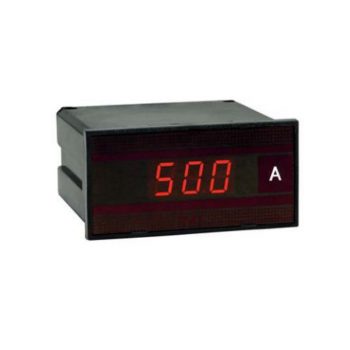
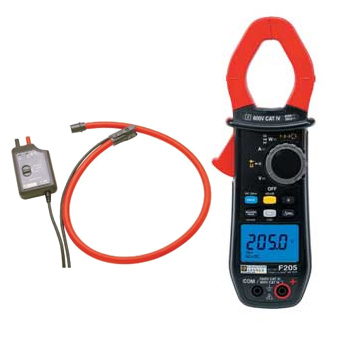
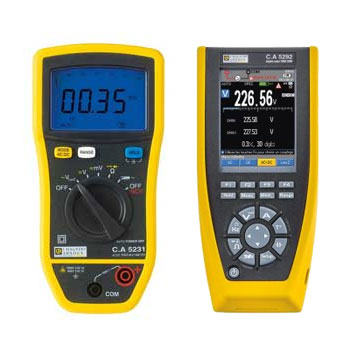
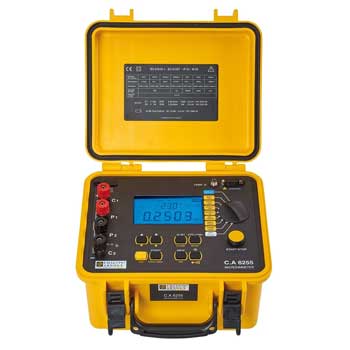
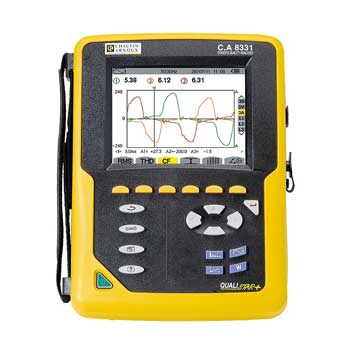
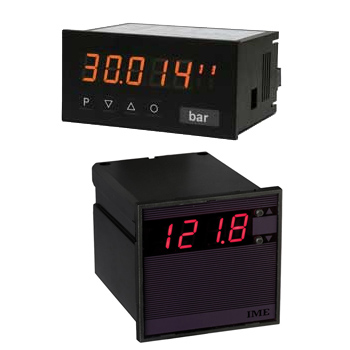
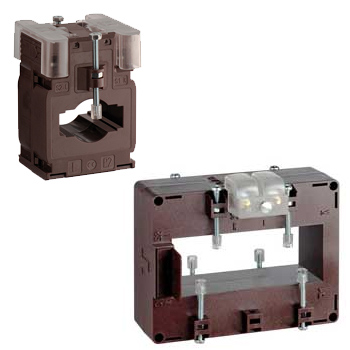
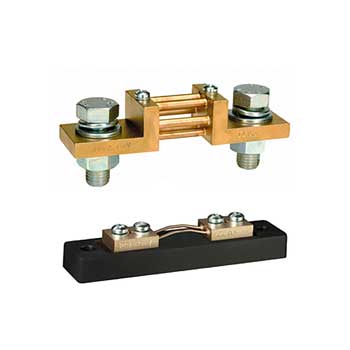
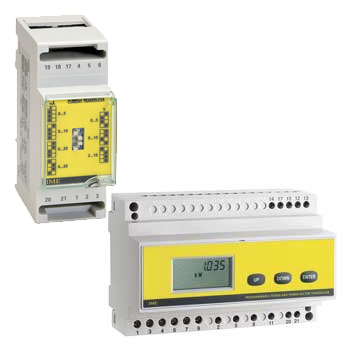
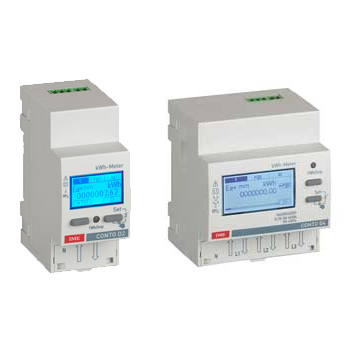
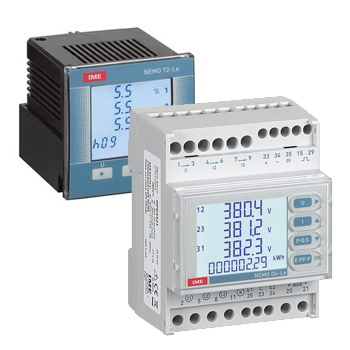
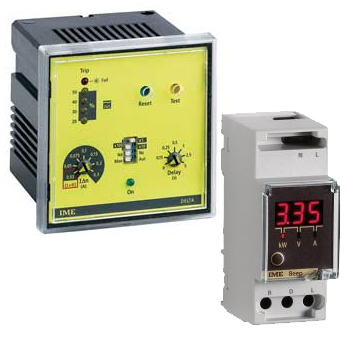
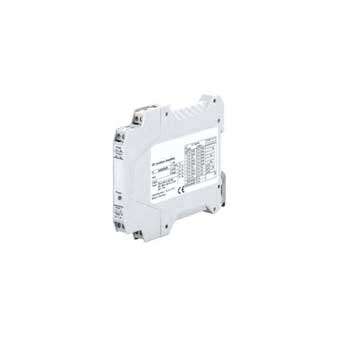
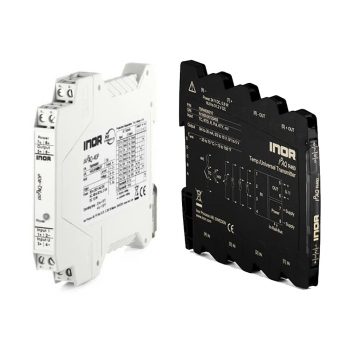
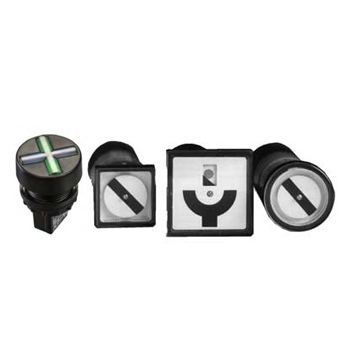
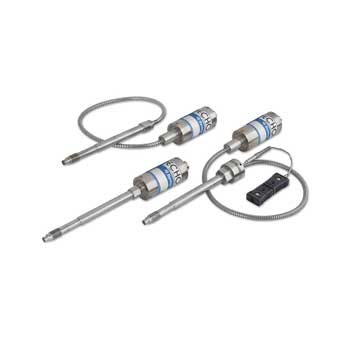
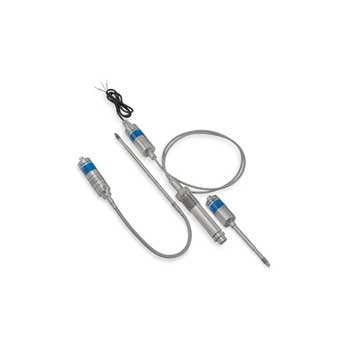
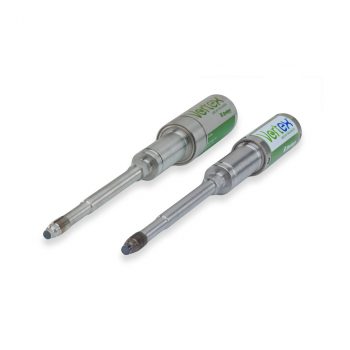
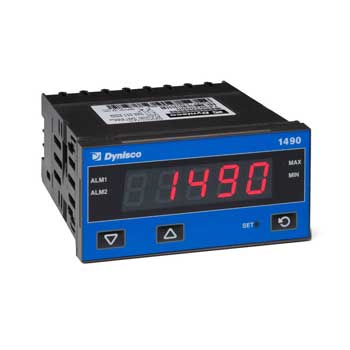
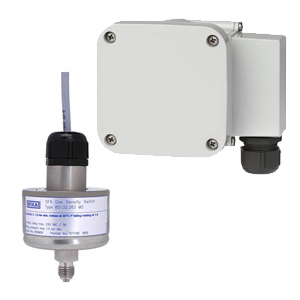
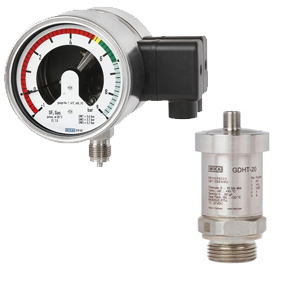
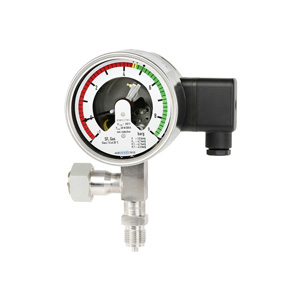
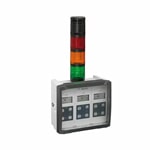
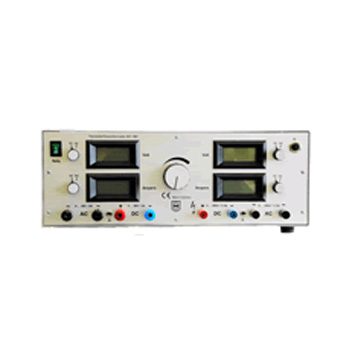
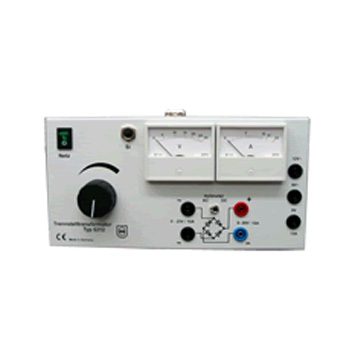
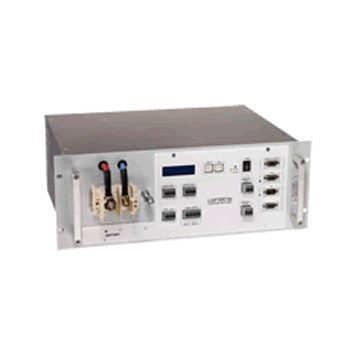
























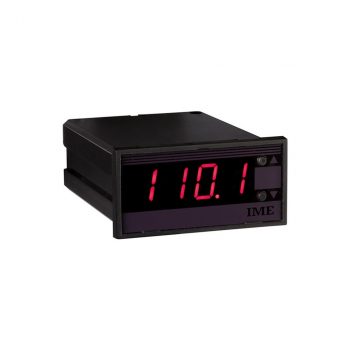
- Digital display for alternating current (CT input) or alternating voltage RMS (direct input)
- Dimensions: 72x36mm
- Without border contacts
- Input: 5A or 500V / 1A or 500V
- Auxiliary voltage: 24Vac or 115Vac or 230Vac or 240Vac or 20 ... 150Vdc / 48Vac or 150 ... 250Vdc
- Display: direct 5 ... 8000A (38 ranges adjustable) / direct 500V; 3 digits, max.display: 999
Datasheet |
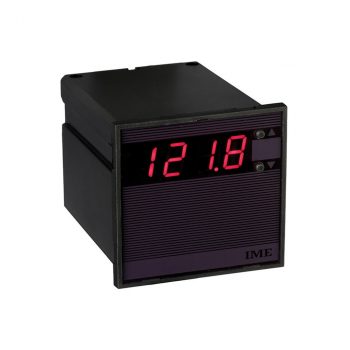
- Digital display for alternating current (CT input) or for alternating voltage RMS (direct input) - 1000 points
- Dimensions: front frame 96x48mm
- With or without 2 programmable limit contacts, MIN and / or MAX contact
- Input: 5A ou 500V / 1A ou 500V
- Auxiliary voltage: 24Vac or 115 or 230Vac or 240Vac or 20 ... 150Vdc / 48Vac or 150 ... 250Vdc
- Display: 5 ... 8000A (38 ranges adjustable); 3 digits, max.display: 999
Datasheet |
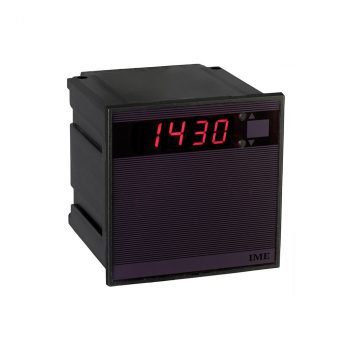
- Digital display for alternating current (CT input) or alternating voltage RMS
- Dimensions: front frame 72x72mm
- With or without 2 programmable limit contacts, MIN and / or MAX contact
- Input: 5A or 500V / 1A or 500V
- Auxiliary voltage: 24Vac or 115Vac or 230Vac or 240Vac or 20 ... 150Vdc / 48Vac or 150 ... 250Vdc
- Display: 5 ... 8000A (38 ranges adjustable) / direct 500V; 3 digits, max.display: 999
Datasheet |
- Digital display for alternating current (CT input) or alternating voltage RMS (direct input)
- Dimensions: front frame 96x96mm
- Without border contacts
- Input: 5A or 500V / 1A or 500V
- Auxiliary voltage: 24Vac or 115Vac or 230Vac or 240Vac or 20 ... 150Vdc / 48Vac or 150 ... 250Vdc
- Display: 5 ... 8000A (38 ranges adjustable) / direct 500V; 3 digits, max.display: 999
Datasheet |
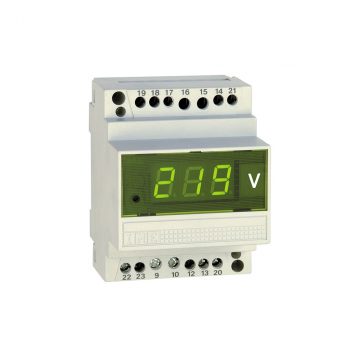
- Digital display for alternating current / CT or alternating voltage RMS (direct input)
- Dimensions: 4 modules DIN
- With or without 2 programmable limit contacts, MIN and / or MAX contact
- Input: 5A or 500V / 1A or 500V
- Auxiliary voltage: 24Vac or 115Vac or 230Vac or 240Vac or 20 ... 150Vdc / 48Vac or 150 ... 250Vdc
- Display: 5 ... 8000A (38 ranges adjustable) / direct 500V; 3 digits, max display: 999
Datasheet |
Digital AC / AC-Voltage Panel Meters
Digital AC / AC-voltage panel meters are electronic instruments designed to measure and display AC voltages — and in many cases additional AC parameters such as current, frequency, power or energy. They use an analog-to-digital converter (ADC) and microprocessor-based signal processing to provide precise, stable real-time values on LED or LCD displays. Depending on the model, they may also offer alarm functions, limit monitoring, energy measurement or communication interfaces for integration into automation systems.
F&Q
What is a digital AC-voltage panel meter?
A digital AC-voltage panel meter measures alternating voltage (VAC) and displays the result as a numeric value. It is designed for fixed installation in control cabinets, switch panels or industrial systems.
Which quantities can be measured?
Typical measurable quantities include AC voltage, AC current, frequency, active/reactive/apparent power, power factor and — depending on the device — energy consumption or multiple parameters simultaneously.
How does the measurement work?
The analog input signal is digitized using an ADC, processed by a microcontroller and shown on the display. This enables accurate measurement even when the signal is fluctuating or distorted.
What advantages do digital AC meters offer?
They offer high accuracy, eliminate reading errors, support automatic range selection and often provide additional features such as alarms, limit monitoring, data logging, power/energy measurement and communication (e.g. RS-485/Modbus).
Where are digital AC-voltage panel meters used?
They are used in distribution boards, industrial control panels, energy management systems, machine control cabinets and building automation — anywhere reliable AC-voltage monitoring is required.
Which display and output types are available?
Devices typically use LED or LCD displays. Optional outputs include relay contacts, analog outputs, pulse outputs for energy counting or communication interfaces for integration into monitoring or automation systems.
What should be considered when selecting a device?
Important factors include voltage range, input type (direct input or via transformers), accuracy class, display clarity, supply voltage, panel cutout size and desired features such as power/energy measurement or communication capability.
Can these meters replace multiple analog instruments?
Yes — multifunction digital meters can combine voltmeter, ammeter, frequency meter, power meter and energy meter in one compact unit, reducing installation effort and panel space.
Are there limitations?
They require an auxiliary supply voltage and may be sensitive to extreme disturbances or very distorted waveforms if not designed for true-RMS measurement. High-speed transients or very high harmonics may require specialized devices.


Datasheet