
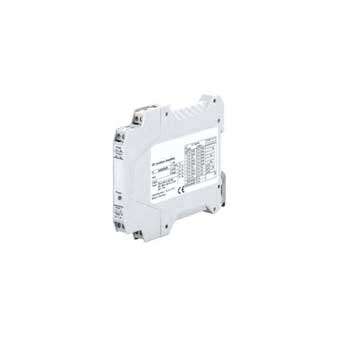





























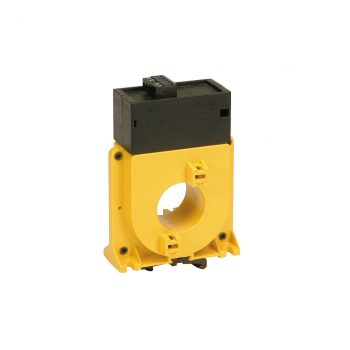
| AUX | 115 Vac |
|---|---|
| OUTPUT | 0...10 V |
| CURRENT | 150 A |
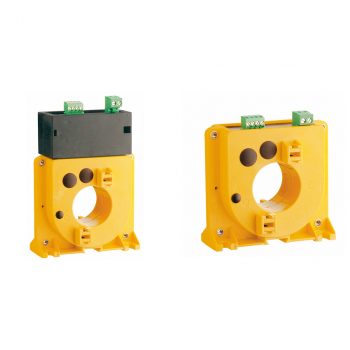
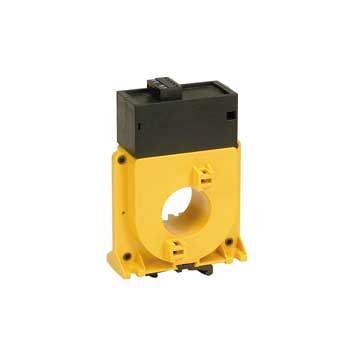
| TYPE | Unidirectional direct or pulsating current transformer with built-in Hall effect transducer (passing cable ø 35 mm) |
Datasheet |
HT35Bm
Unidirectional direct or pulsating current transformer with built-in Hall effect transducer (passing cable ø 35 mm)| AUX | 20...60 Vdc/24 Vac |
|---|---|
| OUTPUT | 4...20 mA |
| CURRENT | 10/20/30/40/50/60/70/80/90/100 A |
| TYPE | Unidirectional direct or pulsating current transformer with built-in Hall effect transducer (passing cable ø 35 mm) |
HT35Bs
Unidirectional direct or pulsating current transformer with built-in Hall effect transducer (passing cable ø 35 mm)| AUX | 15 Vdc |
|---|---|
| OUTPUT | 0...20 mA |
| CURRENT | 10/20/30/40/50/60/70/80/90/100 A |
| TYPE | Unidirectional direct or pulsating current transformer with built-in Hall effect transducer (passing cable ø 35 mm) |
Datasheet
|
| AUX | 230 Vac |
|---|---|
| OUTPUT | 0...10 V |
| CURRENT | 800 A |
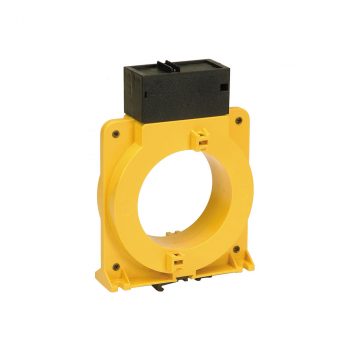
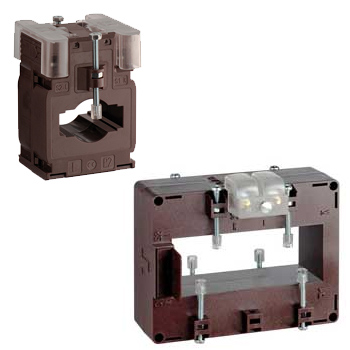
| TYPE | Unidirectional direct or pulsating current transformer with built-in Hall effect transducer (passing cable ø 80 mm) |
Datasheet
|
DC Current Transformers with Integrated Transducer
A DC current transformer with an integrated transducer is a device designed to measure continuous (DC) currents and convert them into a standardized output signal such as 0–20 mA, 4–20 mA or 0–10 V. The primary current is detected using a DC-capable sensing technology — typically Hall-effect, flux-gate or another closed-loop DC sensor — and the integrated electronics convert the measured value into a linear, galvanically isolated output. This makes it possible to measure high DC currents safely without shunts and to pass the result directly to control systems, displays or data acquisition devices.
Questions & Answers
What distinguishes a DC current transformer from a traditional AC transformer?
Traditional current transformers work by induction and therefore only measure alternating currents. DC current transformers, however, use technologies such as Hall-effect or flux-gate sensors that can detect static magnetic fields, allowing accurate DC measurement with galvanic isolation.
Why is the combination of transformer and transducer beneficial?
Because it provides a compact, ready-to-use measurement solution. No separate shunt or external converter is needed — the device measures the current and outputs a standardized signal, reducing wiring effort and installation complexity.
Which output signals are typical?
Common outputs are 0–20 mA, 4–20 mA or 0–10 V. These standardized outputs can be connected directly to panel meters, PLC analog inputs or data loggers.
Which DC current ranges can be measured?
Depending on the model, devices can measure anything from low DC currents to very high levels — for example small auxiliary circuits, battery currents or high-power DC busbars. The transformer must be sized for the maximum expected current.
How does a DC current transformer measure current?
The primary conductor passes through the sensor. A Hall or flux-gate sensing element detects the magnetic field generated by the DC current, and the internal electronics convert this reading into a proportional, standardized output signal.
Where are DC current transformers with transducer typically used?
Typical applications include battery and energy storage systems, photovoltaic and charging systems, DC power supplies, electric drives with DC sections and general DC power monitoring or control tasks.
What is the benefit of galvanic isolation?
Galvanic isolation separates the high-current circuit from the measurement electronics. This increases electrical safety, prevents ground loops and protects downstream devices from high voltages.
Are there limitations or special considerations?
Yes — only DC-capable sensors should be used; classic AC transformers cannot measure DC. For pulsed or rapidly changing DC currents, the appropriate sensing technology (Hall, flux-gate etc.) must be chosen to ensure accuracy. Very high currents also require suitable mechanical and thermal installation.
How is a DC current transformer installed?
The primary conductor is routed through the opening of the transformer without breaking the circuit. The electronics may require auxiliary supply. The standardized output is then wired to the control system or measuring device.
When is it recommended to use a DC transformer with integrated transducer?
Whenever DC currents must be measured safely and converted to a standard industrial signal — for monitoring, control tasks, energy management or integration into automation systems.


Datasheet