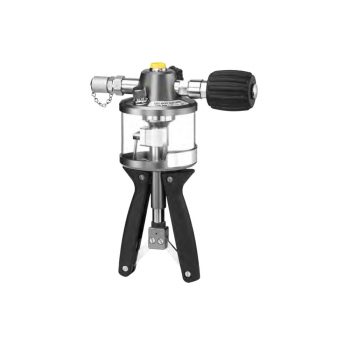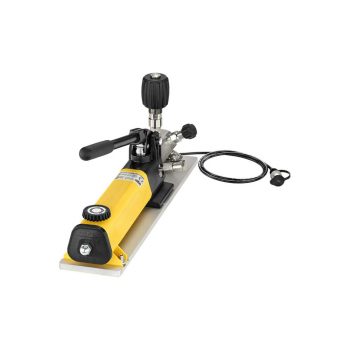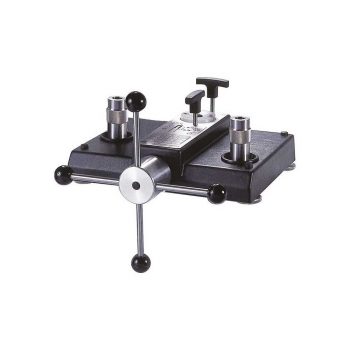
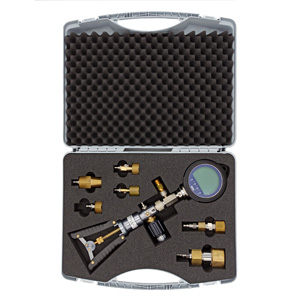



























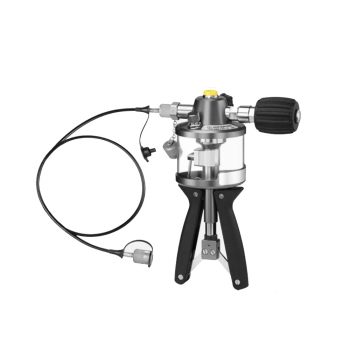
• Hydraulic pressures up to 10,000 psi
  • Pneumatic pressures up to 600 psi
  • Vacuum up to 28.5 in Hg
  • Low pressure fine control
  • Unique vacuum priming function removes trapped air during hydraulic operation
  • High pressure generation achieved with volume adjuster – no physical effort required
  • Pressure/vacuum selector valve provides fine pressure relief in pneumatic and hydraulic modes
  • Tamper-proof overpressure protection valve adjustable from 300 to 10,000 psi
  • Removable hydraulic reservoir can be detached without fluid drainage
  • Reservoir safety feature with spring-loaded top cover vents above 8 psi
  • Hydraulic mode designed for use with distilled water and/or high-viscosity mineral oil
  • Highly sensitive volume adjuster for use across hydraulic, pneumatic, vacuum and low pressure modes
  • Built-in stroke adjuster controls pressure/vacuum per stroke
  • 240° swivel head for optimal reference viewing
  • Internal moving parts PTFE anodized to reduce friction and wear
  • Ergonomic, rugged, and lightweight design with comfortable hand grip
Datasheet

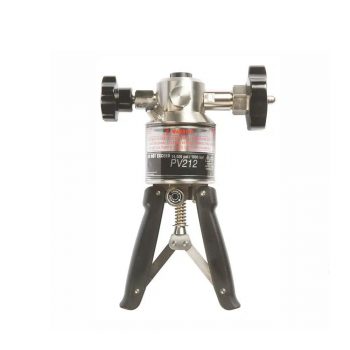
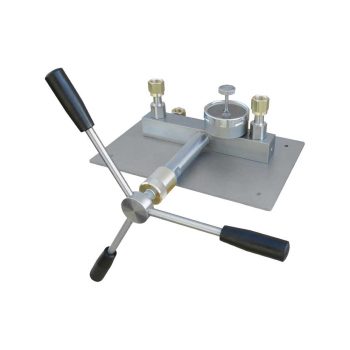
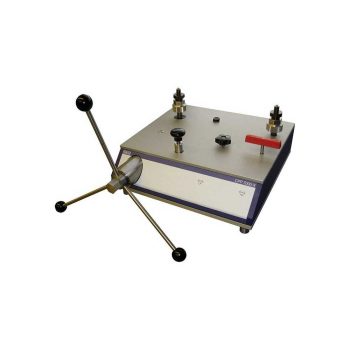
  • Testing, adjustment and calibration of all types of pressure gauges
  • exact setting to ultra-fine thread pitch and large-volume regulating valve
  • high pressure generation with minimum effort
  • large calibration volume (300 ml)
Datasheet
User Manual

  • Testing, adjustment and calibration of all types of pressure gauges
  • exact setting to ultra-fine thread pitch and large-volume regulating valve
  • high pressure generation with minimum effort
  • large calibration volume (300 ml)
Datasheet
User Manual

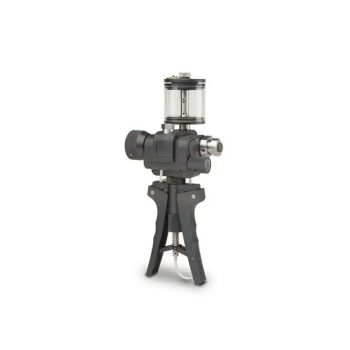
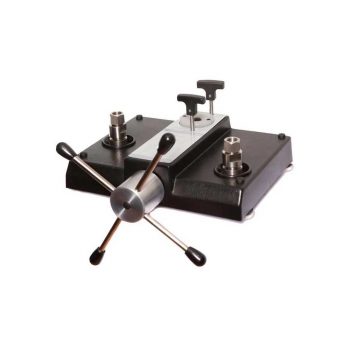
  • Pressures up to 700 bar (10,000 psi) or 1,000 bar (15,000 psi)
  • Compatible with distilled water or mineral oil
  • Quick priming and fast pressure generation
  • Hydraulic pressure source for pressures up to 1,000 bar (15,000 psi)
  • 100 CC transparent reservoir that can be filled during operation
  • Vernier adjuster for fine pressure control
  • Optional pressure release valves provide excellent control for decreasing pressure
Datasheet
User Manual

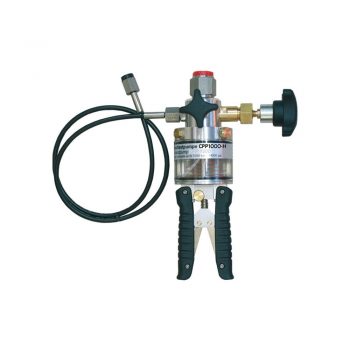
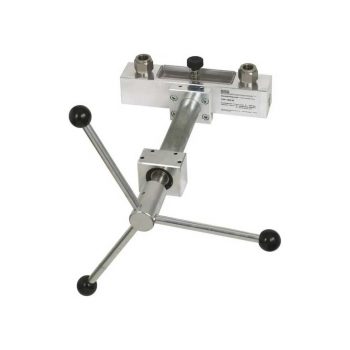
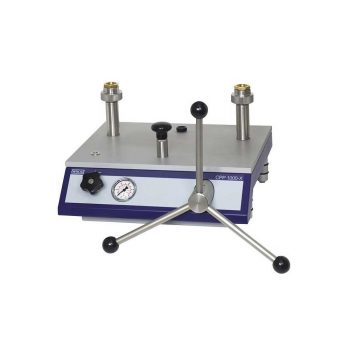
  • Ergonomic handling through the smooth-running, internally operating, precision spindle
  • Integrated oil reservoir
  • Removable star handle
  • Freely rotating test connections (i.e. measuring instruments can be aligned)
  • Precise setting of the test pressure through a fine adjustment valve (optional for model CPP1000-M)
Datasheet
User Manual

  • Precisely adjustable dual-area spindle pump for filling, pressure generation and fine adjustment of pressure
  • Freely rotating test connections (i.e. measuring instruments can be orientated)
  • Proven technology of the model CPB3800 pressure balance
  • Compact dimensions
  • Low weight
Datasheet
User Manual

  • Precisely adjustable dual-area spindle pump for filling, pressure generation and fine adjustment of pressure
  • Proven technology of the model CPB3800HP dead-weight tester
  • Compact dimensions
  • Low weight
Datasheet
User Manual

  • Ergonomic handling through the smooth-running, internally operating, precision spindle
  • Integrated oil reservoir
  • Removable star handle
  • Freely rotating test connections (i.e. measuring instruments can be aligned)
  • Integrated priming pump for large test volumes
Datenblatt
Bedienungsanleitung

  • Ergonomic handling through the smooth-running, internally operating, precision spindle
  • Integrated oil reservoir
  • Removable star handle
  • Freely rotating test connections (i.e. measuring instruments can be aligned)
  • Integrated priming pump for large test volumes
Datasheet
User Manual

  • Pressures up to 700 bar (10,000 psi) or 1,000 bar (15,000 psi)
  • Compatible with distilled water or mineral oil
  • Quick priming and fast pressure generation
  • Hydraulic pressure source for pressures up to 1,000 bar (15,000 psi)
  • 100 CC transparent reservoir that can be filled during operation
  • Vernier adjuster for fine pressure control
  • Optional pressure release valves provide excellent control for decreasing pressure
Datasheet
User Manual

  • Ergonomic handling
  • Precise setting of pressure via a fine adjustment valve
  • Compact dimensions
  • Low weight
Datasheet
User Manual

  • Simultaneous calibration of several DUT thanks to large tank volume
  • fast pressure generation with little effort
Datasheet
User Manual

  • Oil-free pressure generation
  • simple and fast pressure generation with smooth-running spindle
Datasheet

  • Operating pressure: up to 3000 bar
  • Flow rate: 11/0,5 cm³/stroke
  • Dimensions: 480x320x989 mm
Datasheet

  • Operating pressure: up to 100 bar
  • Flow rate: 15 cm³/stroke
  • Dimensions: 438x318x520 mm
Datasheet

  • Operating pressure: up to 60 bar
  • Flow rate: 28 cm³/stroke
  • Dimensions: 438x318x520 mm
Datasheet

  • Operating pressure: up to 630 bar
  • Flow rate: 28/3,4 cm³/stroke
  • Dimensions: 480x330x820 mm
Datasheet

  • Operating pressure: up to 630 bar
  • Flow rate: 28/3,4 cm³/stroke
  • Dimensions: 480x330x820 mm
Datasheet

  • Operating pressure: up to 1000 bar
  • Flow rate: 28/1,5 cm³/stroke
  • Dimensions: 480x330x820 mm
Datasheet

  • Operating pressure: up to 200 bar
  • Flow rate: 79/8 cm³/stroke
  • Dimensions: 438x318x590 mm
Datasheet

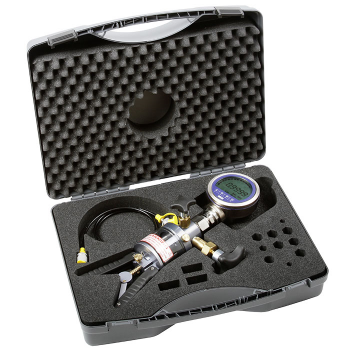
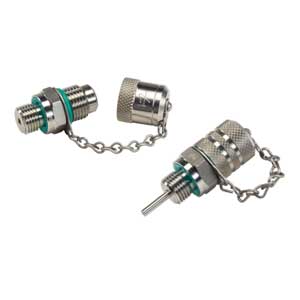
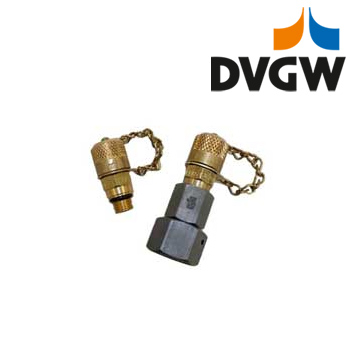
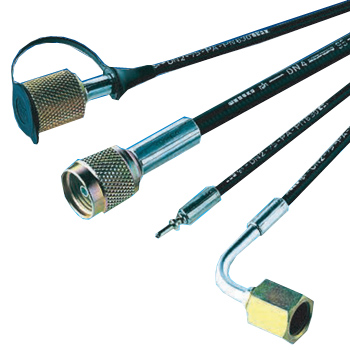
Hydraulic service kit

Datasheet


Hydraulic Calibration Pumps – Generate & Control High Pressure Precisely

Hydraulic calibration pumps generate and finely control high pressures for calibrating pressure transmitters, gauges, and pressure switches in labs and production. Depending on the model they cover up to 350/700/1,000+ bar. Fine adjustment valves, fine volume control, and venting enable stable, repeatable pressure settings—ideal for high-pressure applications with minimal drift.

ICS Schneider Messtechnik supplies hand and bench pumps, matching reference sensors/gauges, high-pressure hoses & adapters, suitable hydraulic media, and DAkkS/ISO calibration. Complete ready-to-use calibration kits are available on request.


FAQ on Hydraulic Calibration Pumps

Answers on selection, media, stability, safety, connection standards, and typical practical setups.

When should I use a hydraulic rather than a pneumatic pump?

Whenever you need very high pressures (≥ 60 bar) or maximum long-term stability at the measurement point. Hydraulics are less elastic and therefore finer to adjust at high pressure.

What pressure ranges are typical?

MediumTypical rangesApplication
Hydraulic oil0…350/700/1,000+ barHigh-pressure transmitters, gauges, switches
Water/water-glycol0…350/700 barClean-media environments; check suitable materials

Which medium should I use?

Calibration oils with low viscosity and low volumetric expansion are standard. Water is possible if DUT/materials are compatible (observe corrosion protection and proper venting). Always verify the DUT’s media compatibility.

How do I achieve a very stable reading on the reference?

  • Use fine volume/micrometer screw for micro-adjustment
  • Thoroughly vent air, use short lines and low dead volume
  • Minimize temperature drift and read only after stabilization

Which connections are common?

ThreadStandardNote
G 1/4 / G 1/2ISO 228Widely used; flat-sealing possible
1/4" NPT / 1/2" NPTASMETapered; sealing compound required
High-pressure fittingsFor 700–1,000+ bar with rated components

How do I perform a leak/hold test?

Raise to setpoint, isolate the circuit, then log pressure decay over a defined period. Consider temperature changes and system volume.

What reference fits high pressure?

Digital reference gauges or reference transmitters with ≤ 0.1% FS (or better) and a DAkkS/ISO certificate. Match range/overpressure rating to the pump and DUTs.

How can I avoid contaminating the DUT?

Use a separator/diaphragm seal or a separate media circuit. For water-based tests, select material-compatible components.

What safety aspects must be observed?

  • Do not exceed the maximum pressure of pump, hoses, and adapters
  • Use only pressure-rated high-pressure lines and secure them correctly
  • Never disconnect under pressure; wear eye and hand protection
  • Handle media properly (leaks, disposal) per instructions

What are typical sources of error?

  • Air in the system → Vent thoroughly
  • Micro-leaks → Check sealing faces; use new seals
  • Temperature drift → Allow stabilization time

Can I test multiple DUTs with one pump?

Yes, via manifolds/distribution blocks. Note the higher system volume and thus longer stabilization times; optionally add check valves.

How often should I recalibrate the reference?

Generally annually (usage dependent). After mechanical impacts/overload, check immediately.

Which accessories are useful?

AccessoryBenefit
Adapter sets (G/NPT, HP)Fast, safe DUT changeover
Seal kits (NBR/FKM/PTFE)Low-leak connections
High-pressure hoses/manifoldsFlexible, scalable setups
Carrying/service caseMobile, protected operation

Do you offer complete calibration kits?

Yes—consisting of a pump, reference, hoses/adapters, seals, and optional documentation templates (CSV/PDF).

Diese Website benutzt Cookies. Wenn du die Website weiter nutzt, gehen wir von deinem Einverständnis aus.