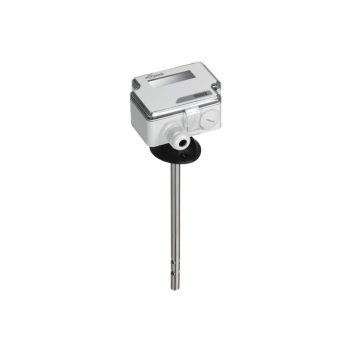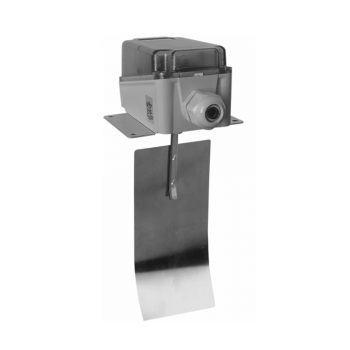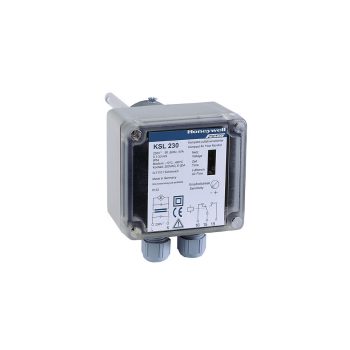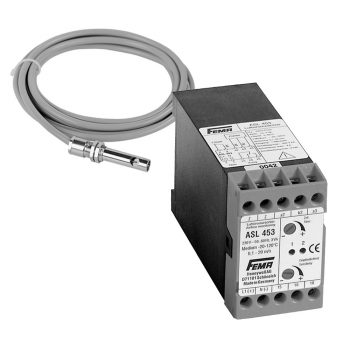
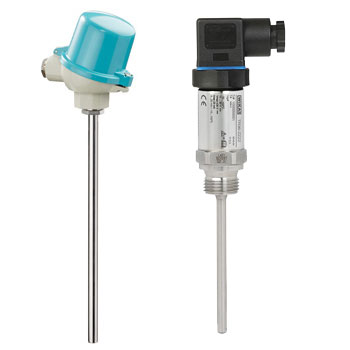
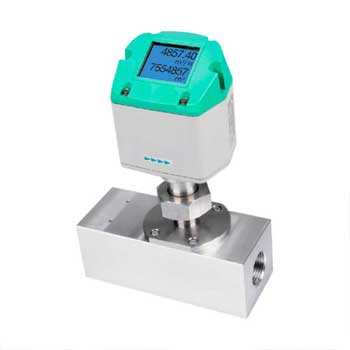
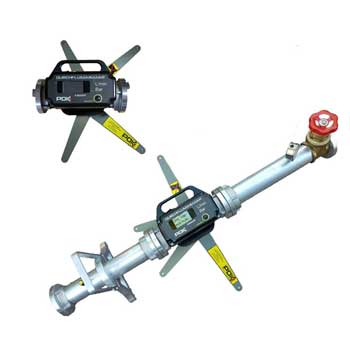
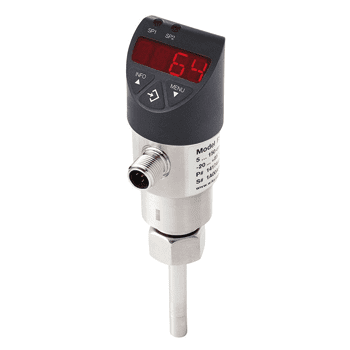
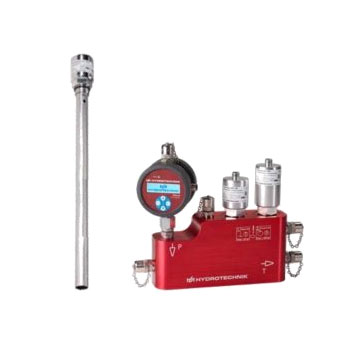
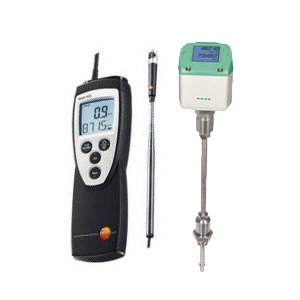
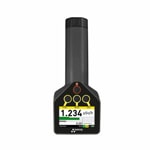
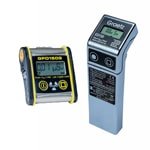






















- Detects smallest changes <0.1 m/s referred to 20°C and 1000 mbar
- No mechanical wear parts
- Easy installation under pressure
Datasheet |
User Manual |
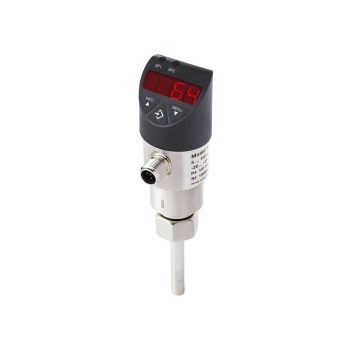
- Wear-free flow monitoring of liquid media using them calorimetric principle
- Flexibly configurable switching and analogue outputs for flow and temperature
- Easily parameterisable via 3-button operation or optionally via IO-Link 1.1
- Exact adaptation to the conditions on-site
Datasheet |
User Manual |
- Electrical output signal DC 0 … 10 V or 4 … 20 mA, can be selected directly at the instrument via jumpers
- Output signal for velocity and air temperature in one instrument
- With switching output
- Mounting flange for mounting on circular ventilation pipes or rectangular ventilation ducts
- Maintenance-free
Datasheet
|
User Manual
|
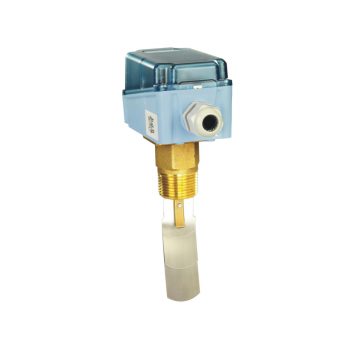
| Switch function/capacity | SPDT, capacity 250 Vac, 15(8) A |
| Setpoint device | screw |
| Sensing element | paddle |
| Flow setpoint range | 2.5 ... 9.2 m/s |
| Outputs | 1xSPDT |
| Mounting place | air duct |
| Immersion depth | 175 mm |
| IP class | IP65 |
| Medium type | air |
| Max. pressure | 0.25 bar |
| Media temp. | -40 ... 85 oC |
Datasheet
|
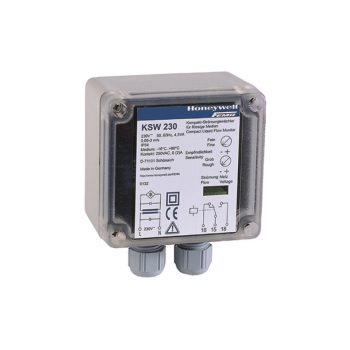
| Switch function/capacity | SPDT, capacity 250 Vac, 10(2) A |
| Sensing element | probe |
| Flow setpoint range | 0.1 ... 30 m/s |
| Outputs | 1xSPDT |
| Mounting place | air duct |
| Immersion depth | 130 mm |
| IP class | IP65 |
| Medium type | air |
| Max. pressure | 10 bar |
| Setpoint device | inside |
| Media temp. | -10 ... 80 oC |
| Additional description | LED's available for indication of power supply and switch status. |
Datasheet
|
| Air flow monitor consisting of two parts: the sensor type SLF.. and the belonging evaluation unit type ASL... |
| For air flow monitoring in air-conditioning systems, ventilation and cooling systems and wherever flow processes in air or neutral gases have to be detected. |
Datasheet
|
| Switch function/capacity | SPDT, capacity 250Vac, 15(8) A |
| Setpoint device | screw |
| Sensing element | paddle |
| Flow setpoint range | 0.6 ... 165 m3/h pipe size dependent |
| Outputs | 1xSPDT |
| Mounting place | in pipe |
| Immersion depth | paddle dependent, 25..300 mm |
| IP class | IP65 |
| Media temp. | -40 ... 120 oC |
Datasheet
|
| Switch function/capacity | SPDT, capacity 250 Vac, 6 A |
| Setpoint device | inside |
| Sensing element | probe |
| Flow setpoint range | 0.05 ... 3 m/s |
| Outputs | 1xSPDT |
| Mounting place | in pipe |
| Immersion depth | 45 mm |
| IP class | IP65 |
| Medium type | liquid |
| Max. pressure | 20 bar |
| Media temp. | -10 ... 80 oC |
| Additional description |
LED's available for indication of power supply and switch status. |
Datasheet
|
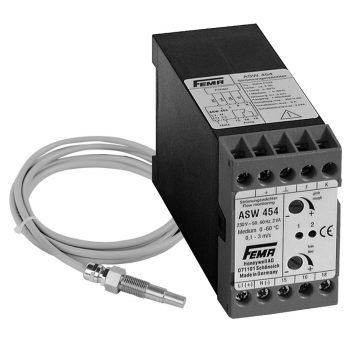
| Sensing element | probe |
| Flow setpoint range | with ASW unit 0.05/0.5 ... 3/20 m/s |
| Mounting place | in pipe or duct |
| IP class | IP65 |
| Medium type | liquid or air |
| Max. pressure | 20 bar |
| Media temp. | -15 ... 80 oC |
| Additional description | LED available for indication of power supply |
Datasheet |
Flow Switches – reliable setpoints for liquids, gases & cooling circuits
Flow switches monitor whether a minimum or maximum flow is achieved and provide a switching signal when limits are exceeded—essential for pump dry-run protection, cooling water circuits, filter monitoring, steam/gas duties and overall process safety.
Depending on medium and installation, you can choose mechanical paddle switches, thermal mass flow switches (insertion/inline), vortex/DP-based variants, or electronic sensor-switches (with measured value + switching output). Outputs include PNP/NPN, relay, IO-Link and 4–20 mA.
ICS Schneider Messtechnik supports principle selection, installation, setpoint definition and integration into PLC/SCADA/IIoT—incl. calibration and documentation.
FAQ on Flow Switches
Answers on principles, media, setpoints, installation, EMC/IP, outputs, ATEX/SIL, calibration and best practices.
Which switching principle fits my application?
| Principle | Media | Strengths | Notes |
|---|---|---|---|
| Paddle (mechanical) | Liquids | Simple, robust, cost-effective | Mind orientation/DN, moving parts |
| Thermal (mass flow) | Air/gases, also liquids | No moving parts, wide turndown | Medium influence (T, p), straight runs |
| Vortex/DP-based | Liquids, gases, steam | Rugged, process-proof | Requires straight runs |
| Electronic sensor-switch | Broad | Local value + switch output | Needs parametrization |
What are typical applications?
Dry-run protection for pumps, cooling (machine tools, drives, furnaces), dosing/rinse loops, compressed air/gas supply, heat exchangers, filter monitoring and safety interlocks.
How do I define a suitable setpoint?
Start from the process target flow and permissible limits. Add safety margin (e.g., setpoint = 70–80 % of nominal). Choose hysteresis to avoid chatter.
How is the device set up/parametrized?
Mechanically via spring/adjust screw (paddle) or electronically via buttons/display/IO-Link. Many units offer teach-in at typical flow.
What is the correct installation orientation?
Depends on principle; generally ensure straight runs up/downstream and a full pipe. Place paddles horizontally in the stream; position thermal insertion probes centrally in the profile.
How much straight run is required?
Guidelines: paddle 5D/3D, thermal 10D/5D, vortex/DP 15D/5D. Use a flow conditioner if disturbances persist.
What media limits apply?
Temperature/pressure per design. Thermal gas switches typically to +100…+120 °C; paddle/metal designs available for higher T/p. For viscous/particle-laden media consider non-paddle concepts.
How does viscosity affect switching?
With high viscosity paddle setpoints shift. Electronic/thermal switches are often more stable but may require medium-specific parameters.
What’s the difference between single-point and window function?
Single-point: one threshold with hysteresis. Window: separate low and high limits—ideal for an operating window.
Which outputs/communications are available?
| Output | Advantages | Typical use |
|---|---|---|
| PNP/NPN (switch) | Easy wiring | PLC digital input, alarms |
| Relay | Galvanic isolation | Contactors, retrofits |
| 4–20 mA | Trend + threshold | Control loops, long runs |
| IO-Link | Parametrics/diagnostics | IIoT, recipe changes, remote teach |
How do I ensure pump protection?
Set the threshold above the pump’s minimum flow, add on-delay for start/empty lines, and provide feedback to the controller. Consider bypass/fill at startup.
What ingress protection ratings are common?
Depending on model IP65…IP67/IP69K. For washdown/outdoor use proper glands and strain relief.
Are ATEX/IECEx and SIL options available?
Yes—many models in Ex i/Ex d and with SIL ratings. In hazardous areas use appropriate isolators and observe system certification.
How do air bubbles/particles affect operation?
Air bubbles can disturb thermal signals—add filters/vents. For particles avoid moving parts and use proper process filtration.
What materials/connections are available?
316L/1.4404, 1.4571, nickel-plated brass, PPS/PA/PBT; seals EPDM, FKM, PTFE. Connections: G/NPT, clamp, flange, insertion (weldolet), T-pieces.
How are commissioning and verification done?
Simulate flow (bypass/control valve), verify the setpoint with a reference, adjust hysteresis and any time delays; document results.
What are common pitfalls?
- Too little straight run → move the measuring point/use a conditioner
- Wrong orientation → paddle fully in the stream, probe centered
- Not a full pipe → change location, install vents
- EMC coupling → shielded, separated cabling
How often should I calibrate/check?
According to criticality: typically annually or per QA plan. After a medium/viscosity change, re-verify the setpoint.
Do you support selection & integration?
Yes. We select the principle, define thresholds, deliver documentation/calibration and integrate switches into PLC/SCADA/IO-Link.


Datasheet
Datasheet