


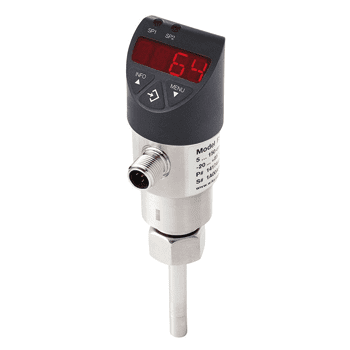
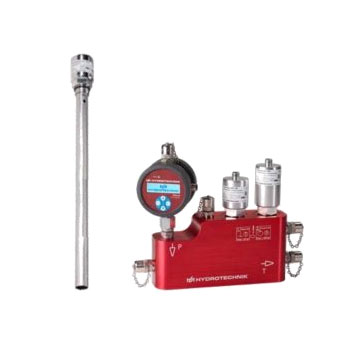
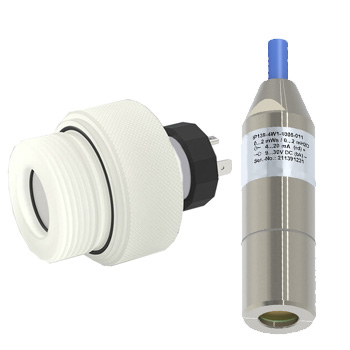
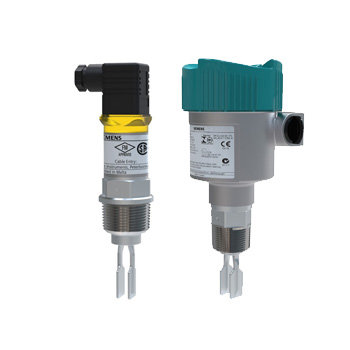
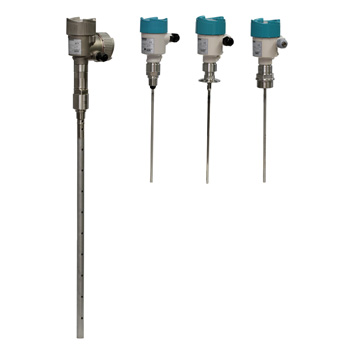
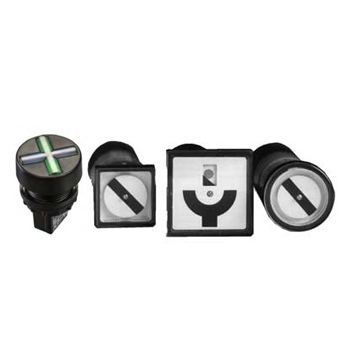
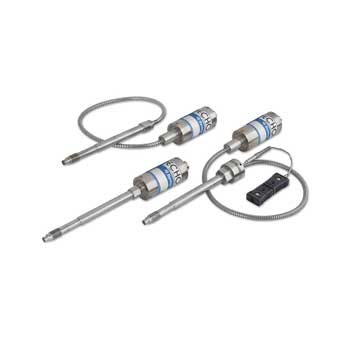
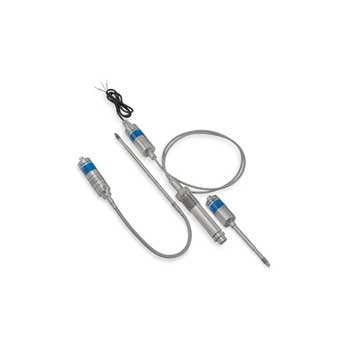
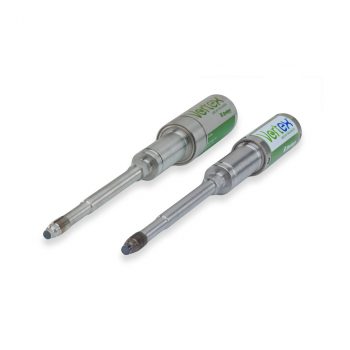
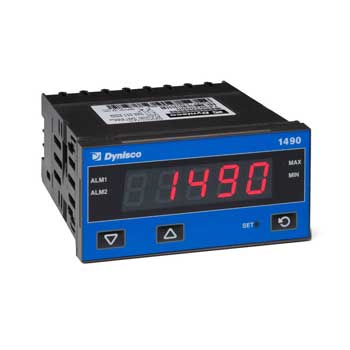
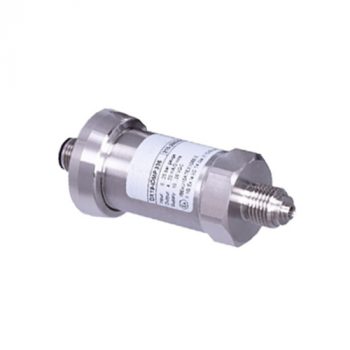
























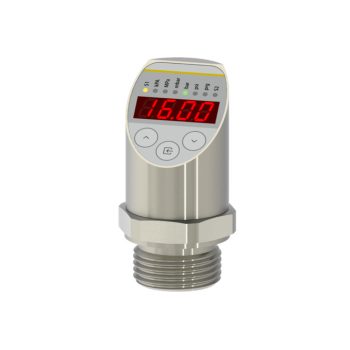
- 4 digit super bright LED display
- Top part rotatable for easy mounting
- Switchable digital display for overhead mounting
- Adjustable turndown without loss of accuracy 1:5
- Dry capacitive pure ceramic measuring cell
- High overload capability
- Front flush process connection
- Smallest measuring range: 0…40 mbar
- Largest measuring range: 0…40 bar
- Negative pressure measuring range: up to -1 bar
- Adjustable on site
- Accuracy ≤ 0,3%, also for turndown up to 1:5
- 2 Switching outputs DC PNP, max. 100mA
- Analog output: 4…20 mA, 3-wires
 Datasheet Datasheet |
| User Manual |
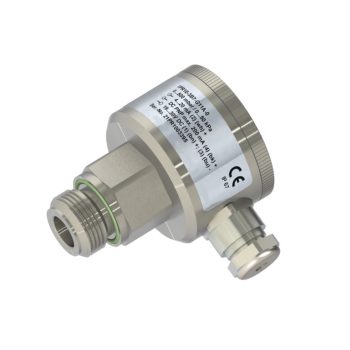
- Simple on-site operation via DIP Switch
- Dry ceramic sensor
- Smallest measuring range: 0…250 mbar
- Largest measuring range: 0…250 bar
- Negative pressure measuring range: up to -1 bar
- Accuracy ≤ 0,5 %
- Compact design
- Analog output: 4…20 mA, 3-Wires
- Contact output: DC PNP, max. 200 mA
| Datasheet |
| User Manual |
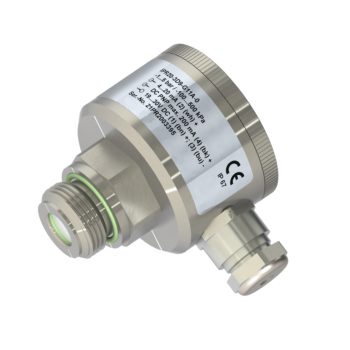
- Dry front flush ceramic sensor
- Simple on-site operation via DIP Switch
- Dry ceramic sensor
- Smallest measuring range: 0…500 mbar
- Largest measuring range: 0…50 bar
- Negative pressure measuring range: up to -1 bar
- Accuracy ≤ 0,5 %
- Compact design
- Analog output: 4…20 mA, 3-wires
- Contact output: DC PNP, max. 200 mA
| Datasheet |
| User Manual |
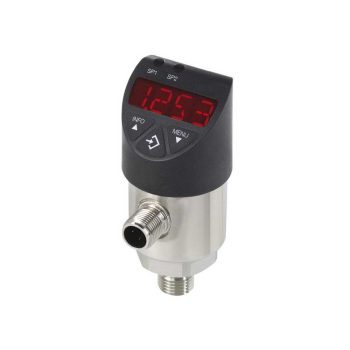
- Easily readable, robust digital display
- Intuitive and fast setup
- Easy and flexible mounting configurations
- Flexibly configurable and scalable output signals
 Datasheet Datasheet |
| User Manual |
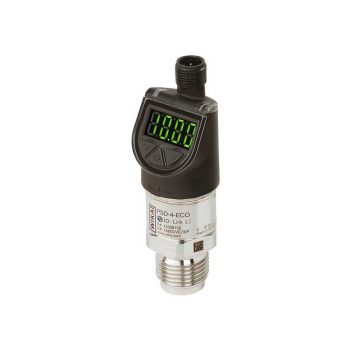
- Good/bad indication through parameterisable digital display (red/green)
- Compact size enables easy installation in narrow spaces
- Optimised design makes OEM machine integration easier
- Designed for rough demands of up to 50 g shock and -40 ... +125 °C [-40 ... +257 °F]
| Datasheet |
| User Manual |
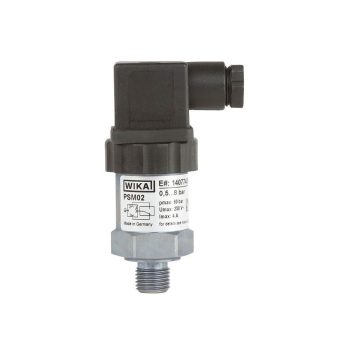
- Adjustable switch hysteresis
- Setting ranges: 0.2 … 2 bar [3 ... 30 psi] to 30 ... 320 bar [450 ... 4,600 psi] and -0.85 ... -0.15 bar [-25 inHg ... -5 inHg]
- Non-repeatability of the switch point: ≤ 2 %
- Switching functions: Normally closed, normally open or change-over contact
- Media: Compressed air, neutral and self-lubricating fluids and neutral gases
|
Datasheet
|
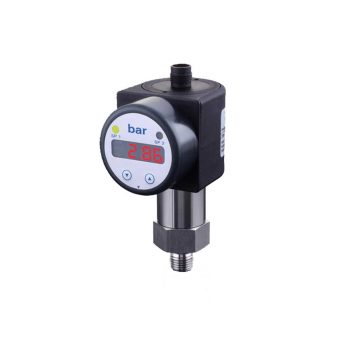
- nominal pressure: 0 ... 100 mbar up to 0 ... 600 bar
- accuracy: 0.25 % / 0.35 % FSO
- indication of measured values on a 4-digit LED display
- rotatable and configurable display module

| Datasheet |
| User Manual |
| User Manual |
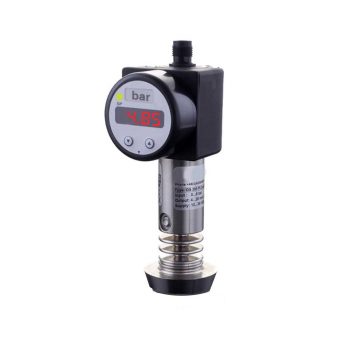
- nominal pressure: 0 ... 100 mbar up to 0 ... 40 bar
- accuracy: 0.35 % (opt. 0.25 %) FSO
- rotatable and configurable display module
- indication of measured values on a 4-digit LED display
- 1, 2 or 4 independent PNP contacts, freely configurable
- configurable contacts (switch on / switch off points, hysteresis / window mode, switch on / switch off delay)
| Datasheet |
| User Manual |
| User Manual |
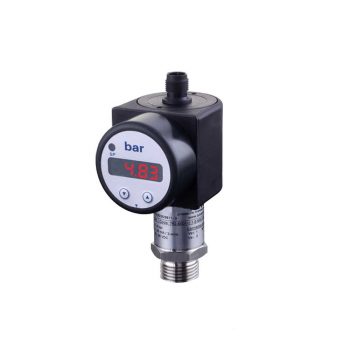
- nominal pressure: 0 ... 400 mbar up to 0 ... 600 bar
- accuracy: 0.5 % FSO
- indication of measured values on a 4-digit LED display
- rotatable and configurable display module
- 1, 2 or 4 independent PNP contacts, freely configurable
| Datasheet |
| User Manual |
| User Manual |
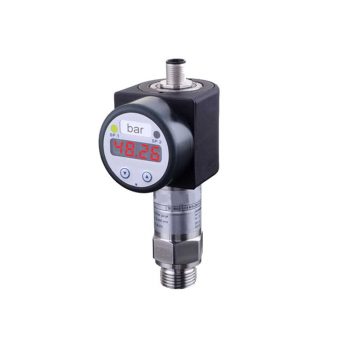
- nominal pressure: 0 ... 60 bar up to 0 ... 400 bar
- accuracy: 0.5 % FSO
- 1, 2 or 4 independent PNP contacts, freely configurable
- rotatable and configurable display module
- indication of measured values on a 4-digit LED display
| Datasheet |
| User Manual |
| User Manual |
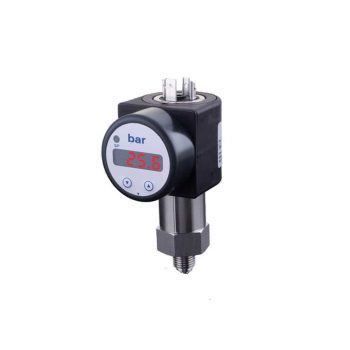
- nominal pressure: 0 ... 6 bar up to 0 ... 600 bar
- accuracy: 0.5 % FSO
- indication of measured values on a 4-digit LED display
- rotatable and configurable display module
- 1, 2 or 4 independent PNP contacts, freely configurable
| Datasheet |
| User Manual |
| User Manual |
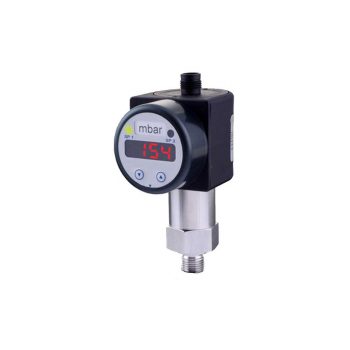
- nominal pressure: 0 ... 10 mbar up to 0 ... 1000 mbar
- accuracy: 0.35 % FSO
- indication of measured values on a 4-digit LED display
- rotatable and configurable display module
- 1, 2 or 4 independent PNP contacts, freely configurable
| Datasheet |
| User Manual |
| User Manual |
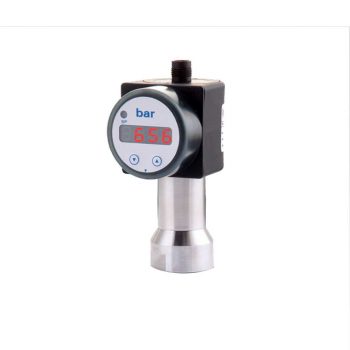
- nominal pressure: 0 ... 600 bar up to 0 ... 2200 bar
- accuracy: 0,35 % FSO
- indication of measured values on a 4-digit LED display
- rotatable and configurable display module
- 1, 2 or 4 independent PNP contacts, freely configurable
- pressure sensor welded
- extremly robust and excellent longterm stability
| Datasheet |
| User Manual |
| User Manual |
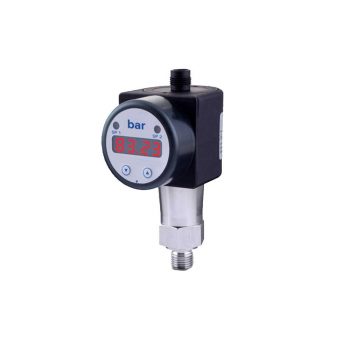
- nominal pressure: 0 ... 6 bar up to 0 ... 600 bar
- accuracy: 0.5 % FSO
- 1 analog output and up to 2 contacts
- display and housing rotatable
- perfect for oxygen applications
| Datasheet |
| User Manual |
| User Manual |
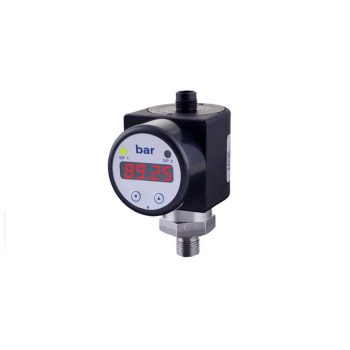
- nominal pressure: 0 ... 2 bar up to 0 ... 400 bar
- accuracy: 1.5 % FSO
- display and housing rotatable
- up to 2 contacts
- configurable via display
| Datasheet |
| User Manual |
| User Manual |
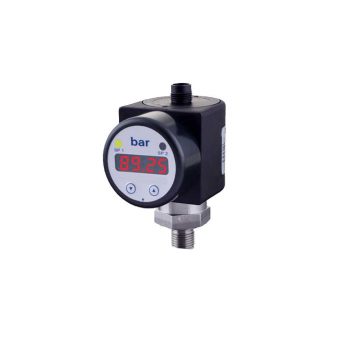
- nominal pressure: 0 ... 6 mbar up to 0 ... 1000 mbar
- accuracy: 0,35 % FSO
- aluminium housing
- rotatable and configurable display module
- 4-digit LED display
- suited for non-aggressive gases and compressed air
| Datasheet |
| User Manual |
| User Manual |
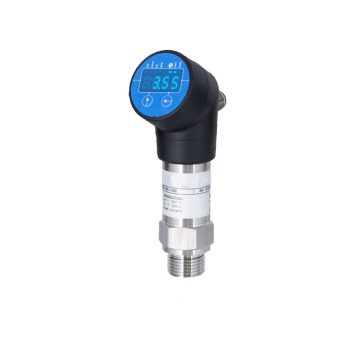
- nominal pressure: 0 ... 100 mbar up to 0 ... 600 bar
- accuracy: 0.5% / 0.35 % (opt. 0.25 %) FSO
- signal output switchable: IO-Link | PNP | NPN | 0…10V | 4…20mA
- indication of measured values on a 4-digit LED display
- rotatable and configurable display
- parametrization by IO-Link or set menu system (VDMA-conform)
- additional information accessible via IO-Link
- Smart sensor profile
- IO-Link according to specification V 1.1
- Data transfer 38.4 kBaud
| Datasheet |
| User Manual |
- nominal pressure: from 0 ... 100 mbar up to 0 ... 40 bar
- accuracy: 0.5% / 0.35 % (opt. 0.25 %) FSO
- IO-Link according to specification V 1.1
- Smart sensor profile
- Data transfer 38.4 kBaud
- signal output switchable: PNP / NPN / 4 … 20 mA / 0 … 10 V
- indication of measured values on a 4-digit LED display
- rotatable and configurable display
- parametrization by IO-Link or set menu system (VDMA-conform)
- additional information via IO-Link
| Datasheet |
| User Manual |
- nominal pressure: 0 ... 0,4 bar bis 0 ... 600 bar relativ, 0 ... 0,6 bar bis 0 ... 600 bar absolut
- accuracy: 0,5 % FSO
- rotatable and configurable display
- parametrization by IO-Link or set menu system (VDMA-conform)
- signal output switchable:
- Smart sensor profile
- IO-Link according to specification V 1.1
- indication of measured values on a 4-digit LED display
- additional information via IO-Link
- Data transfer 38.4 kBaud
| Datasheet |
| User Manual |
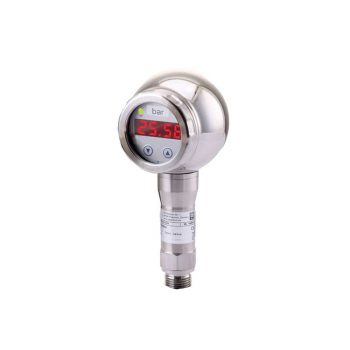
- nominal pressure: 0 ... 100 mbar up to 0 ... 600 bar
- accuracy: 0.25 % / 0.35 % FSO
- indication of measured values on a 4-digit LED display
- rotatable and configurable display module
- 1 or 2 independent PNP contacts, freely configurable
| Datasheet |
| User Manual |
| User Manual |
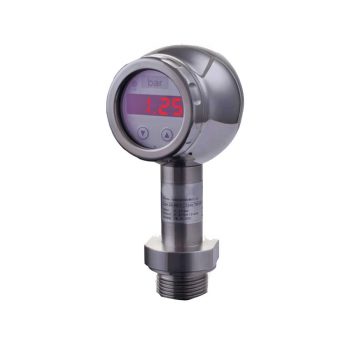
- nominal pressure: 0 ... 100 mbar up to 0 ... 40 bar
- accuracy: 0.35 % (opt. 0.25 %) FSO
- 1 or 2 independent PNP contacts, freely configurable
- indication of measured values on a 4-digit LED display
- rotatable and configurable display module
- hygienic process connections with flush stainless steel diaphragm
- configurable contacts (switch on / switch off points, hysteresis / window mode, switch on / switch off delay)
| Datasheet |
| User Manual |
| User Manual |
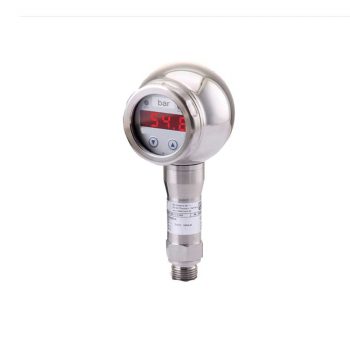
- nominal pressure: 0 ... 400 mbar up to 0 ... 600 bar
- accuracy: 0.5 % FSO
- rotatable and configurable display module
- indication of measured values on a 4-digit LED display
- 1 or 2 independent PNP contacts, freely configurable
| Datasheet |
| User Manual |
| User Manual |
The VDMA standard for fluid sensors (24574-1, part 1 - pressure switches) has the aim of simplifying the use of pressure switches by standardising menu navigation and display.
- Easily-readable, robust display
- Intuitive and fast setup
- Easy and flexible mounting configurations
|
Datasheet
|
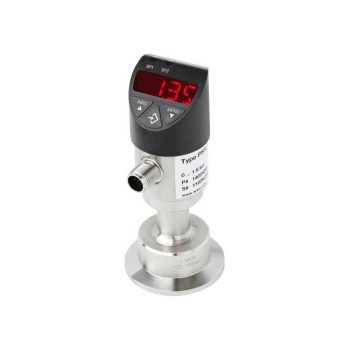
- Easily-readable, robust display
- Intuitive and fast setup
- Easy and flexible mounting configurations
| Datasheet |
| User Manual |
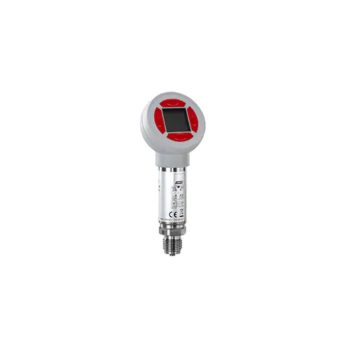
Electronic Pressure Switches are microprocessor-controlled pressure measurement devices for relative pressures of -1 to +1 bar and 0 to 40 bar. They are suitable for an extremely wide range of applications, including the precision recording, monitoring, and control of system pressure. Features: • Open-collector • Configurable as min./max/window monitor • Adjustable drop-in/drop-out delay • Hysteresis defined by set-point and reset-point • Baclit LCD graphical display (Human-Machine-Interface models, only) can be swiveled for better readability; display can be rotated in 90o steps by software
|
Datasheet
|
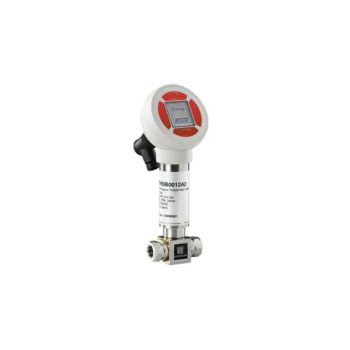
Electronic Differential Pressure Switches are microprocessor-controlled pressure measurement devices for a differential pressure range of 0 ... 20 bar. They are suitable for an extremely wide range of applications, including the precision recording, monitoring and control of system pressure. They come complete with an angled M12X1 plug and are mounted directly to the pipe via two G1/4" internal thread connections. Features: • Open-collector • Configurable as min./max./window monitor • LCD graphical display (Human-Machine-Interface models, only) can be swiveled for better readability; display can be rotated in 90o steps by software for better readability; HMI can be freely swiveled 310o • Self-monitoring electronics • Adjustable drop-in/drop-out delay
|
Datasheet
|
|
User Manual
|
|
User Manual
|
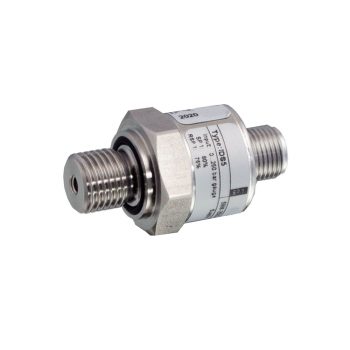
- nominal pressure: 0 ... 16 bar up to 0 ... 600 bar
- accuracy: 0,5 % FSO
- configurable via PC or programming device P6
| Datasheet |
| User Manual |
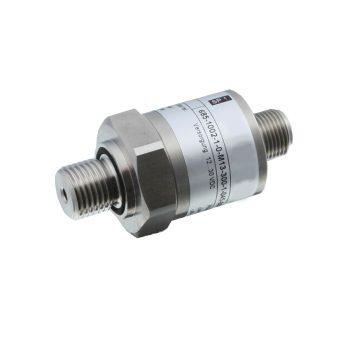
- nominal pressure: 0 ... 2 bar up to 0 ... 400 bar
- accuracy: 1 % FSO
- 1 or 2 contacts
- configurable via PC or programming device P6
- diaphragm ceramic (96 %)
| Datasheet |
| User Manual |
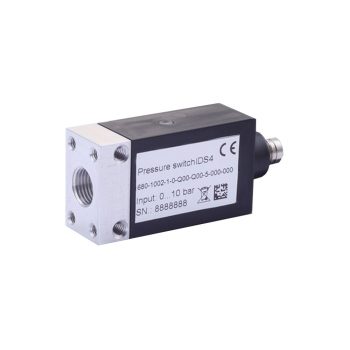
- nominal pressure: 0 ... 1 bar up to 0 ... 10 bar, -1 bar ... 0 bar
- accuracy: 1 % FSO
- 1 or 2 contacts
- silicon sensor, RTV
- configurable via PC or programming device P6
- compact design
| Datasheet |
| User Manual |
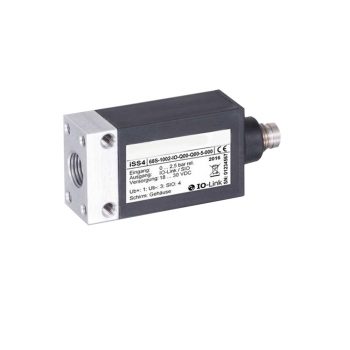
- nominal pressure: 0 ... 1 bar up to 0 ... 10 bar, -1 bar ... 0 bar
- IO-Link according to specification V 1.1
- accuracy: 0.5 % FSO
- silicon sensor, RTV
- compact design
| Datasheet |
| User Manual |
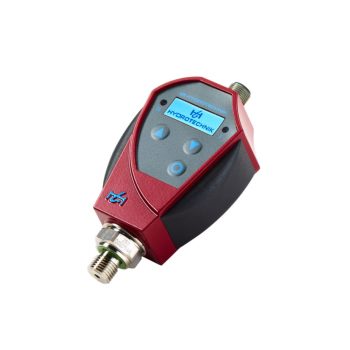
The HySense® MultiEPC is an electronic pressure switch with an extraordinary level of functionality. It is available in standard and DESINA versions with one or two independently programmable limit switches. And to top it all off, the heavy-duty housing, which can rotate axially, features an integrated display.
|
Catalog Excerpt
|
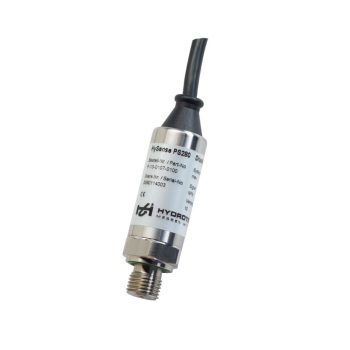
- Qualified for hydraulic systems
- Designed for mobile use
- Short response time
- Many pressure ranges
| Datasheet |
| Catalog Excerpt |
