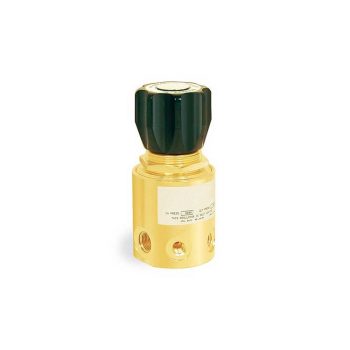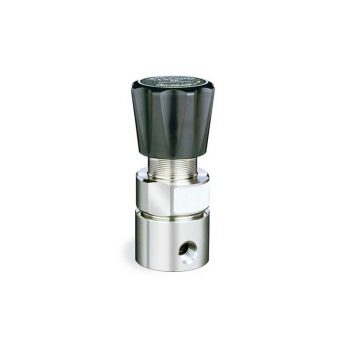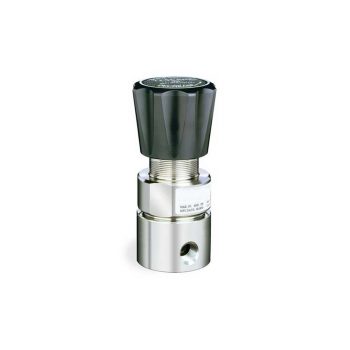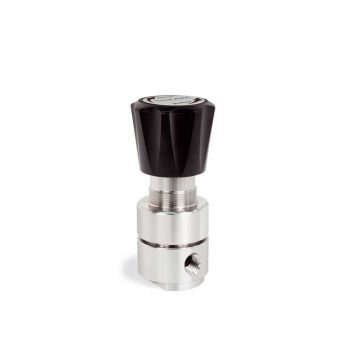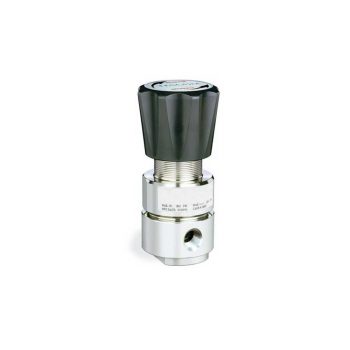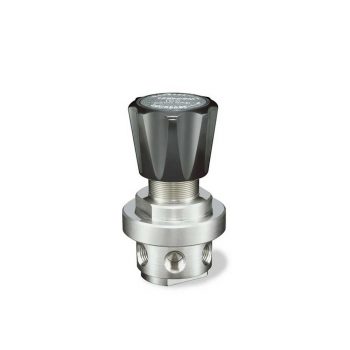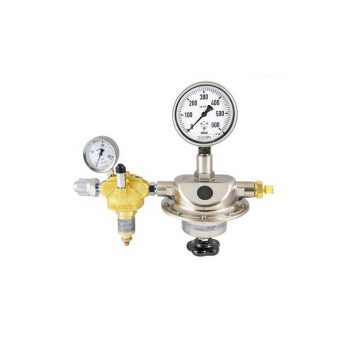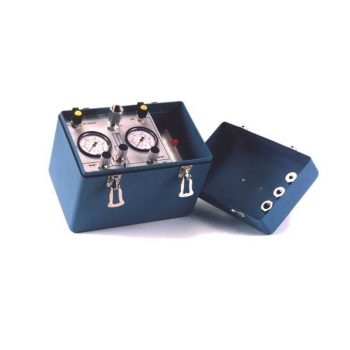
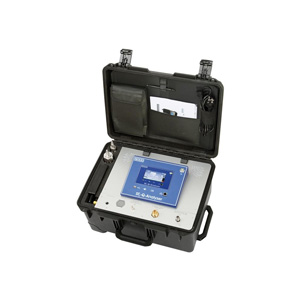
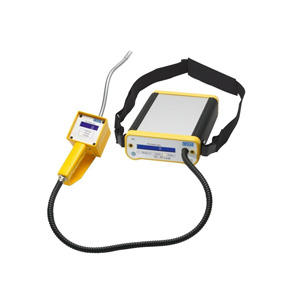
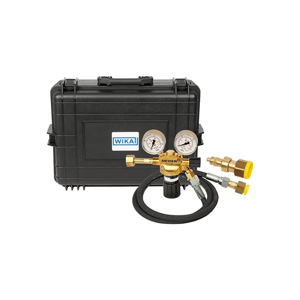
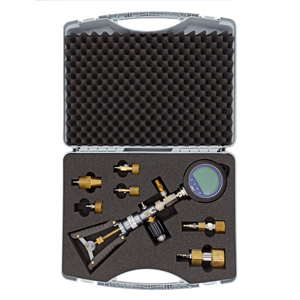





























- Removable valve assembly module permits easy repair
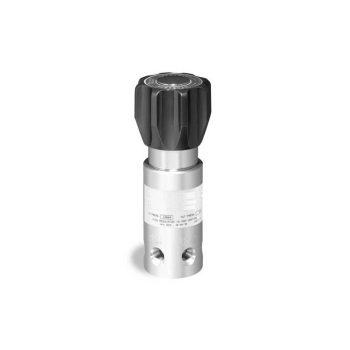
- Excellent sensitivity through a wide range of pressure settings
- Piston style sensor offers extra safety and reliability
- Unbalanced stem assists positive shutoff
- Inlet and outlet gauge ports are standard
- Venting is standard; regulator vents to zero psig / bar in all pressure ranges
- Available in Brass or Stainless Steel
- Numerous modifications are available
Datasheet |
User Manual |
- Compact
- Designed to minimize contamination and provide accurate regulation of any corrosive, noncorrosive, or toxic gas
- Brass model provides added economy for control of non-corrosive media
- Metal-to-metal diaphragm to body seal ensures minimum inboard and outboard leakage
- Convoluted diaphragm delivers excellent accuracy and long service life
- Panel mounting is available
- 300 Series Stainless Steel or Brass bonnet
- NACE compliant designs are available
Datasheet |
User Manual |
- Features a large convoluted diaphragm for extreme sensitivity with minimum droop
- Repeatability: ±0.5% of outlet pressure range
- Metal-to-metal diaphragm to body seal
- Accuracy: ±1% of outlet pressure range
- Gauge ports are standard
- Dome loaded version is available
- Cv = 0.02 and Cv = 0.24 models are available
- NACE compliant designs are available
Datasheet
|
User Manual
|
- Reduces contamination and provides accurate regulation of corrosive or non-corrosive gases
- Convoluted metal-to-metal sealed diaphragm
- Close pressure differential between crack and reseat
- Compact and economical
- Dome loading is optional
- Panel mounting is available
Datasheet
|
User Manual
|
- Single-stage Labo-F includes shut-off valve for high flow capacity (up to 50 m3/h)
- Dual-stage Doppelregulus provides millibar pressure control
- Five different setpoints for outlet pressure
Datasheet
|
Range
- Standard Pressure range: 200 bar max.
- Higher ranges are available on request
Dimensions
- 155 x 280 x 180 mm
Weight
- Approx. 9 kg. incl. carrying case
Supply includes
- Gas Pressure control unit
- Oil/ Gas Separator Model 8335
- Two test hoses
Datasheet
|
- Sensitive control over the entire range
- Stable at every pressure
- Automatic drain
- Very compact
Datasheet
|
- Pressure supply of pressure controllers (CPC3000, CPC6000 and CPC8000)
- Test pressure presetting in adjustment and calibration applications
Datasheet
|
- Economical, compact design
- Piston sensed design is safe and reliable
- Available in a Stainless Steel or Brass design
- Optional gauge ports and panel mounting
- Flow capacity Cv = 0.10
- Low handknob torque for easy operation
- Bubble-tight shutoff at all reseating pressures
Datasheet
|
User Manual
|
- For gaseous and liquid media
- ?Segregated and Captured? vent design is standard
- Balanced valve design ensures stable downstream pressure
- 6000 psig / 414 bar maximum inlet
- Low droop
- Large sensor for accurate pressure control
- High flow, low outlet pressures
- Compatible with TESCOM ER5000 Electropneumatic Controller
Datasheet
|
User Manual
|
- Economical
- Compact design
- Piston sensed design is safe and reliable
- Adjustable stop limits maximum outlet pressure
- Choice of Stainless Steel or Brass construction
- Venting model is available
- Available with a variety of porting and material options
Datasheet |
User Manual |
- Exceptional low torque
- Excellent accuracy
- Standard inlet, outlet and monitoring port connections
- Small dimensions
- Panel monitoring included
Datasheet |
- Gas Pressure System
- Range from -1 to 1000 bar
- Setting the variable volume with hub
- Pressure Gauge (digital or analog possible)
Manual Pressure Regulators – stable setpoints without automation
Manual pressure regulators (precision reducers, fine adjusters, volume controllers) set and maintain stable setpoints—with no electrical control. They are ideal for test rigs, service and calibration tasks that require fine resolution and minimal overshoot.
Depending on design: ranges from vacuum up to 400 bar pneumatically (higher hydraulically when combined with hand pump/booster), needle/fine-control valves or micro-volume adjusters, back-pressure regulation, overpressure protection, media-separated or cleanroom-capable variants; ports G 1/4 (BSPP), NPT, M20×1.5, optionally 7/16″-20 UNF for microbore lines.
ICS Schneider Messtechnik designs complete manual regulation paths with manifolds, isolation/venting, fine adjustment, filters, reference gauges/sensors and provides traceable calibration (factory/DAkkS).
FAQ on Manual Pressure Regulators
Answers on regulator types, media choice, stability, connections/sealing, safety, maintenance and practical tips.
Where do manual regulators make the most sense?
For single setpoints, functional checks, leak/hold tests and as a fine-control element in calibration setups where automation isn’t required.
What regulator types exist?
| Type | Key trait | Typical use |
|---|---|---|
| Forward pressure (reducer) | Reduces inlet to setpoint | Supply lines, test benches |
| Back-pressure regulator | Holds a minimum downstream pressure | Bleed paths, stability/leak tests |
| Micro-volume fine adjuster | Very small volume change | mbar-level trimming, zeroing |
| Diaphragm vs. piston | Diaphragm: sensitive / Piston: robust | Low-pressure finesse vs. high-pressure |
Gas or liquid—which medium should I use?
| Medium | Advantages | Notes |
|---|---|---|
| Gas (air/N₂) | Clean, very fine dosing | Limited end pressure; manage safe venting |
| Hydraulic (oil/water) | High pressures, low compressibility | Bleed carefully; check compatibility |
How do I maximize stability without overshoot?
- Keep the system volume small; use short hoses.
- Use a fine needle/volume adjuster for the last mbar step.
- Minimize temperature differences; build a thermally quiet setup.
What accuracy is realistic?
Your reference standard defines measurement accuracy; the manual regulator determines stability and repeatability. For pass/fail work target a TUR ≥ 4:1 and consider adding a micro-volume stage.
What is a back-pressure regulator and when is it useful?
It maintains a minimum downstream pressure. Use it when the process has bleed/flow or requires a consistent counter/hold pressure.
Which ports and sealing concepts are common?
G 1/4 (BSPP), NPT, M20×1.5, sometimes 7/16″-20 UNF. Seal via O-ring/face seal (BSPP) or taper/cone (NPT/UNF). No tape on sealing faces; use approved compounds only.
How do I integrate the regulator in a calibration setup?
Typical chain: source (cylinder/compressor/hand pump) → filter → manual regulator → isolation/vent valve → DUT with reference sensor in parallel via a T. Optionally place a back-pressure regulator in the bleed path.
How do I run a leak test?
Pressurize to the test level, isolate, log the drift rate (e.g., mbar/min) over a defined dwell time. Record temperature and evaluate.
What safety measures apply?
- Use overpressure relief and pressure limits.
- Provide strain relief/whip checks on hoses.
- Wear goggles/gloves; always depressurize before loosening.
How do I size the range?
Choose so the working range uses 60–90 % of the regulator span. For very fine low pressure use diaphragm/volume regulators; for high pressure use piston types or combine with a hand pump/booster.
Common issues & remedies
- Instability → reduce system volume, add a fine adjuster.
- Leakage → clean faces, check/replace O-rings, verify torque.
- Slow approach → add bypass/venting, set correct inlet pressure.
What does maintenance involve?
Replace filters periodically, inspect seals, verify function. For hydraulic media ensure cleanliness/bleeding; have regulators checked per manufacturer guidance.
Do you support selection & setup?
Yes—we size the regulator type/range, design manifolds, select adapters/hoses, supply references and certificates, and can provide wiring/pneumatic sketches on request.


Datasheet
Datasheet