



























-
Capable of calibration to OIML
-
Quick and simple installation with SIWAREX mounting devices
Datasheet
|
Ring / Torsion Load Cells – Compact Sensors with High Load and Side-Load Tolerance
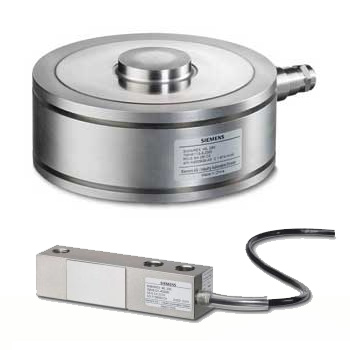
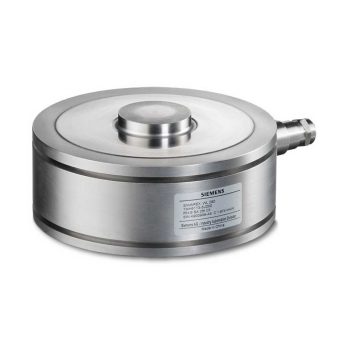
Ring / torsion load cells use a ring-shaped sensor body that undergoes torsional deformation when loaded. This design enables a very low installation height, excellent side- and eccentric-load compensation, and makes these sensors ideal for large platform scales, vehicle scales, tank and silo weighing, and demanding industrial weighing applications.
Many manufacturers specify rated loads from 1 t up to more than 400 t, hermetic sealing, and protection classes up to IP68/IP69K. Combined with weighing modules, rocker or free-floating bearings, junction boxes, and suitable weighing electronics, ICS Schneider Messtechnik provides complete weighing systems—from engineering and configuration to installation, calibration, and PLC/SCADA integration.
FAQ About Ring / Torsion Load Cells
Answers regarding working principle, selection, accuracy, installation, protection, calibration, and typical use cases.
What is a ring / torsion load cell and how does it work?
A ring / torsion load cell consists of a circular sensor body that undergoes torsional deformation when loaded. Strain gauges bonded inside the ring detect this deformation and generate an electrical signal proportional to the applied force.
Where are ring / torsion load cells typically used?
They are commonly used in vehicle and large platform scales, tank and silo weighing, large container or module scales, and generally wherever high loads, low installation height, or high side-load tolerance are required.
What advantages do ring / torsion load cells offer?
Key advantages include extremely low installation height, high load capacity, excellent side- and eccentric-load compensation, and very robust performance in demanding environments.
Which materials and protection classes are common?
These load cells are typically manufactured from stainless steel, hermetically sealed, and rated up to IP68/IP69K, making them suitable for harsh industrial or outdoor applications.
Are ring / torsion load cells legal-for-trade?
Yes—many models are approved according to OIML R60 and can be used in legal-for-trade weighing systems, provided the complete weighing setup meets conformity requirements.
What load ranges and accuracy classes are available?
Rated loads typically range from around 1 t up to more than 470 t. Accuracy classes such as C3 are available depending on the manufacturer and application.
What should be considered during mechanical installation?
The load cell must be mounted on a stable, flat surface. Proper load introduction is essential, and side forces, tilting, and rigid connections (pipes, cables) should be avoided. Rocker or floating bearing modules improve decoupling and accuracy.
How do side or eccentric loads affect measurements?
Ring / torsion load cells are designed to compensate for side and eccentric loads, but improper installation or significant misalignment can still affect accuracy. Mechanically decoupled and symmetric mounting reduces errors.
How are ring / torsion load cells electrically connected?
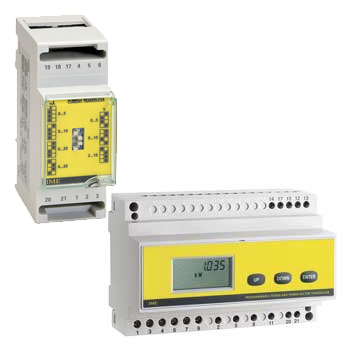
They provide a standard strain-gauge bridge output (mV/V). A suitable weighing transmitter converts this into a processable signal such as 4–20 mA, 0–10 V, or digital communication.
How is calibration performed?
Calibration is done by applying known test loads, then adjusting zero and span, checking linearity and repeatability, and documenting the results. For high-load systems, structured calibration procedures are essential.
What are common sources of error?
Frequent issues include insufficient frame stiffness, rigid mechanical connections, vibration, temperature gradients, uneven loading, or uneven mounting surfaces.
What accessories are recommended?
Recommended accessories include weighing modules with tilt and side-load isolation, pendulum or free-floating bearings, junction boxes for multi-cell systems, and suitable weighing electronics.
Does ICS Schneider Messtechnik provide technical support?
Yes—ICS Schneider Messtechnik supports selection, mechanical design, installation, electronics integration, calibration, and full system documentation.
How can I request a quotation?
You can add a product to the inquiry list on the product page or contact ICS Schneider directly via phone or email. Please provide application details, load range, dimensions, and environmental conditions for a tailored quote.


Datasheet