Power Supplies for Industrial Measurement & Monitoring Systems

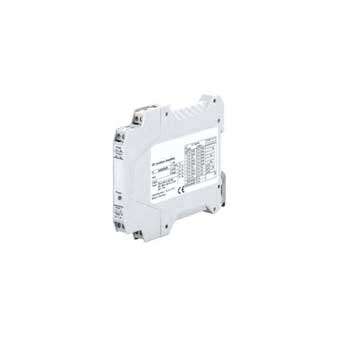
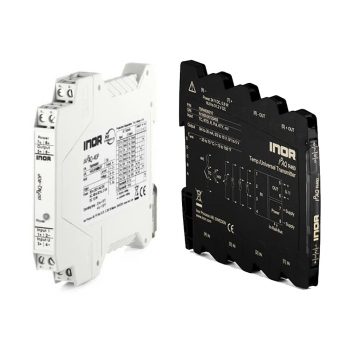
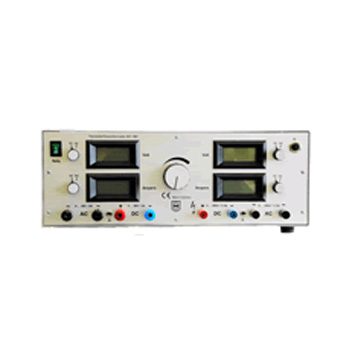
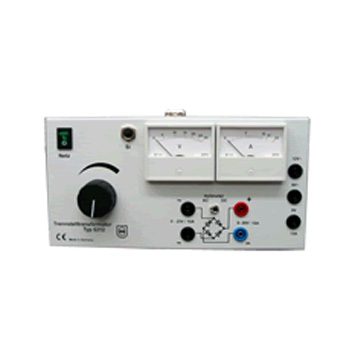
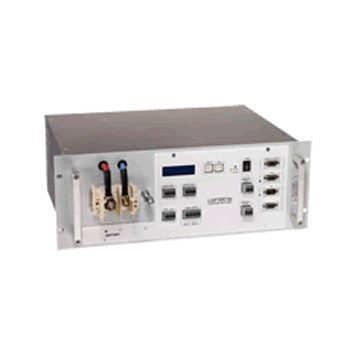
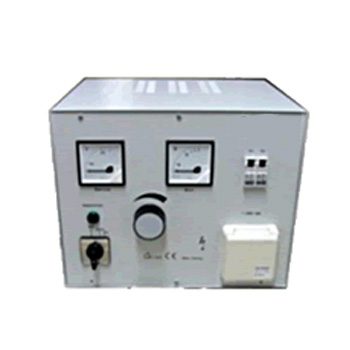
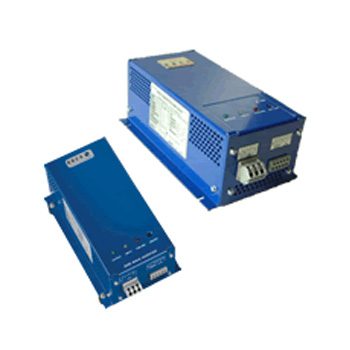
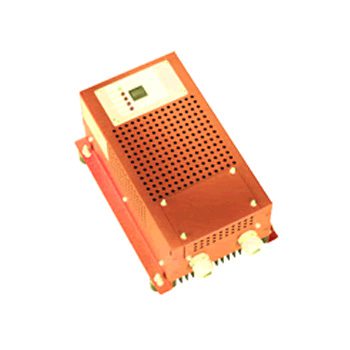
Power supplies provide stable, regulated electrical energy to sensors, monitors, control and instrumentation devices in industrial environments. They convert mains voltage (e.g. 230 V AC) into defined DC or AC voltages with specified current capacity, and offer protective functions such as over-voltage, reverse polarity and overload protection. For safety-critical applications, features like galvanic isolation, EMC robustness and redundancy are essential.

Parameter Typical Specification / Options
Input Voltage 230 V AC / 110 V AC / 24 V AC/DC (depending on site)
Output Voltage 24 V DC, 48 V DC, 12 V DC, 5 V DC, possibly 230 V AC
Output Current from < 1 A up to several tens of A, depending on load
Regulation / Stabilization linear regulated or switch-mode power supply
Protection Features Over-voltage, reverse polarity, overload and short-circuit protection
Galvanic Isolation optional for signal and control circuits
Redundancy / Reliability single supply or redundant (e.g. 1+1, UPS)
EMC Compatibility compliant with industrial EMC standards

Questions & Answers on Power Supplies

What is a regulated power supply?

A regulated power supply delivers a constant output voltage regardless of input voltage fluctuations or changes in load, ensuring stable operation of instrumentation and control equipment even under varying supply conditions.

Why is galvanic isolation important?

Galvanic isolation electrically separates control, signal or measurement circuits from the mains input, preventing unwanted potential shifts, interference or grounding loops — critical for safety, measurement accuracy and EMC performance.

Which output voltages are commonly required?
Common voltages are 24 V DC for sensors and control units, 5 V DC or 12 V DC for electronics, and sometimes 48 V DC for specialized devices. In some cases 230 V AC is used depending on the equipment and network configuration.

When is a redundant power supply useful?
Redundancy (e.g. 1+1 configuration or use of a UPS) is beneficial when downtime leads to high costs or when safety and monitoring systems must remain continuously operational — for instance in process monitoring, safety circuits or radiological measurement systems.

What do over-voltage and reverse polarity protection do?

Over-voltage protection prevents damage from power surges or lightning strikes; reverse polarity protection avoids damage or malfunction when DC supply is connected incorrectly. Both increase safety and reliability during installation and operation.

How do I dimension a power supply correctly?

Calculate the sum of the maximum currents of all connected devices plus a safety margin (e.g. 20–30 %). Also consider inrush currents, switch-on surges and potential future expansion when selecting capacity.

What is the difference between a linear power supply and a switch-mode power supply?

A linear power supply transforms voltages directly via transformers and regulators — it is stable and low-noise but inefficient and bulky. A switch-mode supply converts voltages electronically, offering compactness and efficiency, but may introduce more noise and EMC issues — thus proper filtering and quality are key for instrumentation.

Why is EMC compatibility relevant?

Industrial environments often include motors, switching operations or other devices generating electromagnetic interference. An EMC-compliant power supply prevents such disturbances from affecting measurement or control devices — essential for reliable operation.

What are the benefits of using an UPS?

An uninterruptible power supply (UPS) ensures that monitoring, control and safety systems remain operational during mains failures or voltage fluctuations, which is critical for safety-relevant or continuous processes.

How do I integrate a power supply into a measurement or automation system?

Choose a power supply with correct voltage and current ratings, ensure protection functions and galvanic isolation, mount it securely in a control cabinet or enclosure, and use appropriate cabling and grounding. For safety-critical systems, consider redundancy and optionally UPS backup.

What is the expected lifespan of an industrial power supply and how should it be maintained?
With quality components, a lifespan of many years is common. Regular checks of output voltage, monitoring for overheating or wear, cleaning, and replacing fuses or worn parts when necessary help ensure long-term reliable operation.

Which safety standards and regulations apply for power supplies?
Depending on application, relevant standards cover electrical safety, EMC, overload protection and possibly explosion protection. Compliance with applicable regulations and certified conformity is essential in design and operation.

Diese Website benutzt Cookies. Wenn du die Website weiter nutzt, gehen wir von deinem Einverständnis aus.