


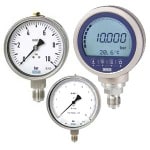
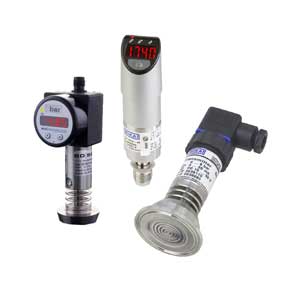
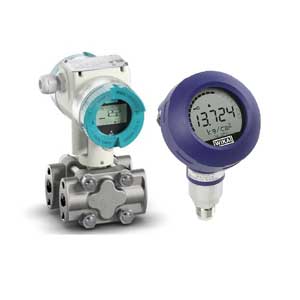
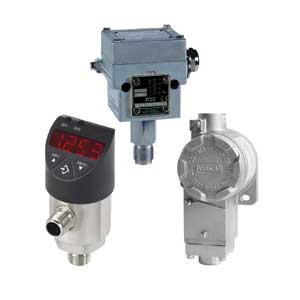
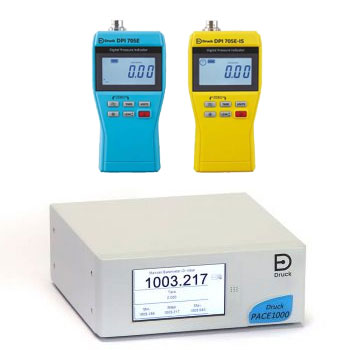
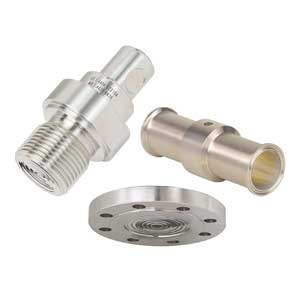
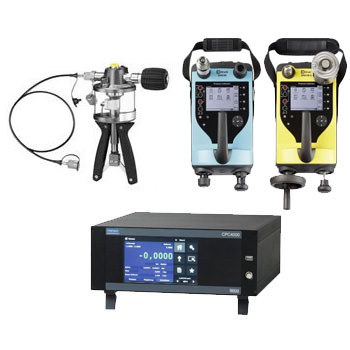


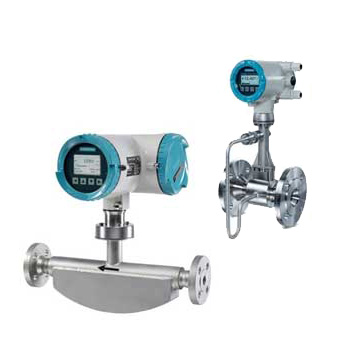
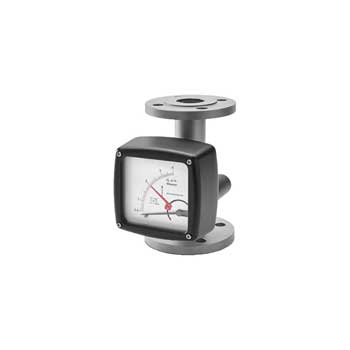
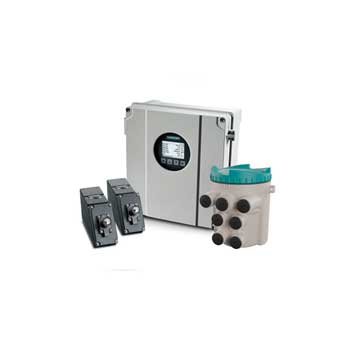
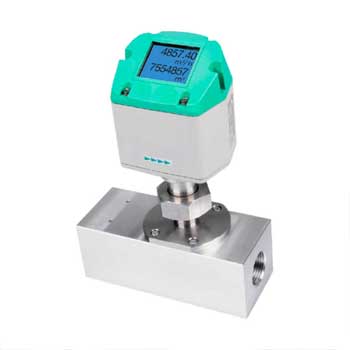






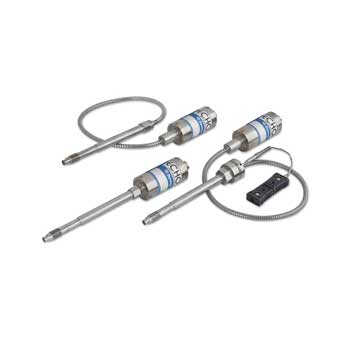
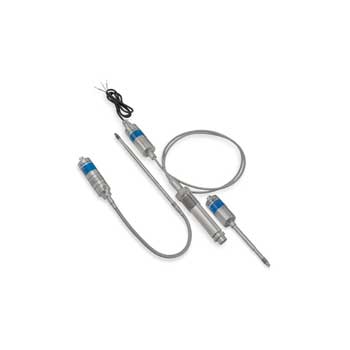
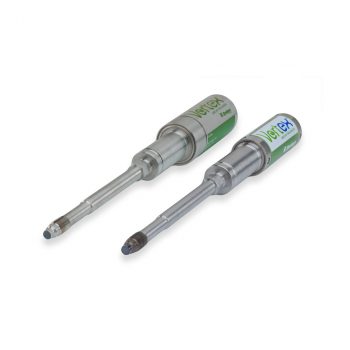
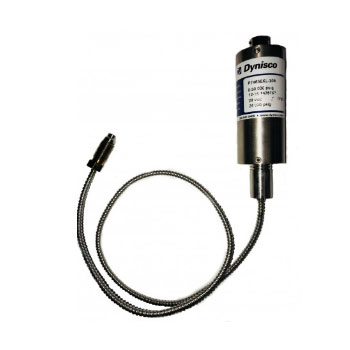
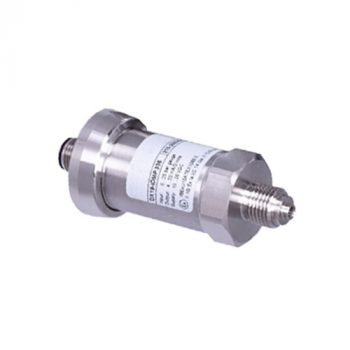
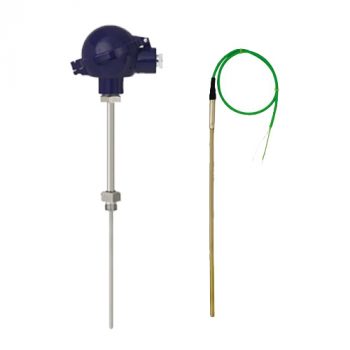
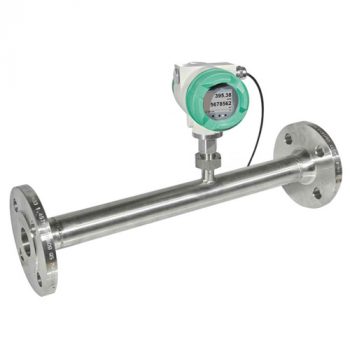
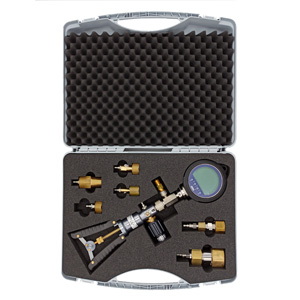
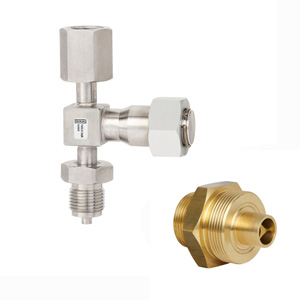

























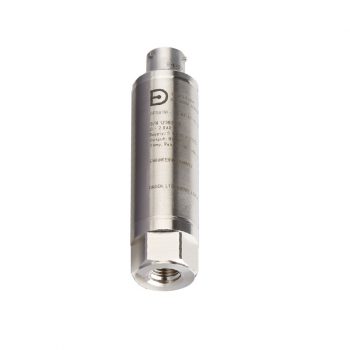
- High precision, ±0.01% FS over the compensated temperature range
- High long-term stability, ±100 ppm FS/year
- Wide temperature range from -55 °C to +125 °C (-40 to 257 °F)
- Media-isolated construction, suitable for use in harsh environments
- Suitable for use in hydrogen-rich media
- Multiple output configurations: RS-232, RS-485, USB 2.0, CANbus, frequency and diode output (TTL)
- Wide selection of pressure and electrical connections to meet specific requirements
 Datasheet Datasheet |
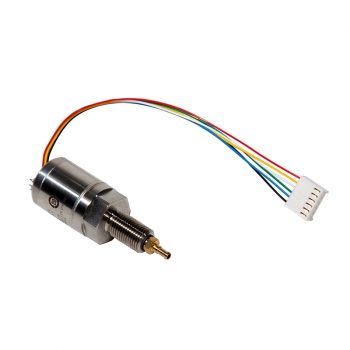
- Pressure range 500 to 1150 hPa (14.75 to 34 inHg)
- High stability ±0.05 hPa per year typical
- Precision ±0.1 hPa Including all errors: NLHR (non linearity, hysteresis, and repeatability), zero & span setting, and thermal error
- Output 4.5 V TTL square wave. Frequency 25 to 40 kHz.
- Two compact barb-fitting options for integration into weather stations
| Datasheet |

- nominal pressure: 0 ... 100 mbar up to 0 ... 400 bar
- accuracy: 0.1 % FSO
- output signal: RS485 mit Modbus RTU Protokoll
- perfect thermal behaviour
- excellent long term stability
- reset function
 Datasheet Datasheet
|
|
User Manual
|

- nominal pressure: 0 ... 100 mbar up to 0 ... 400 bar
- accuracy: 0.25% FSO
- output signal: RS485 with Modbus RTU protocol
- perfect thermal behaviour
- excellent long term stability
- reset function
| Datasheet |
| User Manual |

- nominal pressure: 0 ... 100 mbar up to 0 ... 400 bar
- accuracy: 0.25% (opt. 0.1%) FSO
- output signal: RS485 mit Modbus RTU Protokoll
- CIP / SIP cleaning up to 150 °C
- diaphragm with low surface roughness
- reset function
- ingress protection IP 67 / IP 69
| Datasheet |
| User Manual |
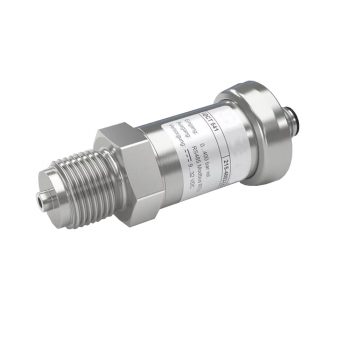
- nominal pressure: 0 ... 16 bar up to 0 ... 1000 bar
- accuracy: 0,5 % FSO
- output signal: RS485 with Modbus RTU protocol
- wetted parts of special stainless steel
- insensitive to pressure peaks
- high overpressure capability
- oil and grease free according to ISO 15001 (e.g. for oxygen applications)
| Datasheet |
| User Manual |
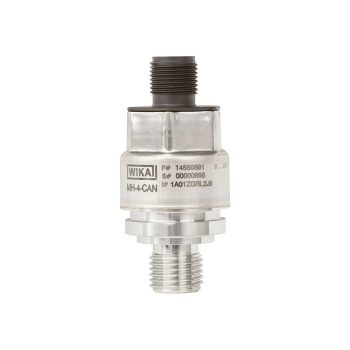
- For extreme operating conditions
- Signal stability thanks to CANopen®
- Reliable and accurate
- Customer-specific solutions
- High production capacities
| Datasheet |
| User Manual |
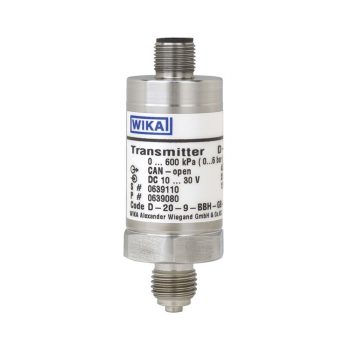
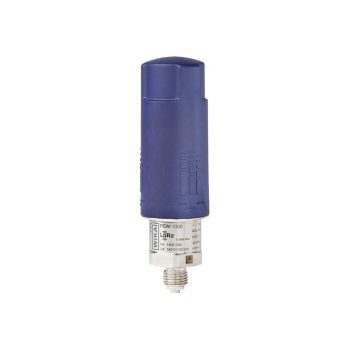
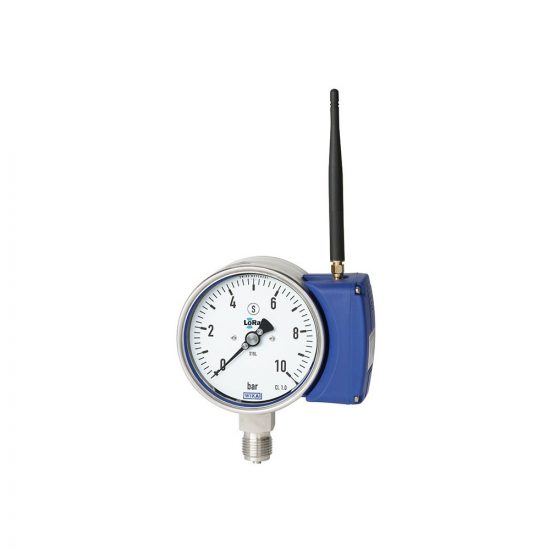
- Low operating costs through intelligent measurementcontrol
- Easy integration thanks to several radio-standard options
- Numerous application possibilities – also as retrofit
- Robustly built, permanently reliable pressure measurement
- Risk minimisation through condition monitoring
| Datasheet |
| User Manual |
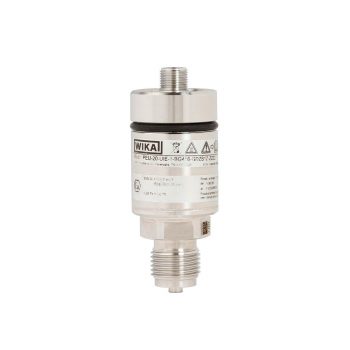
- IIoT-capable measuring instrument in combination with model NETRIS®3 radio unit
- Intrinsically safe version Ex i per ATEX, IECEx
- Measuring ranges from 0 … 1 to 0 ... 1,600 bar [0 ... 15 to 0 ... 20,000 psi] as well as vacuum and +/- measuring ranges

| Datasheet |
| User Manual |
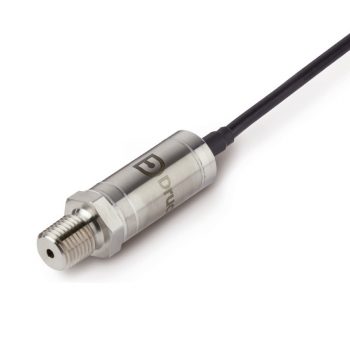
- Pressure ranges: 1.6, 3, 10, 15, 30, 80, 125, 250, 350 bar
- Absolute pressure reference
- Voltage output: 0.2 to 4.7 VDC
- Total accuracy including thermal effects: ±1% span
- Frequency response up to 1 kHz
- 316L stainless steel housing
- Compensated temperature range: -40 °C to 125 °C
- Short-term operation possible from -55 °C to 150 °C
| Datasheet |
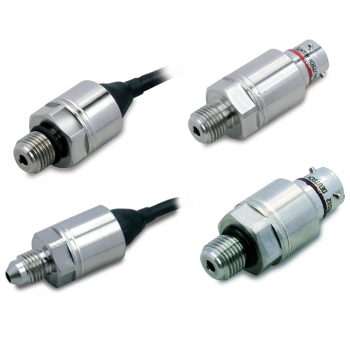
- Race proven technology
- High temperature capability to 350°F (175°C)
- Amplified or millivolt output
- Stainless steel or titanium construction
- Fully EMC protected
- Flexible mechanical/electrical interface options
| Datasheet |
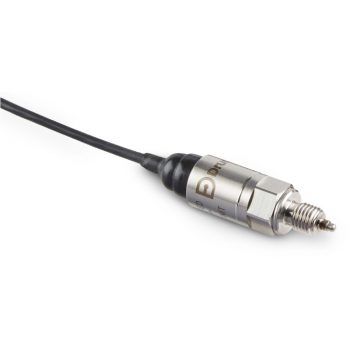
Druck’s 4400T is the new pinnacle motorsport sensor, combining pressure and temperature measurements. Key features of the 4400T include:
- Race proven technology
- High temperature capability to 185°C
- 14.5 mm diameter
- Amplified output
- Stainless steel construction
- Fully EMC protected
- PT1000 temperature probe
 Datasheet Datasheet |
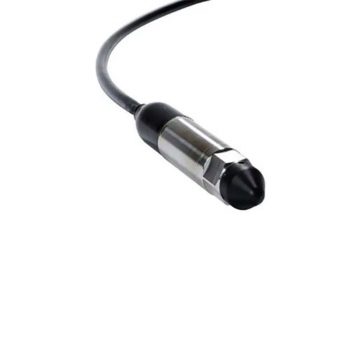
- Ranges from 350 mbar to 70 bar
- Total accuracy up to ±0.1 % full scale (FS)
- Stainless steel or titanium construction
- Wide temperature range: -40 °C to +80 °C
- Low power consumption
- Customer-configurable filter setting
- Excellent long-term stability
- Customizable and reconfigurable output formats
| Datasheet |
|
User Manual
|

- Pressure ranges from 200 mbar to 700 bar
- Total accuracy up to ±0.1% full scale (FS)
- Stainless steel construction
- Wide temperature range: -40 °C to +125 °C
- Fast update rate: 1 ms
- Customer-configurable filter setting
- Baud rate up to 1000 kbit/s
- Excellent long-term stability
| Datasheet |
|
User Manual
|
- Ranges from 70 mbar to 100 bar
- Total accuracy to ±0.1 % FS
- Stainless steel construction
- 3 V supply voltage
- Low power
- I2C digital output
- Sleep mode
- Hazardous area certifications
- Excellent long-term stability
| Datasheet |
|
User Manual
|
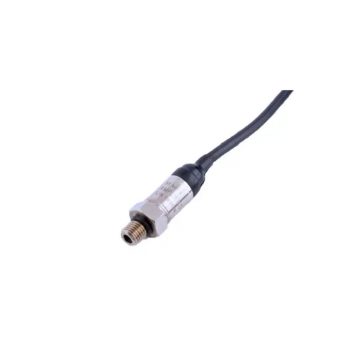
- Race proven technology
- High temperature capability to 175°C
- 12.5 mm diameter
- Amplified output
- Stainless steel construction
- Fully EMC protected
- Flexible mechanical/electrical interface options
| Datasheet |
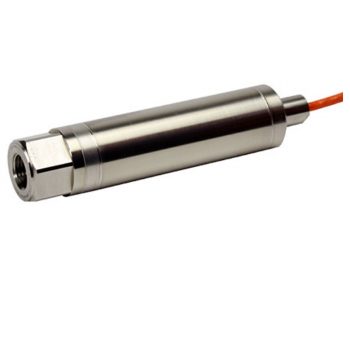
- High precision: ±0.01% full scale (FS) over compensated temperature range
- High stability: ±100 ppm FS per year
- Wide temperature range: up to –40°C to +125°C (–40°F to 257°F)
- Media-isolated construction – suitable for use in harsh environments
- Multiple output configurations: RS-232, RS-485, USB 2.0, CAN Bus, frequency, and diode (TTL)
- Wide selection of pressure and electrical connections to meet specific requirements
| Datasheet |
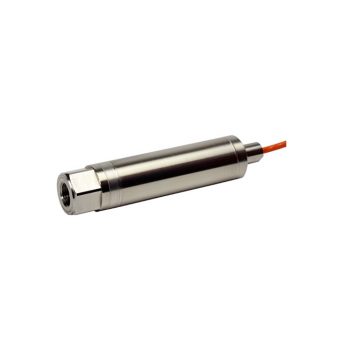
- High Precision, ±0.01% FS over compensated temperature range
- High Stability, ±50 ppm FS/year (typical)
- Wide temperature range, up to -55 to +125°C (-67 to 257°F)
- Multiple Output configurations, RS232, RS485, USB 2.0, CAN Bus, Frequency & Diode (TTL)
- Wide selection of pressure & electrical connections to suit specific requirements
- Low acceleration effects
| Datasheet |
| User Manual |

- High precision, ±0.01% of full scale over the compensated temperature range
- High stability, ±100 ppm of full scale per year
- Wide temperature range, -40 °C to +125 °C (-40 °F to 257 °F)
- Media-isolated design, suitable for use in harsh environments
- Multiple output configurations: RS-232, RS-485, frequency and diode (TTL)
- Selection of pressure and electrical connectors to meet specific requirements
| Datasheet |
| User Manual |

- nominal pressure: from 0 ... 40 mbar up to 0 ... 20 bar
- accuracy: 0.35% (opt. 0.25%) FSO
- IO-Link according to specification V 1.1
- Data transfer 38.4 kBaud
- Smart sensor profile
- hygienic version
- ingress protection IP 67/ IP 69
- high overpressure resistance
- diaphragm ceramics Al2O3 (99.9 %)
| Datasheet |
| User Manual |
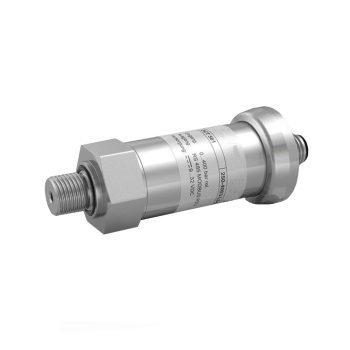
- nominal pressure: 0 ... 600 mbar up to 0 ... 600 bar
- output signal: RS485 with Modbus RTU protocol
- accuracy: 0.5 % FSO
- excellent long term stability
- perfect thermal behaviour
- reset function
| Datasheet |
| User Manual |
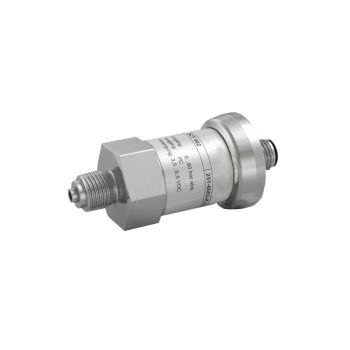
- nominal pressure: 0 ... 400 mbar up to 0 ... 600 bar
- accuracy: 0.5 % FSO
- bus frequency max. 400 kHz
- output signal: digital, i²C
- configuration of data format
- interrupt signal
| Datasheet |
| User Manual |
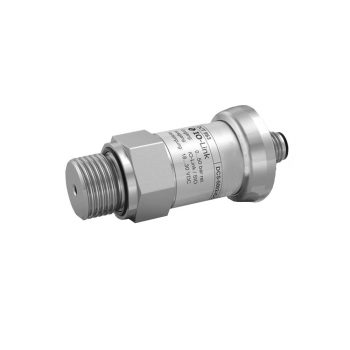
- nominal pressure: 0 ... 600 mbar up to 0 ... 600 bar
- accuracy: 0.5 % FSO
- IO-Link according to specification V 1.1
- Data transfer 38.4 kBaud
- Smart sensor profile
- perfect thermal behaviour
- excellent long term stability
| Datasheet |
| User Manual |

- output signal: RS485 with Modbus RTU protocol
- reset function
- nominal pressure: from 0 ... 100 mbar up to 0 ... 60 bar
- accuracy: 0,35% (opt. 0,25%) FSO
- output signal: RS485 mit Modbus RTU Protokoll
- ceramic diaphragm
| Datasheet |
| User Manual |

Contrary to the industrial pressure transmitter with analog signal, the IDCT 532 has a digital i²C-interface. i²C has a master-slave topology, whereby you can use up to 127 devices at one master.
|
Datasheet |
| User Manual |

Suitable for almost every industrial application, if medium is compatible with stainless steel 316L
|
Datasheet
|
|
User Manual
|

- Industry 4.0-ready IO-Link sensor improves connectivity and diagnostics
- Designed for rough demands of up to 1,000 g shock and -40 ... +125 °C [-40 ... +257 °F]
- Optimised design makes OEM machine integration easier
- Multicolour 360° LED status display simplifies troubleshooting and localisation
| Datasheet |
| User Manual |
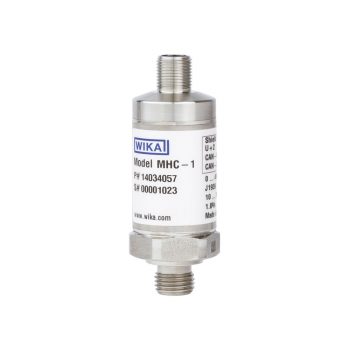

- 2 in 1 sensor: Pressure and temperature
- Wettedparts made of stainless steel for universal use in gases and liquids
- Easy integration into control systems, process control technology and energy management systems via digital interfaces
- Modbus-RTU, Ethernet or M-Bus interface
- Alarm relay – limit value adjustable via buttons (max 60 VDC, 0.5 A)
- Optional: 2 x 4...20 mA analogue output, 2 x alarm relays for pressure and temperature
| Datasheet |
| User Manual |

- 3 in 1 sensor: absolute pressure, temperature and humidity in the room
- Modbus-RTU, Ethernet or M-Bus interface
- Alarm relay – limit value adjustable via buttons (max 60 VDC, 0.5 A)
- Optional: 2 x 4...20 mA analogue outputs, 2 x alarm relays, e.g., for dew point and temperature
| Datasheet |
| User Manual |

Digital Pressure Sensors – Smart Measurement with Diagnostics, Setup & Fieldbus
Digital pressure sensors combine precision sensing elements with integrated signal processing, local display/keys, and communication interfaces such as IO-Link, RS-485/Modbus RTU, or HART (4–20 mA). Features like Min/Max/Peak, Tare, switching outputs, unit switching, and diagnostic flags streamline commissioning and service. Variants for gauge, absolute, and differential pressure cover ranges from vacuum to high pressure—robust, EMC-proof and optionally with ATEX/IECEx and hygienic design.
ICS Schneider Messtechnik supports selection & sizing, process connection/materials, parameterization (e.g., IO-Link IODD, Modbus registers), calibration (ISO/DAkkS) and—on request—the IIoT integration via edge gateways (MQTT/HTTPS) into SCADA/cloud.
FAQ on Digital Pressure Sensors
Answers on functions, protocols, accuracy, installation, EMC, hygiene/Ex, as well as setup and IIoT.
How do digital pressure sensors differ from analog ones?
| Aspect | Digital Pressure Sensor | Analog Pressure Sensor |
|---|---|---|
| Signal | IO-Link, Modbus, HART (+ analog/switch) | 4–20 mA, 0–10 V |
| Functions | Min/Max/Peak, Tare, diagnostics, menu | Basic, external features |
| Service | Fast parameterization/cloning | Trim/PC tools, vendor-specific |
| Transparency | Device status & events available | Limited |
Which interfaces are common and what are they best for?
| Interface | Benefits | Typical Use |
|---|---|---|
| IO-Link | Plug & play, IODD, params/events | Machinery, OEM, fast setup |
| RS-485/Modbus RTU | Robust, many nodes, long cables | Process/plant, retrofit, multi-point |
| HART (4–20 mA) | Analog with digital access | Process industry/installed base |
How accurate are digital pressure sensors?
Depending on model typically ±0.05…0.25% FS. Consider the Total Error Band (TEB) across temperature/load.
Which switching outputs are supported?
Usually PNP/NPN (NO/NC), sometimes IO-Link SIO mode. Set switch points, hysteresis, window functions and delays at the device or via bus.
How do I select the right measuring range?
Rule of thumb: working pressure × 1.5. For pulsation/spikes, choose a higher range or use a pressure snubber.
Which process connections and materials are available?
- G 1/4, G 1/2, M20×1.5, ¼″/½″ NPT, and hygienic fittings (Tri-Clamp/Varivent®).
- Wetted parts typically stainless steel 316L; seals FKM/EPDM/PTFE/FFKM depending on medium/temperature.
Which installation tips improve stability and lifetime?
- Minimize vibration; use a snubber for pulsation.
- For hot media use a cooling element/siphon or remote mount.
- Avoid lever forces at the process port; ensure correct sealing/torque.
How is parameterization done (IO-Link/Modbus/HART)?
Via an IO-Link master (import IODD), Modbus registers (address/scale per manual), or HART device tools. Parameters can be cloned and documented (recipes).
Can values be sent to SCADA/cloud?
Yes. Through a PLC or an edge gateway you can publish data securely via MQTT/HTTPS—including alarms, dashboards, historian and reporting.
How do I secure communication and access?
Keep the field layer physically robust; towards IT/cloud use TLS (MQTTS/HTTPS), device certificates, VPN/zero-trust, roles/scopes and audit logs.
Which EMC measures are important?
Use shielded, twisted-pair cables, ground the shield on one side, ensure equipotential bonding, and route power/signal cables separately.
Are hygienic and Ex versions available?
Yes—EHEDG/IP69K-capable variants for food/pharma and ATEX/IECEx for hazardous areas—selected per project.
How often should I calibrate?
Recommendation: annually; in QA/safety loops semi-annually/quarterly or after overload/event. ISO/DAkkS certificates available.
What display/operation features are common?
LCD/OLED with unit switching (bar, psi, kPa/MPa), Min/Max/Peak, Tare/Zero, invertible display, touch/keys, and lock function to prevent misoperation.
How do I document measuring points properly?
Record device ID/serial no., medium, range, accuracy, connection, materials, installation location, calibration history and—if networked—signal/topic/address.
Typical error causes & remedies?
- Overload: range too small → select higher range/install protection.
- Noise/flutter: pulsation/EMC → snubber, filtering, shielding.
- Leakage: wrong seal/torque → check material/assembly.
- Scaling errors: wrong unit/scale → verify parameters.
Do you support selection & commissioning?
Yes—from media/material check, sizing and parameterization to calibration and commissioning, including documentation/test reports.