

















- Process- and procedure-specific production
- Operating limits: - Operating temperature: -196 ... +374 °C 1) - Operating pressure: Vacuum to 250 bar 1)
- Wide variety of different process connections and materials
- Illumination optional
- Heating and/or insulation optional
Datasheet |
User Manual |
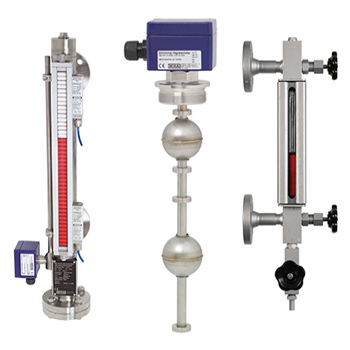
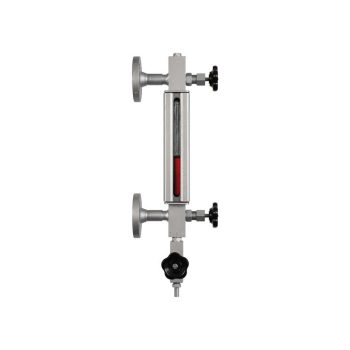
Sight Glass Level Indicators by WIKA / KSR Kuebler – direct, rugged process visibility
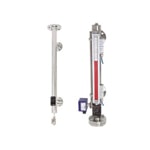
Sight glass indicators provide a direct visual check of level and process—no electronics required. Typical designs include tubular sight glasses, armored (reflex/transparent) gauges, flanged/welded windows, hygienic sight cells for CIP/SIP, and flow sight glasses with arrow/rotor indicators.
Features (model-dependent): windows in borosilicate, tempered glass or sapphire, optional mica shields for hot/caustic media; bodies in 316L/1.4404, carbon steel, duplex or Hastelloy®; seals EPDM/FKM/PTFE/FFKM. Options include heating/insulation, wiper/rinsing, LED luminaires (IP67/IP69K), ATEX/IECEx, hygienic design (clamp/Varivent) and high pressure/temperature ratings.
ICS Schneider Messtechnik supports sizing (p/T, medium, visible length), material selection, relevant standards (e.g., DIN 28120, PED), documentation and adaption to existing nozzles.
FAQ on Sight Glass Indicators (WIKA / KSR Kuebler)
Answers on types, glass materials, pressure/temperature limits, hygiene/ATEX, installation, cleaning, accessories and safety.
Which designs are available and where are they used?
| Type | Principle | Strengths | Typical application |
|---|---|---|---|
| Tubular sight glass | Transparent tube section | All-round view, compact | Local level, flow check |
| Armored gauge (reflex) | Prismatic glass creates contrast line | Very clear level line | Process vessels, energy, chemical |
| Armored gauge (transparent) | Glass plates on both sides | High p/T, media observation | Steam, corrosive/dirty media |
| Flanged/welded window | Window in vessel wall | Large view area | Inspection, agitator vessels |
| Hygienic sight cell | Clamp/Varivent, flush | CIP/SIP capable, crevice-free | Food & pharma |
| Flow sight glass | Rotor/flap/arrow | Flow presence & direction | Utilities, service lines |
Reflex vs. transparent—what’s the difference?
Reflex uses prismatic surfaces: liquid appears dark, gas bright—ideal for a crisp level line. Transparent allows backlighting and viewing through both sides, suited to turbid or viscous media and interfaces; typically supports higher p/T, often with mica shields.
Which glass materials can I choose?
- Borosilicate – standard, good thermal shock resistance.
- Tempered/heat-strengthened glass – higher mechanical strength.
- Sapphire – exceptional scratch and pressure resistance, highly chemical-proof.
- Mica shields – sacrificial layer for steam/caustics, extends service life.
What pressure and temperature ranges are possible?
Model-dependent—from low pressure to high pressure/steam service. Transparent gauges with mica typically achieve the highest p/T ratings. Always check the specific datasheet for exact limits.
What matters in hygienic applications?
Use 316L, flush/crevice-free windows, clamp/Varivent connections, FDA/EU 1935/2004-compliant seals, polished surfaces and ensure full CIP/SIP compatibility and certificates.
Are ATEX/IECEx options available?
Yes—especially for luminaires and powered accessories. For the assembly itself ensure bonding/grounding and anti-static provisions where required.
How should I install correctly?
- Plan the viewing zone at eye level; mount reflex gauges with the prism vertical.
- Apply torque per datasheet; tighten crosswise to avoid glass stress.
- Keep sealing faces clean/scratch-free; select proper gasket (EPDM/FKM/PTFE/FFKM).
- For bypass setups: add isolation valves, vent on top, drain at bottom.
How do I keep the view clear?
Depending on model use wipers (manual/pneumatic), rinsing nozzles or heating against fogging. Verify chemical compatibility of cleaners; avoid scraping with hard tools.
Which lighting is recommended?
LED luminaires with focused optics improve contrast (reflex) and visibility (transparent). Check IP67/IP69K, temperature rating and any required ATEX.
What accessories are available?
- Wiper/spray devices, heating jackets, insulation
- Guards/covers against impact/UV
- Luminaires (incl. Ex), scales and markings
How do I pick the right gasket?
Based on medium, temperature and cleaning agents: EPDM (aqueous), FKM (oils/solvents), PTFE/FFKM (chemicals/high T). For hygiene, use FDA/EU 1935/2004-compliant grades.
How do I recognize glass wear?
By matting, cracks, chips or reduced clarity. In steam service, periodically inspect the mica shield. Replace damaged glass immediately.
Which standards and certificates are relevant?
Depending on type: DIN 28120 (round sight glass), PED, material certificates EN 10204 3.1, possibly TA Luft and hygiene approvals. Factory/pressure tests can be supplied.
Can I add level marks/scales?
Yes—scales/markers on tubular or bypass sight glasses improve reading certainty; for changing density use correction scales.
What are typical pitfalls & quick fixes?
- Wrong gasket → select by medium and temperature
- Excess torque → tighten crosswise with specified torque
- Fogging/fouling → add heater/light, wiper/rinsing
- Unsuitable glass → choose sapphire/mica for abrasive/steam
- Poor mounting height/angle → reposition viewing area, avoid glare
What maintenance intervals are sensible?
Regularly inspect glass condition, tightness, bolt preload and visibility. Define replacement intervals by medium and p/T; function-check lights and wipers periodically.
Do you support selection, retrofit & commissioning?
Yes. We define visible length and p/T, choose glass/gaskets, plan light/wiper/heating, provide certificates and support installation with documentation.


Datasheet