Humidity Measurement
Humidity Measurement – precise RH/T sensing for buildings, industry & process
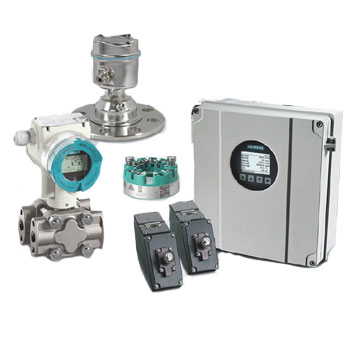
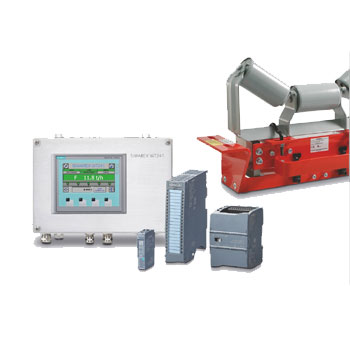
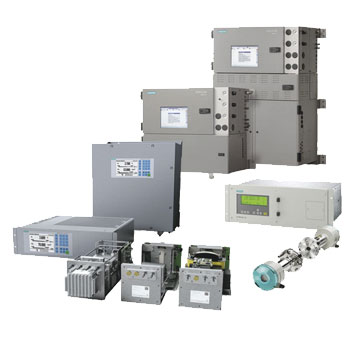
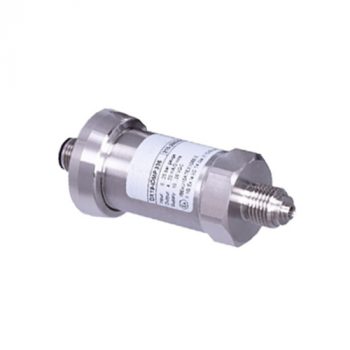
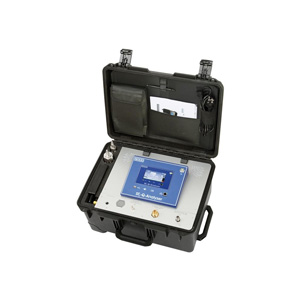
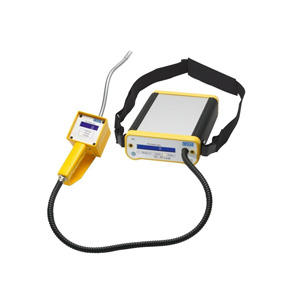
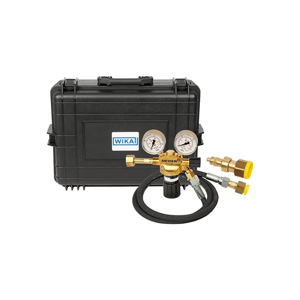
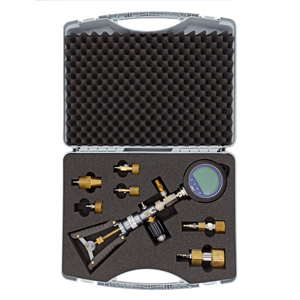
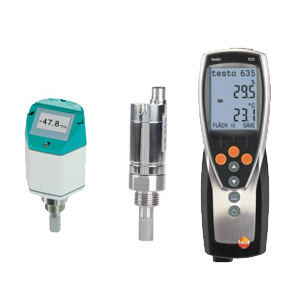
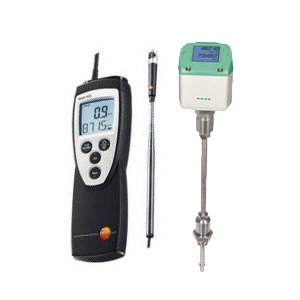
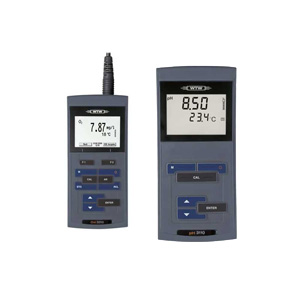
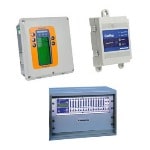
Humidity solutions from ICS Schneider range from room/duct transmitters, process probes and transmitter systems to dew-point/trace-humidity sensors, handhelds, data loggers and calibrators. Typical applications include HVAC, pharma & food, wood/paper, drying processes, compressed air, gases, cleanrooms and laboratories.
Depending on the task, we offer capacitive RH/T sensors, dew-point/trace humidity (e.g., in compressed air), surface/material moisture measurement, explosion-proof variants (ATEX/IECEx), high-accuracy references (chilled-mirror), and digital interfaces (4–20 mA, 0–10 V, Modbus/RTU, BACnet, IO-Link, Ethernet).
ICS Schneider Messtechnik supports sensor selection, installation design, calibration/recalibration, validation and data integration into your QM/IIoT system.
FAQ on Humidity Measurement
Answers on sensor types, accuracy, installation, compressed-air dew point, calibration, industrial interfaces and best practices.
Which sensor technologies exist for relative humidity?
Capacitive polymer sensors (the HVAC/process standard), less common resistive types, and chilled-mirror hygrometers as laboratory/reference devices. For very low moisture in gases use trace humidity/dew-point sensors (dew/frost point).
What’s the difference between RH, dew point and water activity?
RH = relative humidity in %; dew point = temperature at which water vapor condenses; aw = water activity (0…1) used to assess microbial stability of products.
What accuracy is realistic?
Quality RH/T transmitters achieve typically ±1…2 %RH and ±0.2…0.3 °C. High-end references/chilled mirrors are far more accurate but require more care and maintenance.
How does temperature affect RH readings?
RH is temperature dependent; small T errors cause noticeable RH errors. Keep sensor and reference isothermal; avoid drafts and nearby heat sources.
Which form factors are available?
- Room/wall transmitters (office, cleanroom, museum)
- Duct probes for ventilation/air-conditioning
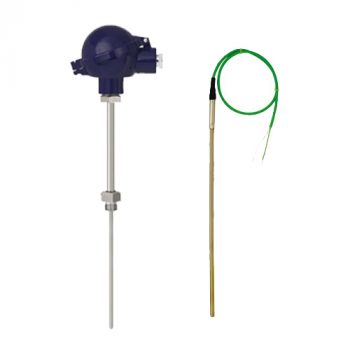
- Process probes with guard/filter, also in ATEX designs
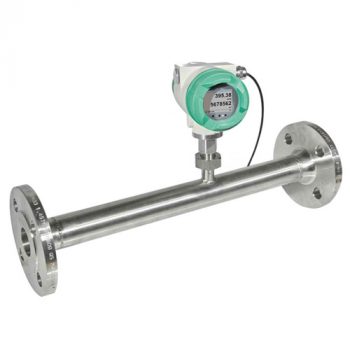
- Compressed-air dew point (in-line/bypass, down to −80 °C td)
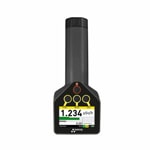
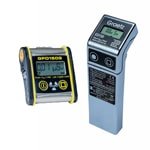
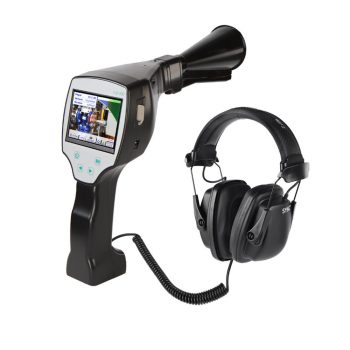
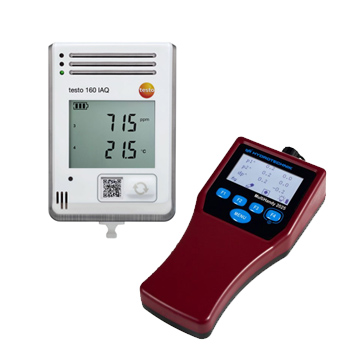
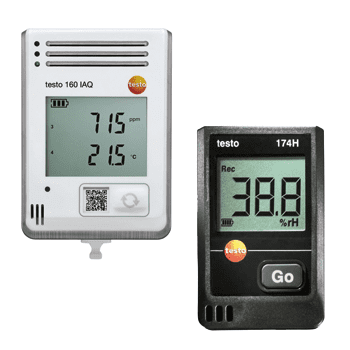
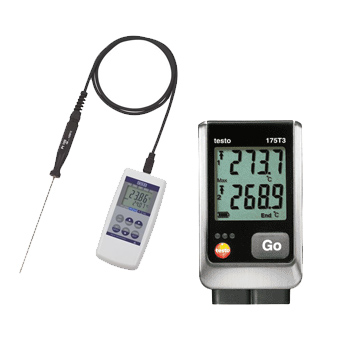
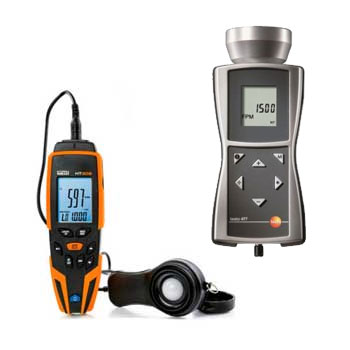
- Handhelds/loggers for QA and service
How do I choose the right measuring range?
For comfort HVAC, 10…90 %RH and −20…+60 °C usually suffice. Drying/compressed-air applications require very low dew points (e.g., −20/−40/−80 °C td). Process/hygienic tasks often need IP65/67 and elevated temperature ratings.
What matters for compressed-air dew-point measurement?
Consider process pressure (pressure dew point ≠ atmospheric dew point), ensure representative sampling (bypass, flow restrictor), use particle/oil filters, observe warm-up and potential sensor dry-out/regeneration.
How often should I calibrate?
Rule of thumb: annually; for critical processes semi-annually. After sensor replacement/shock, perform an interim check using salt solutions or a humidity generator.
Which calibration methods are available?
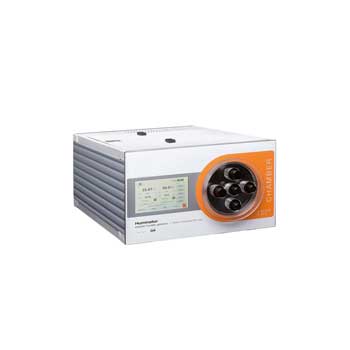
Saturated salt solutions (fixed points), humidity generators/climate chambers (controlled), and chilled-mirror references. Always define a stability criterion (ΔRH/Δt).
How do I install RH probes correctly?
In ducts, mount perpendicular to airflow with sufficient insertion depth; in rooms, keep away from doors/heaters. Use filters and guards for dust/splash environments.
What enclosure ratings/materials make sense?
Depending on the environment choose IP54–IP67; housings in ABS/aluminum/stainless steel; probes with PTFE sinter or metal mesh filters. For CIP/SIP select hygienic designs with FDA-compliant seals.
Which interfaces are supported?
Analog 4–20 mA / 0–10 V, digital Modbus RTU, BACnet, IO-Link, some Ethernet/PoE. For cloud/SCADA use gateways with MQTT/HTTPS.
How do I handle condensation and chemical exposure?
Use condensation protection (heated sleeve/sealed filters), chemically resistant filters/materials, regular cleaning and adapt calibration intervals.
How do I recognize sensor aging/drift?
Increasing deviations at check points, slower response, unstable readings. Mitigation: cleaning, recalibration, sensor replacement as needed.
How do I document compliantly?
Record as-found/as-left, point lists with stability windows, traceability chain, ambient data (T/RH) and expanded uncertainty k=2; export PDF/CSV, optionally with e-signature.
Are there solutions for hazardous areas?
Yes—ATEX/IECEx certified transmitters/probes with suitable protection concepts (e.g., Ex ia) and matching barriers/galvanic isolation.
How do I integrate sensors into BMS/PCS/SCADA?
Via analog outputs to DDC/PLC or directly via Modbus/BACnet. For higher-level systems use an edge gateway (buffering, MQTT, alarms).
Which accessories are useful?
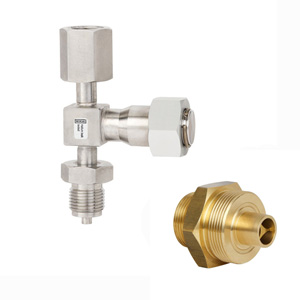
Mounting flanges, sampling sets, filter caps, calibration adapters, indicators/loggers, DIN-rail PSUs, communication cables.
Do you support design & validation?
Yes—we define measurement points, select sensors/signals, plan installation and calibration intervals, and provide factory/DAkkS certificates on request.