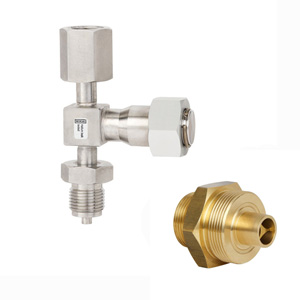
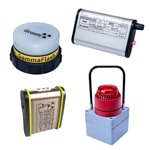
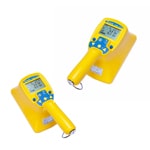
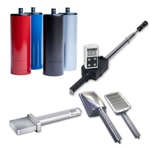
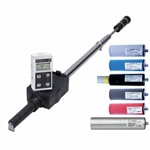
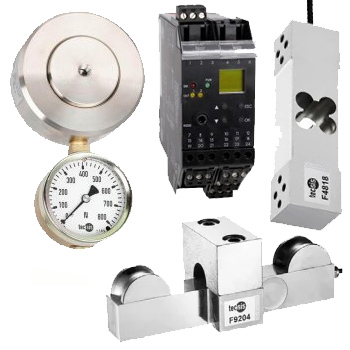
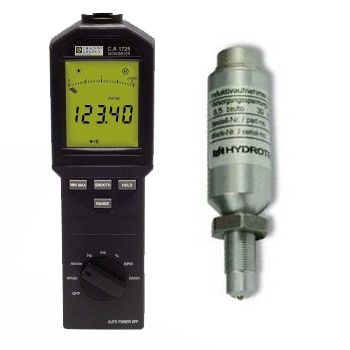
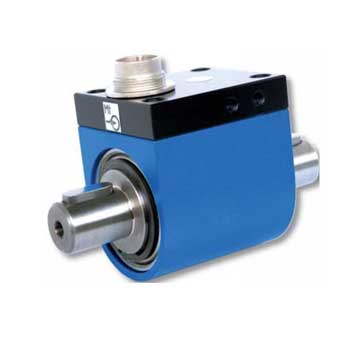
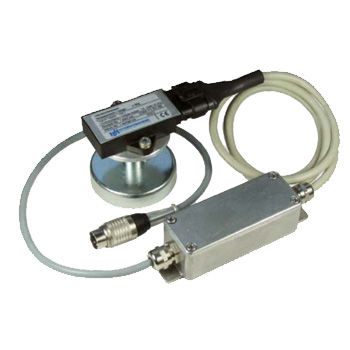
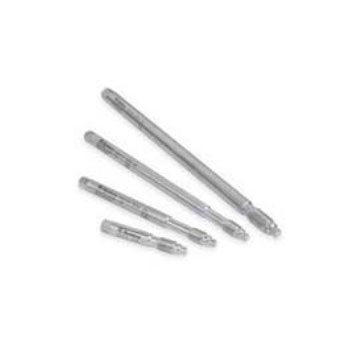
Position, Force, Speed, Torque & Vibration Sensors – precise condition & process monitoring
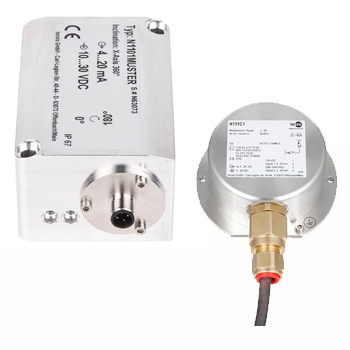
Displacement/position sensors, force transducers, speed/torque sensors and vibration/acceleration sensors capture key mechanical variables in machine building, automation, energy, mobility, test benches and condition monitoring. Designs range from rugged, IP-rated industrial probes to high-accuracy lab/reference transducers, with optional analog/digital interfaces, self-diagnostics and calibration certificates.
Signals & interfaces include mV/V, 4–20 mA, 0–10 V, IEPE/ICP®, TTL/HTL, quadrature, SSI, CANopen/J1939, IO-Link and Modbus. Accessories: mounting adapters, amplifiers/conditioners, data acquisition, cables, magnets/couplings.
ICS Schneider Messtechnik supports selection & sizing, mounting concepts, signal conditioning, factory/DAkkS calibration and integration into PLC/SCADA/IIoT.
FAQ on Position, Force, Speed, Torque & Vibration Sensors
Answers on principles, selection, mounting, accuracy, signal chains, calibration and condition monitoring.
Which measurement principles are typical per category?
| Category | Common principles | Highlights |
|---|---|---|
| Displacement/position | LVDT, potentiometric, magnetostrictive, Hall/magnet tape, optical (incremental/absolute) | Contactless options, high resolution, long strokes |
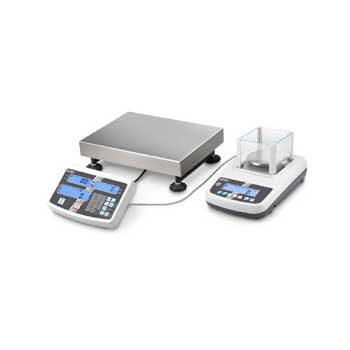
| Force | Strain-gauge bridge (S-beam, C-beam, ring, compression/tension), piezo | mV/V output, high accuracy, overload protection |
| Speed | Inductive, Hall, optical (reflective/encoder), magnetic tooth | Robust at high rpm, large air gaps possible |
| Torque | Rotating (telemetry/inductive), reaction torque sensors | Inline measurement, high bandwidth, coupling-friendly |
| Vibration | IEPE accelerometers, MEMS, velocity pickups | CM/CBM, spectral analysis, bearing/unbalance diagnostics |
How do I select the right sensor?
Match range, bandwidth/dynamic, environment (temperature, IP, EMC), accuracy/linearity, mechanics (space, fixation, coupling), signal/interface and calibration needs.
What accuracies are achievable?
Displacement up to ±0.1…0.5 % of reading (LVDT/optical). Force: ±0.03…0.1 % FS (premium). Torque: ±0.05…0.2 % FS. Vibration: depends on frequency band/sensitivity (typically ±5 %).
How do I mount force transducers correctly?
- Flat, parallel mounting faces and centered load introduction.
- Use preload/load buttons or rod ends to minimize side loads.
- Provide cable strain relief and EMC-aware routing.
What matters for torque sensors?
Ensure shaft alignment, use compensating couplings for misalignment, implement overload protection, keep correct telemetry/inductive gap for rotating systems, and observe grounding/shielding best practices.
How do I qualify displacement sensors?
Check hysteresis, linearity, temperature drift and mechanical play/bearing clearance. For LVDT choose suitable excitation and demodulation.
What do the typical signal chains look like?
| Sensor | Conditioning | Output |
|---|---|---|
| mV/V (force/torque) | Bridge amplifier | ±10 V, 4–20 mA, digital bus |
| IEPE (vibration) | Constant-current 2–4 mA | AC voltage to DAQ/FFT |
| Encoders | Direct | TTL/HTL, SSI, quadrature, index (Z) |
| Hall/inductive | Schmitt trigger | TTL/HTL, frequency proportional to rpm |
How should I size bandwidth & sampling?
Choose a sampling rate at least 5–10× the highest relevant frequency (Nyquist + margin). For vibration analysis, typical needs range from ≥2.5 kHz up to 25 kHz or more.
What are common error sources?
- Side/bending loads on force sensors.
- Misaligned couplings on torque sensors.
- Loose mounts → resonances for vibration sensors.
- Thermal drift and missing zeroing.
How are mechanical sensors calibrated?
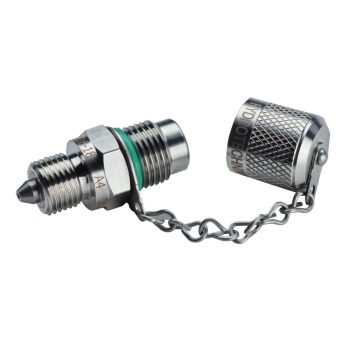
Force/torque: deadweights/lever arms or calibration rigs with traceable standards. Displacement: gauge blocks/CMM/interferometer. Vibration: shaker with RMS/Hz points. Typical interval: annually.
Which protection classes & materials are offered?
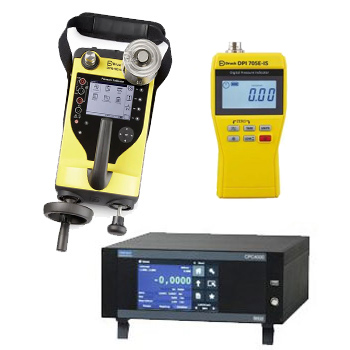
Industrial designs with IP65–IP68, stainless steel/aluminum; high-temperature versions and ATEX on request. Select cables/connectors for the environment.
How do I integrate sensors into control systems?
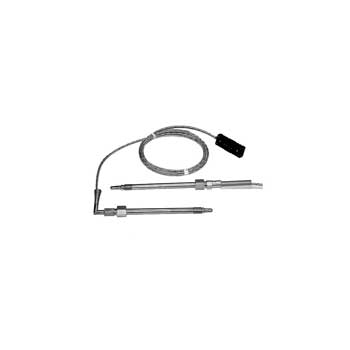
Analog 4–20 mA / 0–10 V to PLCs, or digital via SSI/CANopen/J1939/IO-Link/Modbus. For condition monitoring use IEPE DAQ with FFT/order analysis.
What does IEPE/ICP® mean for accelerometers?
It denotes an integrated preamplifier powered by a constant-current source; the sensor outputs an AC voltage proportional to acceleration—robust for long cables and EMC.
How do I detect overload or damage?
Look for zero shift, increased hysteresis, noise or unusual resonances. After incidents perform an as-found calibration.
Any mounting tips for vibration sensors?
- Prefer stud mounting or hard adhesive over magnets for high frequencies.
- Clean, flat surfaces; apply specified torque.
- Decouple cables to avoid triboelectric effects.
How do I use sensors in condition monitoring?
Define points, capture a baseline, set thresholds/alarms and KPIs (e.g., RMS, peak, crest factor, envelope). Stream data to your CM/SCADA platform.
What belongs in test/calibration reports?
As-found/as-left, test points, linearity/hysteresis, temperature, traceability chain, expanded uncertainty (k=2), serial/cal ID and timestamps.
Do you support selection & commissioning?
Yes—we specify the sensor/signal chain, provide conditioners/DAQ, prepare calibration plans and integrate signals with PLC/SCADA/IIoT.