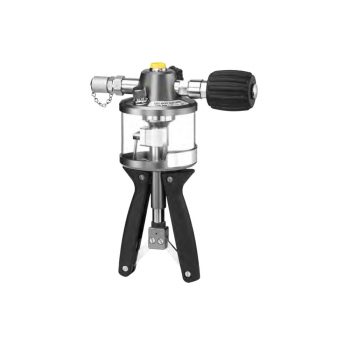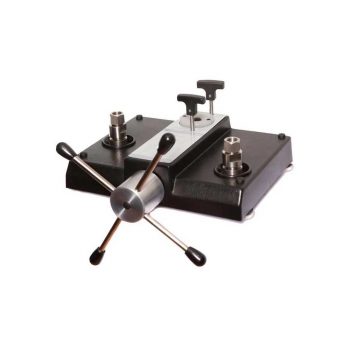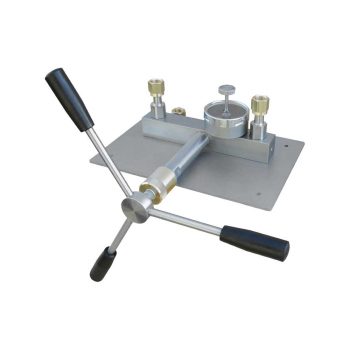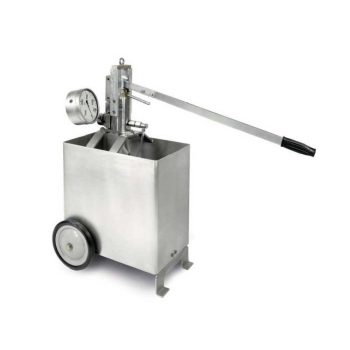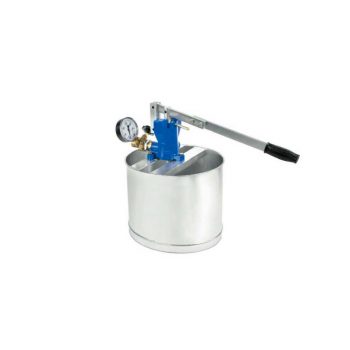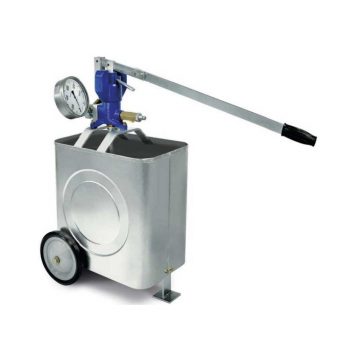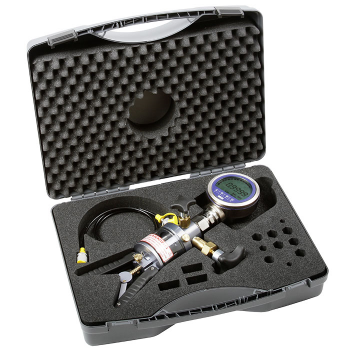
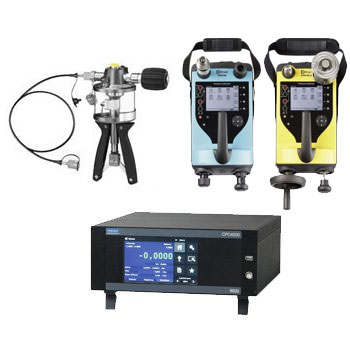
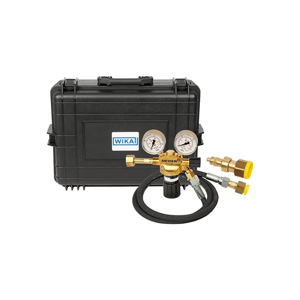
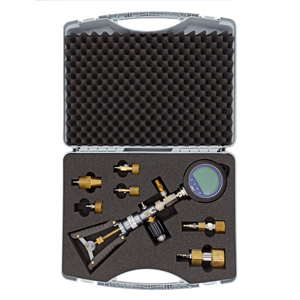
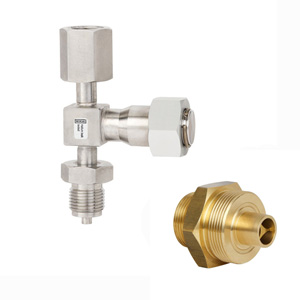























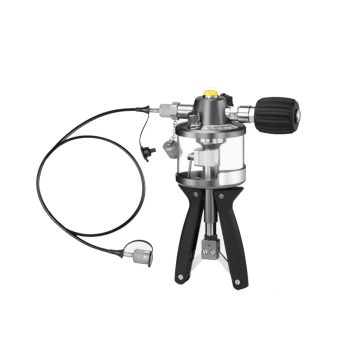
- Hydraulic pressures up to 10,000 psi
- Pneumatic pressures up to 600 psi
- Vacuum up to 28.5 in Hg
- Low pressure fine control
- Unique vacuum priming function removes trapped air during hydraulic operation
- High pressure generation achieved with volume adjuster – no physical effort required
- Pressure/vacuum selector valve provides fine pressure relief in pneumatic and hydraulic modes
- Tamper-proof overpressure protection valve adjustable from 300 to 10,000 psi
- Removable hydraulic reservoir can be detached without fluid drainage
- Reservoir safety feature with spring-loaded top cover vents above 8 psi
- Hydraulic mode designed for use with distilled water and/or high-viscosity mineral oil
- Highly sensitive volume adjuster for use across hydraulic, pneumatic, vacuum and low pressure modes
- Built-in stroke adjuster controls pressure/vacuum per stroke
- 240° swivel head for optimal reference viewing
- Internal moving parts PTFE anodized to reduce friction and wear
- Ergonomic, rugged, and lightweight design with comfortable hand grip
Datasheet
|
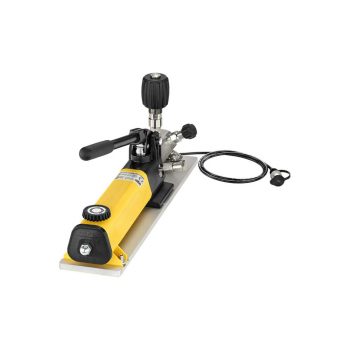
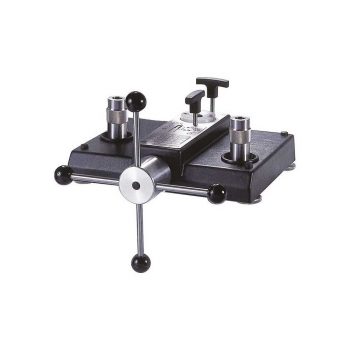
- Testing, adjustment and calibration of all types of pressure gauges
- exact setting to ultra-fine thread pitch and large-volume regulating valve
- high pressure generation with minimum effort
- large calibration volume (300 ml)
Datasheet
|
User Manual
|
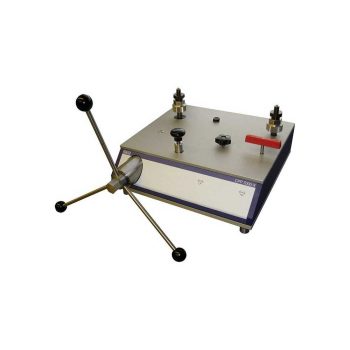
- Testing, adjustment and calibration of all types of pressure gauges
- exact setting to ultra-fine thread pitch and large-volume regulating valve
- high pressure generation with minimum effort
- large calibration volume (300 ml)
Datasheet |
User Manual |
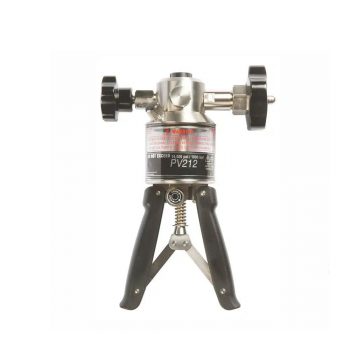
- Pressures up to 700 bar (10,000 psi) or 1,000 bar (15,000 psi)
- Compatible with distilled water or mineral oil
- Quick priming and fast pressure generation
- Hydraulic pressure source for pressures up to 1,000 bar (15,000 psi)
- 100 CC transparent reservoir that can be filled during operation
- Vernier adjuster for fine pressure control
- Optional pressure release valves provide excellent control for decreasing pressure
Datasheet |
User Manual |
DPI104/DPI104S Pressure Ranges for Fitting B – BSP
| Code | Description |
|---|---|
| 16A | 70 bar absolute |
| 16G | 70 bar gauge |
| 18S | 200 bar sealed gauge |
| 20S | 350 bar sealed gauge |
| 22S | 700 bar sealed gauge |
| 23S | 1000 bar sealed gauge |
DPI104/DPI104S Pressure Ranges for Fitting N – NPT
| Code | Description |
|---|---|
| 16A | 1000 psi absolute |
| 16G | 1000 psi gauge |
| 18S | 3000 psi sealed gauge |
| 20S | 5000 psi sealed gauge |
| 22S | 10000 psi sealed gauge |
| 23S | 15000 psi sealed gauge |
- Pressures up to 700 bar (10,000 psi) or 1,000 bar (15,000 psi)
- Compatible with distilled water or mineral oil
- Quick priming and fast pressure generation
- Hydraulic pressure source for pressures up to 1,000 bar (15,000 psi)
- 100 CC transparent reservoir that can be filled during operation
- Vernier adjuster for fine pressure control
- Optional pressure release valves provide excellent control for decreasing pressure
Datasheet |
User Manual |
DPI104/DPI104S Pressure Ranges for Fitting B – BSP
| Code | Description |
|---|---|
| 16A | 70 bar absolute |
| 16G | 70 bar gauge |
| 18S | 200 bar sealed gauge |
| 20S | 350 bar sealed gauge |
| 22S | 700 bar sealed gauge |
| 23S | 1000 bar sealed gauge |
DPI104/DPI104S Pressure Ranges for Fitting N – NPT
| Code | Description |
|---|---|
| 16A | 1000 psi absolute |
| 16G | 1000 psi gauge |
| 18S | 3000 psi sealed gauge |
| 20S | 5000 psi sealed gauge |
| 22S | 10000 psi sealed gauge |
| 23S | 15000 psi sealed gauge |
- Pressures up to 700 bar (10,000 psi) or 1,000 bar (15,000 psi)
- Compatible with distilled water or mineral oil
- Quick priming and fast pressure generation
- Hydraulic pressure source for pressures up to 1,000 bar (15,000 psi)
- 100 CC transparent reservoir that can be filled during operation
- Vernier adjuster for fine pressure control
- Optional pressure release valves provide excellent control for decreasing pressure
Datasheet |
User Manual |
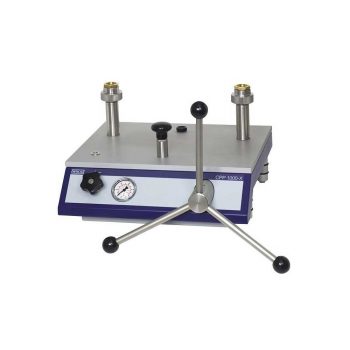
- Ergonomic handling through the smooth-running, internally operating, precision spindle
- Integrated oil reservoir
- Removable star handle
- Freely rotating test connections (i.e. measuring instruments can be aligned)
- Precise setting of the test pressure through a fine adjustment valve (optional for model CPP1000-M)
Datasheet
|
User Manual
|
- Precisely adjustable dual-area spindle pump for filling, pressure generation and fine adjustment of pressure
- Freely rotating test connections (i.e. measuring instruments can be orientated)
- Proven technology of the model CPB3800 pressure balance
- Compact dimensions
- Low weight
Datasheet
|
User Manual
|
- Precisely adjustable dual-area spindle pump for filling, pressure generation and fine adjustment of pressure
- Proven technology of the model CPB3800HP dead-weight tester
- Compact dimensions
- Low weight
Datasheet
|
User Manual
|
- Ergonomic handling through the smooth-running, internally operating, precision spindle
- Integrated oil reservoir
- Removable star handle
- Freely rotating test connections (i.e. measuring instruments can be aligned)
- Integrated priming pump for large test volumes
Datenblatt
|
Bedienungsanleitung
|
- Ergonomic handling through the smooth-running, internally operating, precision spindle
- Integrated oil reservoir
- Removable star handle
- Freely rotating test connections (i.e. measuring instruments can be aligned)
- Integrated priming pump for large test volumes
Datasheet
|
User Manual
|
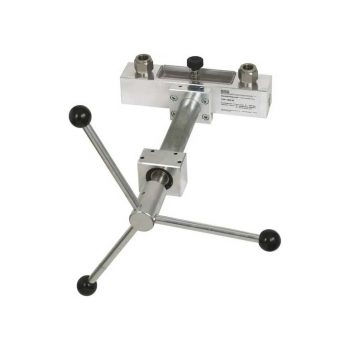
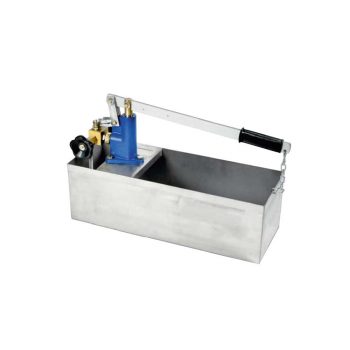
- Simultaneous calibration of several DUT thanks to large tank volume
- fast pressure generation with little effort
Datasheet
|
User Manual
|
- Oil-free pressure generation
- simple and fast pressure generation with smooth-running spindle
Datasheet
|
- Operating pressure: up to 3000 bar
- Flow rate: 11/0,5 cm³/stroke
- Dimensions: 480x320x989 mm
Datasheet
|
- Operating pressure: up to 1000 bar
- Flow rate: 28/1,5 cm³/stroke
- Dimensions: 480x330x820 mm
Datasheet
|
Hydraulic Calibration Pumps – stable high-pressure generation up to 1,000+ bar
Hydraulic calibration pumps generate and hold precise test pressures for calibrating gauges, pressure transmitters, switches and test rigs in the high-pressure range. They combine fast coarse generation (lever/screw) with a micro volume adjuster for mbar-level trimming without overshoot—ideal for laboratory and field use.
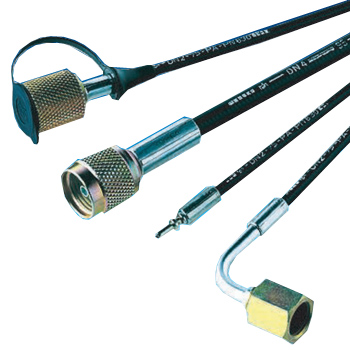
Key features (model-dependent): ranges typically 0…700/1,000+ bar, media hydraulic oil or water (optional deionized), integrated reservoir, bleed/bypass valves, fine adjuster, rugged carry cases; ports G 1/4 (BSPP), M20×1.5, NPT, and 7/16″-20 UNF for microbore hoses.
ICS Schneider Messtechnik supplies pumps, reference gauges/sensors, adapter/hose kits, media, and—on request—factory/DAkkS calibration as a ready-to-use kit.
FAQ on Hydraulic Calibration Pumps
Answers on media choice, bleeding, stability, accuracy, tightness, fittings, safety, care and best practices.
When are hydraulic calibration pumps the right choice?
Whenever you need high pressures with very stable setpoints—e.g., high-pressure gauges, presses, injection systems or burst/leak tests.
Oil or water—which medium should I use?
| Medium | Advantages | Notes |
|---|---|---|
| Hydraulic oil | Lubricity, corrosion protection, excellent stability | Check material compatibility; avoid contaminating the DUT |
| Water | Oil-free, clean, often required for cleanroom/ELV | Dry/preserve after use; prevent corrosion; additives optional |
How do I achieve mbar-fine pressure setting?
Use the micro volume adjuster. Keep the system volume small (short hoses, few cavities), stabilize temperature and avoid vibration.
How do I bleed a hydraulic circuit correctly?
- Fill the circuit and open the highest bleed points.
- Increase pressure slowly and vent air bubbles via bleed screws.
- Cycle pressure and gently tap lines until bubble-free.
What accuracy can I achieve?
The pump generates pressure; the reference (digital gauge/transducer/deadweight) defines measurement accuracy. For pass/fail work, aim for a TUR ≥ 4:1.
How do I run a leak/hold test?
Pressurize to the target → isolate → hold for a defined time → record the drift rate (e.g., mbar/min). Consider/compensate temperature changes.
Which fittings/adapters are common?
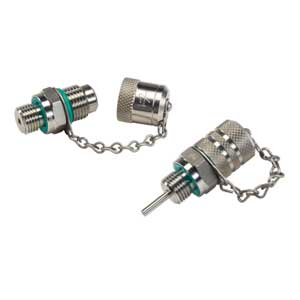
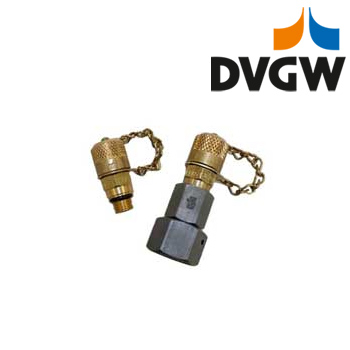
G 1/4 (BSPP), M20×1.5, NPT, 7/16″-20 UNF for microbore hoses. Seal via O-ring/face seal (BSPP) or taper/cone (NPT/UNF). No tape on sealing faces; use approved pastes only.
How do I prevent cross-contamination?
- Use only clean media and inline filters.
- Flush adapters/hoses; protect ends with dust caps.
- Keep tooling strictly separated by medium (do not mix oil/water).
Typical issues & remedies
- No pressure build-up → locate leaks, check seals, verify vents are closed.
- Unstable pressure → reduce volume, use fine adjuster, equalize temperature.
- Spongy feel → trapped air; bleed thoroughly again.
What safety aspects matter at high pressure?
- Provide over-pressure relief; always depressurize before loosening.
- Use whip checks and strain relief on hoses.
- Wear goggles/gloves; use splash shields/guards at very high pressures.
How big should the reservoir be?
Size it to cover the entire test volume including expansion. Prefer corrosion-resistant materials (e.g., 316L) for water service.
What care/maintenance is recommended?
- Inspect/replace seals and filters periodically.
- Keep oil clean; dry/preserve water systems after use.
- Lightly lubricate moving parts per manufacturer guidance.
Can I calibrate gauge, absolute and differential pressure?
Yes. For absolute pressure include the barometer. For differential, use suitable manifolds/valves with an equalize function.
Which accessories simplify daily work?
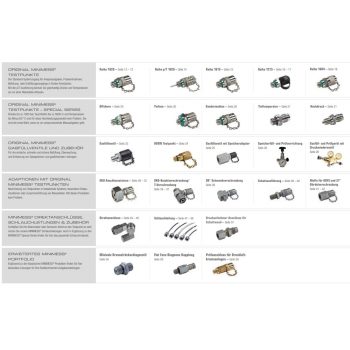
Adapter/hose kits, T-pieces, isolation/vent valves, fine adjusters, manifolds, carry cases, whip checks, reference gauges/sensors, data loggers.
Do you support selection & commissioning?
Yes—we define range/medium, assemble complete kits, supply traceable certificates and assist with setup, bleeding and documentation.


Datasheet
Datasheet
Datasheet