


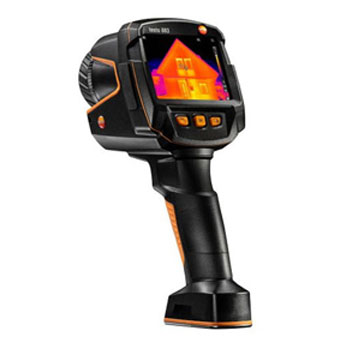
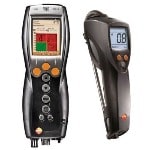


























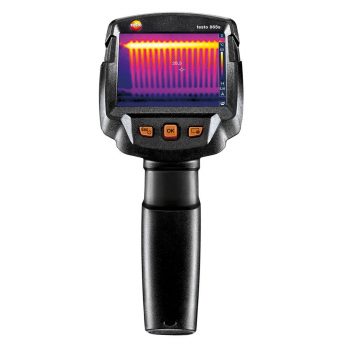
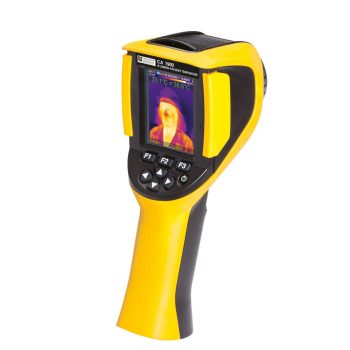
- Image quality with IR resolution of 160 x 120 pixels (with testo SuperResolution technology 320 × 240 pixels)
- Thermal sensitivity of 0.1 °C
- Automatic detection of hot and cold spots
- Free analytical software for creating professional reports
- Fast measurement with fixed focus
- Measuring accuracy of ±2 °C
 Datasheet Datasheet |
| User Manual |
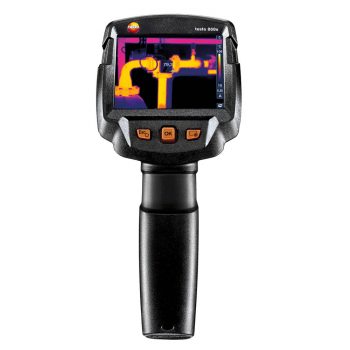
- Image quality with IR resolution of 160 x 120 pixels (with testo SuperResolution technology 320 × 240 pixels)
- Thermal sensitivity of 0.08 °C
- Free analytical software for creating professional reports
- Automatic detection of hot and cold spots
- Thermal images can be saved as JPEGs
- App for analysis and creating on-site measurement reports
| Datasheet |
| User Manual |
- Simple, practical health tool for measuring body temperature
- Measurement accuracy less than 0.5 °C
- High temperature detection function based on the average of the people tested
- Minimized risk with a distance of 1.5 m maintained between the operator and the person tested
- Quick setup in any environment thanks to the tripod insert
|
Datasheet
|
|
User Manual
|
- 2 LCD screens: current intensity and potential
- Simultaneous display of the current intensity and the potential
- Possibility of manual adjustment of the potential
- Compact and simple to use
- Analogue output compatible with Computer-Assisted Experimentation software
- Maximum potential indicator
- Switches for current range (µA/mA) and potential range (-mV/+mV)
- 2 ranges: 2, µA and/or 2 mA
- Plotting of current/potential graphs
- Powered via the mains (delivered with 9 V power supply)
|
Datasheet
|
|
User Manual
|
|
User Manual
|
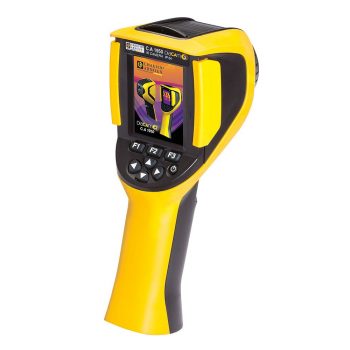
- exceptional 9-hour battery life with standard Ni-MH rechargeable batteries or alkaline batteries
- connectivity with current clamps and environmental measurement products: all the necessary measurements simultaneously (current, influencing quantities, dew point for identifying areas at risk from mould, etc.)
- voice annotations to record your comments directly on the image
- the possibility of renaming the images and thermograms by site
- recording and storage in memory of the configurations for each application
|
Datasheet
|
|
User Manual
|
|
User Manual
|
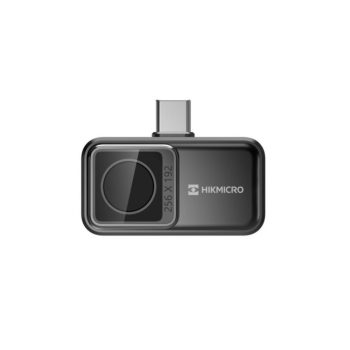
- Thermal resolution: 256 × 192 (49,152 pixels)
- NETD: < 40 mK (@ 25°C, F#=1.0)
- Accuracy: ± 2°C (-20°C to 100°C) ; ± 2 % (100°C to 350°C)
- USB Type-C Interface (Android)
- 20 g Weight
 Datasheet Datasheet |
|
Flyer
|
| User Manual |
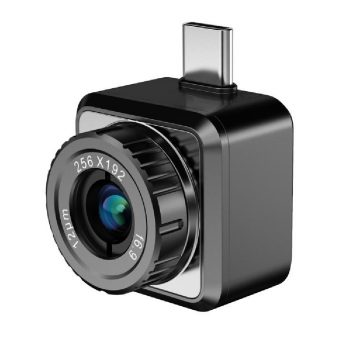
The Smartphone Module is designed to inspect electrical equipment, troubleshooting HVAC problems. Equipped with functional thermal App for smartphone, the Smartphone Module enables you to get the thermal imaging on your phone.
- Thermal resolution: 256 × 192 (49,152 pixels)
- NETD: < 40 mK (@ 25°C, F#=1.0)
- Accuracy: ± 2°C (-20°C to 100°C) ; ± 2 % (100°C to 350°C)
- USB Type-C Interface (Android)
- 20 g Weight
| Datenblatt |
| Flyer |
| Bedienungsanleitung |
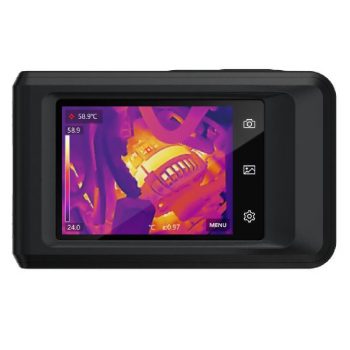
- Thermische Auflösung: 192 × 144 (27.648 Pixel)
- NETD: < 40 mK (@ 25°C, F# = 1,0)
- Präzise Temperaturmessung von -20°C bis 400°C
- 3,5-Zoll-LCD-Touchscreen
- Messgenauigkeit: Max. (± 2°C, ± 2%)
- 25 Hz Bildfrequenz
- Wärmebild-, Fusions-, PIP- und optische Modi
- optische 8-MP-Kamera
- Manuelle, automatische und 1-Tap-Ebene und Spanne
- Alarm bei hoher Temperatur
- Integrierter 16-GB-Speicher
- LED-Arbeitsleuchte
- 1,0x bis 4,0x stufenloser Digitalzoom
- Bis zu 4 Stunden Dauerbetrieb
| Datasheet |
| Flyer |
| User Manual |
- Thermal resolution: 256 × 192 (49, 152 pixels), NETD: < 40 mK (@ 25°C, F# = 1.0)
- Accurately measure temperature from -20°C to 400°C (-4°F to 752°F)
- Accuracy: Max. (± 2°C/3.6°F, ± 2%)
- 25 Hz image frequency
- Thermal, fusion, PIP, and optical modes, 8 MP optical camera
- Manual, automatic, and 1-Tap level and span
- High temperature alarm
- Built-in 16 GB memory
- LED work light
- 1.0x to 4.0x continuous digital zoom
- 8 MP Optical camera
- Up to 4 hours continuous running
| Datasheet |
| Flyer |
| User Manual |
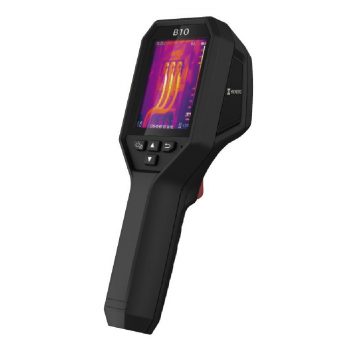
- Thermal resolution: 256 × 192 (49,152 pixels)
- NETD : < 40 mK (@ 25°C,F#=1.0)
- Temperature measurement range : -20°C to 550°C (-4°F to 1022°F)
- Accuracy: Max (± 2°C/3.6°F, ± 2%), for ambient temperature 15°C to 35°C (59°F to 95°F) and object temperature above 0°C (32°F)
- Measurement presets: Center spot, Hot spot, Cold spot, User Preset Point
- 25 Hz image frequency
- 3.2'' LCD screen display
- Up to 6 hours continuous running
| Datasheet |
| Flyer |
| User Manual |
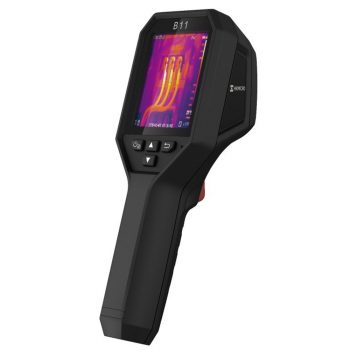
- Thermal resolution: 192 × 144 (27,648 pixels)
- NETD: < 40 mK (@ 25°C, F# = 1.0)
- Temperature measurement range: -20°C to 550°C (-4°F to 1022°F)
- Accuracy: Max (± 2°C/3.6°F, ± 2%), for ambient temperature 15°C to 35°C (59°F to 95°F) and object temperature above 0°C (32°F)
- Measurement presets: Center spot, Hot spot, Cold spot, User Preset Point
- 25 Hz image frequency
- 3.2'' LCD screen display
- Up to 6 hours continuous running
| Datasheet |
| Flyer |
| User Manual |
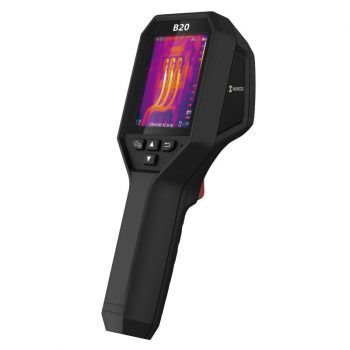
- Thermal resolution: 256 × 192 (49,152 pixels)
- NETD : < 40 mK (@ 25°C,F#=1.0)
- Temperature measurement range : -20°C to 550°C (-4°F to 1022°F)
- Accuracy: Max (± 2°C/3.6°F, ± 2%), for ambient temperature 15°C to 35°C (59°F to 95°F) and object temperature above 0°C (32°F)
- Measurement presets: Center spot, Hot spot, Cold spot, User Preset Point
- 25 Hz image frequency
- 3.2’’ LCD screen display
- Up to 6 hours continuous running
| Datasheet |
| Flyer |
| User Manual |
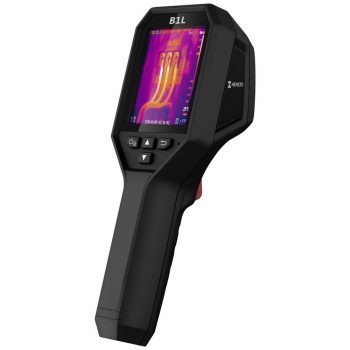
- Thermal resolution: 160 × 120
- High quality 240 × 320 resolution 3.2'' LCD display
- Up to 4 palettes
- Wide temperature measurement range: -20°C to 550°C
- High temperature measurement accuracy: Up to ± 2°C, ± 2%
- Long-distance laser light supplement for thermography targets
- Built-in rechargeable Li-ion battery
- Up to 8 hours continuous operation
| Datasheet |
| Flyer |
| User Manual |
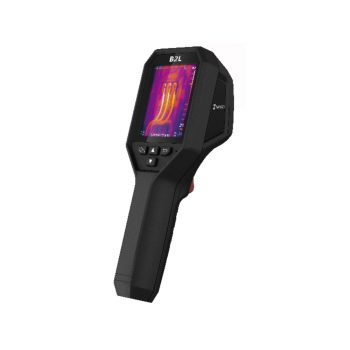
- Thermal resolution: 256 × 192 (49,152 pixels)
- NETD : < 40 mK (@ 25°C,F#=1.0)
- Temperature measurement range : -20°C to 550°C (-4°F to 1022°F)
- Accuracy: Max (± 2°C/3.6°F, ± 2%), for ambient temperature 15°C to 35°C (59°F to 95°F) and object temperature above 0°C (32°F)
- Measurement presets: Center spot, Hot spot, Cold spot, User Preset Point
- 25 Hz image frequency
- 3.2'' LCD screen display
- Up to 8 hours continuous running
| User Manual |
| Flyer |
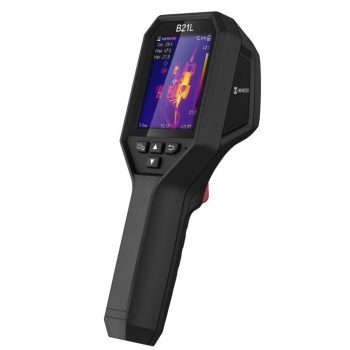
- Thermal resolution: 256 × 192 (49,152 pixels)
- NETD: < 40 mK (@ 25 °C, F#=1.0)
- Temperature measurement range: -20°C to 550°C (-4°F to 1022°F)
- Accuracy: Max (±2°C/3.6°F, ±2%), for ambient temperature 15°C to 35°C (59°F to 95°F) and object temperature above 0°C (32°F)
- Measurement presets: Center spot, Hot spot, Cold spot, User Preset Point
- 25 Hz image frequency
- 3.2'' LCD screen display
- Up to 6 hours continuous running
| Datasheet |
| Flyer |
| User Manual |
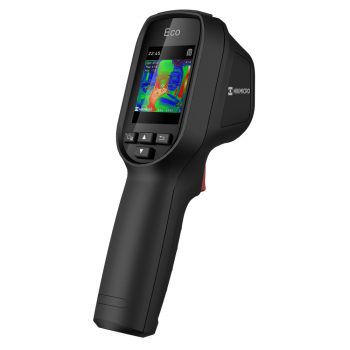
- Thermal resolution: 96 × 96 (9,216 pixels)
- Distance to spot ratio (D:S): 112:1
- SuperIR: 240 × 240 (57,600 pixels)
- NETD: < 50 mK (@ 25°C, F# = 1.0)
- Measurement presets: center spot, hot spot, cold spot, off
- Image frequency: 25 Hz
- Laser pointer
- Built-in 4 GB flash memory: 30,000 pictures
- Up to 8 hours continuous running
|
Datasheet
|
|
Flyer
|
|
User Manual
|
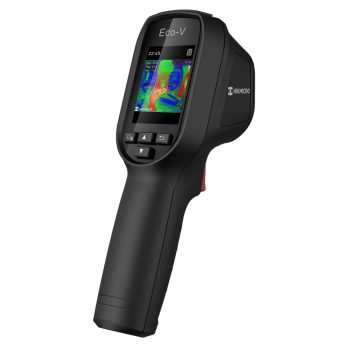
- Thermal resolution: 96 × 96 (9,216 pixels)
- Distance to spot ratio (D:S): 112:1
- SuperIR: 240 × 240 (57,600 pixels)
- NETD: < 50 mK (@ 25°C, F# = 1.0)
- Measurement presets: center spot, hot spot, cold spot, off
- Image frequency: 25 Hz
- Laser pointer
- Built-in 4 GB flash memory: 30,000 pictures
- Up to 8 hours continuous running
- Thermal/Visual/Fusion
|
Datasheet
|
|
Flyer
|
|
User Manual
|
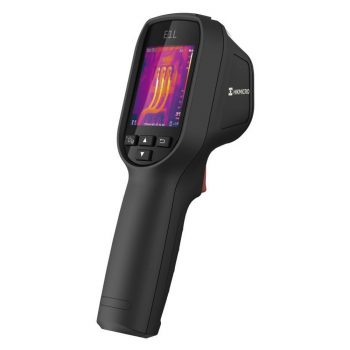
- Thermal resolution: 160 × 120 (19,200 pixels)
- NETD : < 40 mK (@ 25°C,F#=1.0)
- Measurement presets: center spot, hot spot, cold spot, off
- 8 GB SD card: 120,000 pictures
- Weight: 350 g (0.77 lb)
| Datasheet |
|
Flyer
|
| User Manual |
| User Manual |
