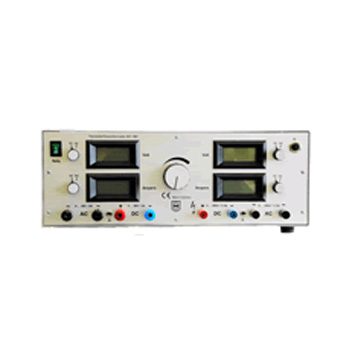
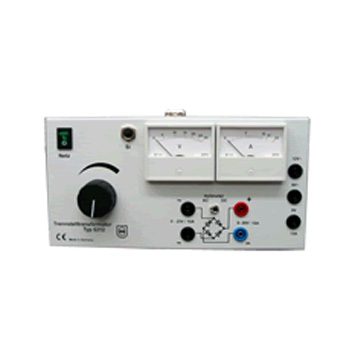
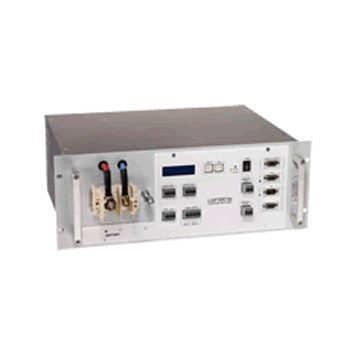
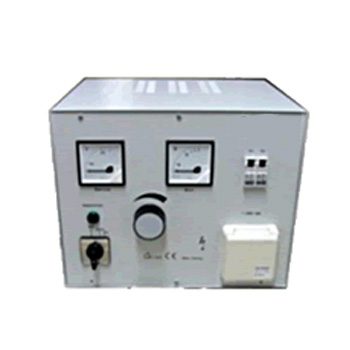
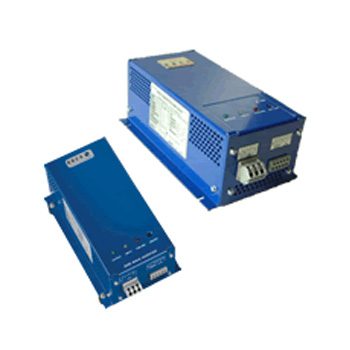
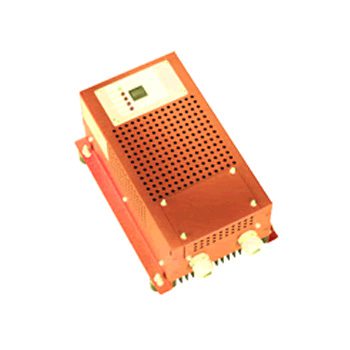
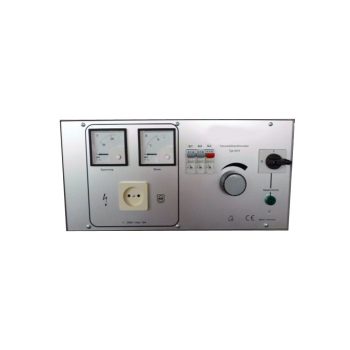
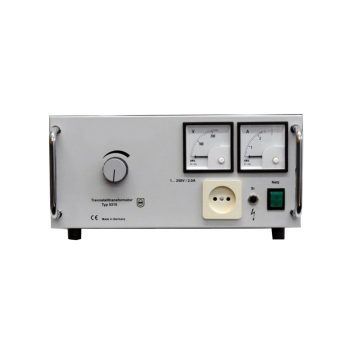
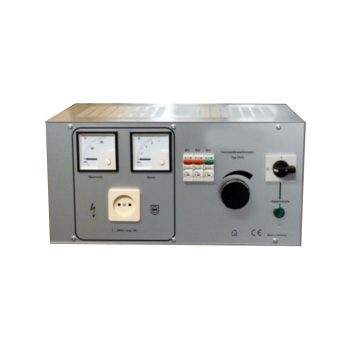
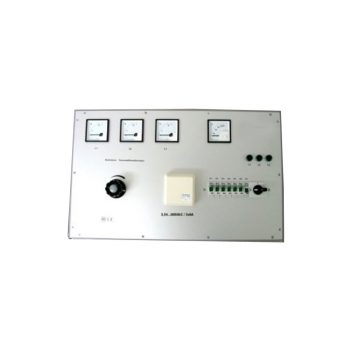
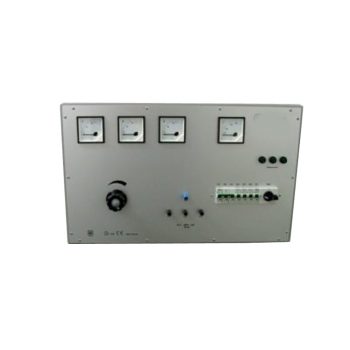
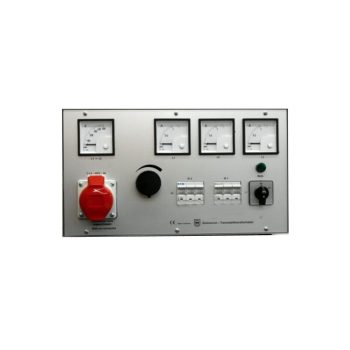
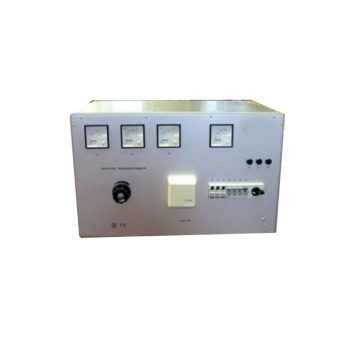
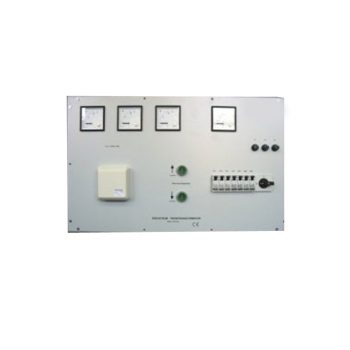
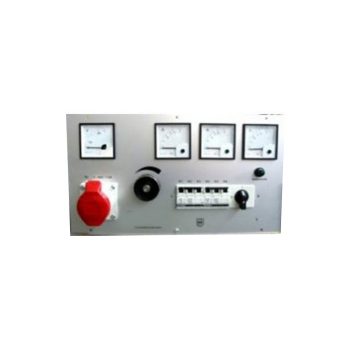
AC 3 x 1 - 400V / 3x 1.0A three-phase current isolating transformer

Datasheet

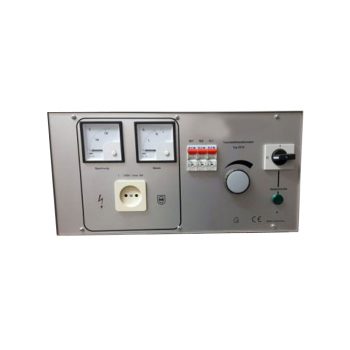
3 x 1 - 400VAC / 3 x 1.6A three-phase current isolating transformer

Datasheet


Isolated Variable Transformers (Isolation + Autotransformer)

Isolated variable transformers combine the benefits of galvanic isolation from an isolation transformer with the adjustable output voltage capability of an autotransformer. They provide an electrically isolated secondary output with variable voltage — ideal for safe and flexible powering of devices, test benches, or machines requiring different voltages under isolation.

Questions & Answers on Isolated Variable Transformers

What is an isolated variable transformer?

An isolated variable transformer provides both galvanic separation between primary and secondary sides and an adjustable output voltage. This merges safety advantages with flexibility — yielding an isolated, floating secondary output whose voltage can be adjusted stepwise or continuously.

When should an isolated variable transformer be used?
It is especially useful when tests, measurements or workshop equipment require both galvanic isolation and variable supply voltage. Typical scenarios include test benches, device testing, machines with various supply voltage requirements or experimental setups where safety and flexibility are critical.

How does an isolated variable transformer differ technically from a pure isolation or autotransformer?
Unlike a pure isolation transformer, it additionally offers adjustable output voltage. Unlike a simple autotransformer, the secondary side remains galvanically isolated. The design includes separate windings or an isolated regulation winding plus a tap or tuning mechanism on the secondary side.

What output voltage ranges are typical?

Isolated variable transformers often provide adjustable output ranges, e.g. 0 … 230 V or 0 … 400 V, depending on the model. The secondary voltage is provided with galvanic isolation, so devices can be powered safely and flexibly, independent from earth reference or mains conditions.

What are the benefits of combining isolation with adjustable voltage?

The combination allows safe, floating supply with defined isolation and flexible voltage adjustment. This is especially beneficial for test benches where different voltages must be tested, or for devices with non-earthed enclosures. It also minimizes ground loops and stray currents, enhancing measurement and operational safety.

How to properly size an isolated variable transformer?

One must consider rated power (VA), maximum output current, voltage adjustment range, insulation class and load capacity. It is critical that the transformer delivers stable voltage under full load and that insulation meets necessary standards. The regulation mechanism must be robust enough to avoid voltage drop or overheating under load.

How stable is the output voltage under load?

Under heavy load, the output voltage may drop slightly depending on the design. High-quality isolated variable transformers are designed to maintain voltage and current within specified tolerances as long as load stays within rated values. For sensitive applications, attention should be paid to stable voltage regulation and sufficient load margin.

What mechanical designs and connection types are common?
Common designs include enclosed metal housings as bench- or wall-mounted units. Connections are made via screw terminals or protective mains plug connectors. Voltage adjustment is often via rotary knobs, tap switches or step selectors. Some models offer multiple outputs or selectable secondary voltages.

What are typical application areas for isolated variable transformers?

Typical applications include laboratories, workshops, test benches, device development, repair and maintenance, and training facilities. They are ideal when various voltages under safe isolation are needed — e.g. testing equipment, machines or controllers under different voltage conditions without direct mains reference.

Do isolated variable transformers require maintenance?

They are generally low-maintenance. Nonetheless, with frequent or intensive use a regular visual inspection of housing, connections and wiring is recommended. For older devices, insulation resistance testing might be advisable — especially if used in humid or industrial environments.

What advantages do isolated variable transformers offer over electronic voltage regulators?

They provide galvanic isolation, high load capability and flexible voltage adjustment without relying on complex electronics. They are robust, durable, resistant to overload and electromagnetic disturbances — ideal for industrial test environments where simple, reliable and low-maintenance devices are required.

Diese Website benutzt Cookies. Wenn du die Website weiter nutzt, gehen wir von deinem Einverständnis aus.