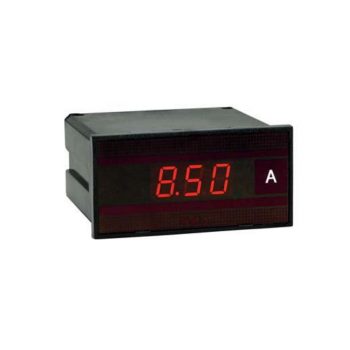
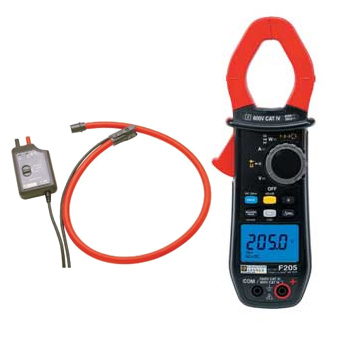
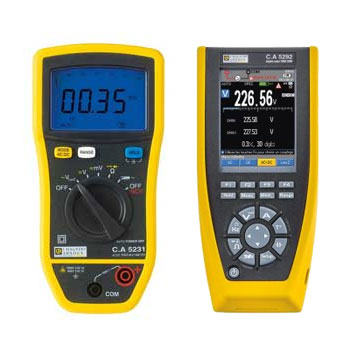
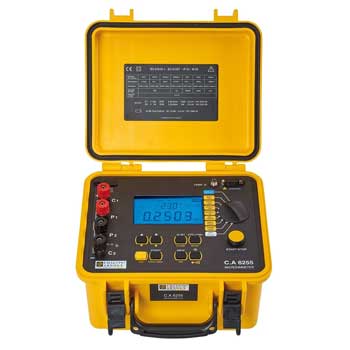
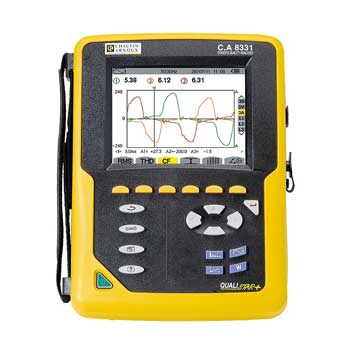
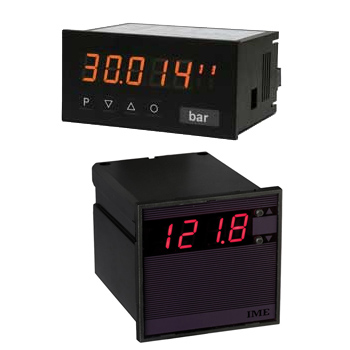
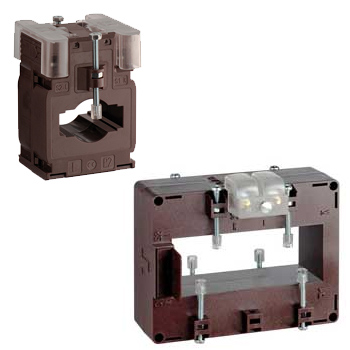
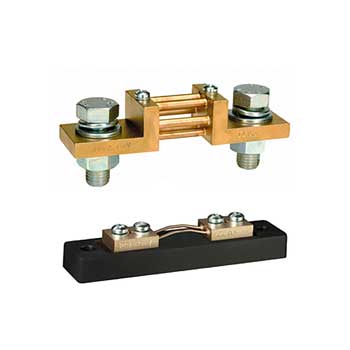
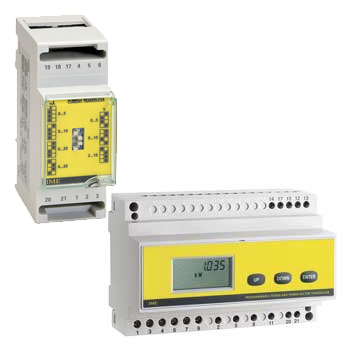
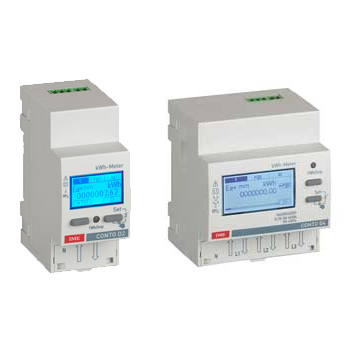
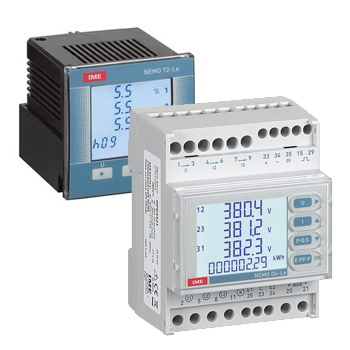
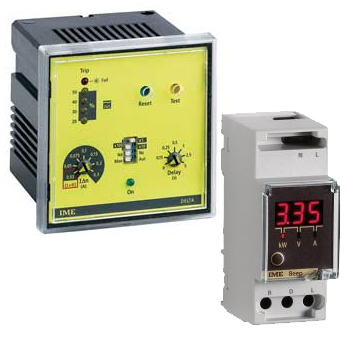
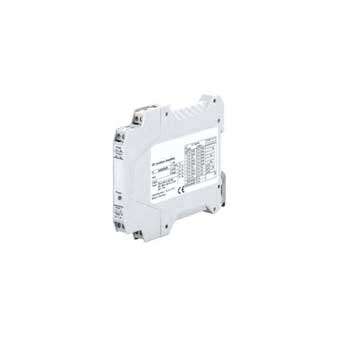
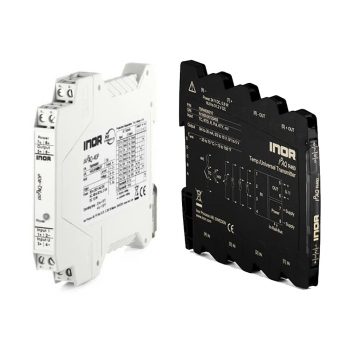
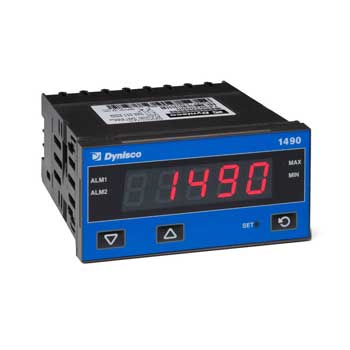
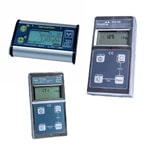
























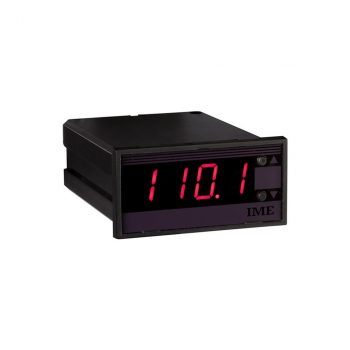
- Digital display for alternating current RMS (direct input)
- Dimensions: 72x36mm
- Without border contacts
- Entrance: 10A
- Auxiliary voltage: 24Vac or 115Vac or 230Vac or 240Vac or 20 ... 150Vdc / 48Vac or 150 ... 250Vdc
- Display: direct 9.99A; 3 digits, max.display: 999
Datasheet
|
- Digital display for alternating current RMS (direct input)
- Dimensions: front frame 96x48mm
- With or without 2 programmable limit contacts, MIN and / or MAX contact
- Entrance: 10A
- Auxiliary voltage: 24Vac or 115 or 230Vac or 240Vac or 20 ... 150Vdc / 48Vac or 150 ... 250Vdc
- Display: 3 digits, max.display: 999
Datasheet
|
- Digital display for alternating current (direct or CT input)
- Dimensions: front frame 48x48mm
- Without border contacts
- Input: directly 20A or 10A or to current transformer / 5A or 1A
- Auxiliary voltage: 24Vac or 115 or 230Vac or 240Vac or 20 ... 150Vdc / 48Vac or 150 ... 250Vdc
- Display: 3 1/2, max. display: 1999
Datasheet
|
User Manual
|
Datasheet
|
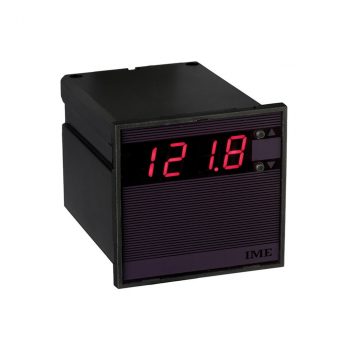
- Digital display for alternating current RMS (direct input)
- Dimensions: front frame 72x72mm
- Without border contacts
- Entrance: 10A
- Auxiliary voltage: 24Vac or 115 or 230Vac or 240Vac or 20 ... 150Vdc / 48Vac or 150 ... 250Vdc
- Display: direct 9.99A; 3 1/2 digits, max.display: -999
Datasheet
|
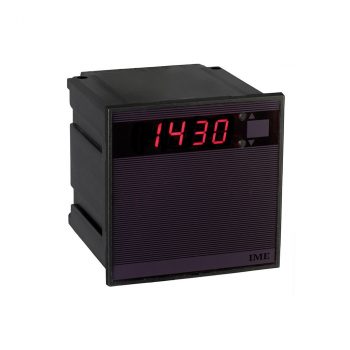
- Digital display for alternating current RMS (direct input)
- Dimensions: front frame 96x96mm
- Without border contacts
- Entrance: 10A
- Auxiliary voltage: 24Vac or 115Vac or 230Vac or 240Vac or 20 ... 150Vdc / 48Vac or 150 ... 250Vdc
- Display: direct 9.99A; 3 digits, max.display: 999
Datasheet
|
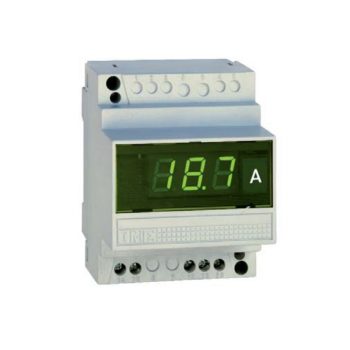
- Digital display for alternating current RMS (direct input)
- Dimensions: 4 modules DIN
- With or without 2 programmable limit contacts, MIN and / or MAX contact
- Input: 10A or 20A direct RMS
- Auxiliary voltage: 24Vac or 115Vac or 230Vac or 240Vac or 20 ... 150Vdc / 48Vac or 150 ... 250Vdc
- Display: directly 9.99A or 20.0A; 3 digits, max display: 999
Datasheet
|
Digital AC Panel Meters / Digitale Einbaumessgeräte für Wechselstrom
Digital AC panel meters are electronic measuring instruments designed to monitor alternating-current (AC) parameters — such as AC voltage, AC current, frequency, power and energy — and display the results on a numeric LED or LCD screen. They convert incoming analog signals via an analog-to-digital converter (ADC) and microprocessor, enabling precise, real-time measurements with optional features like alarms, data outputs or communications interfaces. :contentReference[oaicite:0]{index=0}
F&Q
What is a digital AC panel meter?
A digital AC panel meter is a device that measures AC parameters (voltage, current, frequency, power, etc.) and displays them digitally — often with LED or LCD displays for easy reading in control panels and switchgear. :contentReference[oaicite:1]{index=1}
Which AC quantities can be measured?
Common measurable quantities include AC voltage (VAC), AC current (AAC), line or load power (active, apparent, reactive), power factor, frequency (Hz), and — depending on model — energy consumption or demand over time. :contentReference[oaicite:2]{index=2}
How does a digital AC panel meter work?
The meter receives the analog input signal (e.g. from a current transformer or voltage input), converts it via an analog-to-digital converter, processes the signal with a microcontroller, and displays the result digitally. This delivers accurate and stable readings, even with complex or fluctuating waveforms. :contentReference[oaicite:3]{index=3}
What are the advantages compared to analog meters?
Digital meters offer higher accuracy, eliminate reading errors associated with analog pointers, enable automatic range selection, and often provide additional functions such as alarms, data logging, multi-parameter display, and communication outputs (e.g. RS-485/Modbus). :contentReference[oaicite:4]{index=4}
Where are digital AC panel meters used?
They are widely used in industrial control cabinets, distribution boards, power-distribution panels, motor control centers (MCC), power control centers (PCC), and any application requiring precise monitoring of AC networks and loads. :contentReference[oaicite:5]{index=5}
Which display and output types are common?
Displays are usually LED or LCD, sometimes with several digits (4- or 5-digit displays) to allow fine resolution. Many devices also provide optional outputs: relay or alarm outputs, analog outputs, pulse outputs for energy counting, or digital communication interfaces for remote monitoring. :contentReference[oaicite:6]{index=6}
What should be considered when selecting a digital AC meter?
Important criteria include: supported input type (direct input or via current/voltage transformers), measurement ranges (voltage, current), accuracy class, display type and readability, panel cutout size, auxiliary power requirement, and available functions (power measurement, energy counting, communications, alarms). Also environmental conditions (temperature, enclosure protection) and compatibility with the electrical installation. :contentReference[oaicite:7]{index=7}
Can digital AC meters replace multiple analog instruments?
Yes — multifunction digital AC panel meters often combine the functions of voltmeter, ammeter, frequency meter, power meter, energy meter and more in a single unit, reducing the need for multiple analog instruments. :contentReference[oaicite:8]{index=8}
Are there limitations or disadvantages?
Digital meters require a supply voltage (auxiliary power) for display and electronics. They may be sensitive to strong electromagnetic interference, voltage spikes or waveform distortions if not designed for true-RMS measurement or not used with appropriate sensors (CT/PT). For very high transient currents or harmonics, specialized meters may be required. :contentReference[oaicite:9]{index=9}


Datasheet