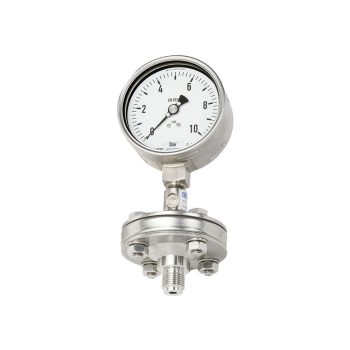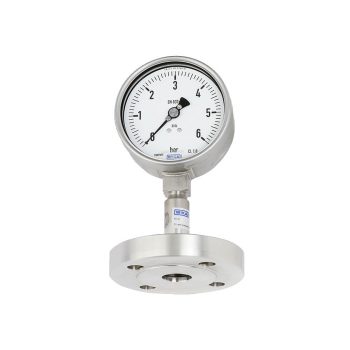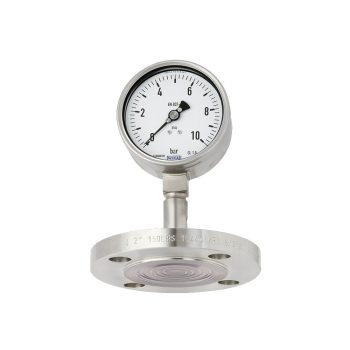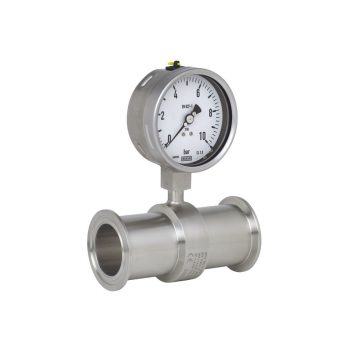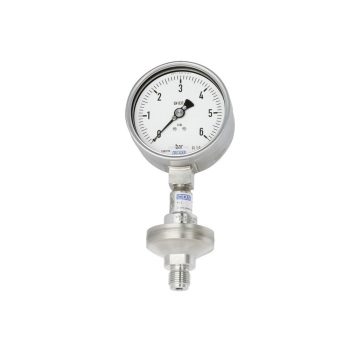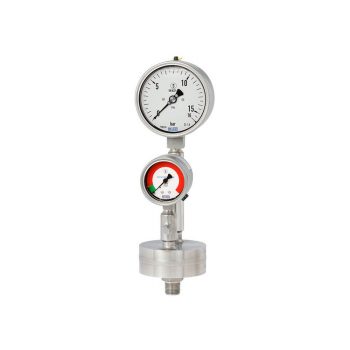
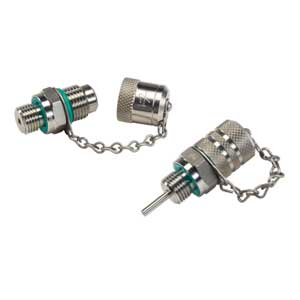
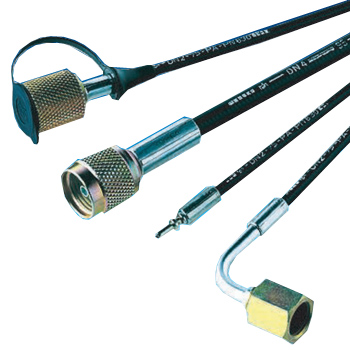

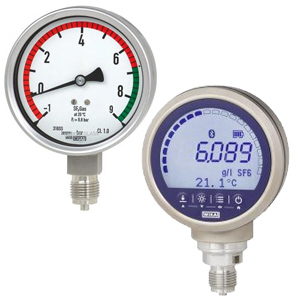
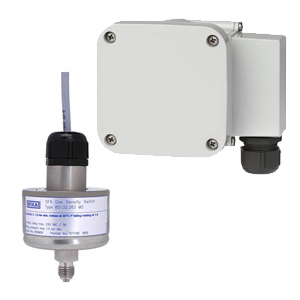
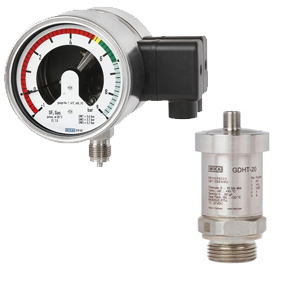
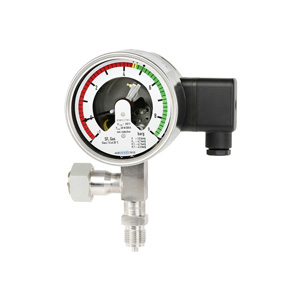




























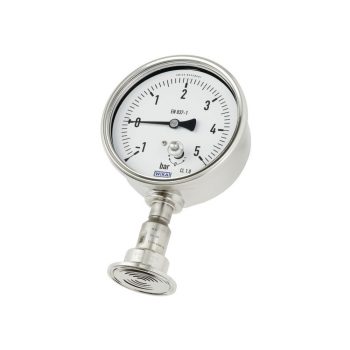
- Dead-space free, direct installation in pipes
- Easy to open, self-draining in all mounting positions
- Quick cleaning, without residue
- Suitable for COP, SIP and CIP
- Autoclavable version
Datasheet |
User Manual |
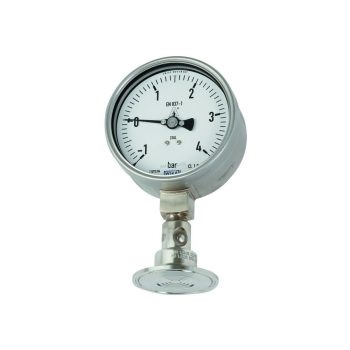
- Case and wetted parts in hygienic design
- Suitable for SIP and CIP
- Clamp connection easy to open for cleaning and seal replacement
- Easy zero point setting
Datasheet |
User Manual |
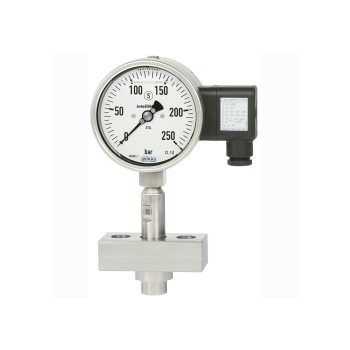
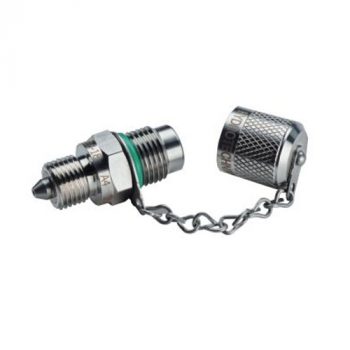
- Process connection with thread for direct threaded connection
- Version with internal diaphragm
- Diaphragm seal parts screwed together
- Universal application
Datasheet |
User Manual |
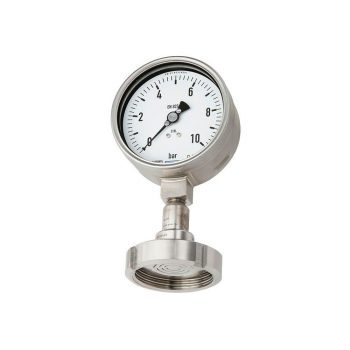
- Quick cleaning, without residue
- Milk thread fitting per DIN 11851
- Suitable for cleaning out of place (COP)
Datasheet |
User Manual |
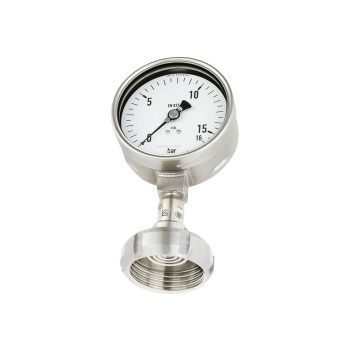
- Quick cleaning, without residue
- Process connection per Svensk Standard SS 1145
- Suitable for cleaning out of place (COP)
- Sterilisation-in-Place (SIP) up to max. 130 °C [266 °F]
Datasheet |
User Manual |
- Quick cleaning, without residue
- Clamp connection easy to open for cleaning and seal replacement
- Suitable for SIP and CIP
Datasheet |
User Manual |
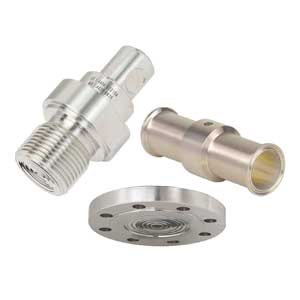
- Open flange with internal, all welded diaphragm with diaphragm bed
- No sealings and clamping elements
- Compact design
Datasheet |
User Manual |
- Flange with a flush welded diaphragm
- Robust, all welded design
- Universal application
Datasheet |
User Manual |
- Process connection with thread to provide for direct threaded connection
- Version with internal diaphragm
- Diaphragm seal parts all welded
- Universal application
Datasheet |
User Manual |
- Double-diaphragm system to ensure the separation of the process and the pressure measuring instrument
- Process connection with thread to provide for direct threaded connection
- All welded version with internal diaphragm
- System from Monel
Datasheet |
User Manual |
- Process connection with flush, all welded diaphragm, with or without retainer flange
- For highest dynamic pressures ≤ 2,500 bar
- System fill fluids FDA and USP conform
- Robust, all welded design
Datasheet |
User Manual |
Pressure Gauges with Diaphragm Seals – safe measurement for hot, viscous & aggressive media
Pressure gauges with diaphragm seals (membrane/flanged diaphragm seals) isolate the measuring mechanism from the process medium. An elastic diaphragm transfers pressure to a fill fluid that loads the gauge. This keeps the indication and mechanics protected from corrosion, clogging, high temperatures, viscosity, solids or hygienic requirements.
ICS Schneider Messtechnik supplies matched combinations of Bourdon tube gauges and diaphragm seals — as direct-mount or with capillary line, in stainless steel 316L, Hastelloy®, Tantalum, PTFE- or PFA-lined, hygienic (Tri-Clamp/Varivent®) or process flanges (EN/ASME). Optional liquid filling (glycerin) for vibration damping and calibration certificates (ISO/DAkkS) are available.
FAQ on Pressure Gauges with Diaphragm Seals
Answers on selection, diaphragm materials, fill fluids, temperatures, accuracy, capillary lengths, hygiene (CIP/SIP) and mounting.
When is a diaphragm seal required?
For aggressive, crystallizing, highly viscous or particle-laden media, at high temperatures, in hygienic processes (food/pharma) and with frequent cleaning (CIP/SIP) where a directly mounted gauge would fail quickly.
What diaphragm seal types exist?
| Type | Connection | Strength | Typical application |
|---|---|---|---|
| Inline/flush diaphragm | Thread/hygienic thread | Low dead space | Hygiene, viscous media |
| Flanged diaphragm seal | EN/ASME flange | Robust, large diaphragm | Chemicals, energy, oil & gas |
| Hygienic diaphragm seal | Tri-Clamp/Varivent® | EHEDG-compliant | Food/pharma, CIP/SIP |
| Wafer (between flanges) | Inline between two flanges | Compact | Retrofits, tight spaces |
| Mini/micro | G/NPT | Small, lightweight | Skids, confined installations |
Which diaphragm/wetted materials are available?
| Material | Chemical resistance | Note |
|---|---|---|
| 316L (1.4404/1.4435) | Many media | Process industry standard |
| Hastelloy® C-276 | Acids/chlorides | High corrosion resistance |
| Monel® | Seawater/alkalis | Good resistance to H₂S |
| Tantalum | Strong acids | Very resistant, higher cost |
| PTFE/PFA lining | Broad chemical range | Excellent anti-adhesion |
Which fill fluid should I choose?
| Fill fluid | Typical temp. range | Characteristic |
|---|---|---|
| Silicone oil | -40…+200 °C | Universal, low viscosity |
| High-temp silicone | -20…+300 °C | For CIP/SIP/steam |
| Glycerin/water | 0…+120 °C | Food-grade options (per approval) |
| Fluorinated oils | -20…+250 °C | Chemically inert, resistant |
| USP/FDA oils | per datasheet | Hygienic/pharma use |
How does temperature affect the reading?
Temperature changes affect fill-fluid expansion and thus the zero point. Measures: thermal decoupling (cooling section), suitable fill fluid, capillary or remote mounting; document any temperature compensation during acceptance/testing.
Direct mount or capillary/remote mount?
Direct mount: best dynamics/accuracy, but higher process temperature at the gauge. Capillary/remote: thermal decoupling & better readability, but additional damping and potential extra error due to temperature gradients.
How long may the capillary be?
As short as possible (typically 1–3 m). Longer lines increase temperature & position effects and response time. Consider insulation/routing; for outdoor use provide UV/kink protection.
What accuracy can I expect?
Depends on gauge class (e.g., EN 837 class 1.0–1.6) plus additional effects from seal/capillary/temperature. For QA choose a large dial (DN 100/160), suitable fill fluid, and verify under realistic temperatures.
Which dial sizes make sense?
| Dial size | Benefit | Recommendation |
|---|---|---|
| DN 100 | Good readability | General processes |
| DN 160 | Very good resolution | QA/greater distances |
How do I minimize dead space (hygiene)?
Use flush, crevice-free hygienic seals with a flat diaphragm, proper gasket concepts (EPDM/FKM/PTFE), polished surfaces and the correct mounting position. Check CIP/SIP approvals and gasket media resistance.
Which process connections are offered?
| Standard | Example | Typical use |
|---|---|---|
| Threaded | G 1/2, 1/2" NPT | General applications |
| Hygienic | Tri-Clamp, Varivent® | Food/pharma |
| Flange | EN 1092-1 / ASME B16.5 | Chemical/energy |
| Wafer | Between flanges | Compact retrofits |
How does vibration affect the indication?
Vibration can cause pointer flutter. A glycerin-filled gauge, rigid mounting, and a restrictor/snubber plus flexible capillary routing help.
What about mounting & tightening torque?
Apply torque per datasheet, use gaskets suitable for the medium, do not overload the diaphragm (avoid lever forces). Always vent/drain before start-up and perform a leak test.
How often should it be calibrated/checked?
Rule of thumb: annually; in QA/safety loops semi-annually/quarterly or after events (temperature spikes, overload). Record test conditions (temperature/position).
Is a diaphragm seal suitable for vacuum?
Yes, with a low-vapour-pressure fill fluid and a stable diaphragm. For deep vacuum prefer absolute-measuring devices or specially engineered assemblies.
Can I upgrade to a transmitter/IIoT later?
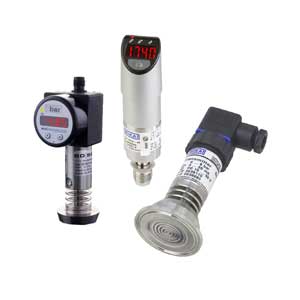
Yes. The diaphragm-seal assembly can be combined with a process transmitter (4–20 mA/HART/RS-485/IO-Link). An edge gateway → MQTT/HTTPS enables dashboards, alarms & reporting.
Which common issues can be avoided?
- Sluggish indication: capillary too long/cold → shorten/insulate, choose proper fill fluid.
- Zero drift: temperature changes → thermal decoupling/zero adjustment.
- Diaphragm damage: pressure shocks/vacuum → use protective devices/limiters.
- Contamination: wrong design → choose flush hygienic/inline type.
Do you support sizing & documentation?
Yes. We select design, material, fill fluid, size the range/dial, supply calibration certificates and — on request — hygiene/material compliance documents and IIoT integration.


Datasheet