


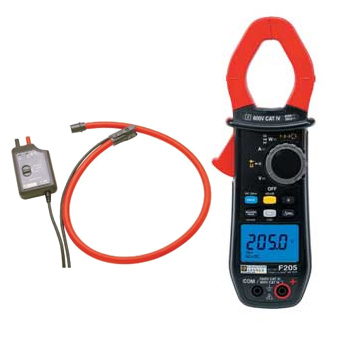
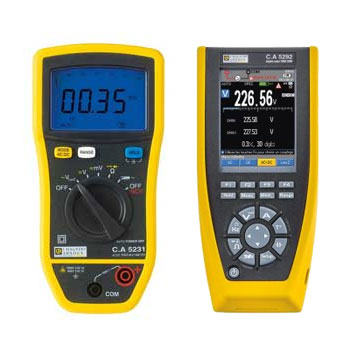
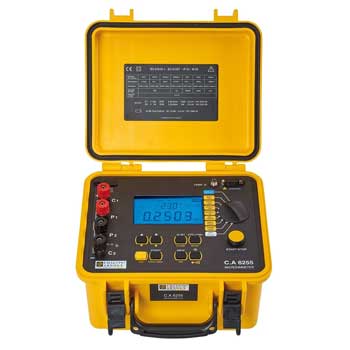
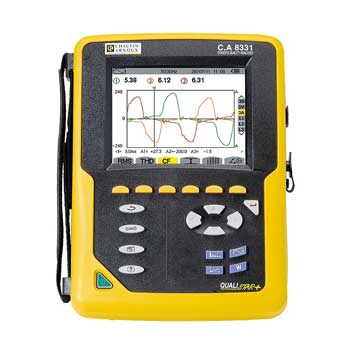























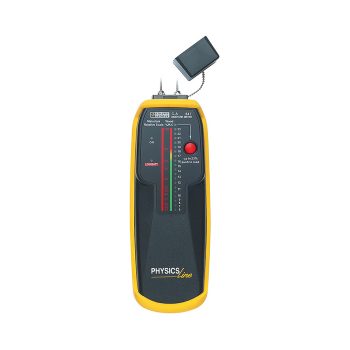
In a compact case protected by a shockproof sheath, the Physics Line C.A. 847 materials humidity indicator checks the humidity content from 6 to 100% in construction materials like plaster, wood, etc.
- 2 display scales with 20 LEDs: 6 to 23 % / 24 to 100 %
- Integrated, replaceable electrodes (L = 12 mm)
- Battery charge indication
- Dimensions: 195 x 60.5 x 38 mm
- Weight: 160 g
- Shockproof sheath
 Datasheet Datasheet |
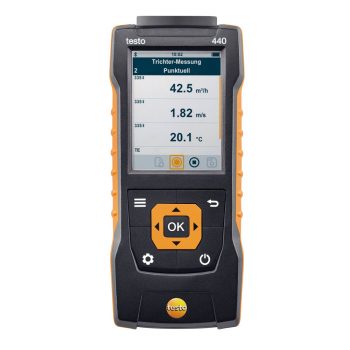
- A measuring instrument for all climate-related parameters
- Extendible with a wide range of probes
- Wireless measurement with Bluetooth probes
- USB interface for exporting measurement reports as CSV files
- Intuitive measurement menus
- Graphic display with parallel display of 3 readings
|
Datenblatt
|
|
Bedienungsanleitung
|
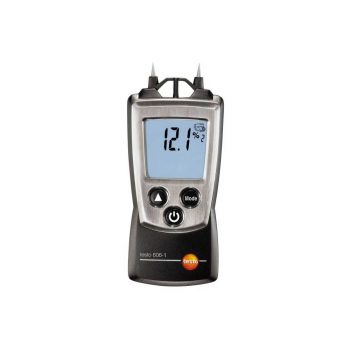
The testo 606-1 is a compact moisture meter that meaures the moisture content in wood, walls and other surfaces and materials and fits snugly in any pocket. Ideal not only for professionals, but also private users who appreciate the precision which such a professional tool has to offer.
- Precise moisture measurements in wood, cement, screed etc.
- Characteristic curves for different types of wood
- Hold function: freezes the last reading for convenient use
- Easy to use; backlit display for use in all lighting conditions
|
Datasheet
|
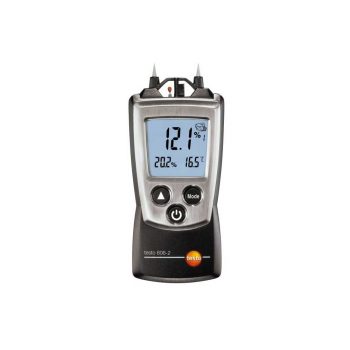
The testo 606-2 moisture meter allows you to measure the moisture content in wood and building materials – and the surrounding environment too. This means that you are now also able to check storage and drying conditions quickly and easily.
- Ram electrodes guarantee precise moisture measurements in wood and building materials
- Ideal for carrying out relative humidity and air temperature measurements to check storage and drying
- Identifying and preventing problems using dew point and wet bulb calculations
- Easy to use; backlit display for use in all lighting conditions
|
Datasheet
|
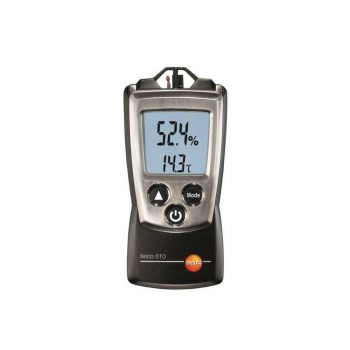
The handy testo 610 thermohygrometer asurement of temperature and humidity in indoor areas. In addition, the compact instrument can also calculate the dew point and the wet bulb temperature.
- Easy temperature and humidity measurement
- Calculation of dew point and wet bulb temperature
- Illuminated display
- Capacitive humidity sensor with long-term stability
|
Datasheet
|
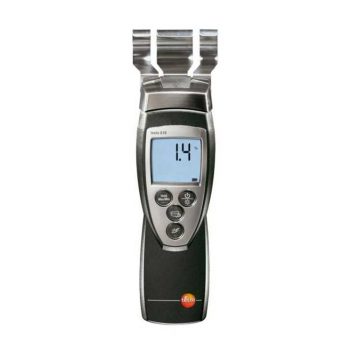
The testo 616 professional moisture meter provides you with a precise and non-destructive means of measuring the moisture content of wood and other building materials.
- Measures the moisture content of wood and building materials quickly and reliably
- Non-destructive, precise measurements up to a material depth of 5 cm
- 10 characteristic curves for different types of building material and wood
- Backlit display, hold function, min/max memory, ergonomic design
|
Datasheet
|
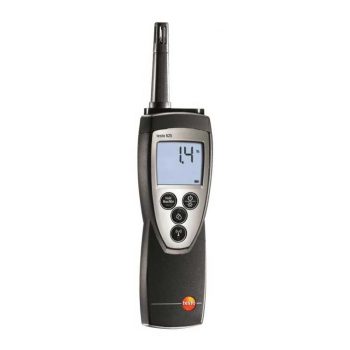
The testo 625 thermohygrometer comes into its own in all situations where the right indoor climate is crucial, for example in archives, storerooms, greeenhouses and buildings. The testo 625 also calculates the dew point and wet bulb temperature quickly and accurately.
- Measures air temperature and relative humidity
- Calculates dew point and wet bulb temperature
- Displays min and max values, hold function, power off mode
- Integrated longlife moisture meter for long lasting quality
|
Datasheet
|
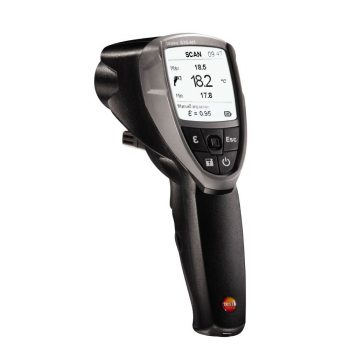
- Measures temperature / moisture / dew point
- Calculates surface moisture content
- Easy to follow menu guide, memory of up to 200 readings, data analysis with free to download software
- 4-point laser and 50:1 optics for precise measurements, even over long distances
 Datasheet Datasheet |
| User Manual |
| User Manual |
| User Manual |
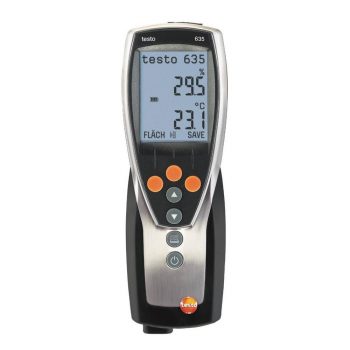
-
Probes available as an option mean you can measure air humidity, temperature, absolute pressure and dew point in compressed air
-
Two plug-in probes and 3 radio probes can be attached
-
Calculates dew point and dew point distance
-
Display of min., max. and mean values
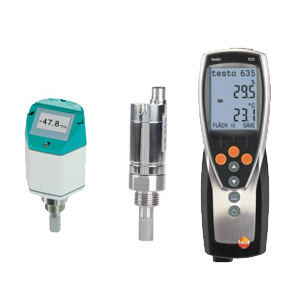
The testo 635-1 temperature and humidity measuring instrument enables you to measure the temperature, air humidity and dew point – in compressed air as well. State-of-the-art technology and a large selection of probes, which are available as an option, enable this wide variety of measuring possibilities.
|
Datasheet
|
|
User Manual
|
|
User Manual
|
-
Optionally available sensors for moisture, temperature, pressure dew point and absolute pressure measurements
-
2 plug-in sensors and 3 wireless sensors can be connected
-
Super-size memory for up to 10 000 readings
-
USB cable and PC software for archiving and logging measuring data included
The testo 635-2 temperature and moisture meter allows you to carry out temperature and moisture measurements on a variety of different materials, surfaces and environments. This is made possible due to leading-edge technology and a wide selection of optionally available sensors.
|
Datasheet
|
|
User Manual
|
|
User Manual
|
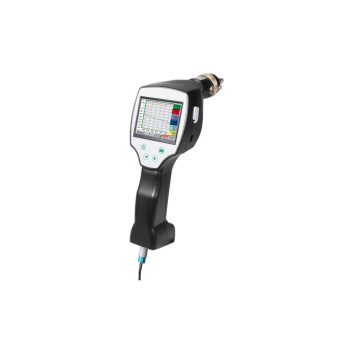
- Separate pressure measurement
- Dew point distance via external temperature sensor
- Compressed air consumption measurement
- Active power in kWh/kW
| Datasheet |
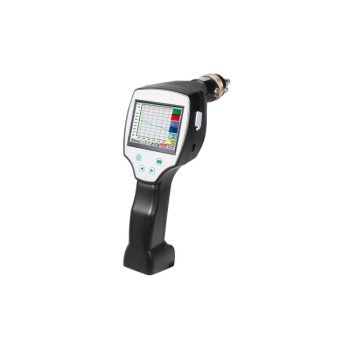
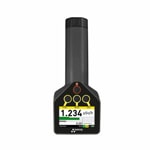
- Percise dew point measurement down to -80°Ctd
- Quick response time
- 3.5" graphic display / easy operation via touch screen
- Integrated data logger for storage of the measured values
- USB interface for reading out via USB stick
- Calculates all necessary moisture parameters like g/m³, mg/m³, ppm V/V, g/kg, °Ctdatm
- International: Up to 8 languages selectable
| Datasheet |
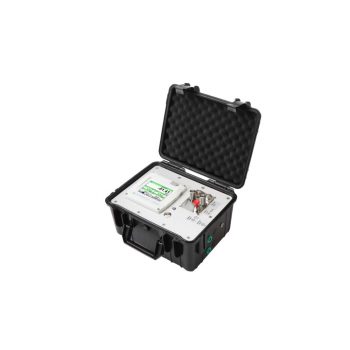
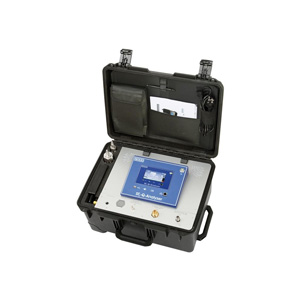
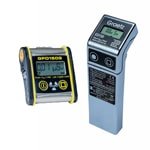
- Precise dew point measurement down to -80°Ctd
- Robust case for field use
- Integrated pressure measurement up to 16 bar
- Integrated measuring chamber with integrated dry container protects the dew point sensor during transport and grants a quick adaptation time
- Long-time stable humidity sensor: precise, insensitive against dewing, quick adaptation time
- Optionally available: 2 further sensor inputs for external sensors
- Optionally available: Integrated data logger
| Datasheet |
