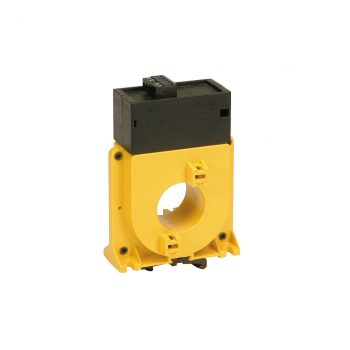
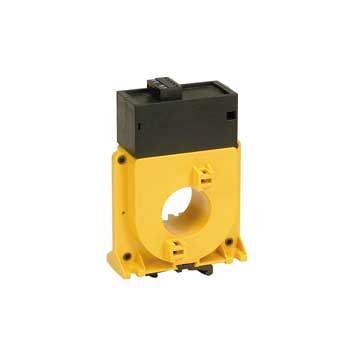
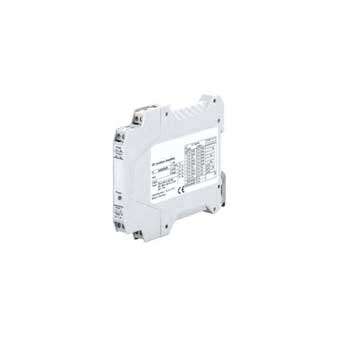

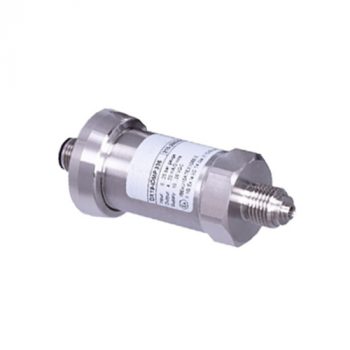
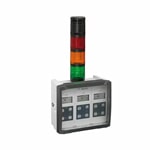



























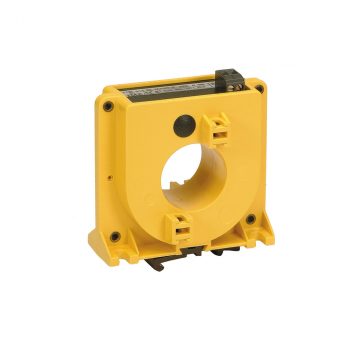
Alternating current transformer with 2-wire technology built-in transducer (passing cable ø 35 mm)
AUX 10...34 Vdc
OUTPUT 4...20 mA
CURRENT 5/10/15/20/25/30/35/40/45 A (selectable)
TYPE Alternating current transformer with 2-wire technology built-in transducer (passing cable ø 35 mm)
Datasheet

Alternating current transformer with built-in transducer (passing cable ø 35 mm)
AUX 230 Vac
OUTPUT 0...10 V
CURRENT 15/30/45/60/75/90/105/120/135 A (selectable)
TYPE Alternating current transformer with built-in transducer (passing cable ø 35 mm)
Datasheet


AC Current Transformers with Integrated Transducer

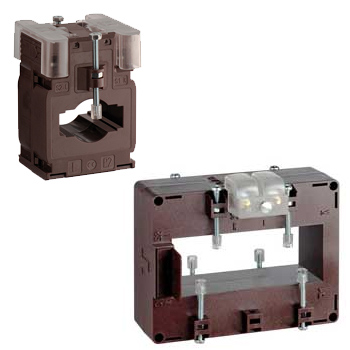
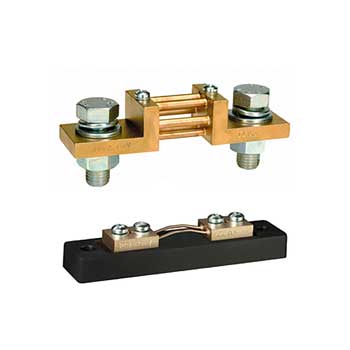
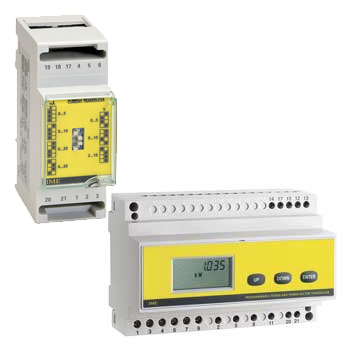
An AC current transformer with an integrated transducer combines a traditional AC current transformer (CT) with built-in signal conditioning electronics that convert the measured current into a standardized output signal such as 0–20 mA, 4–20 mA or 0–10 V. This allows safe measurement of high or inaccessible AC currents and makes the signal directly usable for panel meters, PLCs or automation systems — without the need for external shunts or separate signal converters.

Questions & Answers

What is an AC current transformer with transducer?

It is a device that integrates an AC current transformer and a signal converter in one housing. The primary AC current is transformed, and the electronics produce a linear, standardized output signal suitable for further processing.

How does an AC current transformer work?

The transformer uses electromagnetic induction: the conductor carrying the primary current passes through the magnetic core, and a proportional secondary current is induced. The built-in transducer electronics then convert this secondary value into a standardized output signal. This provides galvanic isolation between the primary circuit and the measurement electronics.

Which output signals are typical?

Common outputs include 0–20 mA, 4–20 mA and 0–10 V, making the device compatible with most analog input modules, data loggers or display units.

What current ranges can be measured?

Depending on the model, AC current transformers can handle a wide range of currents — from a few amperes to several hundred amperes. Choosing the correct range ensures accuracy and avoids saturation.

What are the benefits of combining transformer and transducer?

It reduces installation effort, eliminates the need for external converters, provides galvanic isolation, simplifies wiring and ensures a standardized output signal ready for automation or monitoring systems.

Where are these devices typically used?

Common applications include load and energy monitoring, motor and drive control, consumption measurement, switchboard monitoring and general industrial automation.

What must be considered during installation?

The primary conductor must be correctly routed through the transformer opening. The secondary output must always be connected to a load (never left open). Correct grounding and shielding are recommended to ensure accurate and safe operation.

Can the device measure distorted or non-sinusoidal currents?

This depends on the design. Many modern transformers with appropriate electronics can measure non-sinusoidal or harmonically distorted currents reliably, provided they are specified for such applications.

What is the importance of the secondary burden?

The secondary output must be terminated with an appropriate burden (load resistance). Incorrect burdening can affect accuracy or even damage the transformer. The burden must match the specifications of the integrated transducer.

When is using an integrated AC current transformer recommended?

Whenever AC currents need to be measured safely and converted into a standardized signal for monitoring, automation, diagnostics or energy management systems.

Diese Website benutzt Cookies. Wenn du die Website weiter nutzt, gehen wir von deinem Einverständnis aus.