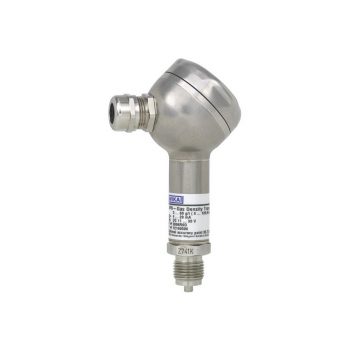
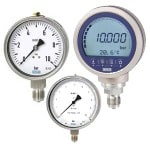
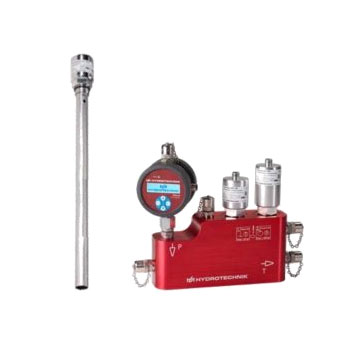
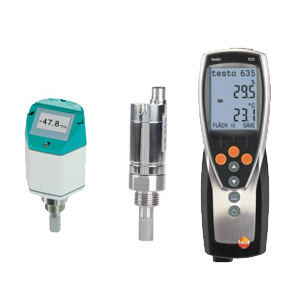
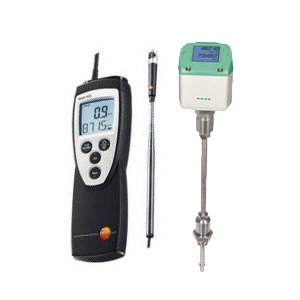
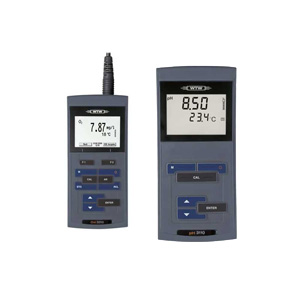
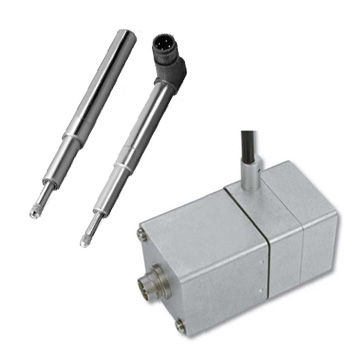
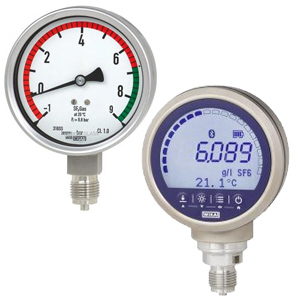
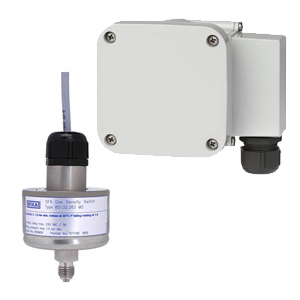
























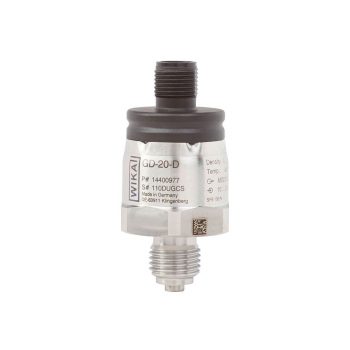
• High-accuracy sensor technology
  • Wireless LoRaWAN® output signal
  • Long battery life
  • Good long-term stability and EMC characteristics
  • Compact design
Datasheet
User Manual

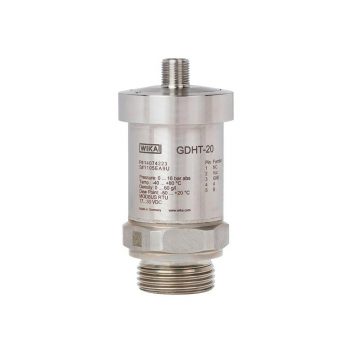
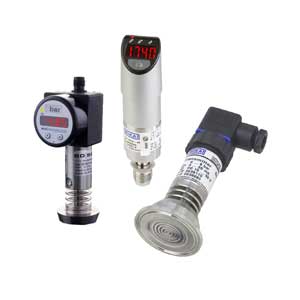
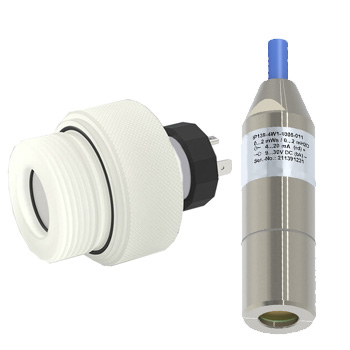
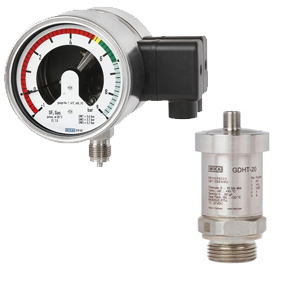
  • High-accuracy sensor technology
  • Digital MODBUS® RTU or analogue 4 … 20 mA output signal
  • IP67 ingress protection, optionally with IP6k9k field case
  • Very good long-term stability and EMC characteristics
  • Compact design
Datasheet
User Manual

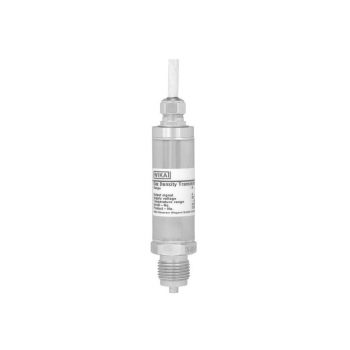
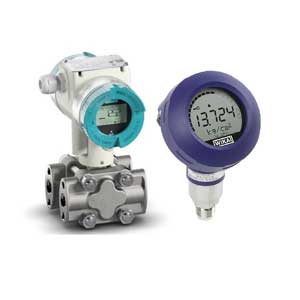
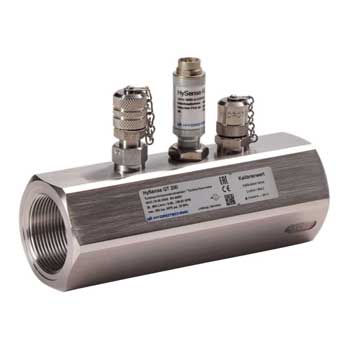
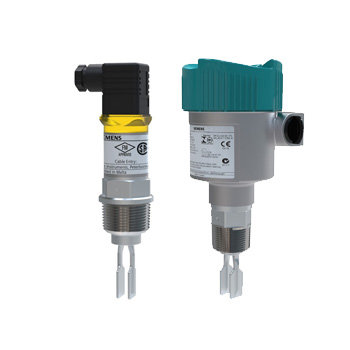
  • Measuring ranges from 0 ... 10 to 0 ... 80 g/litre
  • Output signal 4 ... 20 mA, 2-wire
  • Temperature compensated and hermetically sealed, therefore no influence temperature, by atmospheric pressure fluctuation or differences in altitude
  • Wetted parts and case made of stainless steel, fully welded
  • Ingress protection IP 67, field case, excellent long-term stability, high EMI performance
Datasheet
User Manual

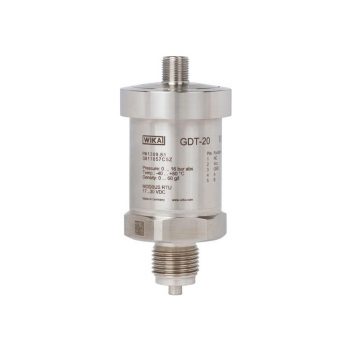
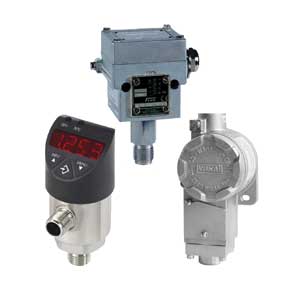
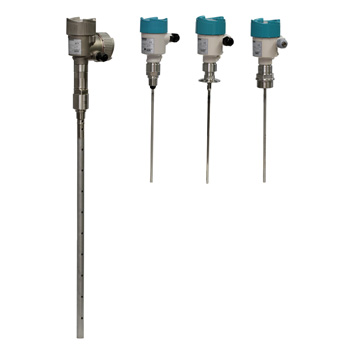
  • High-accuracy sensor technology
  • Modbus® output protocol via RS-485 interface
  • Ingress protection IP65
  • Very good long-term stability and EMC characteristics
  • Compact dimensions
Datasheet
User Manual

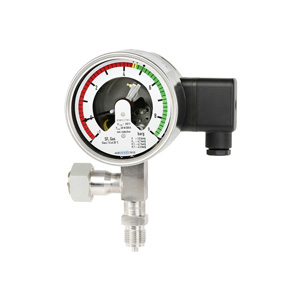
  • Ideally suited for Smart Grid or modernisation projects
  • On-site display with switch contacts and Modbus® output
  • Modbus® delivers measured values for pressure, temperature and gas density
  • Compact design with only one process connection
  • Precision sensors enable high-accuracy gas density determination
Datasheet
User Manual

  • High-accuracy sensor technology
  • Modbus® output protocol via RS-485 interface
  • Ingress protection IP65
  • Very good long-term stability and EMC characteristics
  • Compact dimensions
Datasheet
User Manual

  • Measuring ranges from 0 ... 10 to 0 ... 80 g/litre
  • Output signal 4 ... 20 mA, 2-wire
  • Wetted parts and case made of stainless steel, fully welded
  • Ingress protection IP 54 up to 68, depending on the electrical wiring
  • Excellent long-term stability, high EMI performance
Datasheet
User Manual


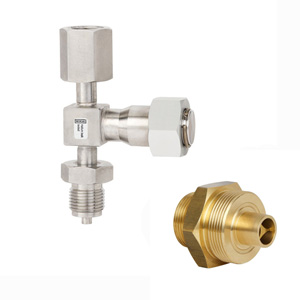
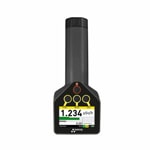
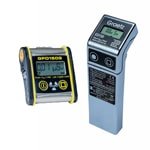
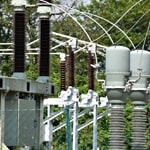
WIKA SF6 gas density sensors for gas-insulated switchgear

SF6 gas density sensors measure the temperature-compensated gas density in sealed SF6 systems and provide continuous electrical output signals. They are used for condition-based monitoring of gas-insulated switchgear, circuit breakers and other SF6 pressure vessels and enable precise leak detection and trend analysis in control and monitoring systems.

Questions & answers on SF6 gas density sensors

How does a gas density sensor differ from a gas density switch?

A gas density sensor delivers a continuous measurement signal, for example as an analogue current output or via a digital interface, and is suitable for permanent monitoring and trend evaluation. A gas density switch mainly provides switching contacts that change state when defined density thresholds are reached.

Which physical quantity does an SF6 gas density sensor actually measure?

In most designs the sensor measures the SF6 gas pressure and temperature and calculates a temperature-compensated gas density value. Depending on the device, pressure, density and temperature may be available simultaneously as individual process values.

Why is temperature compensation required for gas density sensors?

Gas pressure varies significantly with temperature, while the insulation performance depends on gas density. Temperature compensation mathematically corrects the influence of ambient temperature so that the reported density reflects the true filling condition of the SF6 system.

Which output signals are typically available from SF6 gas density sensors?

Typical outputs are 4 ... 20 mA or 0 ... 10 V for pressure or density as well as digital interfaces such as Modbus or CAN-based protocols. Some devices combine analogue outputs with integrated switch contacts for local alarm signalling.

How is a gas density sensor integrated into a monitoring system?

The sensor is connected to the SF6 gas compartment via a suitable process connection and electrically wired to a PLC, protection relay or SCADA system. The measurement signals are acquired, scaled and used for visualization, alarm handling and trending.

What level of accuracy can be expected from SF6 gas density sensors?

Modern gas density sensors typically achieve pressure accuracies in the range of about 0.5 % to 1 % of full scale at reference conditions. Density accuracy depends on the quality of temperature compensation and the underlying calibration data.

For which pressure and temperature ranges are gas density sensors designed?

Sensors for SF6 applications usually cover pressure ranges from a few hundred millibar up to the upper single-digit bar range. The permissible medium temperature range is matched to high-voltage equipment and often extends from low sub-zero temperatures to above 50 °C.

What sealing performance is required from SF6 gas density sensors?

Gas density sensors must exhibit extremely low leakage rates so that they do not contribute to SF6 losses. Welded stainless steel housings, metallic seals and factory helium leak tests are commonly used to achieve this performance.

Does the mounting position affect the measurement of a gas density sensor?

Many gas density sensors are designed to be position independent if the sensing element is suitably arranged. Where a specific mounting orientation is required, it must be respected according to the device documentation to avoid measurement deviations.

What are the main advantages of electronic gas density sensors over purely mechanical solutions?

Electronic sensors enable continuous data acquisition, logging, remote monitoring and integration into condition monitoring systems. This allows operators to detect trends, schedule maintenance and adjust alarm thresholds flexibly.

How are SF6 gas density sensors calibrated?

Calibration is typically carried out in a test chamber at defined pressure and temperature points. Sensor readings are compared with reference standards and the calibration coefficients or characteristic curves inside the device are adjusted accordingly.

How often should gas density sensors be checked or recalibrated?

Test and recalibration intervals are defined by operator policies, applicable standards and the criticality of the equipment. In many cases intervals of several years are chosen, provided the sensors offer proven long-term stability.

Which enclosure types and ingress protection ratings are common for SF6 gas density sensors?

For harsh switchgear environments, robust stainless steel housings with high ingress protection ratings, such as IP65 or higher, are common. They protect the sensing element and electronics from moisture, dust and mechanical stress.

Can gas density sensors be used for leak localisation?

Gas density sensors detect changes in density within a defined gas volume and are therefore suitable for leak and trend monitoring. Precise localisation of a leak, however, requires additional methods such as tightness tests or dedicated leak detectors.

What is the role of self-diagnostics in gas density sensors?

Sensors with integrated self-diagnostic functions can detect internal faults, limit violations or communication errors and signal them to the control system. This increases the availability of the monitoring system and supports efficient fault finding.

Are SF6 gas density sensors suitable for functional safety applications?

Some devices are designed for use in safety-related systems and can be assessed according to relevant functional safety standards. Suitability depends on device architecture, available diagnostics and documented failure rates.

Diese Website benutzt Cookies. Wenn du die Website weiter nutzt, gehen wir von deinem Einverständnis aus.