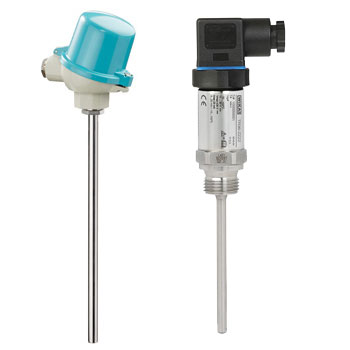
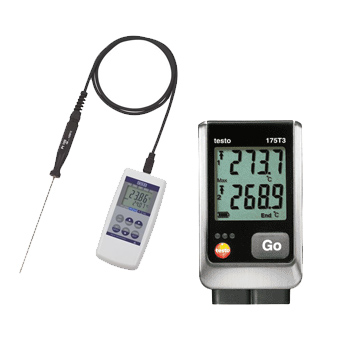
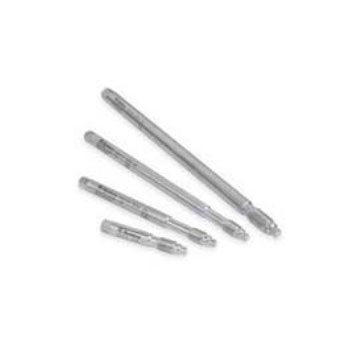

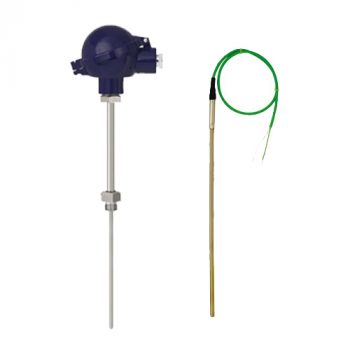



























• Artificially aged by tempering to reduce long-term drift
  • Best performance among SIKA temperature sensors
  • Handmade, with experience from over 120 years of temperature measurement technology
Datasheet

  • Artificially aged by tempering to reduce long-term drift
  • Best performance among SIKA temperature sensors
  • Handmade, with experience from over 120 years of temperature measurement technology
Datasheet

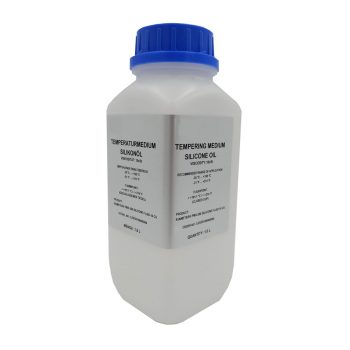
  • Safety bottle with 1 liter silicone oil 10cSt (-35...165 °C)
  • including safety data sheet (English/German)
  • neutral nameplate
  • Net weight: 1.035 kg
  • Item no.: EZSÖ0100000000

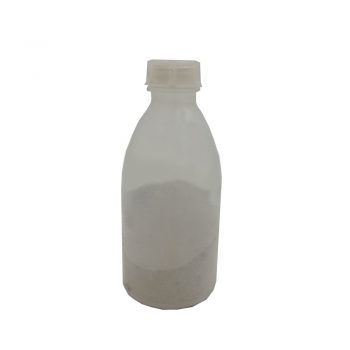
Aluminum oxide powder Al2O3
1x bottle for temperature block calibrators

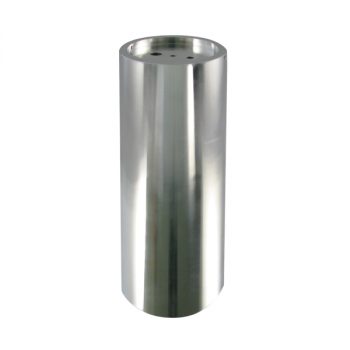
  • Adapter sleeves
  • Infrared calibration sleeves
  • Surface calibration sleeves
  • Calibration liquids
  • Tub insert
  • Calibration and testing software
Datasheet
Calibration Guide

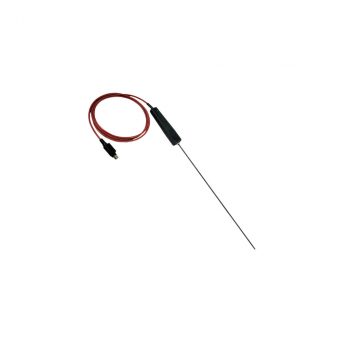
  • Pt100 reference sensors
  • For series TP Premium or TT-Scan
Datasheet
Calibration Guide


Calibration Accessories – calibrate precisely, safely & efficiently

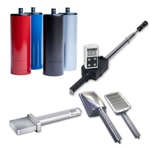
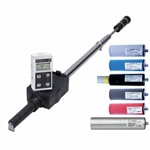
Calibration accessories extend SIKA temperature calibrators to deliver highest reproducibility, comfortable handling and audit-ready documentation. Typical components include block inserts (single-/multi-bore), external reference probes (Pt100/SPRT), surface plates, holders/clamps, bath fluids, blackbody attachments, interface cables, software and protective transport gear.

ICS Schneider Messtechnik supports selection, uncertainty budgeting, ISO/DAkkS calibration of references and integration into QA/IIoT processes.


FAQ on Calibration Accessories

Answers on inserts, reference probes, surface plates, blackbodies, bath media, software, EMC/handling, uncertainty, and documentation.

Why use interchangeable block inserts?

To match probe diameters for optimal thermal coupling, minimize gradients, and ensure repeatable positioning (incl. a reference channel).

How do I choose the correct bore diameter?

Recommendation: 0.2–0.5 mm larger than the probe OD. This gives assembly clearance while maintaining good heat transfer.

Single vs. multi-bore inserts?

TypeAdvantagesUse
Single-borebest coupling, minimal influencehigh accuracy, reference tasks
Multi-borehigher throughputproduction, service

What is a reference channel used for?

It places the reference probe consistently and close to the DUT—key for low measurement uncertainty and repeatable results.

Which external reference probes make sense?

Precision Pt100 for daily QA; SPRT for the lowest uncertainties. Match range/sensitivity to the process and use a current calibration certificate.

How deep should the reference probe be immersed?

Rule of thumb: 15–20× the probe diameter or until the sensing point is fully in the homogeneous zone; keep distance from the bore bottom.

What are surface calibration plates for?

They provide a flat reference surface for contact surface probes. Critical factors: flatness, contact force, and a touch of thermal paste if appropriate.

What are blackbody attachments used for?

For calibrating IR thermometers. Set emissivity (ε) correctly, observe D:S and focus, and shield reflections; verify with a reference RTD where possible.

Which accessories reduce handling errors?

  • Probe holders/clamps to prevent slippage
  • Depth stops/position rails for repeatable immersion
  • Cable strain reliefs to avoid movement

Which bath fluid is the right choice?

MediumTypical rangeNotes
Low-viscosity silicone oil−40…+150 °Clow viscosity, low evaporation
High-temp silicone oil+80…+300 °Cwatch aging; use a lid/cover
Water/alcoholto ~+80 °Cconsider safety/flammability

What software/interface packages are available?

PC software for sequences, stability criteria, pass/fail and reports (CSV/PDF); cables/adapters for USB/RS-485/Modbus/Ethernet.

How do I integrate data into QA/IIoT?

Via exports and network interfaces into QA software or, via an edge gateway, into SCADA/cloud (e.g., MQTT/HTTPS).

How does accessory choice affect uncertainty?

Good coupling (matched bores), stable fixation, reference proximity and correct immersion depth lower gradients & drift → smaller uncertainty budget.

Is there accessory for thermostat/switch testing?

Yes: load adapters, terminal kits, signal/relay leads, and templates for hysteresis documentation.

How do I care for inserts and plates?

Keep bores clean, never scrape; use lint-free wipes and mild cleaners; avoid mechanical damage and check the clearance fit regularly.

Which safety items are useful?

Heat-protection gloves, tongs/tweezers, splash guards for baths, and clear hot-surface labels.

How do I choose accessories for series testing?

Multi-bore inserts, position rails, automated sequences, barcode/ID workflows in software, and robust cabling.

Can ICS Schneider preconfigure & certify?

Yes. We supply preconfigured inserts, reference probes with ISO/DAkkS certificates, report templates, and integrate the solution into your QA.

Typical pitfalls & remedies?

  • Bore too large → select a tighter insert
  • Insufficient immersion → use depth stops/position aids
  • Moving leads → add strain relief/holders
  • Reference too far → use a reference channel close to the DUT

How do I ensure audit-ready documentation?

Use calibration labels, test protocols, asset IDs/serials and traceability records—stored in a revision-safe system with operator/time stamps.

Diese Website benutzt Cookies. Wenn du die Website weiter nutzt, gehen wir von deinem Einverständnis aus.