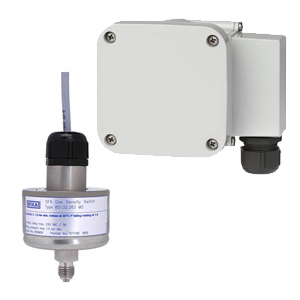
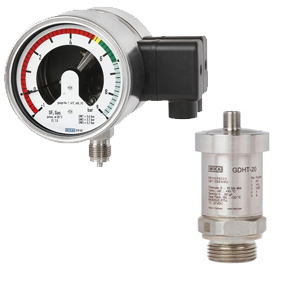
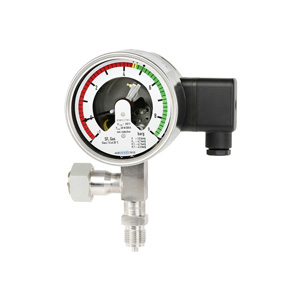
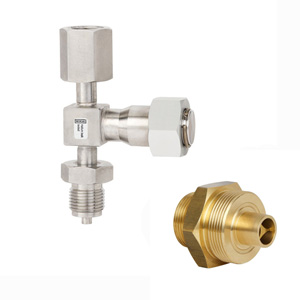
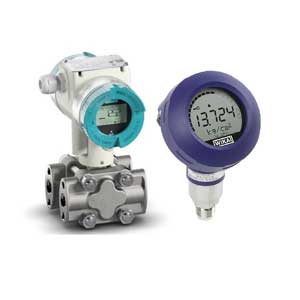
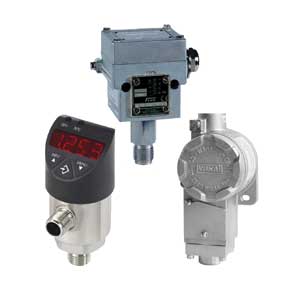
Mechanical Pressure & Differential Pressure Switches – Robust, Simple, Proven
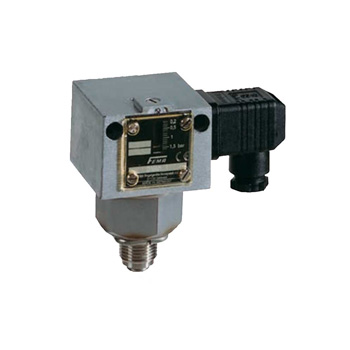
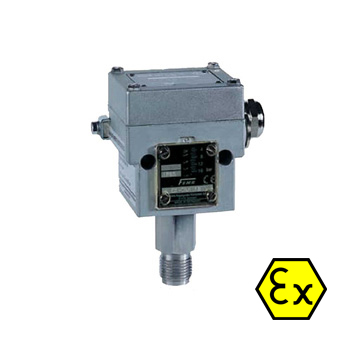
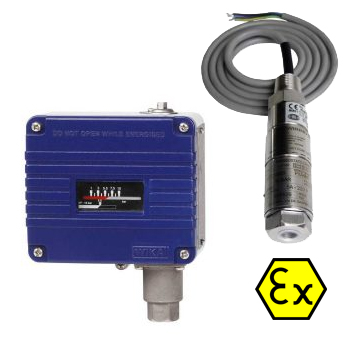
Mechanical pressure switches and differential pressure switches switch reliably without electronics: a diaphragm or piston mechanism actuates a microswitch when the threshold is reached. Ideal for hydraulics/pneumatics, filter monitoring (Δp), pump/compressor control, machinery and building services. Benefits include very high robustness, no standby power, immunity to EMC, and options such as adjustable hysteresis, ATEX/IECEx and high IP ratings.
ICS Schneider Messtechnik supports you with range selection, materials/seals, hysteresis design, electrical contacts (SPDT/NO/NC), mounting and—if needed—PLC/SCADA integration.
FAQ on Mechanical Pressure & Differential Pressure Switches
Answers on selection, sizing, hysteresis, media compatibility, protection classes, connections, installation and maintenance.
How do mechanical pressure switches work?
The process pressure moves a diaphragm or piston. Via a spring pack, a microswitch is actuated once the set threshold is reached/exceeded.
What are differential pressure switches used for?
For filter monitoring (clogged/clear), flow and level monitoring in closed systems, and for room pressure supervision (over-/underpressure).
How do I choose the correct switching range?
Plan a nominal range of 1.3–2.0 × the working pressure. With pulsation/spikes, size larger or add a snubber/restrictor.
What is hysteresis and why does it matter?
Hysteresis is the difference between the on- and off-point. It prevents chatter and frequent re-switching. Many models offer adjustable hysteresis.
Which electrical contact variants exist?
| Contact | Description | Use |
|---|---|---|
| NC (normally closed) | Opens at setpoint | Safety functions |
| NO (normally open) | Closes at setpoint | Start/stop signals |
| SPDT (changeover) | Switch-over contact | Flexible, two states |
Which media/material combinations are common?
| Material | Typical media | Note |
|---|---|---|
| Brass | Air, water, oils | Cost-effective; not for aggressive media |
| Stainless steel 316L | Corrosive media | High resistance |
| Hastelloy® / PTFE | Highly chemical media | Special execution |
What process connections are typical?
| Connection | Standard | Remark |
|---|---|---|
| G 1/4, G 1/2 | ISO 228 | Industry standard |
| ¼″ NPT, ½″ NPT | ASME | US / oil & gas |
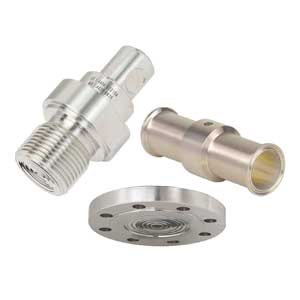
| Flange / hygienic | EN/ASME, Tri-Clamp | For CIP/SIP with diaphragm seal |
Which IP ratings and approvals are available?
Typically IP54–IP67/69K. For hazardous areas, variants with ATEX/IECEx are available (e.g., Ex d, Ex ia).
How do I protect against pressure spikes and vibration?
Use snubbers/restrictors, capillaries or remote mounting. Mechanically decoupled installation increases service life.
How do I set the switching point?
Via adjusting screw or hex key as per datasheet. Verify and document with a reference pressure after adjustment.
Are versions with adjustable hysteresis available?
Yes—many mechanical models provide a separate hysteresis setting (series-dependent).
What are typical applications?
- Filter Δp in ventilation/process air systems
- Pump/compressor protection (dry run/overpressure)
- Hydraulics/pneumatics switching limits
- Level via differential pressure in closed tanks
What must be considered with high medium temperatures?
Use a siphon/cooling element; check seal and housing material for temperature and media resistance.
What does the electrical connection look like?
Terminals or connectors (e.g., DIN, M12). Observe load limits (voltage/current), EMC and protective circuits (e.g., flyback diode for inductive loads).
How often should I test/calibrate?
As a rule of thumb annually, more frequently for safety-related functions. Document as-found/as-left.
Gauge, absolute or differential pressure—what fits?
Gauge for most switching tasks, absolute for vacuum/barometry, differential for filters/flow/level.
Which EMC measures are recommended?
Shielded, twisted leads, proper grounding/shield termination, separate routing of power/signal, and surge protection.
Do you support selection and commissioning?
Yes—from application review (media/temperature/pressures) to range & hysteresis, materials/seals, mounting/EMC and PLC integration—including documentation.