















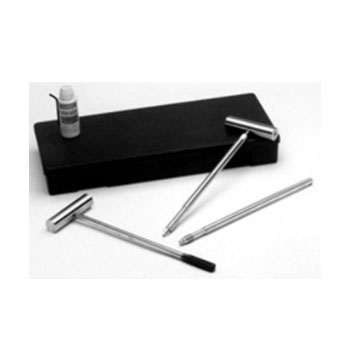





























Safely discharge high voltage cables post-testing using our DP5 Discharge Probe.
- 5kV DC Maximum discharge voltage
- 0.9kJ Maximum discharge energy
- 48μF Maximum discharge capacitance
- 10kΩ Resistance
- 390mm Length
- Up to 5m long Earth lead
- 6mm² Earth lead CSA
- Highly flexible, clear silicone covered earth cable
Datasheet |
The ES100 Earthing Stick is a reliable and safe grounding solution for high voltage connections after AC testing in accordance with EN50191.
- Can be used for earthing high voltage connections
- 100kV Maximum voltage
- 1270mm Length
- 5 metres Earth Lead Length
- 6mm2 Earth Lead CSA
- Clear silicone covered earth cable
- Highly flexible
The ES50 Earthing Stick is a reliable and safe grounding solution for high voltage connections after AC testing in accordance with EN50191.
- Can be used for earthing high voltage connections
- 50kV Maximum voltage
- 840mm Length
- 5 metres Earth Lead Length
- 6mm2 Earth Lead CSA
- Clear silicone covered earth cable
- Highly flexible
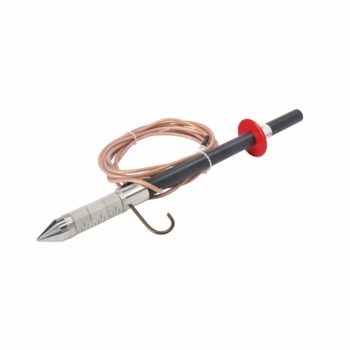
DP20 High Voltage DC Discharge Probe
- For discharging high voltage cables after testing
- Earthing hook
- 20kV Maximum discharge voltage
- 3.6kJ Maximum discharge energy
- 12μF Maximum discharge capacitance
- 30kΩ Resistance
- 530mm Length
- 5m Earth lead length
- 6mm² Earth lead CSA
- Highly flexible, clear silicone covered earth cable
- For use with the PT18-10 and PT30-10 cable test sets
Datasheet
|
Safely discharge high voltage cables with the DP40 Discharge Probe, a reliable accessory for T&R PT30-10 Mk3 AC test set.
- 40kV Maximum discharge voltage
- 7.2kJ Maximum discharge energy
- 6μF Maximum discharge capacitance
- 60kΩ Resistance
- 900mm Length
- 5m Earth lead length
- 6mm² Earth lead CSA
- Highly flexible, clear silicone covered earth cable
Datenblatt
|
The ES30 Earthing Stick is a reliable and safe grounding solution for high voltage connections after AC testing in accordance with EN50191.
- Can be used for earthing high voltage connections
- 30kV Maximum voltage
- 670mm Length
- 5 metres Earth Lead Length
- 6mm2 Earth Lead CSA
- Clear silicone covered earth cable
- Highly flexible
Discharge Probes & Grounding Rods
Discharge probes and grounding rods are tools used during maintenance or work on electrical installations to safely discharge residual voltages and establish a reliable earth connection. They protect against unintended re-energisation and secure the installation — for example by confirming de-energisation, discharging capacitive or stored charge, and grounding conductors or enclosures. They are essential for safe work in medium- and high-voltage environments.
FAQ
What are discharge probes and grounding rods?
They are specialized tools: discharge probes safely discharge capacitors, cables or equipment; grounding rods provide a low-impedance earth connection for conductors, housings or switchgear.
When are they used?
Before any work on electrical installations — to remove stored charge, confirm de-energisation, create a safe earth reference and prevent re-energisation. Especially important before opening enclosures or working on conductors.
When must discharge and grounding be applied?
Immediately after switching off or isolating the circuit, before touching any conductors or components. Also when there is suspicion of residual charge, after shutdown, or when dealing with capacitive or long cable systems.
How is grounding correctly applied?
By connecting the grounding rod to established earth points or the building ground, ensuring a low-resistance connection, and securely fastening the connection to metal parts or conductors to ensure safe discharge paths.
What is important when discharging stored charge?
First verify voltage absence, then connect the discharge probe properly, ensure a defined discharge path, wait sufficient time, then re-measure to confirm that residual charge is gone.
Who is allowed to use discharge probes / grounding rods?
Qualified electrical personnel familiar with high-voltage safety procedures, isolation protocols, correct handling of discharge and grounding equipment, and working under safe conditions.
Which safety measures must be observed?
Inspect equipment before use, select appropriate grounding points, ensure stable metallic contact, isolate and secure the work area, verify de-energisation, use protective gear, and clearly mark the work zone.
How is discharge and grounding documented?
With a protocol including installation ID, date and time, name of the technician, type of probe/rod used, confirmation of voltage absence, any observations and the release status (clearance to work).
Why are discharge and grounding indispensable?
Without safe discharge and grounding, stored charge or residual voltage can cause electric shock or equipment damage. They are essential prerequisites for safe maintenance work on electrical installations.


Datasheet