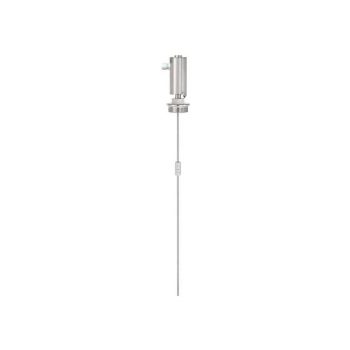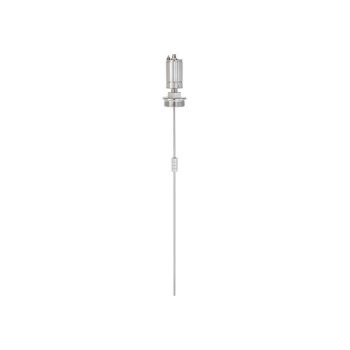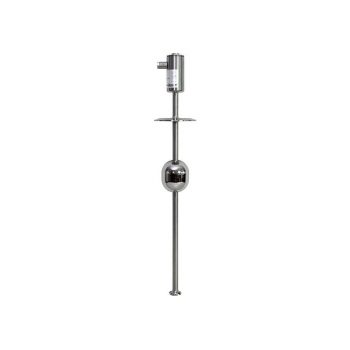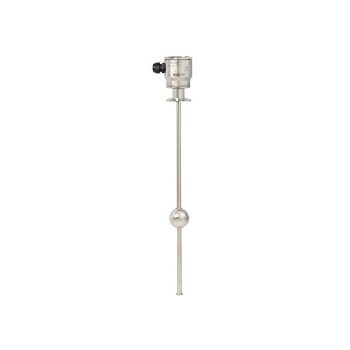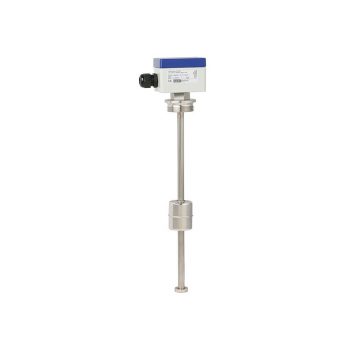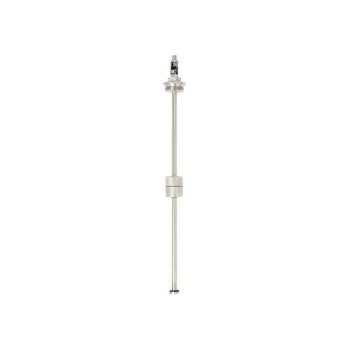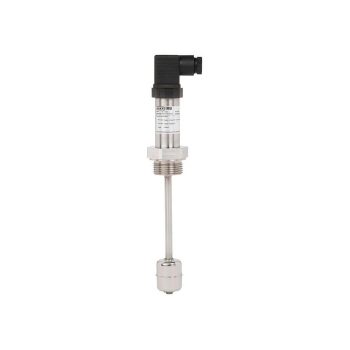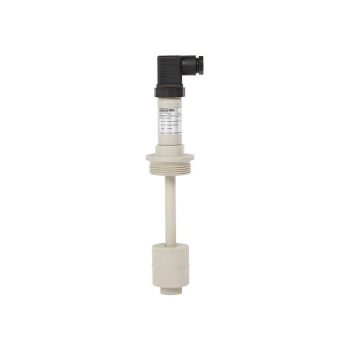
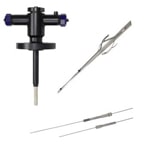
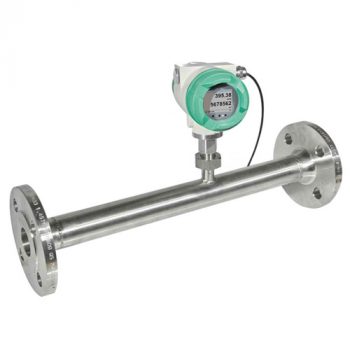
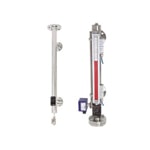
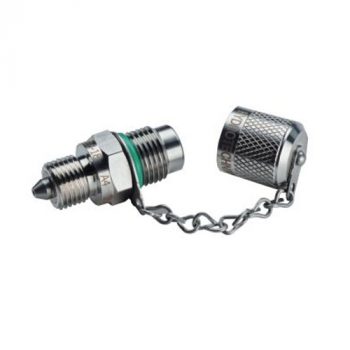
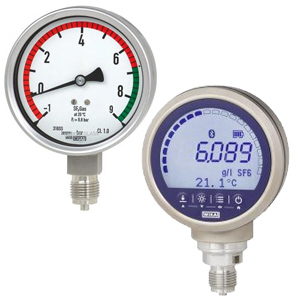
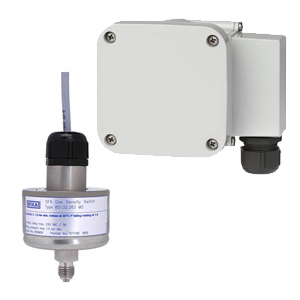
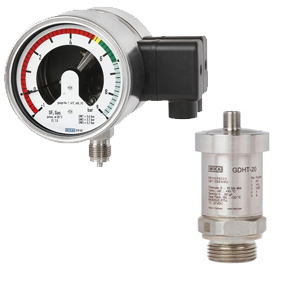
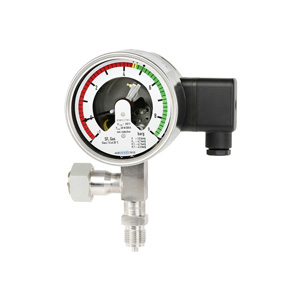
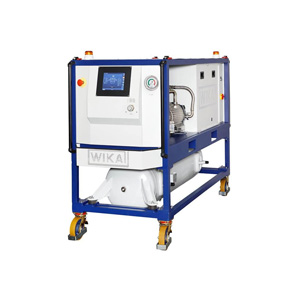
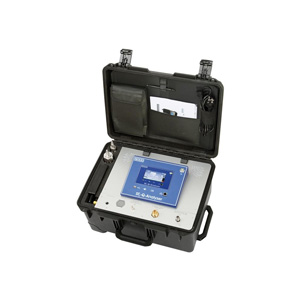
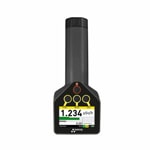
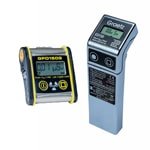
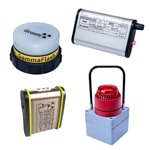





























• Process- and system-specific solutions possible
  • Operating conditions: - Operating temperature: T = -10°C ...+70 °C (+158 °F) - Operating pressure: ambient
  • Lengths: up to 20 m (65 ft)
  • Humidity: 100 %
  • Operational radiation dose: ≤ 160 kGy (16 MRad)
Datasheet

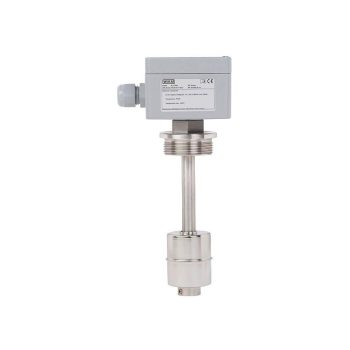
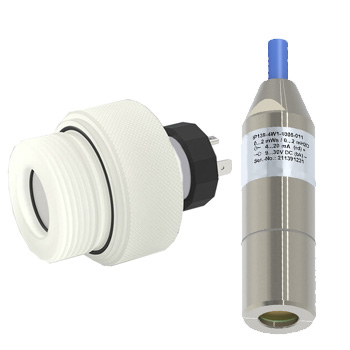
  • Compact and space-saving design
  • Output signal 4 ... 20 mA (NAMUR NE43) or HART® ver. 6
  • Operating limits: - Operating temperature: T = -40 ... +250 °C - Operating pressure: P = Vacuum to 40 bar - Limit density: ρ ≥ 580 kg/m3
  • Explosion-protected version (option)
  • Vibration resistant version (option)

Datenblatt
Bedienungsanleitung
Bedienungsanleitung

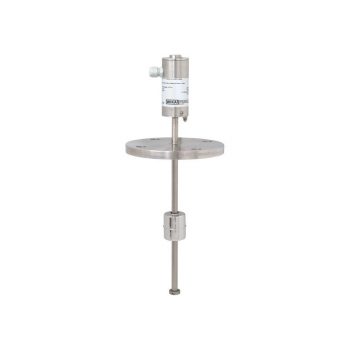
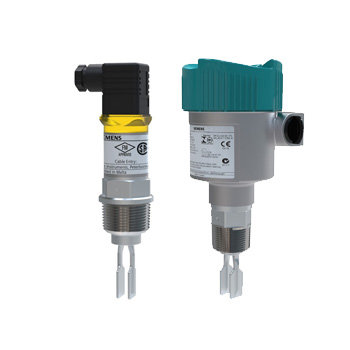
  • Compact and space-saving design for industrial applications
  • Output signal 4 ... 20 mA (NAMUR NE43)
  • Operating limits - Operating temperature T = -40 ... +125 °C - Operating pressure P = Vacuum to 40 bar - Limit density ρ ≥ 680 kgm3
Datasheet
User Manual

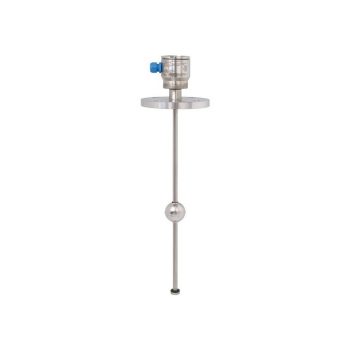
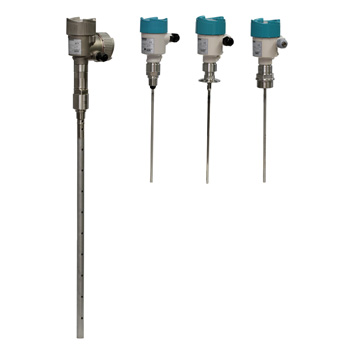
  • Fully welded and dead space free
  • Operating limits: - Operating temperature: T = -40 ... +250 °C - Operating pressure: P = Vacuum to 10 bar
  • Insensitive to foaming, ideal for interface measurement
  • High-precision level measurement: Accuracy < 0.5 mm
  • Wide variety of hygienic process connections
Datasheet
User Manual
User Manual

  • Process- and procedure-specific solutions possible
  • Operating limits: - Operating temperature: T = -80 ... +200 °C [-112 ... +392 °F] - Operating pressure: P = Vacuum to 25 bar [362,6 psi] - Limit density: ρ ≥400 kg/m3 [25,0 lbs/ft3]
  • Wide variety of different electrical connections, process connections and materials
  • Optionally with programmable and configurable head-mounted transmitter for 4 ... 20 mA field signals, HART®, PROFIBUS® PA and FOUNDATION™ Fieldbus
  • Explosion-protected versions (option)
Datasheet
User Manual
User Manual

  • Process- and procedure-specific solutions possible
  • Operating limits: - Operating temperature: T = -80 ... +200 °C [-112 ... +392 °F] - Operating pressure: P = vacuum to 80 bar [1,160.3 psi] - Limit density: ρ ≥ 400 kg/m3 [25.0 lbs/ft³]
  • Wide variety of different electrical connections, process connections and materials
  • 4 ... 20 mA output signal with additional Bluetooth® interface for wireless configuration and level monitoring
Datasheet
User Manual
User Manual

  • IIoT-capable measuring instrument in combination with WIKA radio unit, model NETRIS®3
  • Process- and procedure-specific solutions possible
  • Operating limits:
    • Process temperature:T = -80 ... +200 °C [-112 ... +842 °F]
    • Operating pressure: P = vacuum to 80 bar [1,160 psi]
    • Limit density: ρ ≥ 400 kg/m3
  • Wide variety of different process connections and materials
  • Intrinsically safe version Ex i
Datasheet

  • Media compatibility: Oil, water, diesel, refrigerants and other liquids
  • Permissible medium temperature range: -30 ... +120 °C [-22 ... +248 °F]
  • Output signal: Resistance in a 3-wire potentiometer circuit, current output 4 ... 20 mA
  • Measuring principle: Reed-chain technology
  • Accuracy, resolution: 24 mm [0.9 in], 12 mm [0.5 in], 10 mm [0.4 in], 6 mm [0.2 in] oder 3 mm [0.1 in]
Datasheet
User Manual

  • Media compatibility: aqueous media and corrosive liquids
  • Wetted parts: PP or PVDF
  • Output signal: Resistance in a 3-wire potentiometer circuit, current output 4 ... 20 mA
  • Accuracy, resolution: 24 mm [0.9 in], 12 mm [0.5 in], 10 mm [0.4 in], 6 mm [0.2 in] or 3 mm [0.1 in]
Datasheet
User Manual

  • Media compatibility: Oil, water, diesel, refrigerants and other liquids
  • Level: Current output 4 ... 20 mA
  • Temperature: Pt100, Pt1000, accuracy: Class B
Datenblatt
Bedienungsanleitung

  • Process- and procedure-specific solutions possible
  • Operating limits: - Operating temperature: T = -90 ... +450 °C [-130 ... +842 °F] - Operating pressure: P = vacuum to 100 bar [1,450.4 psi] - Limit density: ρ ≥ 400 kg/m3 [25.0 lbs/ft³]
  • Resolution < 0.1 mm
  • Wide variety of different electrical connections, process connections and materials
  • Explosion-protected versions
Datasheet
User Manual
User Manual
User Manual

  • Process- and system-specific solutions possible
  • Operating limits: - Operating temperature: T = -80 ... +200 °C - Operating pressure: P = Vacuum up to 80 bar - Limit density: ρ ≥400 kg/m3
  • Wide variety of different electrical connections, process connections and materials
  • Optionally with programmable and configurable head-mounted transmitter for 4 ... 20 mA field signals, HART®, PROFIBUS® PA and FOUNDATION™ Fieldbus
  • Explosion-protected versions (option)
Datasheet
Datasheet
User Manual
User Manual
User Manual


Continuous Level Measurement with Floats – WIKA / KSR Kuebler

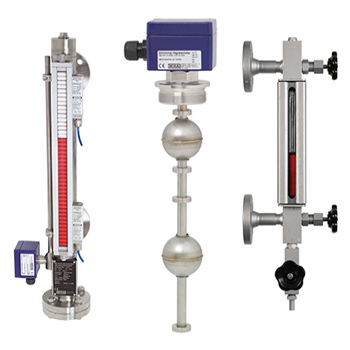
Float-based level transmitters from WIKA / KSR Kuebler provide continuous, robust level readings—even in demanding media and process conditions. Depending on the variant they operate as magnetostrictive transmitters (mm-resolution), Reed-chain transmitters (step-wise resolution) or potentiometric/Hall systems along a guide tube or in a bypass.

Features (model-dependent): materials 316L/1.4571, duplex, Hastelloy®, titanium; process connections G/NPT, PN/ANSI flanges, clamp/Varivent; options for ATEX/IECEx, SIL, high pressure/temperature, multi-point/interface (e.g., oil/water), outputs 4–20 mA/HART, Modbus/RS-485, IO-Link, local indication and limit switches.

ICS Schneider Messtechnik supports sizing (density/viscosity, temperature, pressure), float selection, mounting (top/side entry, bypass), calibration and integration into PLC/SCADA/IIoT.


FAQ on Continuous Measurement with Floats

Answers on measuring principles, accuracy/resolution, density influence, installation, hygiene/ATEX/SIL, setup and best practices.

How do magnetostrictive transmitters work?

A float magnet triggers a torsional wave along a waveguide; the time-of-flight is evaluated. Result: a continuous, high-resolution level signal with millimeter accuracy.

How do Reed-chain transmitters work?

The float sequentially actuates Reed switches along a chain. Resolution equals the contact spacing (e.g., 5, 10 or 20 mm), producing a stepped level profile.

What accuracy is realistic?

TechnologyTypical accuracyNotes
Magnetostrictive±1…2 mmVery high repeatability, low drift
Reed chain±(one step)Depends on step size, e.g., 5–10 mm
Potentiometric/Hall±2…5 mmRugged and economical

Which media are suitable?

Virtually all liquids with sufficient buoyancy: water, oils, chemicals, fuels, solvents, food & beverage. For high viscosity/build-up use suitable float shapes or flush bypass designs.

What is the influence of density (ρ)?

The float position depends on ρ; changing density slightly shifts the reading. Mitigate by specifying ρ during design or applying a correction in the control system.

Can I measure interfaces (e.g., oil/water)?

Yes—using a second float or an interface float enables phase boundary measurement; the system can output both level and interface.

Which mounting styles are available?

  • Top entry with a guide tube inserted from above
  • Side entry via a side nozzle
  • Bypass as an external chamber parallel to the vessel (accessible, retrofit-friendly)

How do I choose the right float?

By density, viscosity, temperature, pressure and chemical compatibility. Floats exist in slim, weighted, heavy-duty or ATEX-capable versions made of stainless steel, titanium, PTFE, etc.

Which process connections are possible?

G/NPT threads, PN/ANSI flanges, and clamp/Varivent for hygienic service; custom lengths and drilling patterns are common.

How large are the dead zones at the ends?

A small blank zone is inherent (float height, end stop). It is specified on the datasheet and included in the measuring length.

What temperature and pressure limits apply?

Model-dependent up to high pressure and elevated temperatures. For hot media use neck extensions/cooling sections; for cryogenic service use dedicated designs.

Which outputs/communications are supported?

4–20 mA/HART (2-wire), 0/10 V, Modbus/RS-485, IO-Link; optional switch outputs (min/max/window) and local indicators.

How are setup and calibration performed?

Factory calibrated; on site set zero/span, damping, alarms and, if needed, load a strapping table. Magnetostrictive devices are linear and low-drift—often no periodic recalibration required.

What matters in hygienic applications?

Use 316L, polished surfaces, flush connections (clamp/Varivent), FDA/EU 1935/2004-compliant seals, CIP/SIP resistance and complete material certificates.

Are ATEX/IECEx and SIL options available?

Yes—many series are offered in Ex i/Ex d and can be used up to SIL2/3. Document proof-test intervals and use suitable safety evaluation.

How do I stabilize the signal under turbulence?

Use a bypass or stilling well, enable damping, keep distance from inlets/agitators and employ mechanical guides where needed.

What are typical pitfalls?

  • Wrong density assumption → correct ρ or enable compensation
  • Build-up/fouling → choose suitable materials/bypass, plan cleaning intervals
  • Float sticking → check alignment, keep guide tube straight/clean
  • EMC interference → shielded cabling and proper bonding

Can I output volume or mass directly?

Yes—via strapping tables the device or PLC can convert level to volume/mass; temperature/density compensation can be included.

What does maintenance look like?

Systems are low maintenance. Periodically inspect the guide tube/bypass for deposits, verify tightness, check electrical connections and record function tests.

Do you support selection, sizing & commissioning?

Yes. We determine the measuring length/connection, select float/materials, configure signal & alarms, provide calibration certificates and integrate into PLC/SCADA/cloud.

Diese Website benutzt Cookies. Wenn du die Website weiter nutzt, gehen wir von deinem Einverständnis aus.