
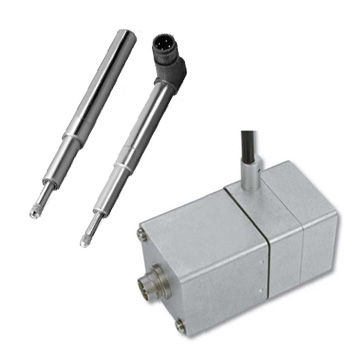
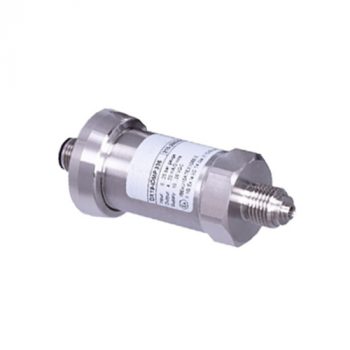




















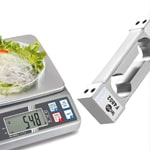




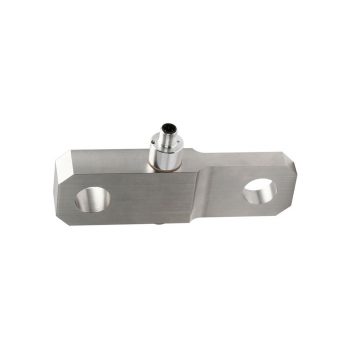
• Fine-grained structural steel with high-quality surface protection or in corrosion-resistant stainless steel version
  • High long-term stability, high shock and vibration resistance
  • For dynamic and static measurements
  • Excellent reproducibility
Datasheet
User Manual


WIKA Tension Plates – Direct Force Measurement for Hoisting & Tension Applications

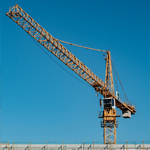
Tension plates (Zugmesslaschen) from WIKA are force transducers designed to be installed directly in the tension load path of lifting, rigging and hoisting systems. Acting as a structural load-bearing element, they measure tensile forces with high accuracy and long-term stability. Typical use cases include cranes, hoists, winches, sheave systems and general tension-force monitoring in industrial and logistics applications.

Key features include measuring ranges starting from approx. 0 … 5 kN, high-strength steel or stainless-steel construction (e.g. 1.4542), thin-film sensor technology, optional 4–20 mA or 0–10 V outputs, CANopen® versions, and designs with redundant outputs for safety-critical environments.


FAQ About WIKA Tension Plates

Answers on working principles, applications, installation, sensor technology and selection.

What is a tension plate?

A tension plate is a load-bearing force sensor integrated directly into the tension load path. It measures tensile forces and outputs an electrical signal, making it ideal for lifting, rigging and cable-tension applications.

Where are tension plates typically used?

They are used in cranes, lifting equipment, winches, sheave systems, load handling devices, offshore equipment and general industrial tension-force monitoring tasks.

What measuring ranges are available?

Standard measuring ranges begin at approx. 0 … 5 kN. Several model series support higher loads depending on the application and design requirements.

What materials are used?

Depending on the model, tension plates are manufactured from high-grade, surface-treated steel or corrosion-resistant stainless steel such as 1.4542. They provide excellent long-term stability as well as vibration and shock resistance.

Which sensor and output technologies are available?

The sensors use thin-film or strain-gauge technology. Electrical outputs include mV/V, 4–20 mA, 0–10 V and CANopen®. Redundant outputs are available for safety-related applications.

Are tension plates suitable for dynamic applications?

Yes — many WIKA tension plates are designed for both dynamic and static loads and can be used in vibrating or shock-loaded systems.

What must be considered during installation?

The tension plate must be installed so that the force passes axially through the sensor. Misalignment, side loads or bending moments can affect measurement accuracy and should be avoided.

What are common sources of error?

  • Lateral loads or off-axis force application
  • Improper alignment of the tension path
  • Incorrect sizing or fit of connecting hardware
  • Poor cable routing or insufficient EMC shielding

What advantages do tension plates offer?

They allow direct integration into the tension load path, require minimal structural modification, are ideal for retrofits and provide precise measurement results — including for overload protection applications.

Does ICS Schneider Messtechnik support selection and integration?

Yes — ICS Schneider Messtechnik assists with sensor selection, mechanical integration, calibration, documentation and commissioning.

How can I request a quotation?

Provide ICS Schneider with information such as the required measuring range, installation environment, mounting dimensions and the desired output signal. Alternatively, you can add the product to the inquiry list via the website.

Diese Website benutzt Cookies. Wenn du die Website weiter nutzt, gehen wir von deinem Einverständnis aus.