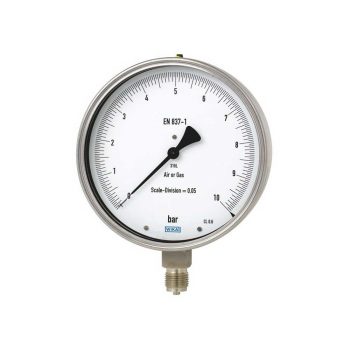
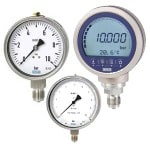
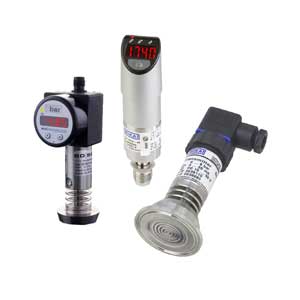
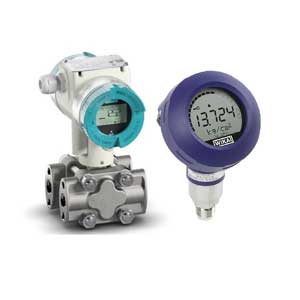
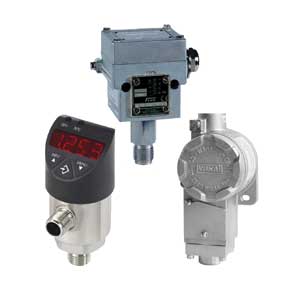
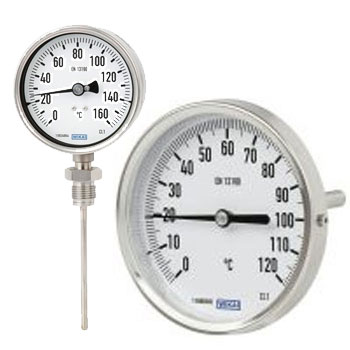



























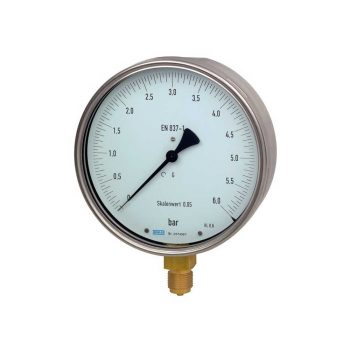
• Knife edge pointer for optimal accuracy of reading
  • Precise movement with wear parts of argentan
  • Scale ranges from 0 … 0.6 to 0 … 600 bar [0 ... 10 psi to 0 ... 10,000 psi]
Datasheet
User Manual
User Manual

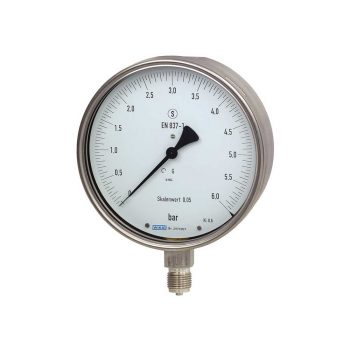
  • Completely from stainless steel
  • Knife edge pointer for optimal accuracy of reading
  • Wear-resistant precision movement from stainless steel
  • Scale ranges from 0 … 0.6 to 0 … 1,600 bar [0 ... 10 psi to 0 ... 20,000 psi]
Datasheet
User Manual
User Manual

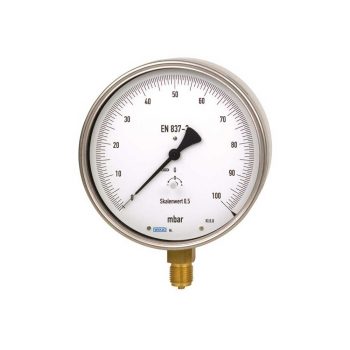
  • Safety pressure gauge with solid baffle wall designed in compliance with the requirements and test conditions of EN 837-1
  • Completely from stainless steel
  • Knife edge pointer for optimal accuracy of reading
  • Wear-resistant precision movement from stainless steel
  • Scale ranges from 0 … 0.6 to 0 … 1,600 bar [0 ... 10 psi to 0 ... 20,000 psi]
Datasheet
User Manual
User Manual

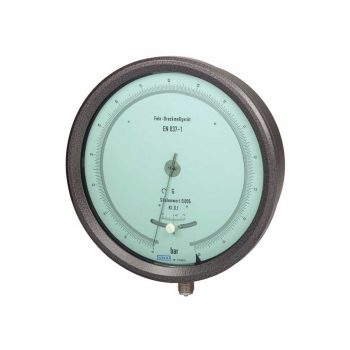
  • Knife edge pointer and dial with mirror band scale for optimal accuracy of reading
  • Precise movement with wear parts of argentan
  • Particularly easy-to-read scale due to nominal size 250
  • Scale ranges up to 0 … 1,600 bar
Datasheet
User Manual


Precision Test Gauges – accuracy for testing, calibration & quality assurance

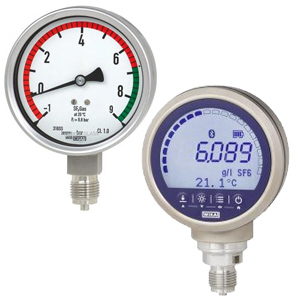
Precision test gauges (high-accuracy Bourdon tube gauges, sometimes capsule or differential precision types) are designed for accurate test and reference measurements in labs, workshops and production. They offer fine dial graduations, low hysteresis and high repeatability — ideal for test benches, commissioning, on-site calibration, or as a reference indication alongside digital pressure calibrators.

ICS Schneider Messtechnik supports you with range & accuracy selection, scales (bar/psi/kPa), dial size for optimum readability, materials (e.g., 316L), and process connections (G 1/4, G 1/2, NPT, flange). On request we provide calibration certificates (ISO/DAkkS), damping accessories (snubber/restrictor) and — if needed — parallel digitalization via transmitters (4–20 mA/HART/RS-485) and edge/MQTT.


FAQ on Precision Test Gauges

Common questions on accuracy classes, selection, installation, damping, calibration, and temperature/media effects.

What are precision test gauges used for?

For precise reference indication on test benches, on-site calibration of process gauges/switches, quality assurance in production and service, and as a comparison standard next to pressure calibrators.

Which accuracy classes are typical?

Class (EN 837)Typical useNote
0.6Accurate process/QA measurementsLarge dial recommended
0.4Workshop/laboratory testingFine graduation, stable environment
0.25Reference near calibratorVery low hysteresis, steady signal

How do I choose the right measuring range?

As a rule of thumb use working pressure × 1.3–1.6. For test tasks, select the span so that the critical measuring point lies in the middle third of the dial. For vacuum/absolute pressure consider dedicated scales.

Which measuring systems are used?

Measuring systemRangeAdvantagesConsider
Bourdon tubeUnder/overpressure up to high pressureRobust, good linearityDamp pulsation
CapsuleVery low pressure (mbar)Very sensitiveTemperature/vibration effects
Precision Δp mechanismSmall differentialsFilters/flow/proof testsCheck static rating

Which dial sizes improve readability?

Dial sizeBenefitRecommendation
DN 100Good readabilityGeneral QA
DN 160Very fine graduationReference/test bench
DN 200Max. resolution/distanceLab/panel mounting

What scales and units are available?

Scales in bar, mbar, kPa, MPa, psi or as a dual scale. For test benches, fine-graduation dials with mirror band (parallax-free) are recommended.

How do I protect the measuring system from pulsation & pressure spikes?

Use a restrictor/snubber, capillaries or remote mounting. With steam/high temperature use a siphon/cooling section. A span that is too small increases stress.

Is liquid filling (glycerin) advisable?

Only for vibration and shock. For the best readability without vibration a dry version is usually preferable (less temperature influence on indication).

Which process connections are available?

ConnectionStandardRemark
G 1/4 / G 1/2ISO 228Industry standard
¼" / ½" NPTASMEUS installations
FlangeEN/ASMESpecial/hygienic with diaphragm seal

What materials are common?

Stainless steel 316L for case/measuring system in demanding media/environments; brass for neutral media. Select seals to match the medium (NBR/FKM/EPDM/PTFE/FFKM).

How does temperature affect indication?

Temperature changes cause zero/span drift, especially on fine ranges. Keep ambient stable, allow thermal equilibration before measurement, and perform zero checks.

How often should I calibrate?

Rule of thumb: annually; in QA/safety loops semi-annually/quarterly or after events (shock/overload). Store certificates (ISO/DAkkS) securely.

Precision test gauge vs. deadweight tester?

CriterionPrecision test gaugeDeadweight tester
MobilityHigh, plug-and-playStationary/more effort
Accuracyto 0.25 % of spanto 0.01…0.05 % of span
UseQuick checks/reference indicationPrimary standard/cal lab

What IP protection classes are available?

Typically IP54–IP65; consider front sealing and safety glass. For washdown/hygiene use diaphragm seals and smooth surfaces as required.

What matters during installation?

  • Low-vibration mounting; keep the dial clearly visible.
  • Do not apply lever forces via the process connection.
  • Provide vent/drain (steam/condensate) before measurement.

Can I add IIoT connectivity?

Yes, via a dual measuring point: precision gauge for local indication + transmitter (4–20 mA/HART/RS-485). An edge gateway publishes securely via MQTT/HTTPS to SCADA/cloud.

Typical fault causes & remedies?

  • Pointer flutter: pulsation/vibration → snubber/restrictor, check mounting.
  • Zero shift: temperature/overload → zero adjustment/calibration.
  • Sluggish indication: damping too strong → adapt settings/accessories.

Do you offer selection & calibration services?

Yes. We size range/dial, choose scales/materials/connection, provide calibration certificates and, on request, accessories (restrictors, siphons, brackets) as well as digital integration.

Diese Website benutzt Cookies. Wenn du die Website weiter nutzt, gehen wir von deinem Einverständnis aus.