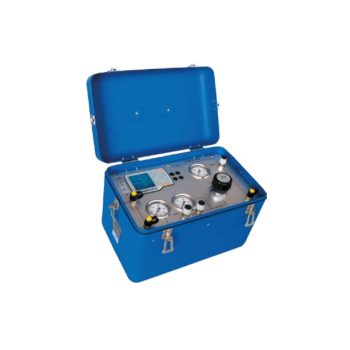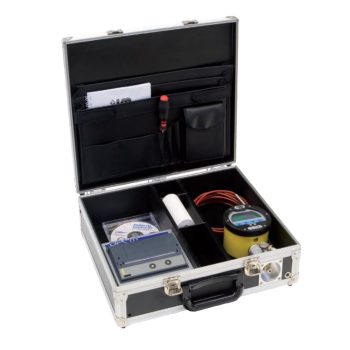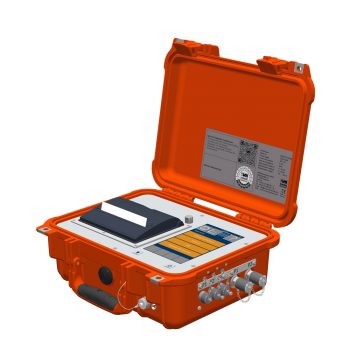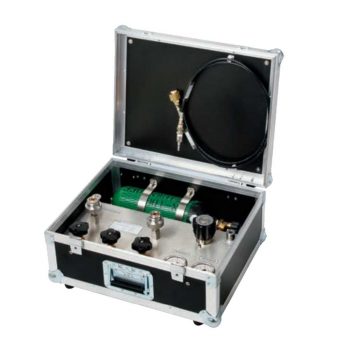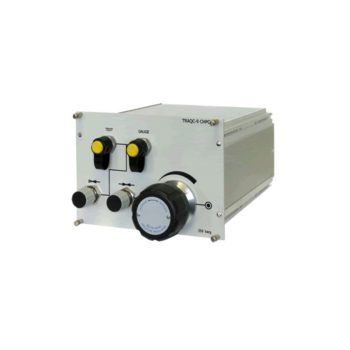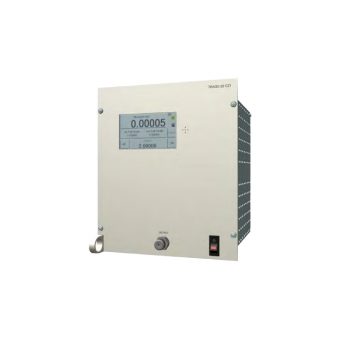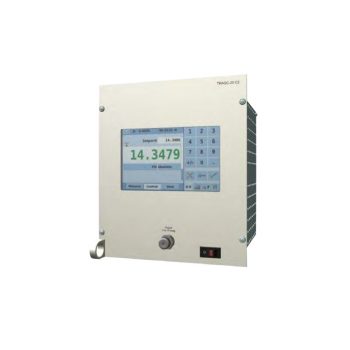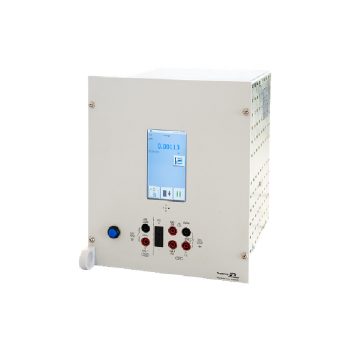
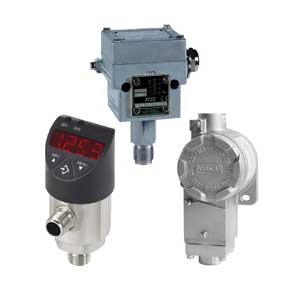
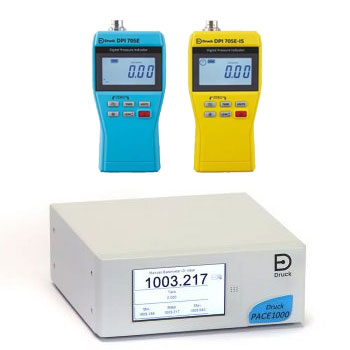
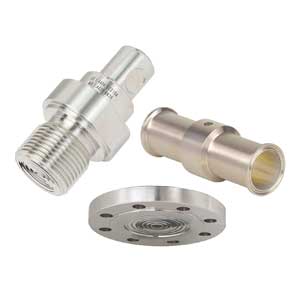
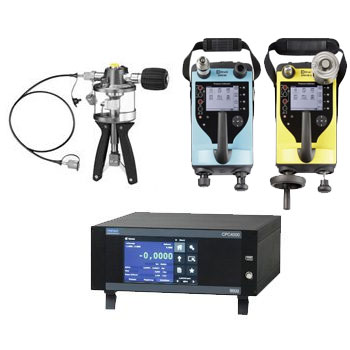
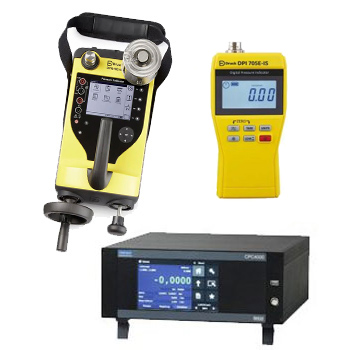
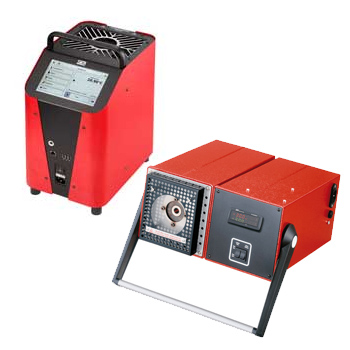
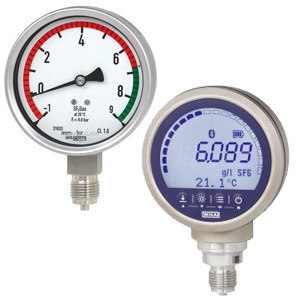
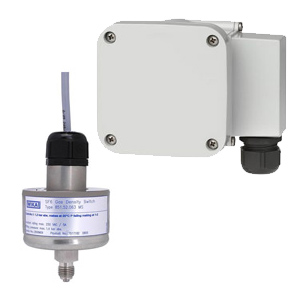
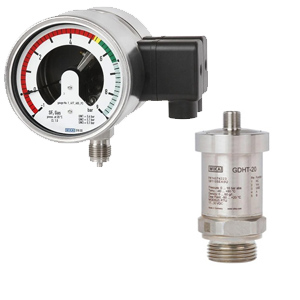
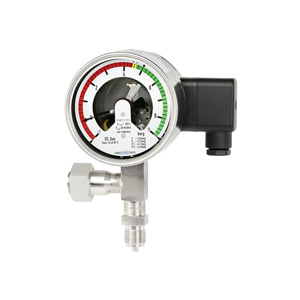
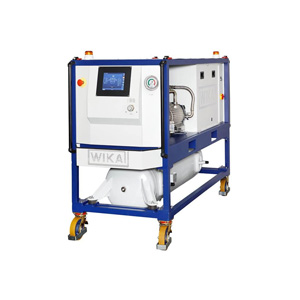
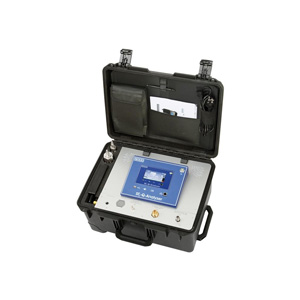
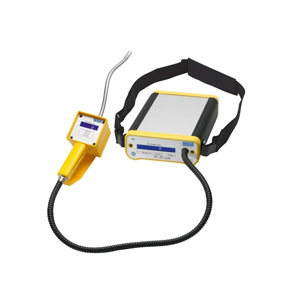
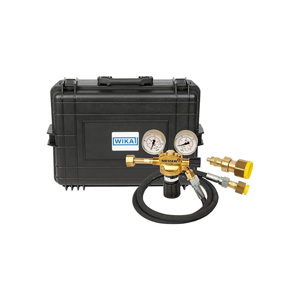
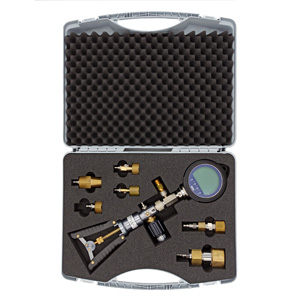
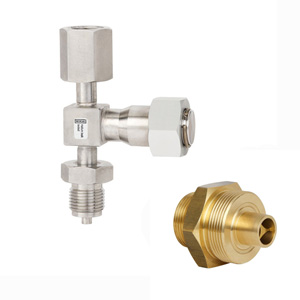
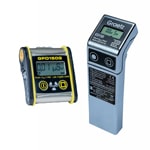
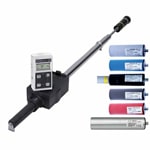
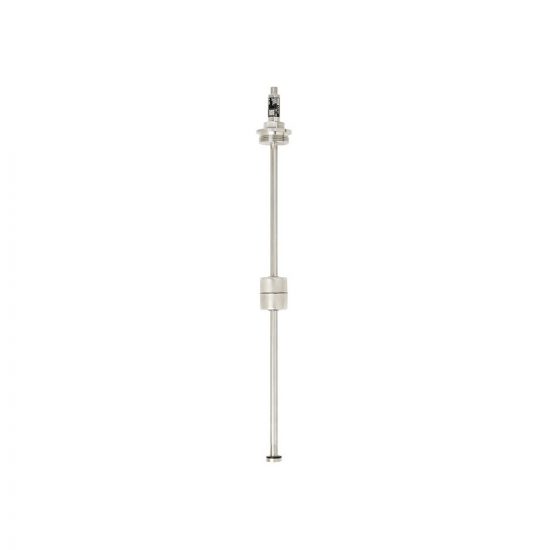


























- Testing, adjustment and calibration of all types of pressure measuring instruments
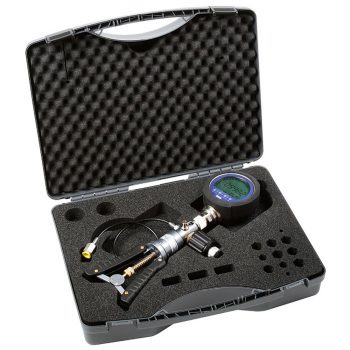
- 3 in 1: Vacuum, low pressure and medium pressure calibration
- exact setting in the mbar range thanks to ultra-fine thread pitch and large-volume regulating valve
- tool-free changeover between overpressure and vacuum generation
Datenblatt |
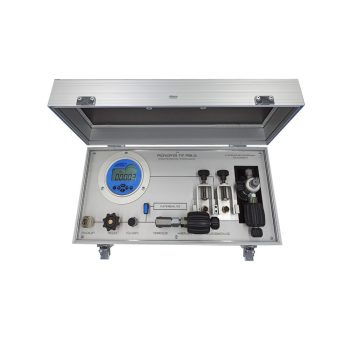
Complete calibration system for pressure ranges from -1...0...700 bar. Built-in interchangeable pressure and temperature modules. Accuracy up to 0.025% of reading. Temperature calibration for overpressure, underpressure, differential pressure, and absolute pressure. Pressure adjustment via regulator and fine volume control possible down to 0.01 mbar. Integrated or external 200 bar pressure cylinder. Hand calibration pump. Data storage and transfer for archiving calibration records via RS232. DKD calibration certificate. Operates on mains or battery power.
Datasheet
|
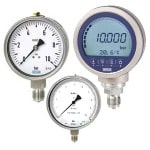
- Simple data transmission via USB interface
- Optional data logger for up to 1 million data points
- Ergonomic handling
- Compact dimensions and low weight
Datasheet |
- Simple data transmission via USB interface or Bluetooth®
- Optional data logger for up to 1 million data points
- Precise adjustment through the fine adjustment valve
- Clear and simple operation
- The right hand test pump for every pressure range
Datasheet |
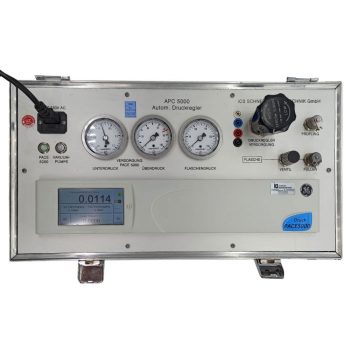
- Individuelle Prüfeinrichtung für Werkstatt, Prozess und Service
- Automatische Druckregler PACE 5000/ PACE 6000 integriert
- Für wählbare Messbereiche von -1 … 0 … +210 bar
- Automatische Vorgabe der Prüfpunkte, Rampen über Touchscreen
- Genauigkeit: 0,05 bis zu 0,0015 % FS
- Großes TFT-Touchscreen
- Eingebaute N2-Stickstoffflasche mit präzisem manuellen Druckregler (auf Wunsch externe Druckflasche)
- Eingebaute Vakuumpumpe für Unterdruck / Absolutdruck (auf Wunsch auch ohne Vakuumpumpe)
- Eingebaut analog Manometer für Vakuum, Überdruck und Flaschendruck
- Externe Nachfüllung der N2_Stickstoffflasche über Minimess
- Prüflingsanschluss über Minimess-Schnellkupplung
- Betrieb an Netz 230 V AC 50 Hz oder Batterie-Betrieb
- Robuster abschließbarer Alukoffer
Datenblatt
|
.
.
- Pressure tests in accordance with G469:2010 and W400-2
- Leak tests of gas pipes, water conduits, sewers and pressure vessels
- SCOPE OF SUPPLY
- ESS3 R1 - without temperature probe
- Case with built-in printer
- Power supply unit
- Software package
- IrDa interface cable
- Spare paper roll
- Connecting hose (mini measurement) 2 m
- Adaptor G 1/2 on mini measurement
- Instructions for use
- Abbreviated instructions
- PROTECTION CLASSES - Measuring device
- Housing class depends on sensor
- Relative pressure IP67
- Absolute pressure IP68
- Temperature IP68
- Differential pressure IP68
- Explosion protection II 2G Ex ib IIC T4 Gb
- Case
- Housing class IP54
- Explosion protection No explosion protection
- Housing class depends on sensor
Datasheet |
- Accuracy ± 0.5% F.S. (or ± 0.25% F.S. available on request)
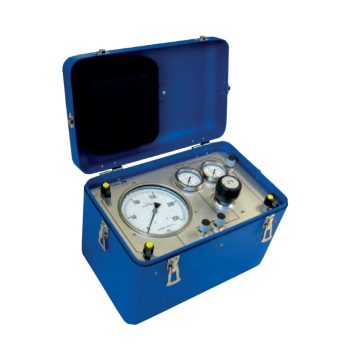
- Pressure gauge Analogue, dial size 160 mm, protected against overpressure
- Monitor gauges Supply Pressure: 0.-250 bar, dial size 63 mm
- Regulated pressure: see ranges
- Gas storage system 2 litre capacity, maximum working pressure 200 bar
- Regulator Model 8810 High Pressure Precision Regulator
- Range; on accordance with pressure gauge ranges
- Filling hose Minimess 1215, length 1.5 metres
- Refill connection For connection to nitrogen bottle, standard RU-3
Datasheet
|
- Accuracy: ± 0.02% F.S.
- Operating temperature: between 5 and 45°C.
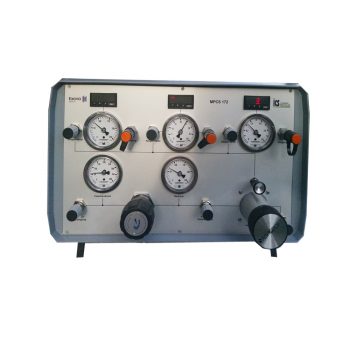
- 3 Analogue 63mm monitor gauges
- 2 liter Integrated Gas capacity for maximum working pressure of 200 bar
- Sensor Ranges from 0-16 bar to 0-250 barg (others on request)
- Fine control valves with soft seat and tight shut-off.
- Overpressure protection: Pressure limiting valve
Datasheet
|
- Adjustment and calibration of pressure measuring instruments on site
- Pressure provision for pressure controllers (CPC3000, CPC6000 and CPC8000)
Datasheet
|
- Accuracy: ± 0.02% F.S. (±0.04% F.S. for ranges ≤400mbar and ≥400 bar.
- Sensor range: Several ranges in gauge or absolute pressure. See datasheet for all possible ranges.
- Connections: Pressure: ¼” NPT female Electric: 4mm
- Power: 100-240 VAC, 1 phase 50/60Hz
- Housing: Euro cassette
- Display: LCD, 70 x 70mm, 128 x 128 pixels with backlight
Datasheet
|
- Simple, efficient operation
- Protected against overpressure
- Can be integrated in workbenches
- Available in various configurations
Datasheet
|
- Selection of Chassis and interchangeable control modules
- Single, dual or auto range control module configurations
- High speed pressure control
- Up to 210 bar (3000 psi/21 MPa) gauge & absolute
- Choice of precision up to 0.005% R +0.005% FS
- Long-term stability up to 0.01% R per annum
Datasheet
|
- Pressure ranges -1 to +70 bar
- Control speed < 3 sec.
- Control stability 0.004 % FS
- Precision up to 0.015 % IS (IntelliScale)
- Accuracy up to 0.025 % IS (IntelliScale)
- Large color touch screen
- Simple menu navigation
Datasheet
|
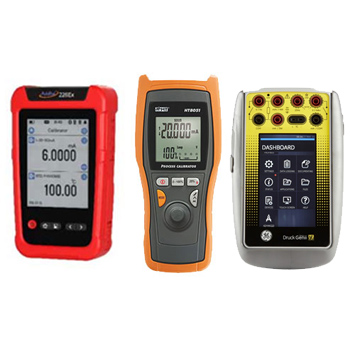
- Long-life Lithium-Polymer battery pack
- Documenting / AutoCal® compatible
- Accuracy from 0.0025%R + 0.002%FS.
- Multi-function capabilities: electrical, frequency, temperature.
- Modular re-rangeable and expandable concept.
- Individual components can be used as stand-alone instruments.
- Allows significant inventory reductions.
- Simplifies training and improves operator safety.
- Reduces costs of ownership.
- Easy to extend with pressure modules.
- HART communication.
- USB and WiFi IEEE 802.11g connectivity.
Datasheet
|
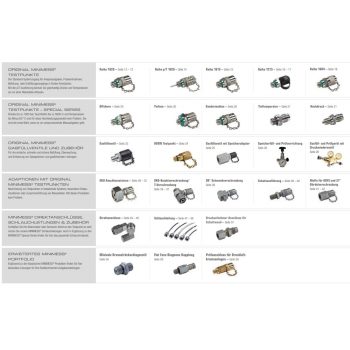
Calibration Cases – Mobile Pressure Calibration, Compact & Ready to Use
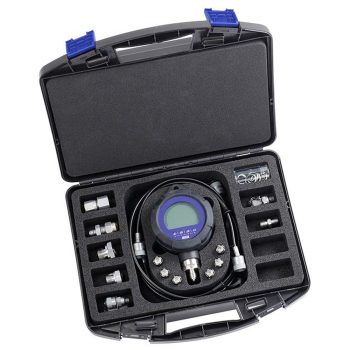
Calibration cases bundle everything you need for on-site calibration of pressure transmitters, gauges, and pressure switches: a hand/bench pump (pneumatic or hydraulic), a reference instrument (digital reference gauge/transmitter), hose & adapter set, seal kits, and optionally a power supply/data logger—all protected in a portable case.
ICS Schneider Messtechnik configures your case application-specifically (ranges, media, accuracy, connections) and supplies it on request with DAkkS/ISO calibration and documentation templates (CSV/PDF). This ensures traceability, shortens downtime, and increases measurement quality—in service, maintenance, and the lab.
FAQ on Calibration Cases
Answers on selection, pressure ranges, media, accuracy, leak testing, safety, documentation, and best practices.
What is included in a typical calibration case?
| Component | Function |
|---|---|
| Pump (pneumatic/hydraulic) | Generate vacuum/overpressure or high pressure |
| Reference instrument | High-accuracy indication (e.g., ≤ 0.1% FS) with certificate |
| Adapters & hoses | Quick connection to G/NPT threads, tight & safe |
| Seal kits | NBR/FKM/PTFE—for repeatably tight connections |
| Accessories | Power/USB, valve/manifold, tools, report templates |
When should I choose pneumatic vs. hydraulic?
Pneumatic (air/N₂) for clean applications, vacuum up to ~20–60 bar. Hydraulic (oil/water) for high pressure up to 350/700/1,000+ bar and maximum stability. Check DUT media compatibility.
What pressure ranges do the cases cover?
| Case type | Typical range | Use |
|---|---|---|
| Pneumatic (vacuum/pressure) | −0.95 … 20/60 bar | Service, HVAC, process air, instrumentation |
| Hydraulic (oil/water) | 0 … 350/700/1,000+ bar | High-pressure transmitters, hydraulics, energy |
| Combo vacuum/pressure | Switchable | Maintenance, field service |
How accurate are the references?
Depending on model typically ±0.05 … 0.1% FS (or better). Consider the total error band over the specified temperature range and DAkkS/ISO traceability.
Which connection standards are provided?
Standard G 1/4 / G 1/2 (ISO 228) and 1/4" NPT. Adapter sets allow switching between G/NPT, including flat-sealing options for repeatable tightness.
Which media are used?
- Pneumatic: dry, clean air or N₂
- Hydraulic: calibration oil (low viscosity/expansion), optionally water/glycol—only with suitable materials/DUTs
How do I achieve a stable reading?
- Use fine volume/micrometer control, short lines & low dead volume
- Vent carefully (hydraulics), minimize temperature changes
- Record only after stabilization
Can I test and set pressure switches?
Yes. Approach/retreat the setpoint slowly and document switch and reset points (hysteresis). Optional relay/signal input on the reference device helps.
How do I perform a leak test?
Pressurize to setpoint, isolate, then measure pressure decay over a defined time. Document environmental effects (T, V); use a manifold if needed.
What safety aspects apply?
- Strictly observe maximum pressure of pump, hoses, and adapters
- Use only pressure-rated lines; never disconnect under pressure
- Wear personal protective equipment (goggles/gloves)
How often should I recalibrate?
Recommendation: annually (usage dependent). After impacts/overload, check immediately. Store certificates in a revision-safe manner.
Is data logging and connectivity available?
Many references provide USB/RS-485, internal dataloggers, and export (CSV/JSON). On request we provide templates for test reports and calibration certificates.
How do I choose the right range?
Target the operating range of your DUTs within the mid span of the reference (10–90% FS). For wide coverage, use multiple references or wide-range references.
Which case solutions do you offer?
- Pneumatic service case (vacuum/pressure, light & mobile)
- Hydraulic high-pressure case (oil/water, 350/700/1,000+ bar)
- Combo case (switchable, versatile in the field)
- Documentation case (with software/templates, USB/power)
Which adapters are recommended?
Quick-change adapters, flat-sealing transitions (G/NPT), high-pressure fittings, a relief valve, and a seal kit (NBR/FKM/PTFE) for repeatably tight connections.
How do I integrate the case into my QMS?
With traceable certificates, documented procedures (SOP), a measurement-uncertainty budget, and complete records (time, environment, operator, device data).
Can the case be expanded?
Yes—modular with additional thread adapters, manifolds, extra reference ranges, electrical test functions (mA/simulation), and software.
Delivery options
Supplied ready to use with calibration certificate, pre-set parameters, labels (device ID), and a documentation package. Optional commissioning/training available.
Tips for repeatable results
- Use consistent up/down ramps
- Keep adapter/seal quality consistent
- Approach each test point multiple times and average


Datenblatt
Datasheet