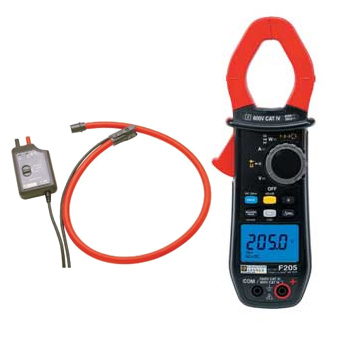





















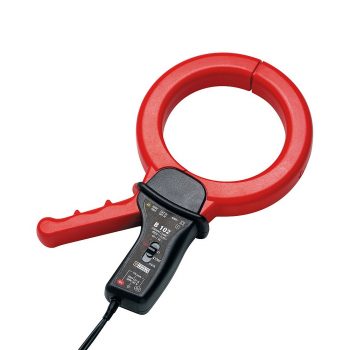
• differential or leakage current, from 500 µA
  • currents up to 400 A max
  • 2 measurement ranges: 1 mV/mA or 1 mV/A
  • used on single or multi-phase systems, with phased or unphased currents and on balanced or unbalanced circuits
  • 110 mm jaw opening
  • measurement of fault currents on 3-wire 3-phase circuits without a neutral using an artificial neutral system
Datasheet

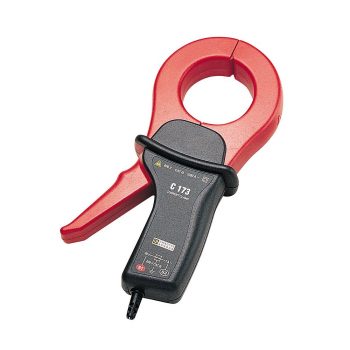
Main features of the C173 model:

  • Output signal: AC voltage
  • Output / input ratio: 1 V / A AC, 100 mV / AAC, 10 mV / A AC, 1 mV / A AC,
  • Output via lead and isolated Ø 4 mm male plugs
Datasheet

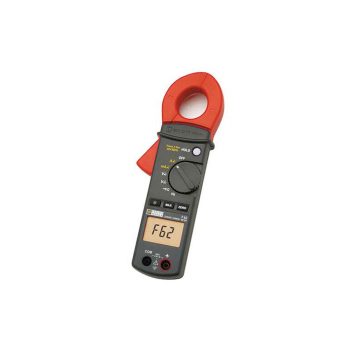
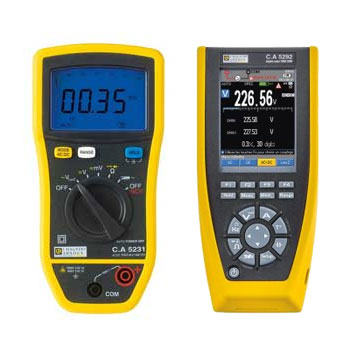
  • resolution: 10µA
  • strong immunity to spurious currents: 70dB
  • 50/60Hz harmonic filter
  • current: 30µA to 100A AC
  • AC/DC voltage: 0.1V to 600V
  • frequency: 5Hz to 1kHz
  • resistance: 0.1Ω to 1kΩ
  • audible continuity: <35Ω
  • backlit display: 10,000 counts
  • functions: max. and Delta; display memorization
  • battery life indicator light; automatic power off
  • dimensions: 218x64x30mm
  • weight: 280g
  • warranty: 3 years
Datasheet

Specifications:

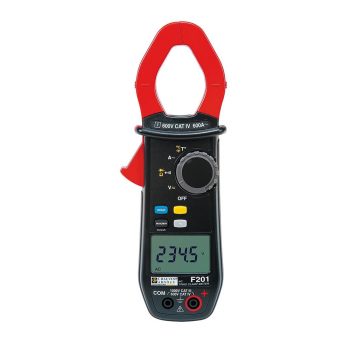
  • 10,000-count backlit display
  • Current: 30 µA to 100 A AC
  • Resolution: 10 µA
  • 50/60 Hz anti-harmonic filter
  • High immunity to eddy currents: 70 dB
  • AC/DC voltage: 0.1 V to 600 V
  • Frequency: 5 Hz to 1 kHz
  • Resistance: 0.1 Ω to 1 kΩ
  • Audible continuity: < 35 Ω
  • Functions: Max, Relative, display memorization
  • Automatic power-off with battery status indication
  • 300 V CAT III
Datasheet

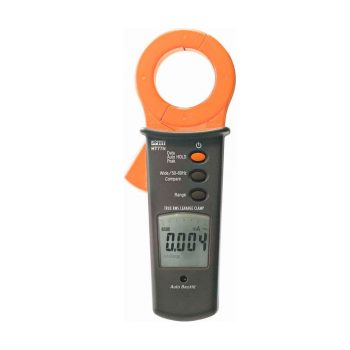
  • AC TRMS Strom
    • Messbereich: 10μA ÷ 100A
    • Auflösung: 1μA ÷ 0.1A
    • Genauigkeit: ±(1.0%rdg + 8digits)
    • Überlastschutz: max 120Arms
  • Sicherheit: IEC/EN 61010-1
  • Überspannungskategorie: CAT III 300V (HT77N)
  • Anzeige: LCD 4 Digits, 6000 Punkte (HT77N)
Datasheet

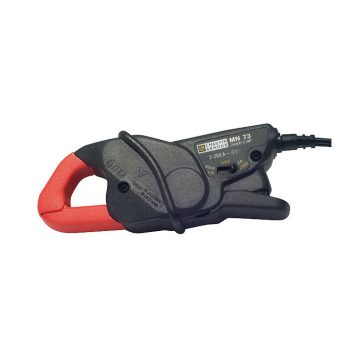
Main features of the MN73 model:

  • Output signal: AC voltage
  • Output / input ratio: 1,000 mV/ A AC, 10 mV / A AC
  • Output via lead and isolated Ø 4 mm male plugs
Datasheet

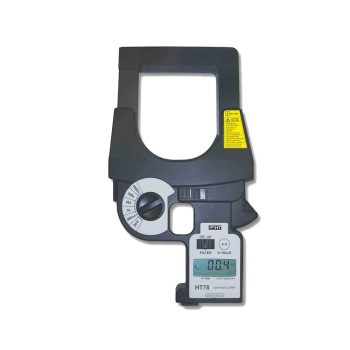
This leakage current clamp is mainly used for troubleshooting circuits in which the RCD (residual current device) repeatedly trips unintentionally.

  • AC TRMS current
    • Measuring range: 0.1 mA ÷ 3000 A
    • Resolution: 0.1 mA ÷ 1 A
    • Accuracy: ±(1.5% rdg + 8 digits)
    • Overload protection: 3000 A rms
  • Safety: IEC/EN 61010-1
  • Overvoltage category: CAT II 600 V, CAT III 300 V (HT78)
  • Display: LCD 4 digits, 3200 counts (HT78)
Datasheet


Leakage Current Clamp Meters

Leakage current clamp meters are specialized clamp-type instruments designed to measure very low currents flowing to earth or protective conductors — so-called leakage or stray currents. They are built for high sensitivity and allow detection of currents in the milli- or microampere range. Their applications include insulation diagnostics, fault current analysis, protective device coordination, and grounding inspections.

FAQ

What is a leakage current clamp meter?

A leakage current clamp meter is a device designed with high sensitivity to detect small currents flowing unintentionally within an electrical installation or equipment, for example towards earth or protective conductors.

Why are leakage currents measurable and relevant?

Leakage currents may result from aging or damaged insulation, filter capacitors in electronic equipment or unintended grounding paths. They can cause nuisance tripping of RCDs, safety hazards or increased energy losses. :contentReference[oaicite:4]{index=4}

What typical measurement ranges and sensitivities are common?

Quality leakage current clamp meters offer resolution down to 0.1 mA (100 µA) or better, allowing reliable measurement of very small currents that standard clamps cannot detect. :contentReference[oaicite:5]{index=5}

How do these differ from standard current clamps?

While standard clamps measure load currents, leakage clamps are optimized for small stray currents, often include filters for non-sinusoidal waveforms, and have accessories to measure protective conductor currents or earth leakage specifically.

How is a proper leakage current measurement conducted?

In single-phase systems clamp around both phase and neutral conductor; in three-phase systems clamp around all phase and neutral conductors. The resulting reading is the imbalance current flowing to earth. :contentReference[oaicite:6]{index=6}

What are common error sources?

Errors may arise from incomplete closure of the clamp, inclusion of multiple conductors inadvertently, strong electromagnetic interference, inadequate bandwidth or wrong measurement mode. :contentReference[oaicite:7]{index=7}

Which applications benefit from leakage current clamp meters?

They are used in grounding systems, RCD fault analysis, preventive maintenance, insulation monitoring, industrial installations, and energy efficiency audits.

Which selection criteria are important?

Important criteria include jaw opening size, sensitivity/resolution, measurement range, filters for removing harmonics, interface options (USB/Bluetooth), CAT rating, safety and calibration capability.

How important is the measurement category (CAT)?

Even for low currents, measurement points may have high voltage. Therefore CAT rating consistent with working environment (distribution panel, installation etc.) is critical.

How often should the instrument be calibrated?

Calibration frequency depends on manufacturer, usage, environment and regulatory requirements. Visual inspection, functional checks and calibration are recommended, especially for documented testing.

What additional features are helpful?

Helpful features include data hold, MIN/MAX/PEAK capture, memory or data export via USB/Bluetooth, built-in filters for precise leakage measurement and large jaw openings.

Are there industry-specific considerations?

Yes — for example in healthcare, data centres or isolation-systems stricter leakage limits apply; also filters or harmonic suppression may be necessary to obtain meaningful measurements.

Diese Website benutzt Cookies. Wenn du die Website weiter nutzt, gehen wir von deinem Einverständnis aus.