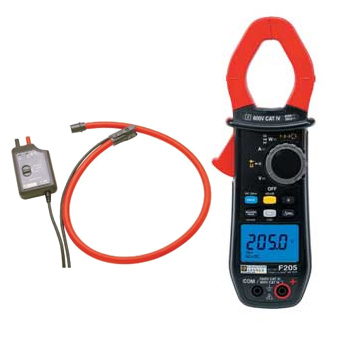
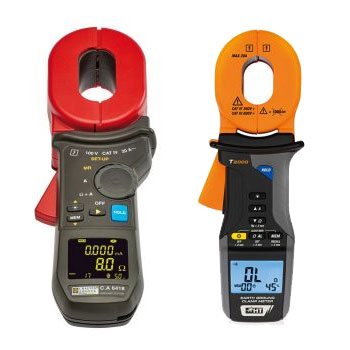
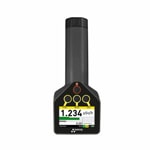























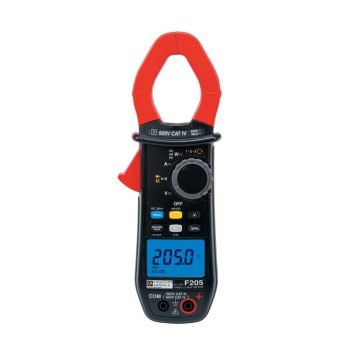
• Current: 2,000 A AC / 3,000 A DC
  • Voltage: 1,000 V AC/DC
  • Clamping diameter: 60 mm
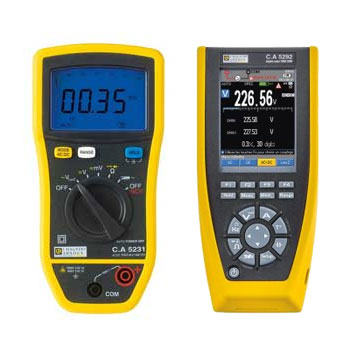
  • Large 10,000-count display
  • Automatic AC / DC detection
  • Min, Max, Peak
  • RELative and differential measurements
  • Power values
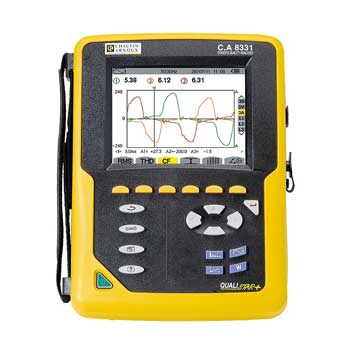
  • THD & Harmonics
Datasheet

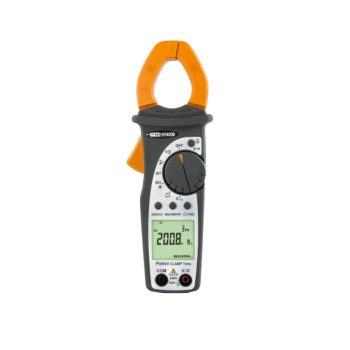
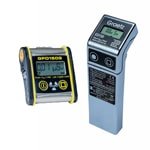
HT4020 carry out measurements in TRMS of AC current up to 400A, AC/DC voltage up to 600V, Frequency, Resistance, Continuity test, Active, Reactive, Apparent Power, Cos , Energy for balanced single-phase and/or three-phase systems, further to the detection of phase sequence by 1-terminal method.

Datasheet

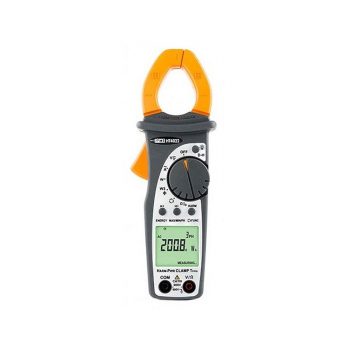
HT4022 carry out measurements in TRMS of AC current up to 400A, AC/DC voltage up to 600V, Frequency, Resistance, Continuity test, Active, Reactive, Apparent Power, Cos , Energy for balanced single-phase and/or three-phase systems, further to the detection of phase sequence by 1-terminal method.

Datasheet

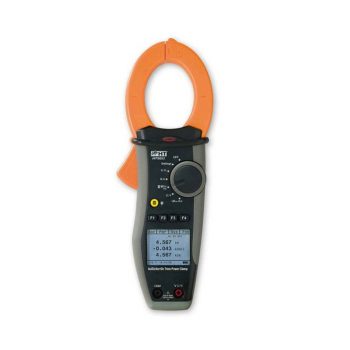
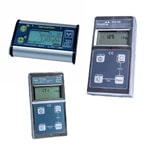
Clamp-on power quality analyzer HT9020 has been designed for measuring DC, AC+DC TRMS current up to 1000A according to CAT IV 600V in compliance with standard IEC/EN61010-1

Datasheet

  • DC, AC + DC TRMS current up to 1000A
  • DC, AC + DC TRMS voltage up to 1000V
  • Resistance and continuity test
  • Frequency with test leads
  • Frequency with jaws
  • Phase sequence / 1 wire phase correlation
  • DC Power
  • Active, Reactive, Apparent power on Single phase systems
  • Active, Reactive energy on Single phase systems
  • Power Factor on Single phase systems
  • Harmonic voltage/current up to 25th with THD% calculation
  • Inrush current
  • Data logger with programmable IP
  • Autoranging
  • Backlight
  • Auto Power OFF
  • Data HOLD
  • MAX/MIN/CREST
  • PC connection via Bluetooth
  • Connection with Win Mobile portable phones
Datasheet


Power Clamp Meters

Power clamp meters measure not only current but also electrical parameters such as voltage, active power, reactive power, apparent power, power factor and energy. They allow load analysis, efficiency evaluation and power quality assessment directly on live conductors without interrupting the circuit. Typical applications include troubleshooting, energy analysis, commissioning and maintenance of electrical systems as well as evaluation of consumers and load profiles.

FAQ

What is a power clamp meter?

A power clamp meter combines current measurement with voltage, power and energy functions. It measures parameters such as active power (kW), apparent power (kVA), reactive power (kvar) and power factor (cos φ), often also energy (kWh).

Which parameters can power clamp meters measure?

Typical parameters include AC/DC current, AC/DC voltage, active/reactive/apparent power, power factor, energy, frequency, harmonics, inrush currents, min/max values and phase angle.

How does a power clamp meter measure power?

The instrument simultaneously measures current and voltage and internally calculates the relevant power values such as kW, kVA or cos φ.

What does True-RMS mean for power clamp meters?

True-RMS ensures accurate measurement of distorted or non-sinusoidal waveforms. It is essential for analysing loads with electronic power supplies or motor drives.

What are typical application areas?

Application areas include energy analysis, load studies, machine monitoring, installation work, troubleshooting, power quality measurement and documentation of consumption.

Which measurement category (CAT) is required?

The CAT rating must match the installation environment – e.g., CAT III for distribution systems or CAT IV for service entrances. The rated voltage must fit the use case.

How accurate are typical instruments?

Typical accuracy ranges from ±1 % to ±3 % depending on load characteristics, measurement range and frequency. Distorted loads may require higher bandwidth instruments.

How are single-phase and three-phase systems measured?

Single-phase systems use one current and one voltage measurement. Three-phase systems may require multiple inputs or dedicated 3-phase measurement modes.

What are common error sources?

Common errors arise from incorrect clamp placement, measuring multiple conductors simultaneously, phase mismatch, lack of True-RMS capability, magnetic interference or insufficient bandwidth.

Which additional features are useful?

Useful features include energy counters, data logging, min/max/peak capture, harmonic analysis, Bluetooth/USB interfaces and graphical waveform displays.

How often should power clamp meters be calibrated?

Calibration intervals depend on manufacturer recommendations and usage. For documented measurements, annual calibration is typically advised.

Diese Website benutzt Cookies. Wenn du die Website weiter nutzt, gehen wir von deinem Einverständnis aus.