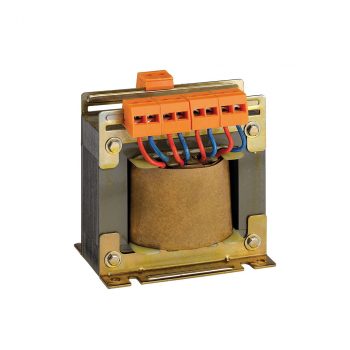


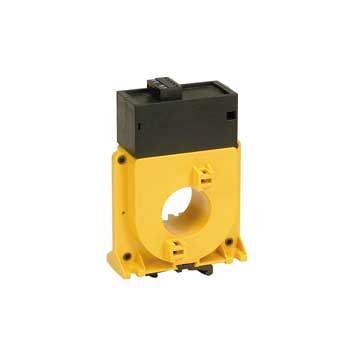







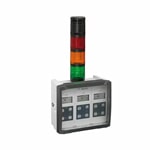
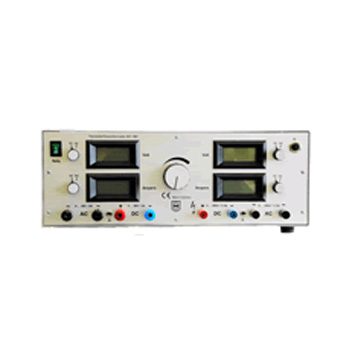
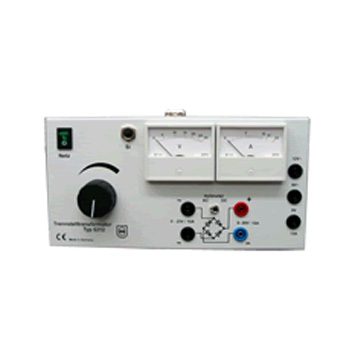
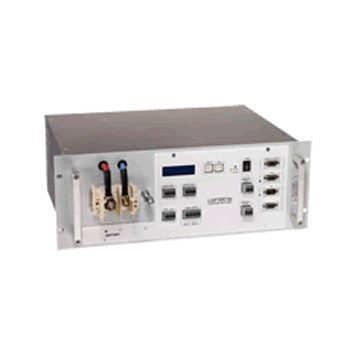




























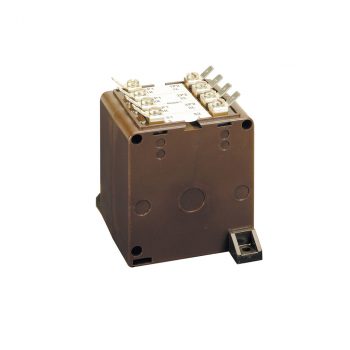
Summation single-phase current transformer (2 equal inputs)
CABLE/PASSING BUS BAR primary winding
TYPE Summation single-phase current transformer (2 equal inputs)
RATIO 1+1/1 A
PERFORMANCE 10/15 VA
Datasheet

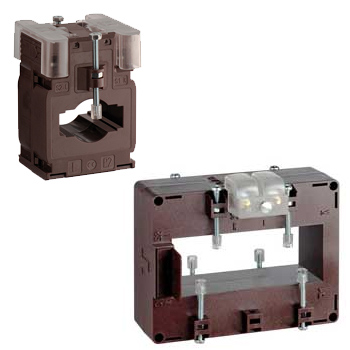
Summation single-phase current transformer (3 equal inputs)
CABLE/PASSING BUS BAR primary winding
TYPE Summation single-phase current transformer (3 equal inputs)
RATIO 1+1+1/1 A
PERFORMANCE 10/15 VA
Datasheet

Summation single-phase current transformer (4 equal inputs)
CABLE/PASSING BUS BAR primary winding
TYPE Summation single-phase current transformer (4 equal inputs)
RATIO 1+1+1+1/1 A
PERFORMANCE 40 VA
Datasheet


Summation Current Transformer (Summation CT)

A summation current transformer is a special type of current transformer that combines multiple input currents into one summed output current. In this setup, secondary outputs of several main CTs feed into the summation CT as its primary inputs. The summation CT then produces a single secondary current proportional to the sum of all inputs — useful when the overall current from several conductors or feeders needs to be monitored with a single instrument.

Questions & Answers

What is a Summation CT?

A Summation CT collects the secondary currents of multiple main current transformers and outputs their sum through one secondary winding — enabling a single meter to monitor the total current of several lines or circuits.

How does the Summation CT work?

The secondary outputs of the main CTs are connected as primary inputs to the summation transformer. The combined primary currents generate a magnetic flux in the core; the secondary winding then provides a current proportional to the total sum.

When is a summation transformer used?

Whenever the load or current of multiple feeders, lines or circuits should be aggregated and monitored together — e.g. in distribution panels, energy metering, load monitoring or whenever total current consumption across multiple lines is relevant.

What are the advantages over using separate CTs and meters?

Less wiring, fewer meters, reduced space requirements — instead of individual measurement for each line, a single summation CT plus one meter captures the total current.

Can summation CTs work with main CTs of different ratings?

Yes. Many summation CTs allow connection of main CTs with different primary ratings. However, the turn-ratios must be correctly accounted for so that the summed output reflects the actual total current.

What accuracy performance can be expected?

The total measurement error results from the sum of individual CT inaccuracies plus the summation CT’s error tolerance. With multiple CTs, error accumulation must be considered.

What typical applications exist for a Summation CT?

Energy and load monitoring, power distribution cabinets, industrial plants with multiple circuits, building automation, consumption aggregation or any scenario where multiple conductors need a combined current measurement.

What must be considered during installation?

All primary inputs must be wired properly; the secondary circuit must never be left open and must always be terminated with a load or meter. Ensure the summation CT is rated for the maximum expected total current.

Which design considerations are important?

All inputs should be in-phase and properly aligned — for accurate sum measurement. For unbalanced or asynchronous loads, a summation CT may deliver incorrect results and is not suitable.

When should a Summation CT not be used?

If individual circuit currents must be known separately, or if the circuits carry different phase angles — in these cases separate CTs with individual measurement are required instead of summation.

Diese Website benutzt Cookies. Wenn du die Website weiter nutzt, gehen wir von deinem Einverständnis aus.