Flow Measurement


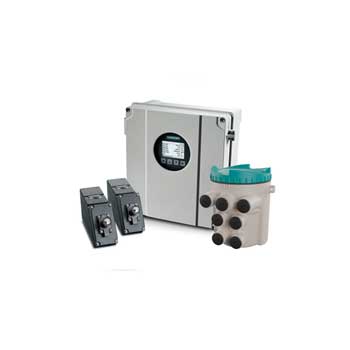
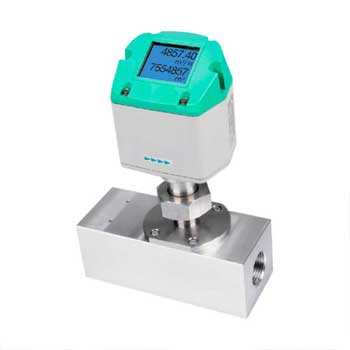
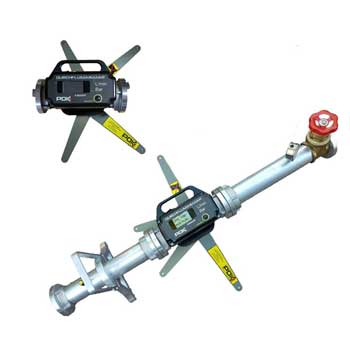
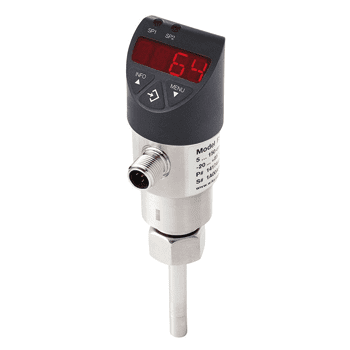
Flow Measurement – precise volume & mass flow for process, energy & water

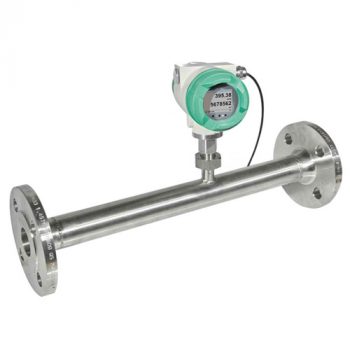
Flow is one of the most critical process variables. Depending on the medium (water/wastewater, chemicals, food & beverage, energy/HVAC, compressed air/gases, oils) different principles are used: magnetic-inductive (magmeter), ultrasonic (in-line/clamp-on), Coriolis (mass), vortex, thermal (gas mass), turbine/paddle wheel, oval gear/gear or variable area (rotameter).

Features (model-dependent): high accuracy, wide turndown, bidirectional measurement, integrated totalizers, I/O & communication (4–20 mA/HART, Modbus/RS-485, Profibus/Profinet, EtherNet/IP, IO-Link), heat/energy functions as well as ATEX/IECEx and hygienic design.

ICS Schneider Messtechnik supports principle selection, sizing (DN, β, Re, viscosity, conductivity), installation/straight-run design, calibration (ISO/DAkkS) and integration into PLC/SCADA/IIoT.


FAQ on Flow Measurement

Answers on measuring principles, accuracy, installation, media compatibility, evaluation, calibration and digitalization.

Which measuring principle fits which medium?

PrincipleMediumStrengths
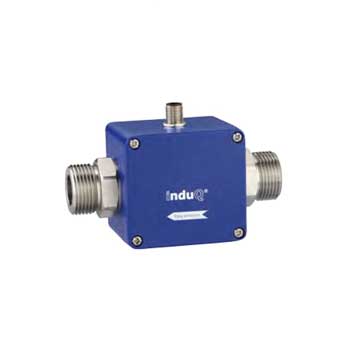
Magnetic-inductive (magmeter)Conductive liquidsNo obstructions, very robust, bidirectional
Ultrasonic (in-line/clamp-on)Liquids (incl. non-conductive)Low pressure loss, retrofittable (clamp-on)
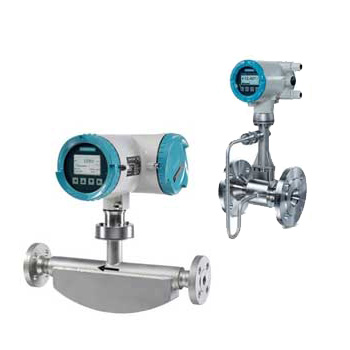
CoriolisLiquids & gasesMass flow, density/temperature, highest accuracy
VortexLiquids, steam, gasesWide range, popular for steam
Thermal (gas)Compressed air, technical gasesMass flow without pressure sensor, very high turndown
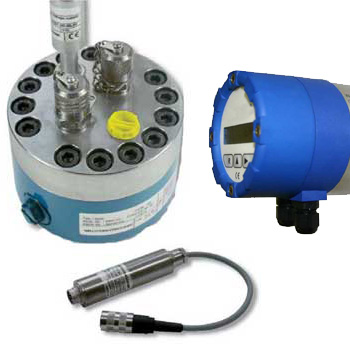
Oval gear/gearViscous media/oilsVolumetric, very accurate for dosing
Turbine/paddle wheelClean, low-viscosity liquidsGood dynamics, cost-effective
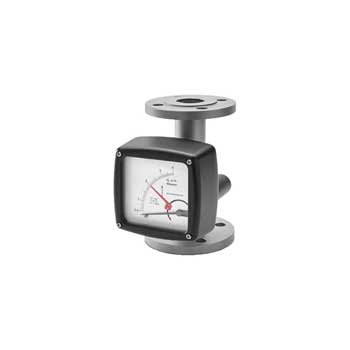
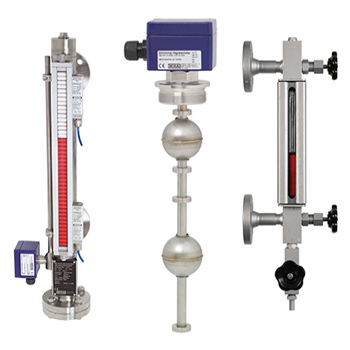
Variable area (rotameter)Liquids & gasesSimple, visual local indication

How important is conductivity for magmeters?

Magmeters require a minimum conductivity (typically > 5…20 µS/cm). Ultrapure water, oils or solvents are unsuitable—use e.g., ultrasonic or Coriolis instead.

What is turndown and why does it matter?

Turndown = ratio of maximum to minimum measurable flow at specified accuracy. Large turndown (e.g., 1:100) supports variable processes with stable quality.

What straight-run lengths are needed?
Principle-specific: magmeters often short (e.g., 5D/3D), vortex/turbine longer (e.g., 15D/5D). Consider elbows, valves, pumps upstream; use flow conditioners if needed.

How do I choose the correct nominal size (DN)?
Design for velocity (typ. 0.5–5 m/s for liquids; 10–40 m/s gas with vortex). Too slow → noise/drift; too fast → pressure loss/erosion.

How does viscosity affect measurement?
Volumetric meters (oval/gear) are ideal for viscous media. Turbines can err with high viscosity; calibrating at process conditions helps.

Can Coriolis measure mass directly?

Yes—Coriolis provides mass flow plus density and temperature. Ideal for dosing, batching and custody-like applications.

When is clamp-on ultrasonic a good choice?

When you cannot open the process: retrofits, temporary measurements, large pipes, critical media. Requires known pipe data and sufficient signal quality.

How do I measure steam?

Vortex with temperature/pressure compensation is common. Alternatively, differential pressure primary elements (orifice/venturi) with suitable transmitters.

What accuracies are typical?

Coriolis: ~±0.1% of rate; Magmeter: ~±0.2…0.5%; Ultrasonic in-line: ~±0.5…1%; Vortex: ~±0.75…1.5%; Thermal gas: ~±1…2% (application-dependent).

What signal outputs are available?

4–20 mA/HART, pulse/frequency, relay, Modbus/RS-485, Profibus/Profinet/EtherNet/IP, IO-Link. Also totalizers and often energy/heat calculation.

Which liners/electrodes for magmeters?

Liners: PTFE/PFA (chemicals), EPDM/hard rubber (water/wastewater), PP (general). Electrodes: 316L, Hastelloy, titanium/tantalum per corrosion/abrasion.

How do I calibrate/verify flowmeters?

Factory/DAkkS calibration on rigs (gravimetric/volumetric). In the field: reference measurements, check meters, clamp-on verification, and I/O simulators.

What matters in hygienic applications?

Hygienic design with dead-space-free fittings (e.g., clamp), 316L, FDA/EU 1935/2004 compliant seals, CIP/SIP resistance, low surface roughness.

How do I feed flow into energy management?

Flow + ΔT/Δp → heat/cooling and compressed-air cost. Connect meters via pulses/communication to SCADA/EMS/cloud, link with time/cost centers.

What ingress protection/ex approvals exist?

Depending on model: IP65…IP67/IP69K, ATEX/IECEx for Zone 1/2 (gas) and 21/22 (dust), and SIL ratings for safety applications.

How to deal with solids/air bubbles?

Consider abrasion (liners/electrodes/protection). Use air release/deaerators, install horizontally with a full pipe, and add filters/separators if required.

How do I choose evaluation/communications?

Local display/total, 4–20 mA + HART for control loops, fieldbus/Ethernet for data density, IO-Link for sensor-level IIoT; mind cybersecurity (TLS/VPN, user roles).

What are typical installation pitfalls?

  • Insufficient straight runs → use flow conditioners
  • Partially filled pipes (magmeter) → install to keep pipe full
  • Vibration/electrical noise → mechanically decouple, shield cables
  • Wrong DN sizing → check velocity window

Do you support selection, sizing & commissioning?

Yes. We analyze medium/process data, recommend the measuring principle, size DN/straight runs, provide calibration certificates and integrate measuring points into control systems/IIoT.

Diese Website benutzt Cookies. Wenn du die Website weiter nutzt, gehen wir von deinem Einverständnis aus.