


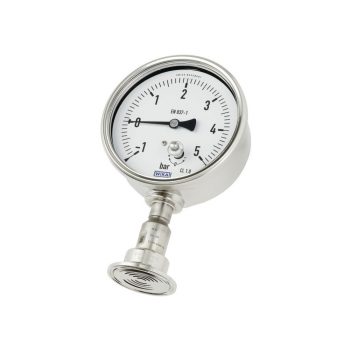
- Case and wetted parts in hygienic design
- Suitable for SIP and CIP
- Clamp connection easy to open for cleaning and seal replacement
- Easy zero point setting
 Datasheet Datasheet |
| User Manual |
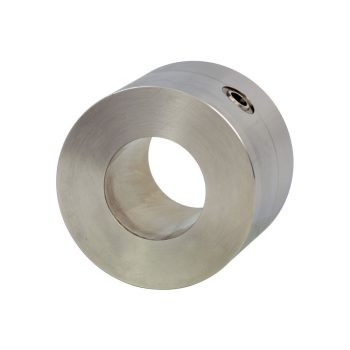
- Completely round, no corners and edges, European Patent No. 0629846
- For direct installation between two flanges
- Wide choice of special materials
| Datasheet |
| User Manual |
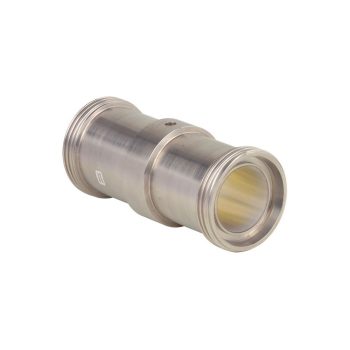
- For direct, quickly removable installation in pipelines
- Self-draining in all mounting positions
- Quick cleaning, without residue
- Suitable for COP, SIP and CIP
- Dead-space free installation in pipes
| Datasheet |
| User Manual |
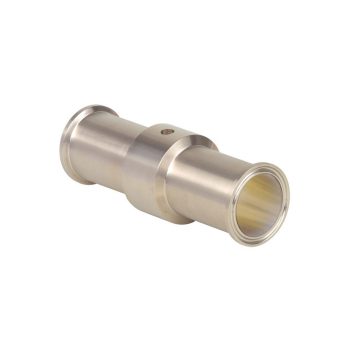
- For direct, quickly removable installation in pipelines
- Self-draining in all mounting positions
- Quick cleaning, without residue
- Suitable for SIP and CIP
- Dead-space free installation in pipes
| Datasheet |
| User Manual |
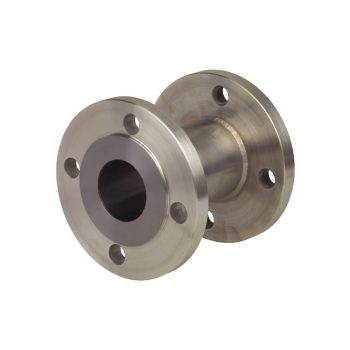
- Completely round, no corners and edges, European Patent No. 0629846
- For direct installation between two flanges
- Wide choice of special materials
| Datasheet |
| User Manual |

- Completely round diaphragm (Europ. Pat. No. 0609846) to avoid dead spaces
- Quick cleaning of measuring point, without residue
- Suitable for SIP and CIP
- 3-A and EHEDG certified
- FDA approved
| Datasheet |
| User Manual |

- Dead-space free, direct installation in pipes
- Easy to open, self-draining in all mounting positions
- Quick cleaning, without residue
- Suitable for COP, SIP and CIP
- Autoclavable version
| Datasheet |
| User Manual |
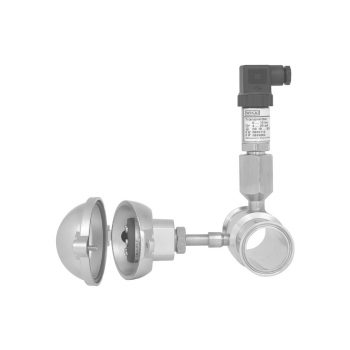
- Pressure and temperature measurement in one measuring location
- Completely round diaphragm (European Patent No. 0609846) to avoid dead spaces
- Self-draining in all mounting positions
- Quick measuring point cleaning without residues
- Suitable for SIP and CIP
| Datasheet |
| User Manual |

Inline Diaphragm Seals – In-Pipe Measurement with No Dead Space
Inline diaphragm seals are mounted directly into the process line (weld-in or threaded). A flush membrane transfers pressure via a suitable fill fluid to a gauge, transmitter, or switch. The medium flows past the measuring point without dead space—ideal for hygienic processes, viscous or particle-laden products, and high flow velocities.
ICS Schneider Messtechnik supplies hygienic inline designs (e.g., weld-in nozzles, clamp) and process versions with thread or flange. We advise on diaphragm material, fill fluid, installation position, flow profile, and temperature management—including factory or DAkkS calibration on request.
FAQ on Inline Diaphragm Seals
Key points on use cases, geometry, hygiene, flow effects, temperature, installation, and calibration.
Where do inline diaphragm seals excel?
In processes with continuous flow where dead space must be avoided: food/pharma (CIP/SIP), viscous/particle-laden media, fast-responding applications, and wherever inline hygiene is required.
How do they differ from flush flange-mounted seals?
Inline seals sit within the pipe cross-section, preserving the flow profile and avoiding dead zones. Flush flange solutions are level with the wall but are not always flow-optimized.
What connection and installation variants exist?
| Variant | Typical connections | Features |
|---|---|---|
| Weld-in (inline) | Weld-in nozzles, orbital weld | Hygienic, low dead space, CIP/SIP capable |
| Clamp/Clamp adapter | Tri-Clamp, Varivent® | Fast removal/cleaning |
| Thread/Flange | G/NPT, DIN/ASME | Process industry, robust mounting |
Which diaphragm and body materials are common?
316L as standard; for corrosive media Hastelloy®, Monel®, Tantalum, or PTFE lining. Bodies in 1.4404/1.4435, optionally electropolished for hygiene.
Which fill fluids are available?
| Fill fluid | Temp. range (typ.) | Notes |
|---|---|---|
| Silicone oil | -40…+200 °C | Universal, low viscosity |
| Synthetic oil | -20…+250 °C | Higher thermal stability |
| Food/medical oil | -10…+200 °C | NSF/H1, FDA compliant |
| High-temperature fluid | to +400 °C* | *design dependent |
Does an inline seal affect the flow profile?
Minimally if properly sized (nominal diameter, diaphragm seat, installation position). Observe straight-run requirements to avoid turbulence.
How does the design influence dynamics and accuracy?
Low-volume membrane systems and low-viscosity fill fluids ensure fast transfer. Excessively long capillaries or highly viscous fluids increase lag.
Which hygiene and cleaning requirements are met?
Low-dead-space inline geometry, smooth surfaces, FDA/EHEDG-compliant seals (EPDM/FFKM/PTFE), and CIP/SIP resistance; surface roughness documentation available.
How can instrument temperature be reduced?
With cooling elements, remote mounting using short capillaries, and installation away from heat sources; shield against radiant heat if necessary.
What is the recommended installation position?
Place the diaphragm in the fully wetted flow, avoiding air pockets (liquids) or liquid traps (gases). Consider flow direction and service access.
Can I reuse existing instruments?
Yes. Gauges, transmitters, and switches can be integrated via suitable adapters. After assembly, verify calibration of the complete system.
How is calibration performed?
Always as a complete system (inline seal + instrument) because transfer characteristics are system-dependent. Distribute test points across the working range.
What typical error sources occur?
- Unsuitable fill fluid → temperature error, sluggish response
- Incorrect installation position → pockets/entrainment, measurement deviations
- Overlong capillaries → increased lag/drift
How should I document the measuring point?
Record device ID, nominal diameter, diaphragm material, fill fluid, connection, installation position, temperature limits, and calibration status (certificate).
Do you provide sizing support?
Yes. We assess medium, temperature, cleaning, and flow, recommend geometry/material/fill fluid, size straight runs, and deliver calibrated complete systems.