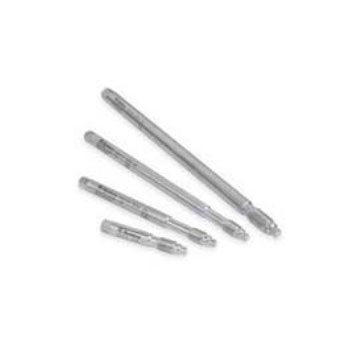
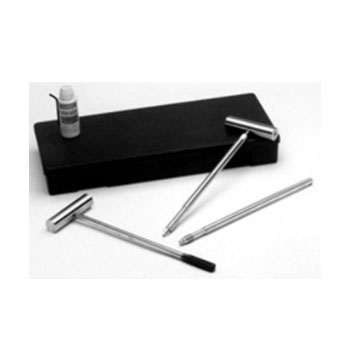
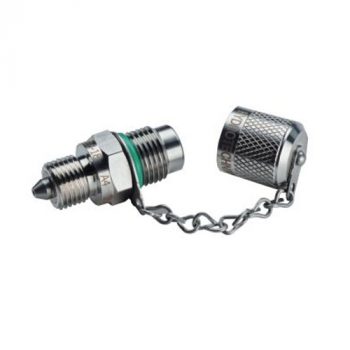
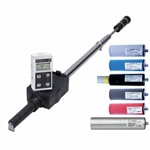
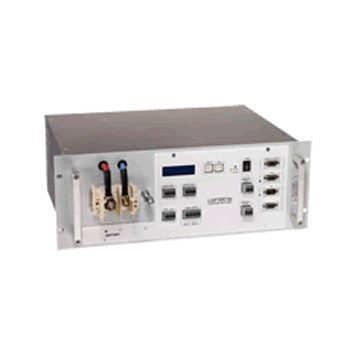
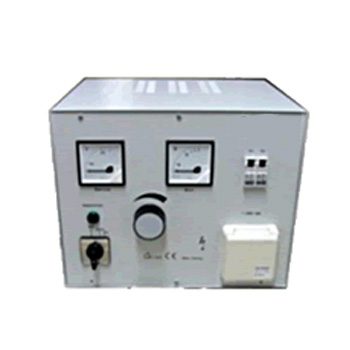


























Safely discharge high voltage cables post-testing using our DP5 Discharge Probe.
- 5kV DC Maximum discharge voltage
- 0.9kJ Maximum discharge energy
- 48μF Maximum discharge capacitance
- 10kΩ Resistance
- 390mm Length
- Up to 5m long Earth lead
- 6mm² Earth lead CSA
- Highly flexible, clear silicone covered earth cable
Datasheet |
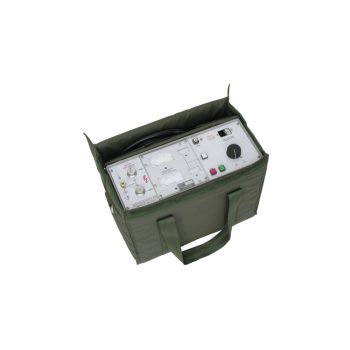
High-performance PT15-10S Mk2 DC Test Set: variable output up to 15kV DC, automatic load discharge, and reliable measurements for accurate testing
- 0 to 15kVdc output voltage
- 10mA output capability
- Both voltage and current metered on HV output
- Automatic earth system for dumping capacitive loads
- HV output plug & socket
- Key operated supply switch to prevent unauthorised operation
- Zero-volt interlock
- Visual indication of test piece failure
- Compact unit with lightweight insulated case
Datasheet |
User Manual |
PT18-10 Mk2 designed for safe cable and jointing systems testing, with variable output voltage and automatic load discharge system.
- ±18kVdc output voltage
- 10mA output capability
- Both voltage and current metered on HV outputs
- Automatic earth system for dumping capacitive loads
- HV output plug & socket system
- Key operated supply switch to prevent unauthorised operation
- Zero-volt interlock
- Visual indication of test piece failure
- Automatic mains voltage selection
Datasheet |
User Manual |
DP20 High Voltage DC Discharge Probe
- For discharging high voltage cables after testing
- Earthing hook
- 20kV Maximum discharge voltage
- 3.6kJ Maximum discharge energy
- 12μF Maximum discharge capacitance
- 30kΩ Resistance
- 530mm Length
- 5m Earth lead length
- 6mm² Earth lead CSA
- Highly flexible, clear silicone covered earth cable
- For use with the PT18-10 and PT30-10 cable test sets
Datasheet
|
Safely discharge high voltage cables with the DP40 Discharge Probe, a reliable accessory for T&R PT30-10 Mk3 AC test set.
- 40kV Maximum discharge voltage
- 7.2kJ Maximum discharge energy
- 6μF Maximum discharge capacitance
- 60kΩ Resistance
- 900mm Length
- 5m Earth lead length
- 6mm² Earth lead CSA
- Highly flexible, clear silicone covered earth cable
Datenblatt
|
- ±30kVdc output voltage.
- 10mA output capability.
- Both voltage and current metered on HV outputs.
- Automatic earth system for dumping capacitive loads.
- HV output plug & socket system.
- Key operated supply switch to prevent unauthorised operation.
- Zero-volt interlock.
- Visual indication of test piece failure.
- Automatic mains voltage selection.
Datasheet
|
DC Cable Test Systems
DC cable test systems are specialized instruments for testing, diagnosis and evaluation of DC-cables and direct-current lines. They perform insulation tests, leakage or earth fault detection, polarity verification, conductance or resistance measurement, as well as load and stress tests under defined DC conditions. The goal is to ensure reliability, safety and long-term stability of DC-cable installations such as transmission lines, substation DC-grids, battery supply networks or industrial DC-systems.
FAQ
What are DC cable test systems?
They are test and measurement devices specifically designed for cables and conductors operating under direct current, to check insulation, grounding, continuity, polarity and fault conditions under DC operating conditions.
Why are special tests required for DC cables?
Because DC systems have different stress conditions compared to AC — insulation ageing, polarity, corrosion risks and different leakage behaviour. AC-based tests may not reliably indicate DC-suitability.
Which tests can be carried out?
Insulation resistance testing, leakage and earth-fault testing, conductance/resistance measurement, polarity check, DC-voltage or withstand tests, load testing under DC current, and verification of connectors, joints and terminations.
When should DC cables be tested?
Upon installation, after installation or repair, after modifications, before energisation or high-current operation, after suspected damage or corrosion, and regularly as part of maintenance cycles.
Which parameters are critical in DC cable testing?
Insulation resistance, leakage current, conductor resistance/conductance, grounding integrity, contact quality, polarity, temperature, and long-term stability under DC load.
How is a DC insulation test typically conducted?
A specified DC test voltage is applied to cable or conductor, and insulation resistance or leakage current is measured to detect insulation degradation, moisture ingress or breakdown risk.
What can conductance or resistance measurement reveal?
High contact resistance, poor joints or terminations, corrosion, insufficient conductor cross-section or degraded conductor materials — all critical for safe DC operation.
Which fault types are especially critical in DC cables?
Insulation degradation, moisture ingress, corrosion, polarity reversal, earth faults, poor connections or degraded insulation under long-term DC stress.
How do DC tests differ from AC tests?
DC tests focus on resistive behaviour, leakage, insulation and conductor integrity. AC tests often measure impedance and reactive components, which do not reflect DC performance accurately.
Who should perform DC cable tests?
Experienced technicians or engineers familiar with DC-system requirements, cable installation standards, measurement techniques and safety regulations — especially in power distribution, battery back-ups or HVDC systems.
How are test results documented?
With a test report including cable data (type, length, cross-section), test voltage/current, measured values (insulation resistance, conductor resistance, leakage), polarity, temperature, test date and responsible technician. Comparison with reference values or manufacturer specifications is advised.
Why is temperature important in DC testing?
Temperature significantly affects resistance and insulation behaviour. Under DC load, temperature rise can accelerate ageing. Thus, ambient and conductor temperatures should be recorded and considered in evaluation.
How often should DC cables be tested?
At installation, after repairs or changes, before high current use, and in regular maintenance intervals — e.g. annually or semi-annually in critical systems or when environmental stress is high.


Datasheet
Datasheet