
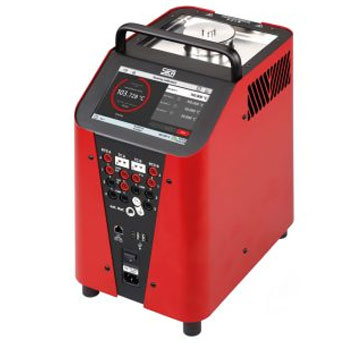
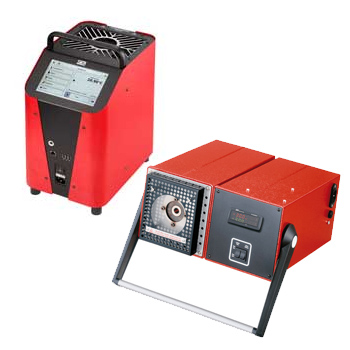
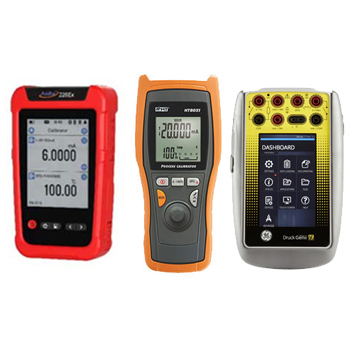
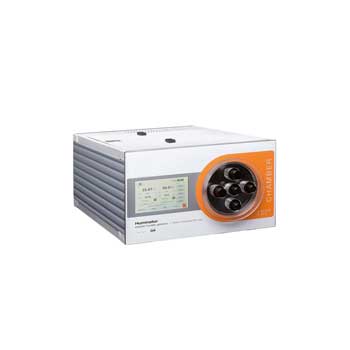
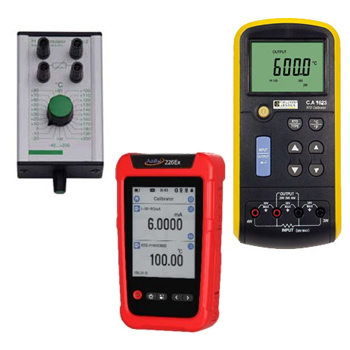
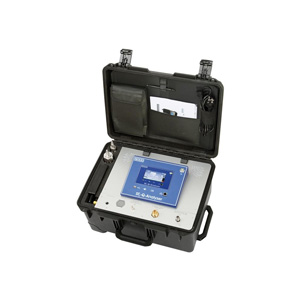
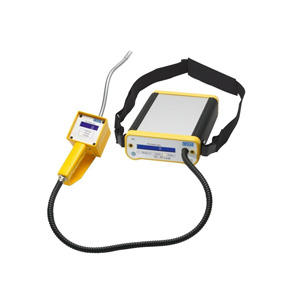
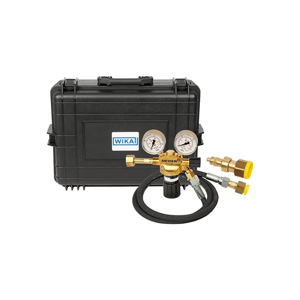
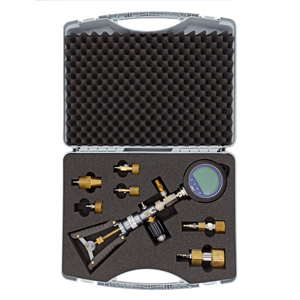




























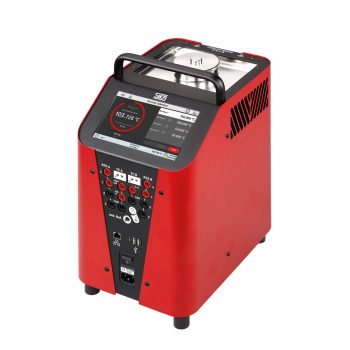
- Temperature range RT...255 °C
- Calibration insert dimensions: Ø60 x 163 mm
- Accuracy ±0.1 °C
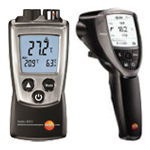
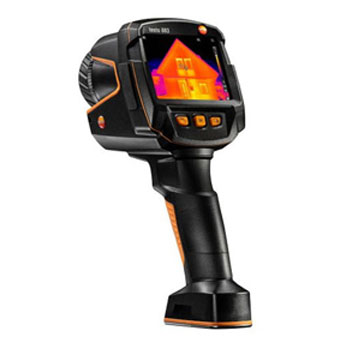
- Multifunction: Dry block, calibration bath, infrared, surface
- Option: Integrated measuring instrument
Datasheet |
Datasheet |
User Manual |
- Temperature range RT...255 °C
- Calibration insert dimensions: Ø60 x 163 mm
- Accuracy ±0.1 °C
- Multifunction: Dry block, calibration bath, infrared, surface
- Option: Integrated measuring instrument
Datasheet |
Datasheet |
User Manual |
SIKA TP Premium Series – high-end temperature dry-wells with multi-zone control
The SIKA TP Premium sets benchmarks for stability, uniformity and repeatability. With multi-zone heating control, precision sensing and optimized heat flow, it delivers lab-grade results with field-friendly operation—ideal for quality assurance, test facilities and accredited labs.
Typical features (model-dependent): fast ramps, very low drift, external reference input (PRT/RTD), multi-channel measurement, ramp/soak profiles, automatic stability check, data interfaces (USB/LAN, some with Bluetooth), calibration software integration and interchangeable precision sleeves/Inserts.
ICS Schneider Messtechnik supports model selection, sleeve/insert design, procedures, uncertainty budgeting and supplies optional factory/DAkkS certificates for calibrator and reference probes.
FAQ on the SIKA TP Premium Series
Answers on performance, sleeves, reference probes, procedures, documentation and best practices.
How do TP Premium units differ from Basic/Solid?
TP Premium adds multi-zone control, top-tier stability/uniformity, extended automation/interfaces and built-in options for reference measurement—optimized for low measurement uncertainty.
What performance figures can I expect?
| Criterion | TP Premium (typ.) | Notes |
|---|---|---|
| Stability | to ±0.005…0.02 °C | Depends on temperature/load |
| Uniformity | ≤0.02…0.05 °C | Mind insert and loading |
| Heat/cool rates | very fast | Model & load dependent |
| Ranges | e.g., −35…+650 °C | Model dependent |
Why is multi-zone control important?
It compensates axial/radial gradients to ensure a uniform temperature field in the insert—critical for minimizing the uniformity term in your uncertainty budget.
Which sleeve/insert should I choose?
Bore = probe Ø + 0.1…0.2 mm with continuous fit. Materials: aluminum/copper up to ~300 °C, Inconel/stainless for higher temperatures. Use multi-hole sleeves to separate reference and DUTs.
Why use an external reference probe?
The block display does not exactly represent the tip temperature. A PRT/RTD close to the DUT minimizes gradient and coupling errors and improves traceability.
How much immersion depth do I need?
At least 15–20× the probe diameter or past the sensing element. For short sensors use extended sleeves and insulation caps to reduce convection.
Which procedures are supported?
Ramp/soak profiles, automatic stability verification (time/ΔT window), hysteresis and linearity checks, and step sequences (e.g., −20/0/50/100/150/200 °C) with defined dwell times.
How do I build an uncertainty budget?
Combine contributions from reference accuracy, stability, uniformity, indicator resolution, self-heating, heat loss and repeatability; report as k=2.
How do I integrate TP Premium with my software?
Via USB/LAN (some with Bluetooth), supported protocols/SCPI and calibration software. Sync jobs/point lists and auto-generate CSV/PDF reports.
What tips improve repeatability?
- Use precision sleeves with minimal clearance.
- Add insulation caps and a top clamp to limit convection/tilt.
- Fix a constant immersion depth using stop rings.
- Limit loading (count/Ø); place the reference close to the DUT tips.
How should I calibrate RTD/PRT optimally?
4-wire measurement, low test current (to limit self-heating), adequate stabilization and proper cable strain relief.
How do I check thermocouples correctly?
Place the hot junction in the sleeve; enable cold-junction compensation on the instrument (or measure a reference CJC). Ensure tight thermal coupling at the hot end.
What safety aspects apply in operation?
Burn protection, stable placement, keep over-temperature protection active, use PPE; remove hot sleeves only with appropriate tools.
How fast will the unit reach setpoint?
TP Premium is designed for short ramp times. Actual time depends on ΔT, insert mass and load. The stability check indicates measurement-ready conditions.
What maintenance is recommended?
- Clean/deburr bores/inserts; store sleeves dry.
- Recalibrate the reference thermometer periodically.
- Keep fans/air paths clear; maintain current firmware/software.
Is TP Premium suitable for multi-sensor calibration?
Yes, with multi-hole sleeves. Choose number/diameter of DUTs so that uniformity and dwell targets are met; keep the reference close to the DUT tips.
Do you support selection & validation?
Yes—we size the model/temperature range, design sleeves, prepare procedures, define the uncertainty budget and supply factory/DAkkS certificates.


Datasheet