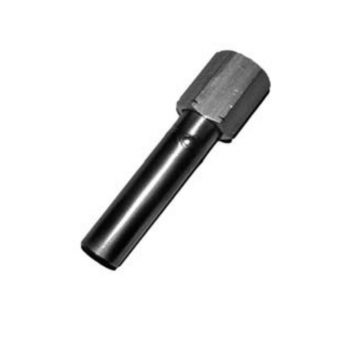
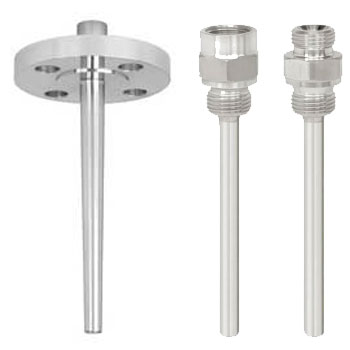
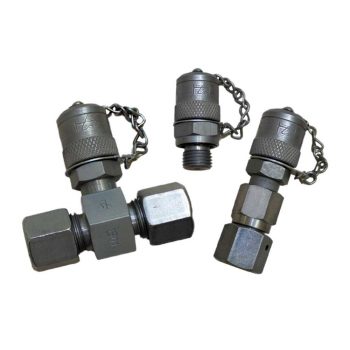
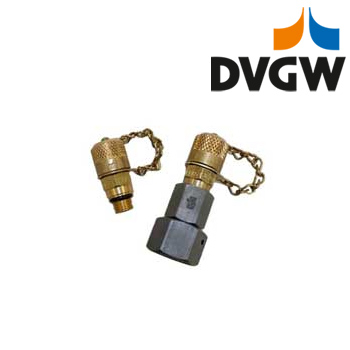
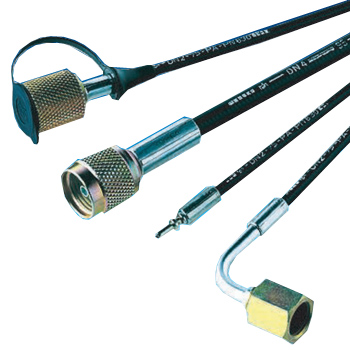
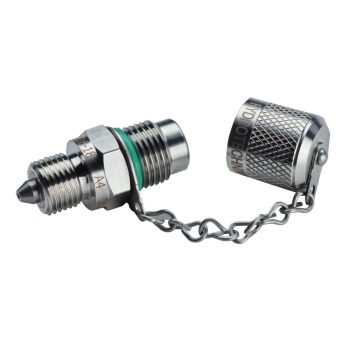
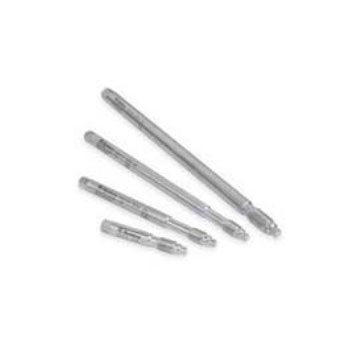
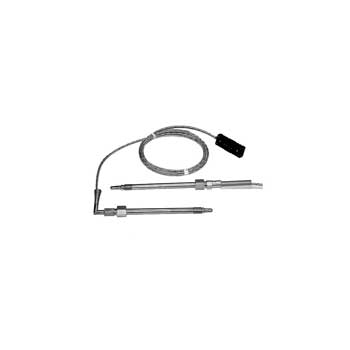

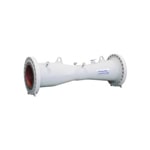
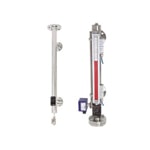
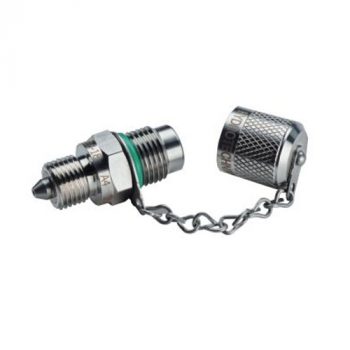
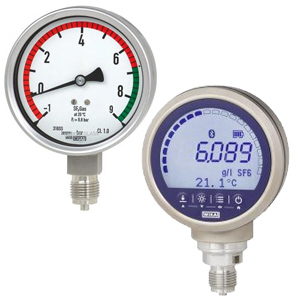
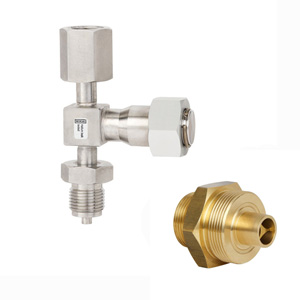


























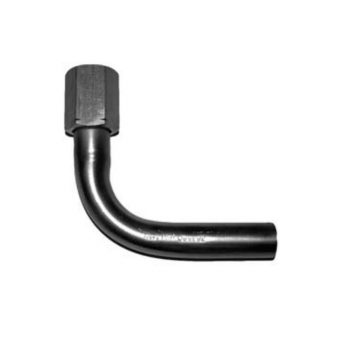
- Connection: G1/2
- Material: St 35.8,stainless steel
- PN in bar: 63,80,100
- Max. Temperature: 400°C
- Form A - Angle-Form , with connecting sleeve x male 1/2"
- Angle-Form , connecting sleeve with entry butt welding Form B
Datasheet
|
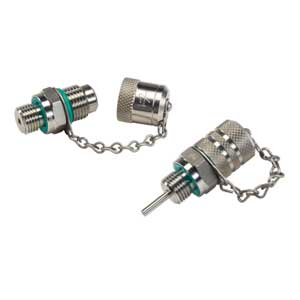
- Connection: G1/2
- Material: St 35.8, stainless steel
- PN in bar: 63,80,100
- Max. Temperature: 400°C
- Form A - Straight form , with connecting sleeve x male thread 1/2"
- Form B - Straight form with connecting sleeve entry butt welding
Datasheet
|
Gauge Connection Pipes – safe offset, better measurement quality
Gauge connection pipes create distance between the process and the instrument, reducing the influence of temperature and vibration and simplifying service. They connect pressure gauges, digital gauges, pressure switches or diaphragm seals to the plant and are available as straight versions or as offset/bent designs. Common threads: G 1/4, G 1/2, 1/4" NPT, 1/2" NPT, optionally M20×1.5.
Versions in carbon steel and stainless steel 304/316(L) cover a wide pressure/temperature range. On request, ICS Schneider Messtechnik supplies cut-to-length pipes, EN 10204 3.1 material certificates, pre-assembled sets (pipe + valve/snubber + gauge) and matching accessories.
FAQ on Gauge Connection Pipes
Answers on selection, thread standards, materials, installation, sealing concepts and proven best practices.
What do I use connection pipes for?
For thermal decoupling (distance from hot media), vibration reduction, improved accessibility of the instrument, and to combine shut-off valves/snubbers at a convenient service location.
Straight or bent design – which is better?
| Design | Advantages | Typical use |
|---|---|---|
| Straight | Simple, cost-effective | General applications, short offset |
| Bent/offset | Better thermal decoupling, ergonomic reading | High temperatures, tight spaces |
Which thread types are available?
| Thread | Standard | Note |
|---|---|---|
| G 1/4, G 1/2 | ISO 228 (BSPP, parallel) | Flat gasket/O-ring on mating part |
| 1/4" NPT, 1/2" NPT | ASME B1.20.1 (taper) | Use PTFE tape/sealant |
| M20×1.5 (optional) | ISO metric | Compatibility with metric ports |
Which material should I choose?
Carbon steel for neutral media/standard duty; stainless steel 316(L) for corrosive media/environments and higher temperature resistance. Select gasket materials (PTFE, FKM, EPDM) to suit medium and temperature.
How long should the pipe be?
As short as possible, as long as necessary: leave space for a shut-off valve/gauge cock, snubber and possibly a siphon. For hot media, a longer offset helps reduce instrument temperature.
What is the correct installation method?
- Clean threads and use the proper gasket (BSPP) or sealant (NPT).
- Mount free of mechanical stress; avoid lever forces on the instrument.
- For vertical reading, orient the pipe so the dial is clearly visible.
Can I combine connection pipes with other accessories?
Yes. A typical setup is: Process → shut-off valve/gauge cock → snubber/restrictor → connection pipe → gauge/diaphragm seal. This optimizes serviceability and protection.
BSPP (G) vs. NPT – what should I consider?
| Thread | Sealing | Practice |
|---|---|---|
| G (BSPP) | Flat gasket/O-ring at the sealing face | Keep faces flat and burr-free |
| NPT | PTFE tape/sealant | Wrap in thread direction; tighten to spec |
How does the pipe affect measurement dynamics?
Longer/narrower runs can damp pulsations but may also increase response time. For fast processes, keep length/bore moderate; use a snubber deliberately.
Are there standard pressure ratings?
Yes—depending on OD/wall thickness and material. Choose reinforced designs for higher pressures and observe applicable plant codes (PED/ASME).
Use in hazardous (Ex) areas?
Mechanical parts are usually uncritical; for electrical add-ons (contact gauges) observe Ex approvals, use barriers/isolators, and ensure bonding/grounding.
Hygienic applications?
For food/pharma: 316L, low surface roughness, low-dead-space installation and suitable gaskets. Alternatively, use hygienic process connections (Tri-Clamp/Varivent®) with a diaphragm seal.
Which typical mistakes should I avoid?
- Thread leaks due to the wrong sealing concept.
- Torsion/bending of the pipe → stress-free mounting/supports.
- Overheating of the instrument due to insufficient distance from hot media.
Does ICS Schneider supply pre-assembled sets & documents?
Yes—ready-to-install sets including valve/snubber/gauge, and on request EN 10204 3.1 certificates, test documentation and project-specific tagging.


Datasheet