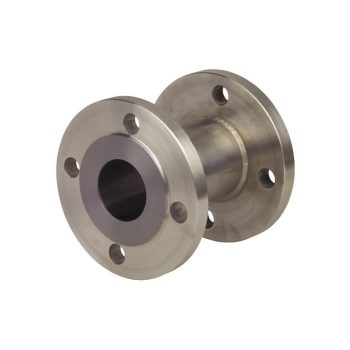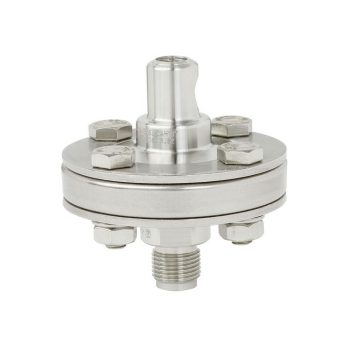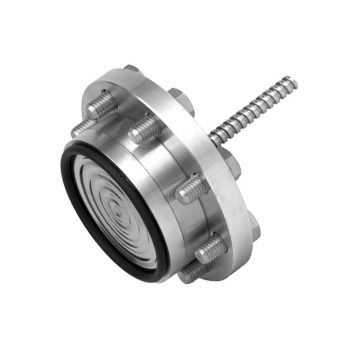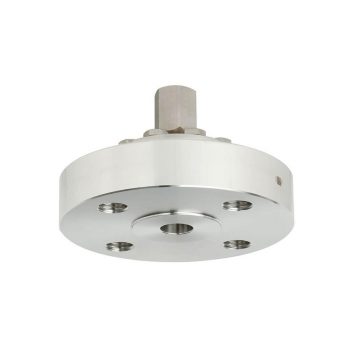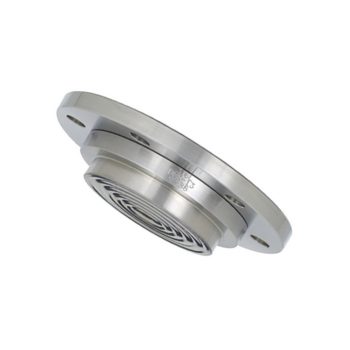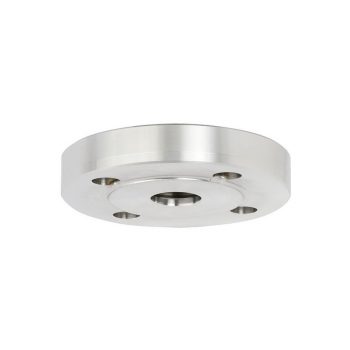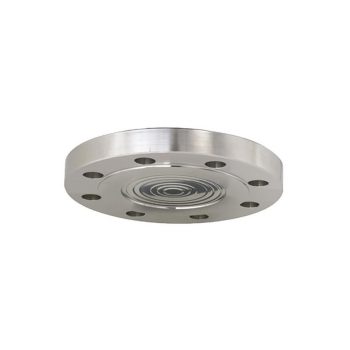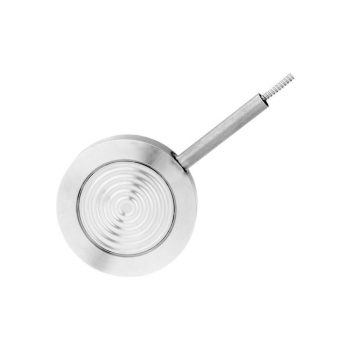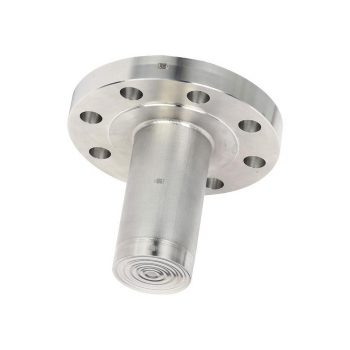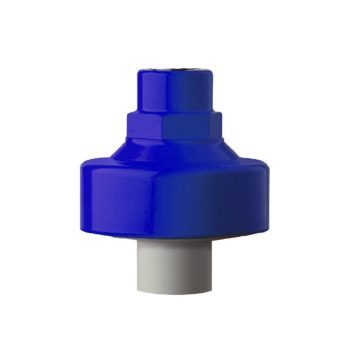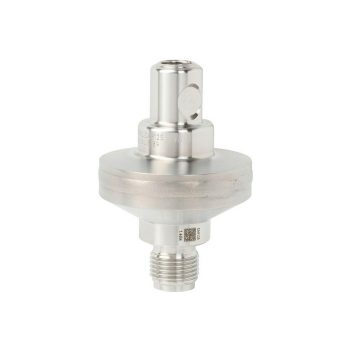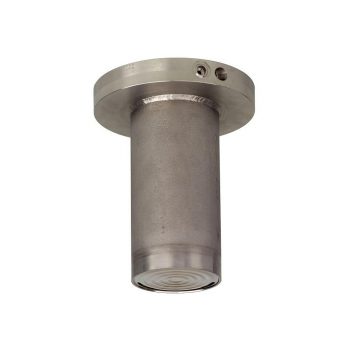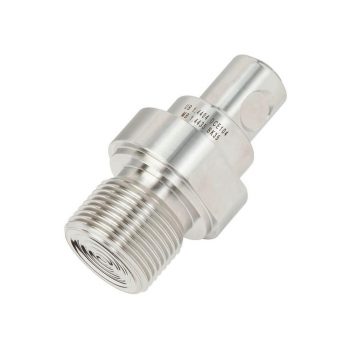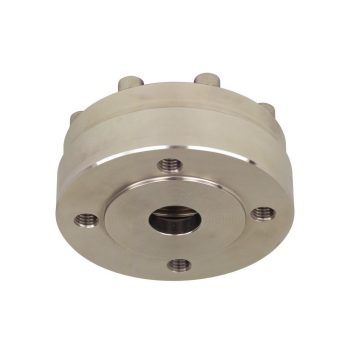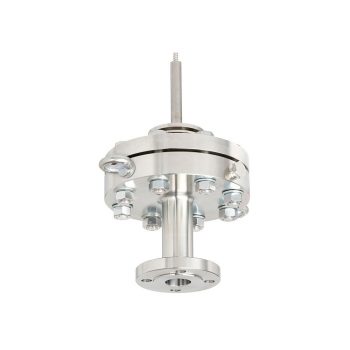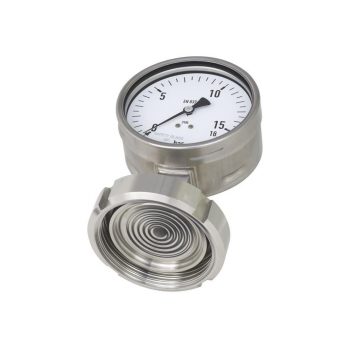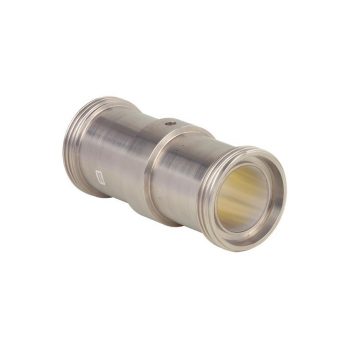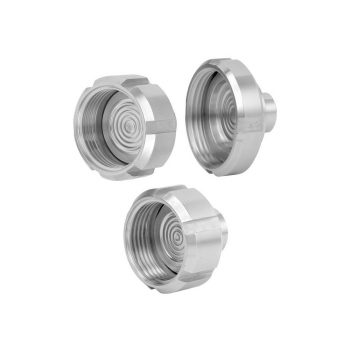
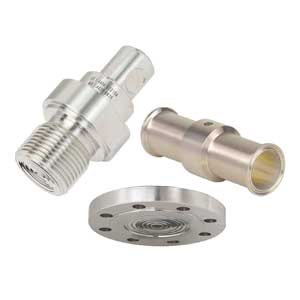
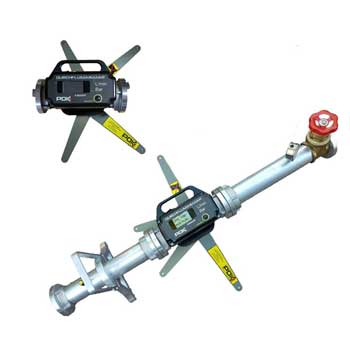
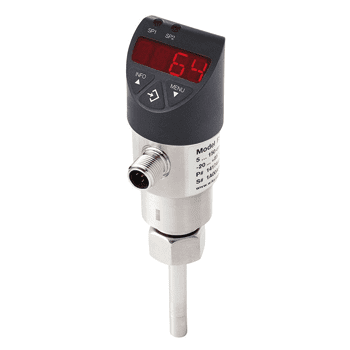
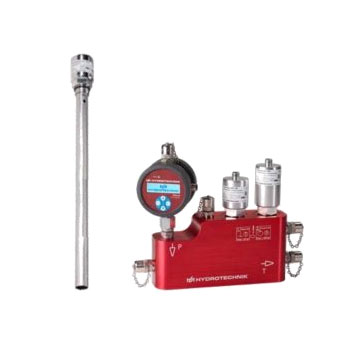
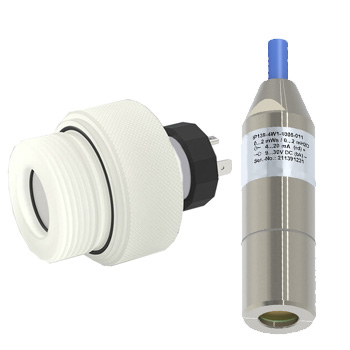



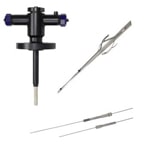
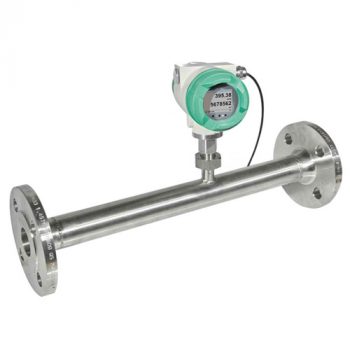





























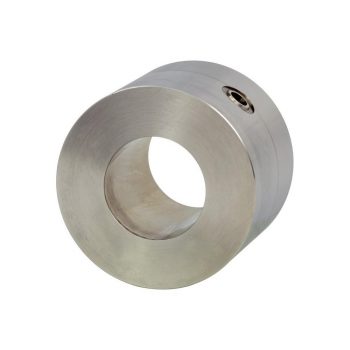
- Completely round, no corners and edges
- For direct installation between two flanges
- Wide choice of special materials
Datasheet |
User Manual |
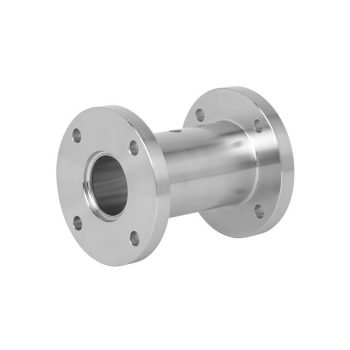
- Completely round, no corners and edges
- For direct installation between two flanges
- Wide choice of special materials
Datasheet |
User Manual |
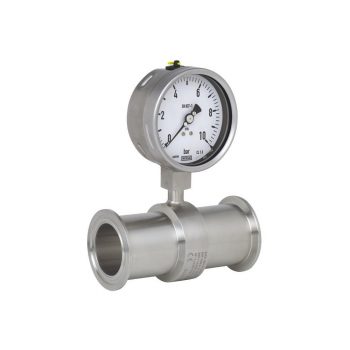
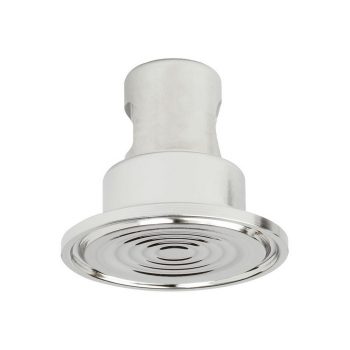
- Dead-space free installation in pipes
- Self-draining in all mounting positions
- Quick cleaning, without residue
- Suitable for SIP and CIP
- EHEDG-certified and 3-A-compliant
Datasheet |
User Manual |
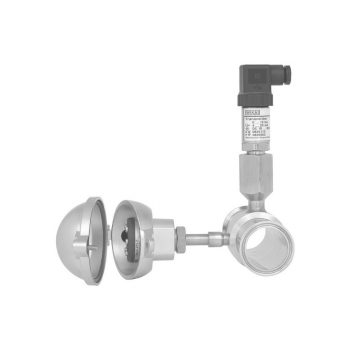
- Dead-space free, direct installation in pipes
- Easy to open, self-draining in all mounting positions
- Quick cleaning, without residue
- Suitable for COP, SIP and CIP
- Autoclavable version
Datasheet |
User Manual |
- Pressure and temperature measurement in one measuring location
- Completely round diaphragm (European Patent No. 0609846) to avoid dead spaces
- Self-draining in all mounting positions
- Quick measuring point cleaning without residues
- Suitable for SIP and CIP
Datasheet |
User Manual |
- Process connection with thread
- Version with internal diaphragm, diaphragm seal parts screwed together
- Large selection of process connections and materials
- Flushing connections optionally available
Datasheet |
User Manual |
- Flush diaphragm
- Process connection to provide for direct threaded connection with block flange or saddle flange
Datasheet |
User Manual |
- High pressures up to PN 400 / class 2.500
- Flange with internal welded diaphragm
- Small process connections
- Flushing connections optionally available
Datasheet |
User Manual |
- Flange with flush welded diaphragm
- Common standards and nominal widths available
- Wide variety of different materials and material combinations
Datasheet |
User Manual |
- Compact cell-type
- Intermediate flange with flush diaphragm
- Common standards and nominal widths available
- Wide variety of different materials and material combinations
- Instrument connection via radial gauge adapter
Datasheet |
User Manual |
- Flange with extended welded diaphragm
- Common standards and nominal widths available
- When special materials are selected, all wetted parts are made of the selected material
- Robust, all welded design
Datasheet |
User Manual |
- Process connection with thread
- Version with internal diaphragm, diaphragm seal parts fully welded
- Large selection of process connections and materials
- Flushing connections optionally available
- High pressures up to 1,000 bar [14,500 psi] can be achieved
Datasheet |
User Manual |
- Intermediate flange (diaphragm seal cell) with extended diaphragm
- Versions for all common standards and nominal widths available
- When special materials are selected, all wetted parts are made of the selected material
Datasheet |
User Manual |
- Threaded connection for screwing in directly
- Flush diaphragm with compact dimensions
- High pressures for the process industry
- Version with protective plate for increased wear resistance
- Vacuum measuring ranges
Datasheet |
User Manual |
- Internal diaphragm with large working volume
- Special materials available
- Low temperature error due to large diaphragm diameter (realisation of low measuring ranges possible)
- Wide temperature application range due to large working volume
- Integrated flushing connections (optional)
Datasheet |
User Manual |
- Common standards and nominal widths available
- When special materials are selected, all wetted parts are made of the selected material
- Version with integrated flushing connections available
Datasheet |
User Manual |
- Quick cleaning, without residue
- Suitable for SIP and CIP
- EHEDG certified and 3-A compliant
- Certified hygienic design
Datasheet |
User Manual |
- For direct, quickly removable installation in pipelines
- Self-draining in all mounting positions
- Quick cleaning, without residue
- Suitable for COP, SIP and CIP
- Dead-space free installation in pipes
Datasheet |
User Manual |
- For cleaning easy to remove
- Quick cleaning of measuring point, without residue
- Suitable for cleaning out of place (COP)
- 3-A compliant
Datasheet |
User Manual |
- For cleaning easy to open
- Quick cleaning of measuring point, without residue
- Suitable for SIP and CIP
- 3-A certified
- Flush, welded diaphragm
Datasheet |
User Manual |
Diaphragm Seals (Remote Seals) – Protection & Precision for Demanding Media
Diaphragm seals decouple pressure gauges, sensors, and switches from the process medium. A diaphragm isolates the medium from the instrument; pressure is transmitted via a fillable transmission fluid (fill fluid). This enables safe measurement of hot, viscous, crystallizing, fibrous, or highly corrosive media—optionally in hygienic design (Tri-Clamp, Varivent®) and with ATEX/IECEx.
ICS Schneider Messtechnik supplies diaphragm seals in many designs (inline, flanged, tank, threaded, pipe, mini/micro, hygienic) with diaphragms in 316L, Hastelloy®, Monel®, Tantalum, Titanium, etc., matched to medium, temperature, and pressure. We support the fill fluid selection, capillary length, temperature management, calibration, and—on request—IIoT integration.
FAQ on Diaphragm Seals
Answers on selection, seal types, fill fluids, temperature effects, hygienic design, installation, calibration, and maintenance.
When is a diaphragm seal recommended?
For hot (steam, oil), viscous, crystallizing, solid-laden, or aggressive media as well as in hygienic/CIP/SIP processes. It protects the instrument and sealing system and enables cleanable connections.
What designs are available?
| Design | Process connection | Typical use |
|---|---|---|
| Inline/pipe seal | G/NPT, Clamp, DIN/ASME | Flowing media, hygiene |
| Flanged seal | EN/ASME flange | Larger sizes, tanks/reactors |
| Threaded/cellular seal | G 1/2, G 1, 1/2"–1" NPT | General processes, compact |
| Tank-bottom/flush membrane | Flush to vessel wall | Pastelike/fibrous media, CIP/SIP |
| Hygienic (Tri-Clamp/Varivent®) | Hygienic fittings | Food/pharma, CIP/SIP |
| Capillary remote mounting | Capillary up to several meters | Thermal decoupling, vibration relief |
How do I choose diaphragm and body materials?
By corrosion resistance and media compatibility: 316L as standard, Hastelloy® for chloride-bearing media, Tantalum for strong acids, PTFE/PFA lining for chemical resistance, Titanium/Monel® depending on the medium. Select gaskets (EPDM/FKM/PTFE/FFKM) accordingly.
Which fill fluid is appropriate?
| Fill fluid | Properties | Typical application |
|---|---|---|
| Silicone oil (standard) | Wide temp range, forgiving | General processes |
| High-temperature oil | Thermally stable | Superheated steam/oil, high T |
| FDA/USP compliant | Food/pharma approved | Hygienic processes, CIP/SIP |
| Glycerin/propylene glycol | Food-grade | Food & beverage |
| Inert (e.g., Halocarbon) | Chemically inert | Oxidizers/chlorine |
| Gas filling | Very dynamic | Fast processes, low viscosity |
How does temperature affect measurement?
Temperature changes viscosity and volume of the fill fluid ⇒ potential additional error. Mitigation: cooling sections, capillary/remote mounting, proper fill fluid, and consider temperature compensation in the instrument.
What does “dead-space-free” mean in hygienic design?
No product residues and fully CIP/SIP cleanable—achieved by flush membranes, polished surfaces, suitable gasket geometry (Tri-Clamp/Varivent®), and approved fill fluids.
How long may a capillary be?
As short as possible, as long as necessary. Longer capillaries increase fill volume and thus temperature/dynamic effects. Provide mechanical protection (bend radius, chafing) and insulate outdoors.
Which pressure ranges are realistic with diaphragm seals?
From a few mbar (flush membrane, large diaphragm area) up to high pressure (suitable flange/thread systems). For very low ranges choose a sensitive diaphragm with low fill volume.
How does fill volume influence behavior?
Lower fill volume improves dynamic response and reduces temperature effects, but requires a tight and mechanically robust design. With capillaries the fill volume increases by design.
What typical error sources exist—and how to avoid them?
- Air entrapment: Vacuum filling, proper assembly.
- Temperature gradients: Use capillary/cooling, insulate.
- Wrong fill fluid: Check media/CIP compatibility.
- Membrane damage: Correct materials, avoid mechanical overload.
How do I combine diaphragm seals with gauges/sensors?
Select an instrument with a suitable range (incl. damping if needed), thread/flange, and possibly hygienic connection. Observe zero offset and the total error band of the assembly.
Do I still need a cooler/siphon despite a diaphragm seal?
At very high temperatures yes: cooling sections/siphons reduce temperature at the membrane/capillary, lowering error and aging of the fill fluid.
How are calibration and documentation handled?
Calibrate the entire assembly (seal + instrument) under defined temperature conditions. Document serial/batch numbers, fill fluid, capillary length, test conditions, and provide an ISO/DAkkS certificate.
What cleaning/CIP guidance applies?
Use only CIP/SIP-resistant fill fluids and gaskets; adhere to the datasheet for steam/temperature. Prevent underpressure “suction” of cleaner through vents.
Is operation in hazardous areas (ATEX/IECEx) possible?
Yes, with suitable materials, conductive gaskets, and approved instruments (Ex i/Ex d). Observe grounding/bonding; use appropriate barriers for NAMUR contacts.
How do I choose the right hygienic connection?
| System | Benefit | Typical use |
|---|---|---|
| Tri-Clamp | Quick to release, minimal dead space | Food/pharma, CIP/SIP |
| Varivent® | High stability, large sealing area | Brewery, beverages, dairy |
| Aseptic flange | Highest hygiene requirements | Sterile processes |
How does vibration affect measurement?
Vibration can stress the capillary and diaphragm. Solutions: short, fixed lines, optionally a glycerin-filled gauge, and mechanical decoupling.
Service & spare parts—what to consider?
Diaphragm seals are system-critical; repairs must be professional. When replacing, keep fill fluid and capillary length identical, otherwise behavior changes. Replace gaskets/bolts per standard.
Do you support sizing & selection?
Yes. We review medium, temperature, pressure, viscosity, CIP/SIP, select diaphragm/body materials, fill fluid, capillary length, connection standards, and supply fully calibrated assemblies with documentation on request.


Datasheet