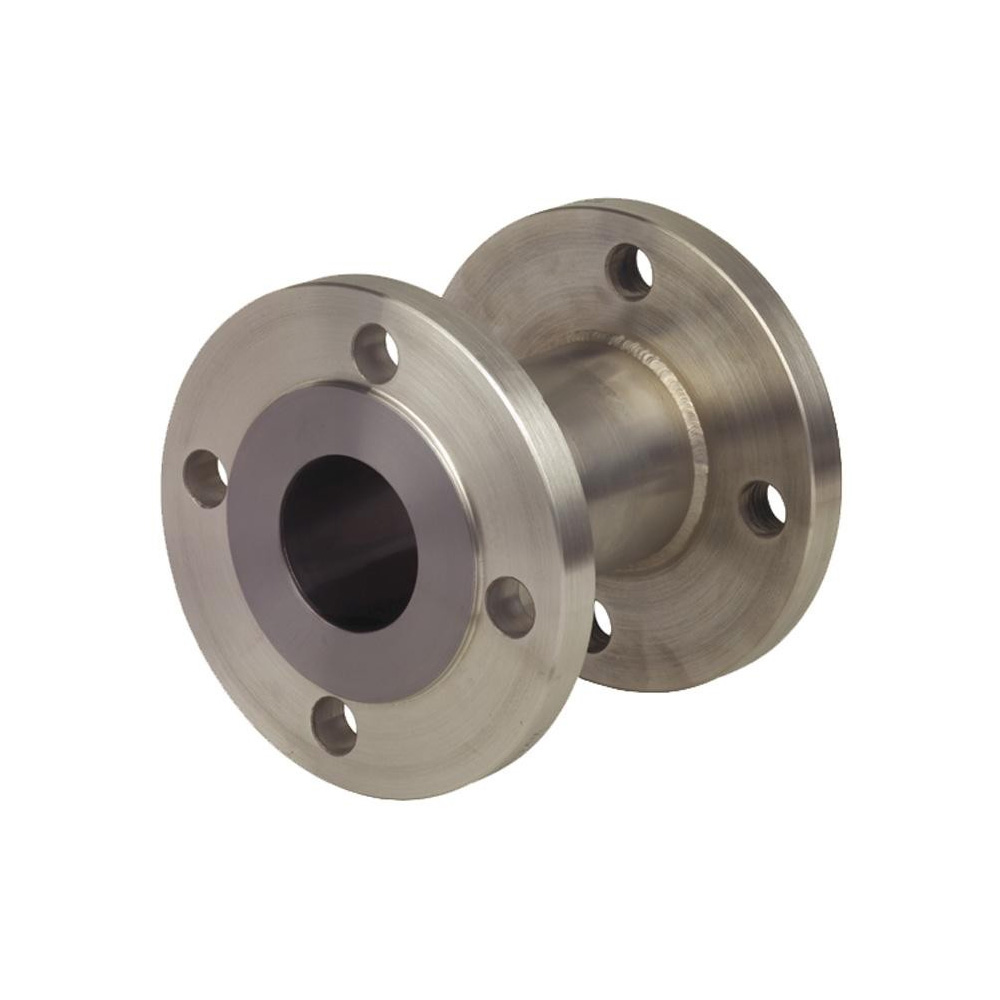
WIKA Model 981.27 In-line diaphragm seal For flange connection, flange-type


  • Completely round, no corners and edges
  • For direct installation between two flanges
  • Wide choice of special materials
Datasheet
User Manual
[yith_ywraq_button_quote]

Application

  • For direct, permanent installation in pipelines
  • For flowing, pure and aggressive media
  • Chemical process industry
  • Petrochemical industry


Description

Process connection
Sealing face, Form B1 or ASME RF 125 … 250 AA For flanges following ASME B 16.5, 1″, 2″, 3″, 4″
Nominal size: see drawing and tables on datasheet

Pressure rating
Class 150/300

Pressure ranges
preferably mounted to pressure gauges NS 63, 100, 160 or pressure transmitters, Pressure ranges 0 … 15 to 0 … 600 psi

Housing and material of wetted parts
Stainless steel (AISI 316L)

Measuring instrument connection
Pressure gauge or transmitter directly welded, process pressure transmitter with threaded adapter

Options

Process connection

  • Larger nominal sizes
  • Other flange connections on request
  • Sealing faces per EN 1092-1, form B2 or per ASME B 16.5, RF 125 AA, 500 AA, RFSF; EN 1092-1 groove and tongue; projection and recess; ASME B 16.5 snap ring groove form RJF (limited for special materials, please request)
  • Flame arrester approved for zone 0

Material of wetted parts

  • Stainless steel 316TI, 316, 321, Monel, Hastelloy B3, C22, C276, tantalum

Measuring instrument connection

  • Capillary, when ordering please specify: length of capillary
  • Cooling tower (for directly mounted gauge when fluid temperature > +284 °F)

Capillary

  • Custom lengths between 3 and 25 ft.
  • White PVC – Armor protection


Technical advice: 03303 / 50 40 66

Technical advice for this product


    In accordance with the General Data Protection Regulation (GDPR), we are obliged to inform you about the collection of data. We meet this obligation by referring to our privacy notice.


    WIKA Model 981.27 In-line diaphragm seal For flange connection, flange-type

    • Completely round, no corners and edges
    • For direct installation between two flanges
    • Wide choice of special materials
    Datasheet
    User Manual

    Application

    • For direct, permanent installation in pipelines
    • For flowing, pure and aggressive media
    • Chemical process industry
    • Petrochemical industry


    Description

    Process connection
    Sealing face, Form B1 or ASME RF 125 … 250 AA For flanges following ASME B 16.5, 1″, 2″, 3″, 4″
    Nominal size: see drawing and tables on datasheet

    Pressure rating
    Class 150/300

    Pressure ranges
    preferably mounted to pressure gauges NS 63, 100, 160 or pressure transmitters, Pressure ranges 0 … 15 to 0 … 600 psi

    Housing and material of wetted parts
    Stainless steel (AISI 316L)

    Measuring instrument connection
    Pressure gauge or transmitter directly welded, process pressure transmitter with threaded adapter

    Options

    Process connection

    • Larger nominal sizes
    • Other flange connections on request
    • Sealing faces per EN 1092-1, form B2 or per ASME B 16.5, RF 125 AA, 500 AA, RFSF; EN 1092-1 groove and tongue; projection and recess; ASME B 16.5 snap ring groove form RJF (limited for special materials, please request)
    • Flame arrester approved for zone 0

    Material of wetted parts

    • Stainless steel 316TI, 316, 321, Monel, Hastelloy B3, C22, C276, tantalum

    Measuring instrument connection

    • Capillary, when ordering please specify: length of capillary
    • Cooling tower (for directly mounted gauge when fluid temperature > +284 °F)

    Capillary

    • Custom lengths between 3 and 25 ft.
    • White PVC – Armor protection


    Technical advice: 03303 / 50 40 66

    Technical advice for this product


      In accordance with the General Data Protection Regulation (GDPR), we are obliged to inform you about the collection of data. We meet this obligation by referring to our privacy notice.


      Print
      Diese Website benutzt Cookies. Wenn du die Website weiter nutzt, gehen wir von deinem Einverständnis aus.