

 Datasheet
Dynisco Pressure Transducer Mounting Hole Tool Kit
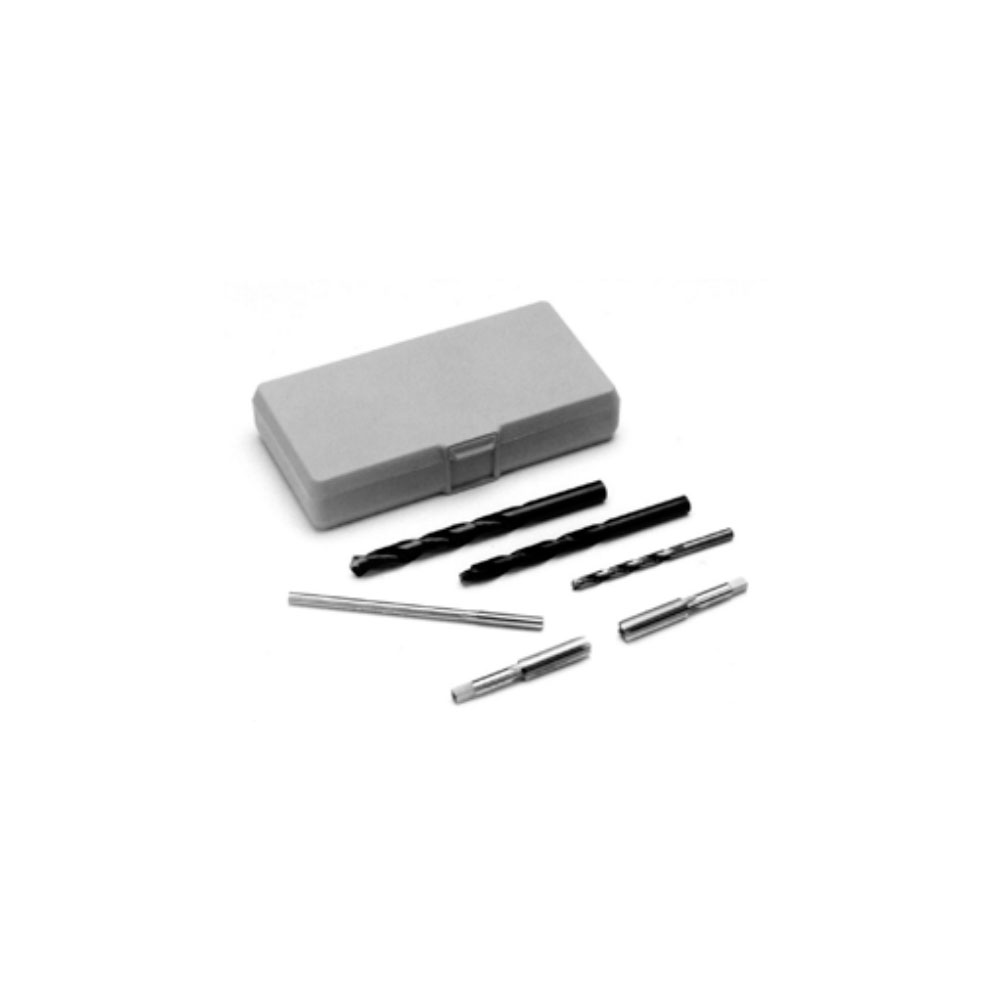
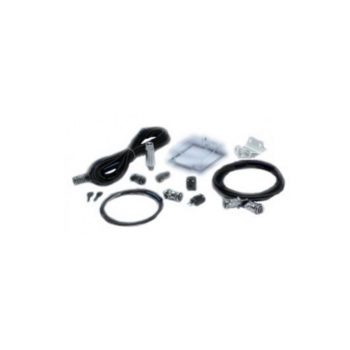
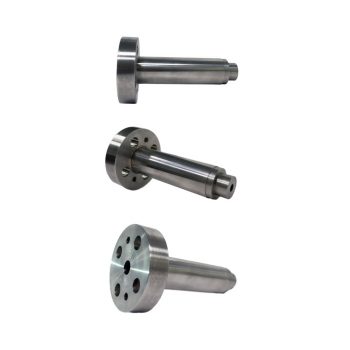
The Dynisco pressure transducer mounting hole tool kit contains all required drills and tools for properly machining the mounting hole for Dynisco pressure transducers. The kit includes pilot drills, reamer, taps, step drill and core drill. The step drill is used to machine the 45° sealing surface.
When machining the mounting hole, special attention must be paid to the correct drilling speed, feed rate, suitable lubricant and excellent concentricity. A properly machined mounting hole is essential for reliable sealing, correct positioning of the pressure transducer and protection of the sensitive sensor diaphragm.
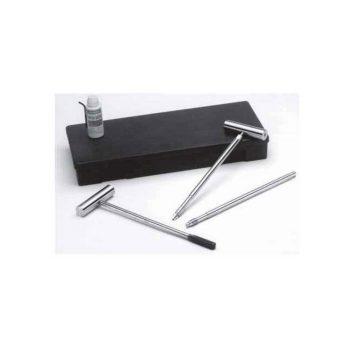
Before installing the pressure transducer, it is generally recommended to check the mounting hole. For this purpose, marking compound is applied to the test plug below the thread. The test plug is then screwed in until it reaches the sealing surface. The marking compound should only be removed at the 45° sealing surface by contact with the bore. If marking compound is removed at any other point, the mounting hole has not been cleaned or machined correctly.
| Type | Tool kit for pressure transducer mounting holes |
|---|---|
| Manufacturer | Dynisco |
| Application | Machining and checking mounting holes for Dynisco pressure transducers |
| Suitable for | Melt pressure transducers and pressure sensors with standardized mounting bore |
| Thread versions | 1/2″-20 UNF-2B or M18 x 1.5 |
| Tool kit contents | Step drill, pilot drill, reamer, tap, bottoming drill and core drill |
| Step drill | For machining the 45° sealing surface |
| Test plug | For checking the correct sealing surface using marking compound |
| Important requirements | Correct drilling speed, suitable feed rate, appropriate lubricant and excellent concentricity |
| Mounting hole inspection | Marking compound should only be removed at the 45° sealing surface by contact with the bore |
| Benefit | Enables precise, leak-tight and safe installation of pressure transducers |
| Key features | Complete tool kit for bore, thread, sealing surface and inspection check |
| Thread | d1 | d2 | d3 | d4 | a | b | c |
|---|---|---|---|---|---|---|---|
| 1/2″-20 UNF-2B | 12 | 7.92 +0.025 / -0.025 | 11.5 +0.1 / -0.1 | 13 | 5.7 | 4 | 19 |
| M18 x 1.5 | 17 | 10.1 +0.025 / -0.025 | 16.4 +0.1 / -0.1 | 20 | 6.15 | 4 | 25 |
| Step | Procedure |
|---|---|
| Step 1 | Drill the hole using the drill for d2. |
| Step 2 | Ream the bore to size using the reamer for d2. |
| Step 3 | Determine the required depth of d3 according to the drawing so that dimension “a” remains at bore d2. Drill to the previously calculated depth with the step drill, leaving some material for step 7. |
| Step 4 | Enlarge the bore using the drill for d4. Leave dimension “c” from bore d3. |
| Step 5 | Use the taper tap to cut the thread without damaging the 45° sealing surface machined with the step drill. |
| Step 6 | Finish the thread using the plug tap. |
| Step 7 | Check the sealing surface. If marks from the tap are present, rework the bore using the step drill. |