






















































• legal for trade

  • easy and quick installation with SIWAREX mounting units

  • options for use in hazardous areas are in preparation

Datasheet


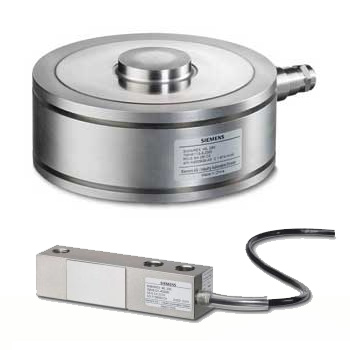
Siemens Bending Beam Load Cells

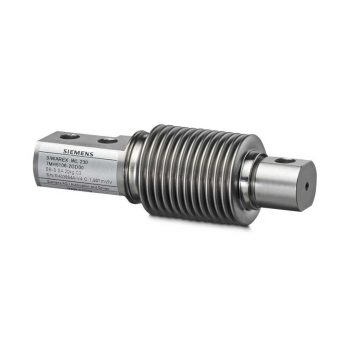
The bending-beam load cells of the Siemens WL series are robust strain-gauge sensors designed for precise weight measurement in industrial scales and weighing systems. Their beam geometry allows them to absorb loads via a defined lever arm and convert the resulting deformation into a proportional electrical signal. Bending-beam load cells are especially suited for hopper, silo, belt, and platform scales — in applications where loads are applied at points or distributed — and where accurate weight detection is required.

FAQ

What characterizes a bending-beam load cell?

A bending-beam load cell uses a flexible beam as the measuring element. Under load, the beam bends slightly, causing the strain gauges mounted on it to detect deformation and convert it into an electrical signal proportional to the applied load.

For which applications are bending-beam load cells particularly suitable?

They are ideal for hopper and silo scales, platforms with multiple support points, belt and in-line scales, as well as any system where loads are distributed or not centrally applied on the scale.

What load ranges can bending-beam load cells handle?

Depending on design, they typically cover medium to high load ranges — from several tens of kilograms up to multiple tons — making them suitable for heavy-duty industrial weighing tasks.

How are they mounted and wired?

The load cell must be installed so that the beam can deform freely under load. Electrical connection is typically via four- or six-wire shielded cables. Adequate grounding and careful cable routing are essential to avoid interference or measurement errors.

What happens if the load is unevenly distributed?

Uneven or eccentric loads can lead to measurement inaccuracies, because the beam is optimized for defined load paths. Uniform load distribution across support points is critical.

Can multiple cells be combined?

Yes — for larger scales or containers, often multiple bending-beam load cells are used in parallel. The individual signals are summed to determine total weight or fill level.

How precise are bending-beam load cells?

Precision depends on the design, but for industrial applications they generally provide sufficient repeatability and linearity. Temperature compensation and stable construction contribute to reliable measurements.

How is calibration performed?

Calibration is done using defined test loads under realistic conditions. For multi-cell systems, calibration weights and corner/load-point adjustment are needed to ensure uniform load distribution and accuracy.

For which environments are bending-beam cells suitable?

They are designed for industrial environments, often featuring dust- and moisture-resistant housings and corrosion-resistant materials. Environmental factors like temperature, vibration or humidity should nevertheless be considered when selecting the cell.

What are the advantages compared to other load cell types?

Bending-beam load cells offer a balance of flexibility in load distribution, robust construction and good measurement accuracy. They are especially advantageous for large or irregularly loaded scales and represent a cost-effective solution for many industrial weighing tasks.

Diese Website benutzt Cookies. Wenn du die Website weiter nutzt, gehen wir von deinem Einverständnis aus.