



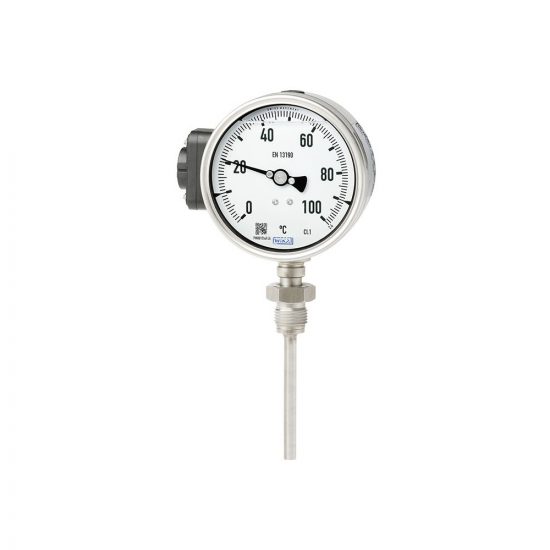

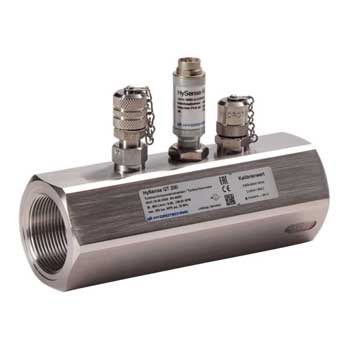
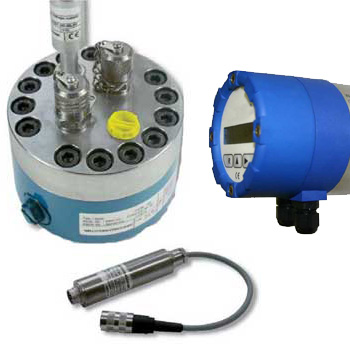
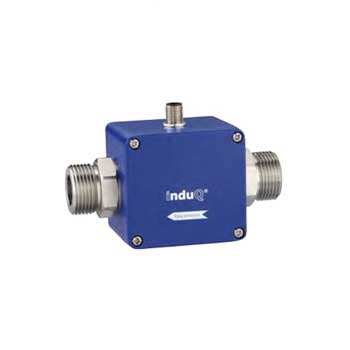
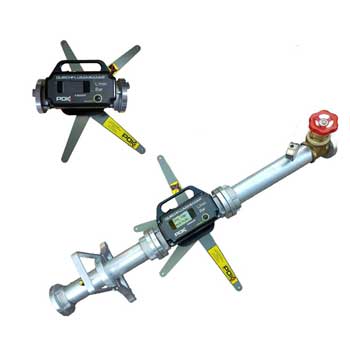
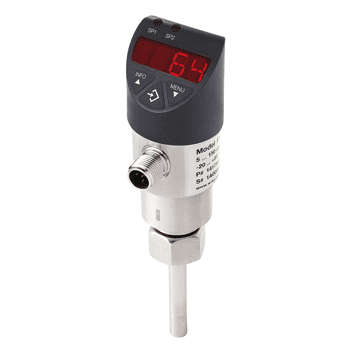
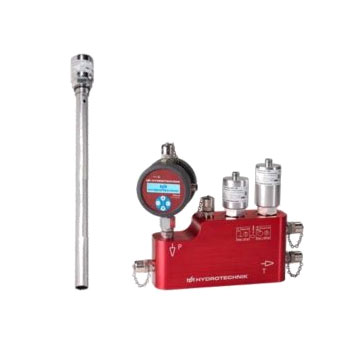
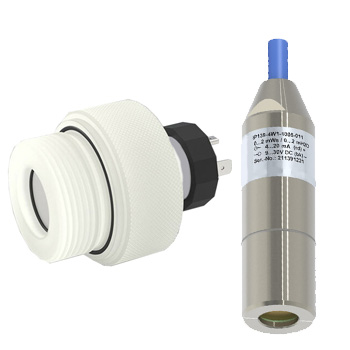



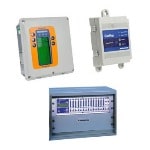
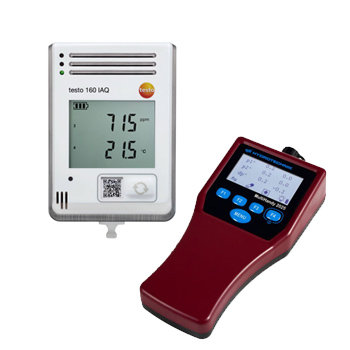
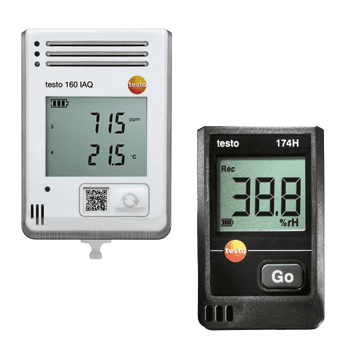
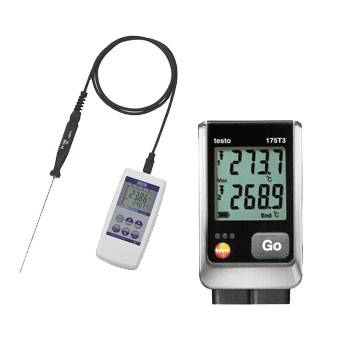


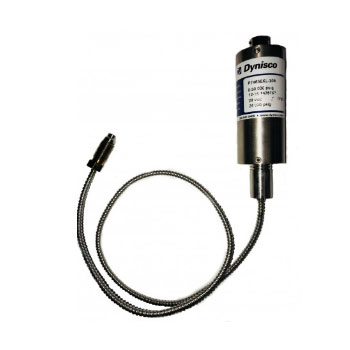
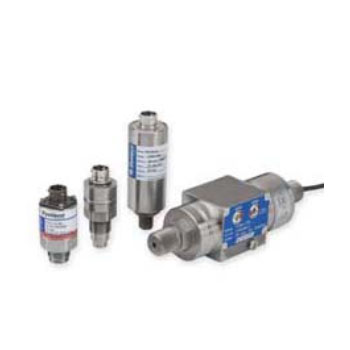
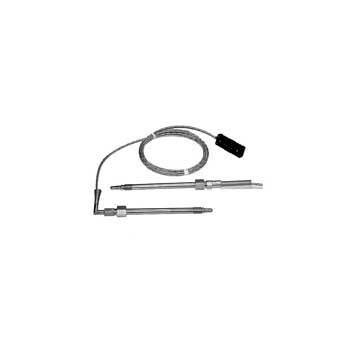
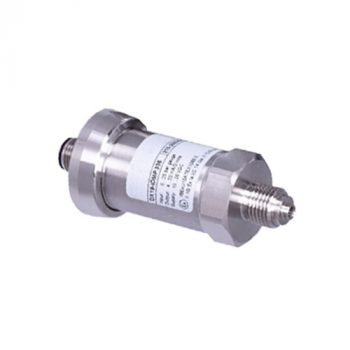
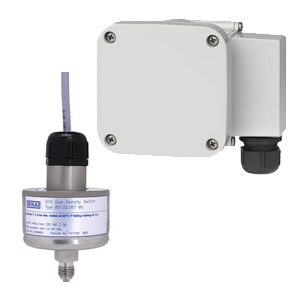
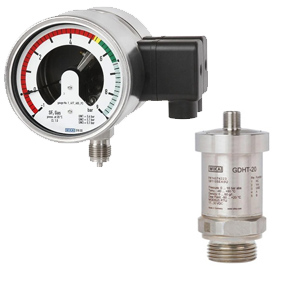
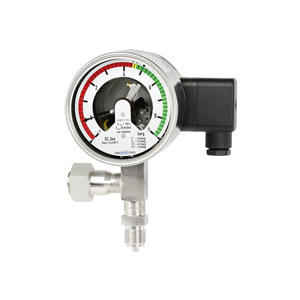
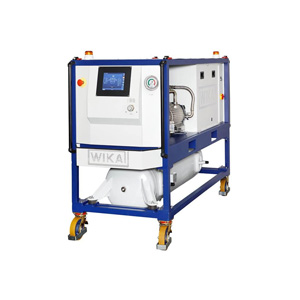
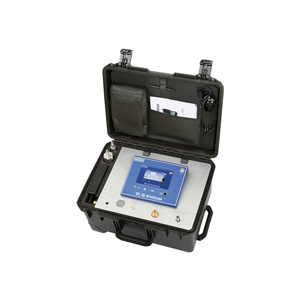
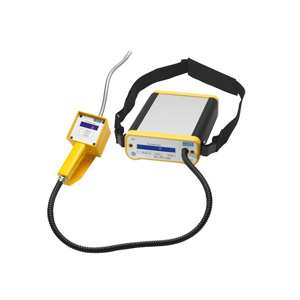
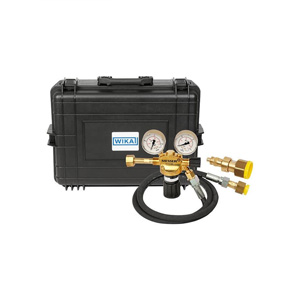
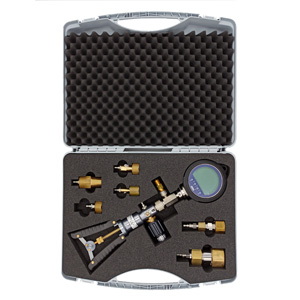
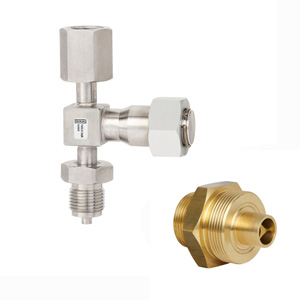
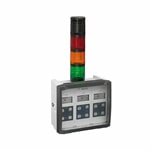
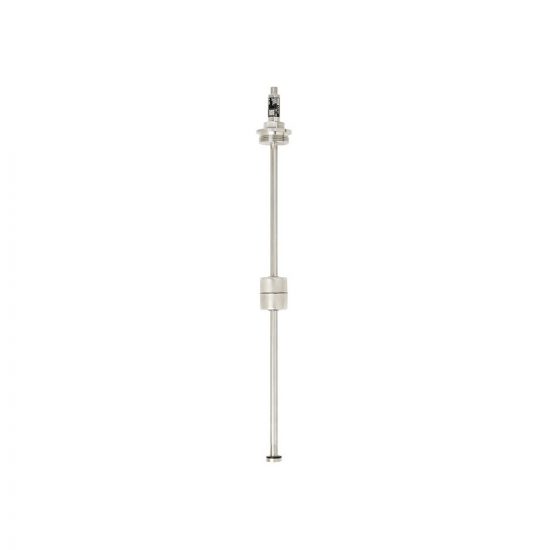




















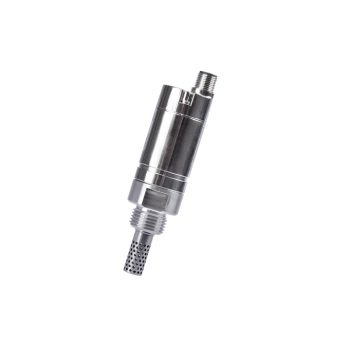
- Measured variables: Water activity (aw), temperature (t) and water content in PPM (x) (for transformer oils)
- Fast response time
- Oil temperature up to 100°C
- Pressure tight up to 300 bar
- Two analog outputs
- Digital Modbus RTU interface
- ISO G ½" or ½" NPT threaded connection
 Datasheet Datasheet |
| User Manual |
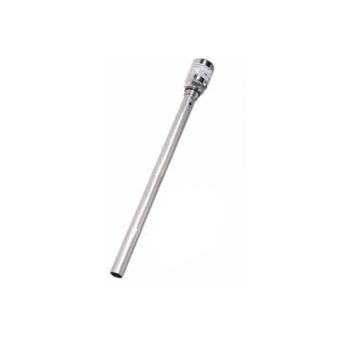
The HySense® CL 1xx is a high intelligence sensor that not only determines oil level precisely, but also measures the following oil condition parameters: relative humidity, relative permittivity, conductivity, and temperature. After a calibration phase, this sensor can evaluate an oil’s condition and output it based on implemented condition algorithms. Moreover, the corresponding analysis application that is implemented in MultiSystem measuring devices makes it enormously easier to operate and use the sensors. Finally, the intuitive menu navigation and the stored oil database both make it easy to quickly acquire, visualize, evaluate, and store oil condition parameters
 Datasheet Datasheet |
| Catalog Excerpt |
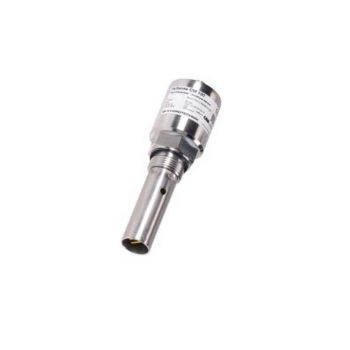
The HySense® CM100 is a high intelligence sensor that measures the following oil condition parameters: relative humidity, relative permittivity, conductivity, and temperature. After a calibration phase, this sensor can evaluate an oil’s condition and output it based on implemented condition algorithms. Moreover, the corresponding analysis application that is implemented in MultiSystem measuring devices makes it enormously easier to operate and use the sensors. Finally, the intuitive menu navigation and the stored oil database both make it easy to quickly acquire, visualize, evaluate, and store oil condition parameters.
|
Datasheet
|
|
Catalog Excerpt
|
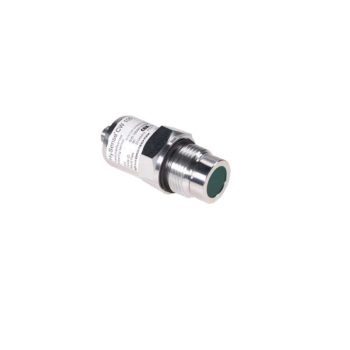
The HySense® CW 100 is a high intelligence sensor that detects wear in the form of ferromagnetic particles. In addition, it is able to determine whether the particles are fine particles in the micrometer range or coarse particles in the millimeter range. Finally, this sensor has a fully automatic particle release function that eliminates the need to clean or maintain it.
| Datasheet |
| Catalog Excerpt |
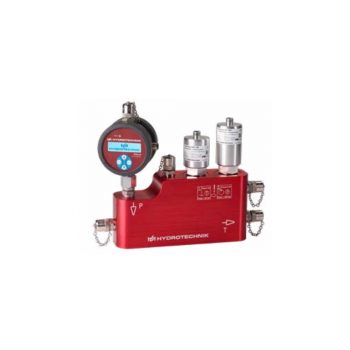
The HySense® CX 197 service measuring kit combines all the oil condition sensors needed for a professional and fast oil condition analysis. As a result of its heavy-duty construction and compact design, combined with MINIMESS® adapters that make setup an absolute breeze, this kit is a perfect fit for mobile use. Moreover, the corresponding analysis application that is implemented in MultiSystem measuring devices makes it enormously easier to operate and use the sensors. Finally, the intuitive menu navigation and the stored oil database both make it easy to quickly acquire, visualize, evaluate, and store oil condition parameters.
| Datasheet |
| Catalog Excerpt |
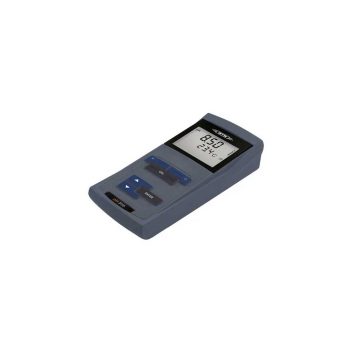
Reliable conductivity meter with automatic nIF temperature compensation according to DIN EN 27888 for routine measurements in natural waters and wastewater.
- Automatic temperature compensation nlF
- Salinity measurement
- Easy operation (also with gloves)
- Robust and waterproof
Conductivity measurement without effort: the Cond 3110 is a robust and waterproof meter for portable conductiviy measurement. A safe operation is ensured by automated functions, which reduces the number of keys on the keypad. Furthermore, this meter can be operated with gloves based on its silicone keypad with noticable key clicks. The Cond 3110 works with the TetraCon® 325 as well as with the KLE 325.
| Datasheet |

A combination of robust conductivity pocket meter and data logger for all who want to automatically capture and evaluate measured data with the help of a computer.
- Covers all standard and special measurements
- Pure water measurement according to pharmacopeia
- With built-in memory and data logger
- The versatile Cond 3310 is designed for conductivity measurements in changing media with different 2 and 4 pole measuring cells. With its large memory and its
- waterproof USB interface, this meter is ideal for the capture of large data volumes, e.g. for groundwater pumping tests including date, time and ID number. Via the
- interface, the data can be transferred to the computer and processed as needed.
The scope of delivery includes the MultiLab® Importer to collect data via Excel®.
| Datasheet |
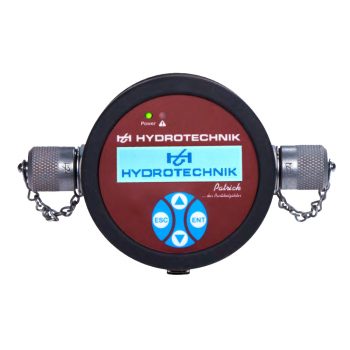
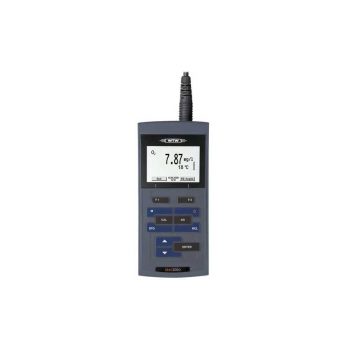
Professional dissolved oxygen pocket meter with mini USB interface for mobile applications or routine measurements with documentation.
- Documentation of long data series by integrated data logger function
- Backlit graphic display for measurements in all lighting conditions
- Calibration against external standard possible
- Robust and waterproof (IP 67)
The Oxi 3310 is a top of the line portable meter for dissolved oxygen with a modern, user-friendly user interface. The output of the measured results is either as concentration, saturation or partial pressure. It has an interval-driven data logger and memory for 5,000 entries - ideal for the automatic data collection on site. If desired, you can calibrate against external standards such as reference sensors or Winkler titration. The scope of delivery includes the MultiLab® Importer to capture data via Excel®.
| Datasheet |
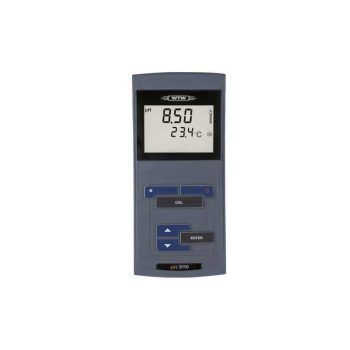
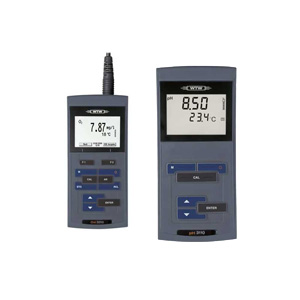
Easy and robust portable pH/mV meter for routine measurement - secure and reliable pH measurement due to repeatable results.
- Waterproof according IP 67
- 3-point calibration
- Integrated calibration timer
The pH 3110 is the right choice for all who are looking for a simple meter for portable pH measurements. A clear keypad with only 6 keys and the automatic AutoRead function for repeatable measured values make pH measurement safe and prevent errors. The anti-skidding keypad can be operated with gloves as well. The large display is clear and easy to read.
| Datasheet |
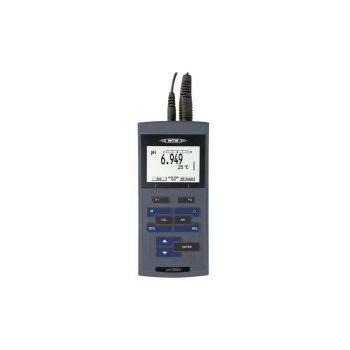
Precise, portable pH/mV pocket meter with lit background graphic display and manual memory for safe and convenient measurements
- Data logger with intervals between 1 s and 60 minutes
- Easy calibration thanks to 22 stored buffer sets
- Optimum measuring range use with CMC function
- 1 to 5-point calibration with calibration timer for all measuring tasks
| Datasheet |

pH, Conductivity & Dissolved-Oxygen Measuring Instruments
Instruments for pH, conductivity and dissolved oxygen measurement are essential tools in chemical, environmental, industrial and laboratory applications. They permit determination of pH, ionic concentration (via conductivity) and oxygen content in liquids — parameters critical for water analysis, wastewater control, process monitoring, quality assurance and scientific research. Often combined in multiparameter instruments, they enable efficient and versatile measurement of several water quality parameters with one device. :contentReference[oaicite:15]{index=15}
Questions & Answers on pH / Conductivity / Dissolved Oxygen Measuring Devices
What does a pH meter measure exactly?
A pH meter measures the activity of hydrogen ions in a solution and outputs the pH value — a measure for the acidity or alkalinity of the liquid. :contentReference[oaicite:16]{index=16} Most pH meters use a glass electrode, whose potential relative to a reference electrode is converted into pH units. :contentReference[oaicite:17]{index=17}
How does conductivity measurement work?
Conductivity meters measure the electrical conductivity of a solution, which correlates with the concentration of dissolved ions (salts, ions). :contentReference[oaicite:18]{index=18} This allows conclusions about ion concentration or overall salinity. In analytical chemistry, conductivity measurements are also used for titrations and ion concentration determinations. :contentReference[oaicite:19]{index=19}
How is dissolved oxygen measured?
Dissolved oxygen (DO) sensors typically consist of a probe with a membrane and internal electrodes/electrolyte. Oxygen from the liquid diffuses through the membrane and reacts electrochemically, which leads to a measurable current or potential change that the meter converts to a DO concentration. :contentReference[oaicite:20]{index=20} Many modern instruments combine pH, conductivity and DO measurement — practical for water quality analysis or environmental monitoring. :contentReference[oaicite:21]{index=21}
Why are temperature and possibly pressure compensation important?
pH, conductivity and dissolved oxygen depend on temperature; for DO additionally auch auf den Luftdruck bzw. Wasserdruck. Eine Temperaturkompensation sorgt für korrekte, vergleichbare Messergebnisse — und bei Sauerstoffmessung kann eine Druckkompensation nötig sein, um Lösung und Partialdruck korrekt zu berücksichtigen. Viele Geräte bieten automatische Kompensation. :contentReference[oaicite:22]{index=22}
Where are these measuring instruments typically used?
Typical applications include water and wastewater analysis, environmental and surface water monitoring, process water monitoring, aquaculture, food and beverage production, chemical and industrial process control as well as research and laboratory analysis. :contentReference[oaicite:23]{index=23}
What are typical measurement ranges and accuracies?
For pH measurement the usual range is 0–14 pH, with resolution/accuracy around 0.01 … 0.02 pH. :contentReference[oaicite:24]{index=24} Conductivity measurements can span from a few µS/cm up to several 100 mS/cm, depending on the sensor and solution conductivity. :contentReference[oaicite:25]{index=25} Dissolved-oxygen sensors typically provide results in mg/L (ppm) or percent saturation; accuracy and response time depend on the probe technology. :contentReference[oaicite:26]{index=26}
What factors affect measurement results?
Important influencing factors are temperature, electrode / sensor condition (cleanliness, age), calibration status, sample composition (ion concentration, salinity), oxygen equilibrium (bei DO), and user handling. Regular calibration, Reinigung und ggf. Austausch der Sensoren ist notwendig, um verlässliche Werte zu erhalten. :contentReference[oaicite:27]{index=27}
Why consider a multiparameter device instead of separate instruments?
Multiparameter instruments — combining pH, conductivity and DO (often plus Temperatur, TDS, Salinity) — save space und Kosten and increase flexibility, especially when multiple water-quality parameters must be checked. They simplify handling and documentation compared to using separate devices. :contentReference[oaicite:28]{index=28}
What are requirements for industrial applications?
In industrial or field applications robustness, wasserdichte oder staubgeschützte Gehäuse, einfache Bedienung, verlässliche Sensoren, automatische Temperatur- und ggf. Druckkompensation sowie gute Kalibrierbarkeit und Dokumentation sind wichtig. Für Wasseraufbereitung, Umweltüberwachung oder Prozesskontrolle müssen Messwerte zuverlässig und reproduzierbar sein. :contentReference[oaicite:29]{index=29}