



























-
legal for trade according to accuracy class C3 acc. To OIMLR60
-
easy and quick installation with SIWAREX mounting units
-
options for use in hazardous areas are in preparation
Datasheet
|
Siemens Tension Load Cells
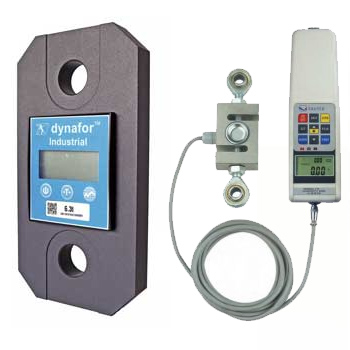
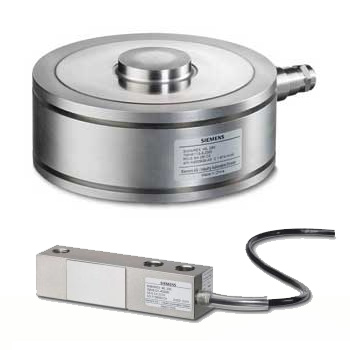
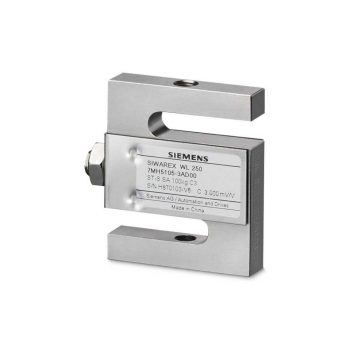
The tension (tensile) load cells from the Siemens WL-series are strain-gauge sensors specifically designed for measuring tensile loads. They detect the applied tensile force and convert it into a proportional electrical signal via strain gauges. Due to their construction, they are particularly suited for applications where tensile load is predominant — for example container or tank suspensions, weighing systems with hanging load, test rigs or lifting/hoisting arms under load.
FAQ
What distinguishes a tension load cell from other load cell types?
Tension load cells measure pure tensile force rather than compressive or shear loads. The measuring element is designed to deform linearly under tension and the strain gauges detect this deformation reliably.
For which applications are tension load cells suitable?
They are used in systems with suspended loads such as container or tank hangings, lifting and conveying systems, test rigs for tensile or lifting operations, and industrial applications with tension load. Also weighing systems configured for hanging loads fall under this use case.
How are tension load cells mounted and connected?
The cell is installed between a fixed point and the load so that the tensile force acts directly along the measurement axis. Electrical wiring is done via shielded multi-core cables — commonly four- or six-core — and requires proper grounding and cable routing.
What load ranges do tension load cells cover?
Depending on the model, they can measure loads from a few kilograms up to several tons, depending on the cell’s size and design. This makes them versatile for light to heavy-duty tension weighing applications.
How precise and stable are tension load cells?
With correct installation and calibration, tension load cells deliver stable, repeatable measurements with good linearity and low hysteresis. Accuracy depends on the specific model and load range.
What must be considered during installation?
The load must be applied strictly in the tensile direction — shear or lateral forces must be avoided. The cell must not be twisted or loaded off-axis. Cables should be shielded and properly grounded, especially for long cabling or humid environments.
Can multiple tension load cells be used together?
Yes — in complex hoisting or weighing setups, several tension load cells can be combined in parallel or series, as long as the mechanical structure and electronics support such configurations.
How is calibration performed?
Calibration is done using defined tensile loads, often under realistic operational conditions. Zero adjustment, calibration at reference load and temperature compensation are necessary for precise measurement.
For which environments are tension load cells suitable?
Depending on housing and protection class, they are suitable for both dry and industrial, possibly humid environments. Materials and surface treatments are chosen to resist mechanical stress and corrosion. Environmental factors like temperature or moisture should be considered in the specification.
What advantages do tension load cells offer compared to other types?
They allow flexible weighing solutions for suspended or lifted loads and are ideal when a traditional platform or floor scale is impractical. They also provide design freedom in constrained spaces or special mechanical setups.


Datasheet