




























-
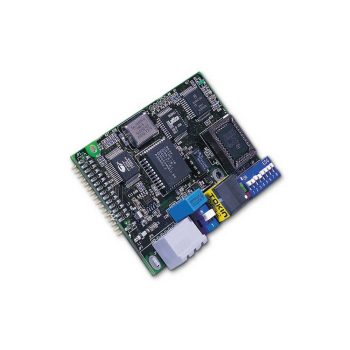
Fast, easy installation
-
Direct connection: no additional installation required
-
Scaleable application layer allows for optimized network bandwidth and memory requirements (for PROFIBUS DPV0 and DeviceNet only)
-
Modules available for PROFIBUS DPV0, PROFIBUS DPV1, PROFINET, DeviceNet, Modbus TCP/IP, and EtherNet/IP
®Modbus is a registered trademark of Schneider Electric.
TMDeviceNet is a trademark of Open DeviceNet Vendor Association
Datasheet
|
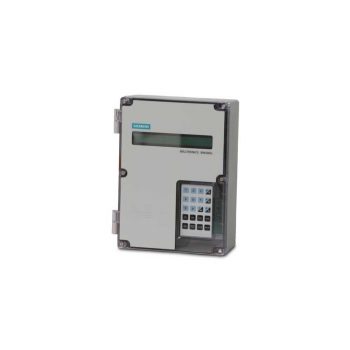
- Automatic zero and electronic span calibration
- Alarms for rate, load, speed, or diagnostic error
- On-board Modbus®, optional PROFIBUS DP, ProfiNet, Modbus TCP/IP, EtherNet/IP and DeviceNet™
- Comprehensive weighfeeder control functions
- PID control and on-line calibration with optional analog I/O card
- Differential speed detection with second speed sensor
- Moisture meter input with optional analog I/O card for calculation of dry weight
- Inclinometer input with optional analog I/O card to compensate for conveyor slope
- Suitable for belt scale custody approval
- Measurement Canada and NTEP approved
- Display languages: English, German, French, Spanish, Russian, Italian, Portuguese
Datasheet
|
-
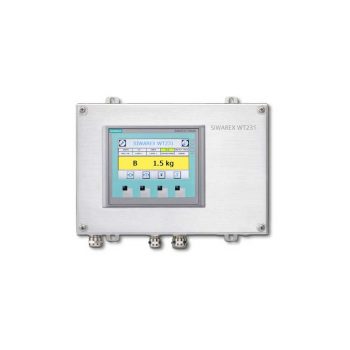
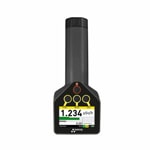
Comprehensive diagnostic functions, monitoring of limit values
-
High resolution of up to +/- four million parts
-
High accuracy of 0,05%
-
Measuring rate of 10 ms
-
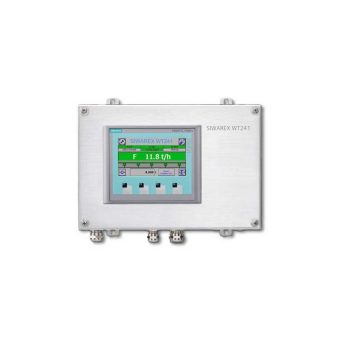
High-quality HMI panel ‒ 4-Zoll TFT widescreen display, touchscreen
-
Intuitive user interface
-
Flexible connection to all automation systems, which support Modbus RTU
-
High-quality stainless steel housing with degree of protection IP65
-
Simulation mode, intelligent speed detection, freely parameterizable digital in- and outputs, analog output, Pulse signal for remote totalizers, recovery function
-
High-quality HMI panel ‒ 4-Zoll TFT widescreen display, touchscreen
-
Intuitive user interface
-
Flexible connection to all automation systems, which support Modbus RTU
-
High-quality stainless steel housing with degree of protection IP65
Datasheet
|
-
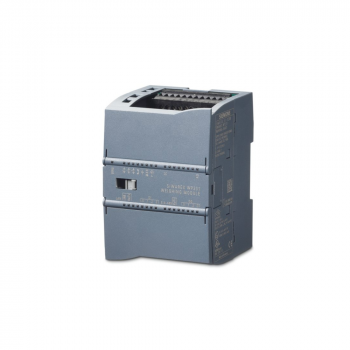
Uniform structure and universal communication through the integration in S7-1200
-
Four digital inputs and outputs, one analog output, all inputs and outputs are controllable via the SIWAREX module or via SIMATIC S7-1200
-
Operation also possible without SIMATIC CPU
-
Easy commissioning via SIWATOOL or via HMI touch panel
-
Extensive diagnostic functions
- Calibratable according type approval 2009/23/EC (NAWI)
- Calibratable according NTEP Class III / III L
-
Flexible adjustment for different requirements
-
Theoretical adjustment without adjustment weights
-
Modules can be exchanged without readjusting the scale
-
Can be used for Ex-applications zone 2
Datasheet
|
-
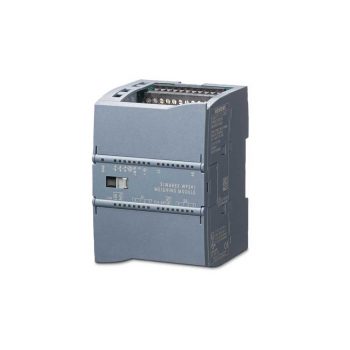
Uniform structure and universal communication through the integration in S7-1200
-
Standalone operation mode without SIMATIC CPU possible
-
Modbus TCP/IP & Modbus RTU
-
6 totalizers (individual resettable)
-
Pulse signal for remote totalizer
-
Simulation mode for belt load and/or belt speed
-
Trace recorder
-
Recovery point for easy rebuild of all parameters
-
Automatic zero tracking function
-
Easy commissioning via SIWATOOL and PC or via HMI touch panel
-
Extensive diagnostic functions
-
Flexible adaption to different requirements
-
Various calibration options
-
Can be used in hazardous applications ATEX zone 2
Datasheet
|
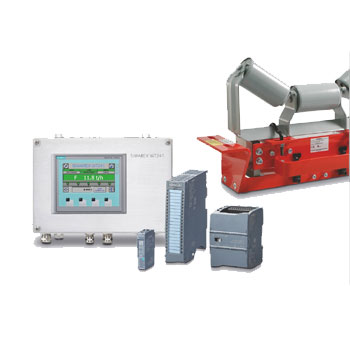
Siemens Stand-alone Weighing Electronics
Siemens stand-alone weighing electronics take over the complete signal processing of strain gauge load cells and provide fully conditioned weight values for platform, hopper and belt scales. The compact weighing terminals combine a powerful weighing module with an industrial touch panel in a robust stainless-steel enclosure and are designed for continuous use in harsh industrial environments.
Typical devices such as SIWAREX WT231 for platform and hopper scales and SIWAREX WT241 for belt scale applications offer high-resolution weight measurement, limit monitoring and a range of analog, digital and serial interfaces for easy connection to higher-level control systems. Features like automatic adjustment without test weights, integrated diagnostics and simulation functions simplify commissioning, maintenance and service.
FAQ
What are stand-alone weighing electronics used for?
Stand-alone weighing electronics are used wherever load cells need to be connected directly and weight values should be displayed locally and transferred to a controller – for example on platform scales, hopper scales, silo level monitoring, belt scales or checkweighers and filling systems.
Which Siemens devices are typical stand-alone weighing electronics?
Typical stand-alone weighing electronics are weighing terminals such as SIWAREX WT231 for platform and hopper scales and SIWAREX WT241 designed for belt scales and bulk material handling. They combine a weighing module and an industrial touch panel in a single compact enclosure.
How are load cells connected to the weighing electronics?
The terminals provide integrated terminals for several analog strain gauge load cells within a typical sensitivity range of about 1…4 mV/V. The load cells are connected in 4- or 6-wire technology, with particular attention to proper shielding, defined reference potentials and short cable routes.
Which interfaces are available for connection to automation systems?
Stand-alone weighing electronics usually offer an RS485 interface with Modbus RTU, an analog 0/4…20 mA output and several digital inputs and outputs for control and signaling. This enables easy integration into PLC systems, HMI panels or DCS solutions from different manufacturers.
How is the scale calibrated?
Calibration can be carried out using conventional test weights or – depending on the device – electronically by means of known reference data. The electronics support functions such as automatic adjustment, linear interpolation over several calibration points and electronic corner adjustment for multi-cell systems.
Are stand-alone weighing electronics suitable for legal-for-trade applications?
Many weighing electronics are designed for use in legal-for-trade scales and comply with relevant standards and OIML recommendations when the complete system of mechanics, load cells and electronics is properly configured and approved. Suitability must always be checked against the specific approvals of the device and the load cells.
What special functions do devices for belt scales provide?
Weighing terminals designed for belt scales measure belt load and belt speed, calculate mass flow and totalized quantity and provide multiple totalizers. In addition, they monitor limits for material flow, belt speed and load and issue alarm or control signals when thresholds are exceeded or undershot.
Which diagnostic functions are available?
Modern weighing electronics offer extensive diagnostics such as trend and weight displays, monitoring of signal levels, load curves and limits, logging of faults and plain-text error messages. This helps to quickly detect cable faults, overloads, drift or mechanical restrictions.
How are limits and switching outputs configured?
Limits for underload, overload, dosing or filling cut-off are configured in the device and linked to the digital outputs. Depending on the application, the outputs can act as min/max contacts, pre-alarms, batch release signals or fault alarms, without necessarily requiring a higher-level PLC.
What are the benefits of the integrated touch panel?
The integrated touch panel provides user interfaces for commissioning, parameterization and diagnostics. Guided wizards support calibration, zero setting, corner adjustment and limit configuration. Process values such as weight, flow rate, totals and status information are displayed in a clear, structured way.
Which environmental conditions must be considered?
The stand-alone weighing electronics are typically housed in splash-proof stainless-steel enclosures with a high degree of protection and are designed for industrial ambient temperature ranges. When installing the device, vibration, direct sunlight, aggressive atmospheres and proper cable routing must be taken into account.
How is EMC-compliant installation ensured?
For reliable, low-noise measurement, load cell cables should be shielded, routed separately from power cables and properly grounded at defined points. Potential equalization between scale mechanics, load cells, electronics enclosure and control cabinet must be implemented with low impedance to minimize interference caused by coupling or leakage currents.
How can multiple scales be connected or expanded?
Via serial or fieldbus-capable interfaces, several weighing terminals can be connected to a higher-level controller. Depending on the process, each terminal can operate one scale or multiple modules can be combined to handle different scales or process stages independently.
Which functions support maintenance and service?
Functions such as simulation of load or belt values, integrated test routines, parameter backup and restore as well as options to export and import configurations simplify maintenance and device replacement. This helps to reduce downtime and return weighing systems to operation quickly.


Datasheet