







































































 Datasheet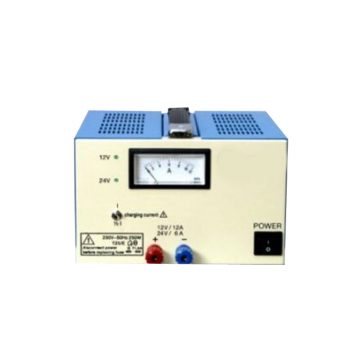
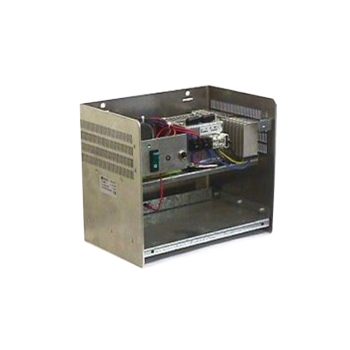
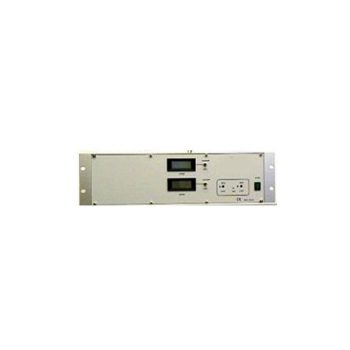

Battery Chargers and Buffer Chargers for Industrial Use
Battery chargers and buffer chargers are used for safe charging and power supply of accumulators, typically lead-acid, AGM or gel batteries. They provide a defined charging voltage with limited charging current and are designed for continuous operation. Buffer chargers combine charging and supply function so that loads remain powered from the battery for a defined time during mains failures, providing an uninterruptible power function.
Questions & Answers on Battery Chargers and Buffer Chargers
What is the difference between a charger and a buffer charger?
A conventional charger mainly charges the battery and is often disconnected or only operated intermittently. A buffer charger is designed for permanent operation: It supplies the load from the mains while keeping the battery in float or standby charge. If the mains fails, the battery automatically takes over the load supply, without any manual switching.
For which battery types are industrial chargers designed?
Industrial chargers are mainly intended for open or sealed lead-acid batteries, including AGM and gel types. Depending on the device, other chemistries such as NiCd or Li-Ion can also be supported, provided that final charging voltages, charging characteristics and protection functions are explicitly designed for these types. Compatibility must always be checked against the battery data.
Which charging characteristics are typically used?
Common charging characteristics are IU, IUoU or IUIa. In these profiles, charging starts with a constant current phase (I-phase), followed by a constant voltage phase (U-phase) until the charge termination criterion is reached. An optional float voltage (oU) then maintains full charge without overcharging. The exact profile depends on battery type, capacity and application (cyclic or standby operation).
How is a charger sized relative to battery capacity?
As a rough guideline, the charging current is often chosen between about 0.1 C and 0.2 C (C = battery capacity in Ah). For a 40 Ah battery this typically corresponds to 4–8 A. For standby operation with maximum lifetime a lower charging current is often preferred, whereas cyclic applications may benefit from higher charging currents. Required recharge time after a mains failure must also be considered.
What is the difference between cyclic operation and standby operation?
In cyclic operation the battery is regularly charged and discharged, for example in mobile systems or in applications with frequent mains interruptions. In standby operation the battery remains fully charged most of the time and only supplies power in fault conditions. Chargers for standby operation often use optimized float voltages to minimise gassing and extend battery lifetime.
Which protection features are important for chargers?
Key protection features include short-circuit protection, current limiting, reverse polarity protection, temperature monitoring and overvoltage protection. In buffer applications, deep discharge protection, battery disconnection at undervoltage and possibly redundant architectures are important to protect both load and battery from damaging operating conditions.
How does ambient temperature affect the charging voltage?
The permissible charging voltage of lead-acid batteries is temperature-dependent. Many chargers are equipped with temperature-compensated voltage control using a temperature sensor attached to the battery. At low temperatures the charging voltage is increased, while at high temperatures it is reduced to optimise capacity, lifetime and safety.
Why is current limiting important during charging?
Defined current limiting prevents excessive heating, gassing and mechanical stress on the batteries. Without current limiting, partially or deeply discharged batteries could draw very high inrush currents. This could thermally overload both the battery and the charger and significantly reduce service life.
What is the role of output ripple in chargers?
The ripple of the DC output voltage affects both the battery and the connected loads. For robust loads, moderate ripple is uncritical, but sensitive electronic equipment often requires chargers with well-smoothed, regulated output. Excessive ripple can contribute to heating and premature ageing of the battery.
Can chargers and loads be connected to the battery at the same time?
Yes, this is the typical buffer mode. The charger supplies the load and charges the battery at the same time. The system must be dimensioned so that the maximum load plus required charging current are within the rated power of the device. In case of mains failure the battery seamlessly assumes the load supply while the charger behaves as a load.
How is the battery state of charge monitored?
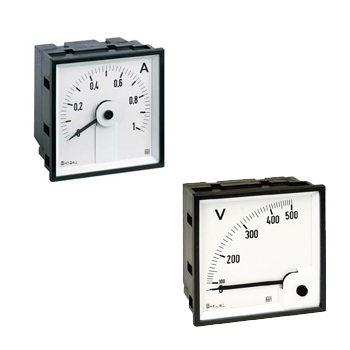
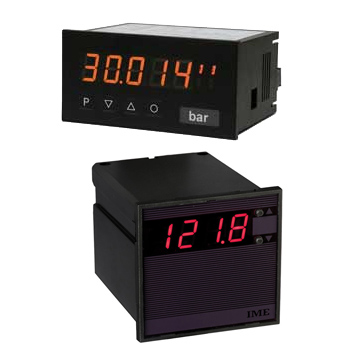
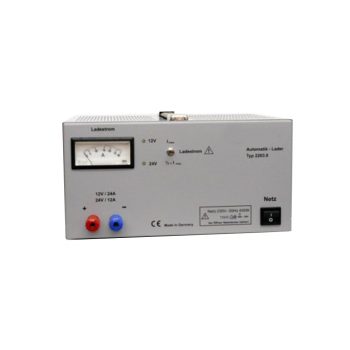
Depending on the device, LED indicators, analogue meters or digital displays for voltage, current and operating status are available. Some chargers provide relay contacts or signal outputs transmitting states such as mains present, battery charging, battery failure or deep discharge to higher-level control systems.
What must be considered in safety-related applications?
In safety-related applications such as emergency lighting, alarm systems or process control, high availability, redundancy and regular functional tests are crucial. Chargers must be designed according to relevant standards, support defined battery tests and provide clear fault indications. In addition, maintenance schedules and regular battery capacity tests are required.
Can multiple chargers be operated in parallel on one battery?
This is possible in principle but requires chargers that are suitable for parallel operation or a current sharing concept using diode or MOSFET isolation. The aim is to prevent reverse currents between devices and to achieve a balanced load sharing. In critical applications a redundant n+1 configuration can be implemented.
What are the requirements for wiring and cable sizing?
The cables must be sized for maximum charge and discharge current and must be mechanically secure. Contact resistances at terminals and connectors should be minimised to avoid voltage drops and heating. Adequate protection against short circuit and reverse polarity is required throughout the entire DC circuit.