









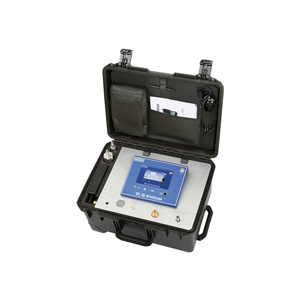
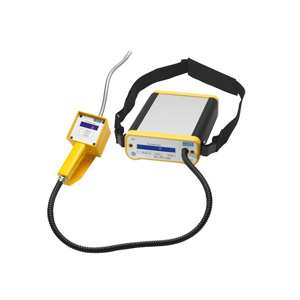
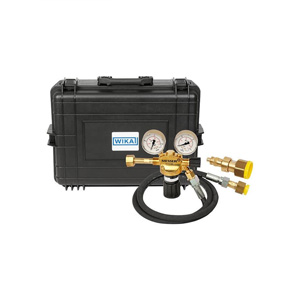
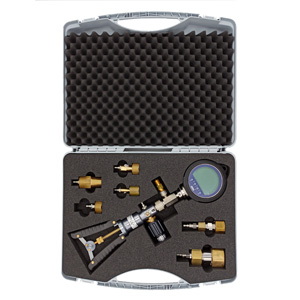
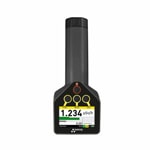
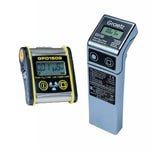
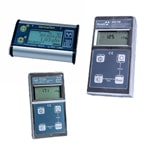
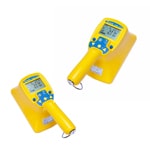
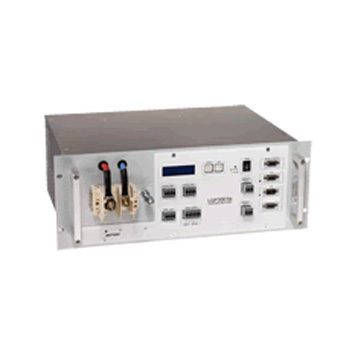
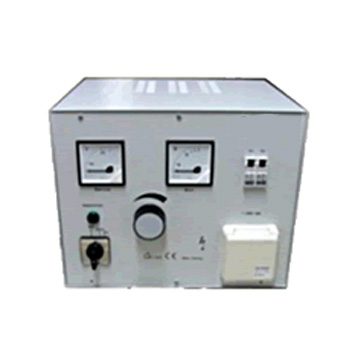
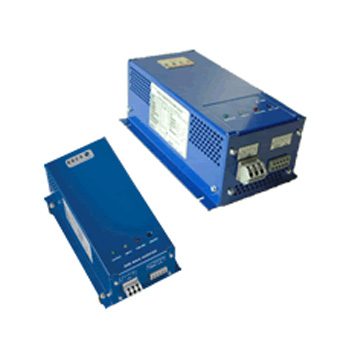
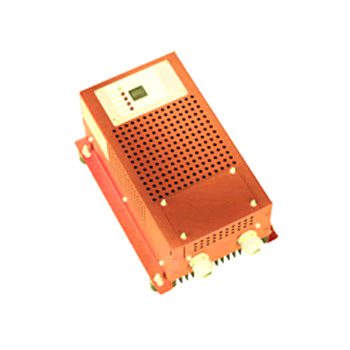
























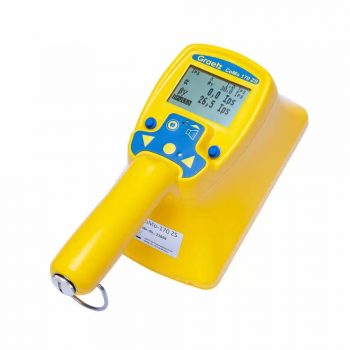
- High-performance, mobile contamination monitor with thin-layer plastic scintillation detector (complete elimination of gas-filled or gas-purged detectors).
- A detector can be used to make α-, β- and γ-sensitive measurements, and the measurement system automatically detects whether alpha radiation is present
- Possibility of simultaneous or selective measurement of α- and β-/γ-contaminations
- User-friendly user interface (operation via 5 function keys)
- Settings and measured value parameters protected by password
- Integrated measurement data storage, optional software for reading and processing the measurement data
- Connection option for various external probes, e.g. for dose rate measurement
- Automatic detection of the probes
- Optional stationary use in wall station with power supply
- In case of mechanical destruction of the detector foil, the repair can be carried out inexpensively by the user himself (no costly detector repair in the manufacturer’s factory necessary as with the xenon detector)
- Avoidance of high operating costs for gas flushing
- CoMo-170 ZS and F: adapted to the tasks of the civil defense and the fire department
- CoMo-170 DL: with additional GM counter tube integrated into the front face for measuring the dose rate
- CoMo-170/-300 G: for pure gamma measurements
 Datasheet Datasheet |
- High-performance mobile contamination monitor with thin-layer plastic scintillation detector (complete elimination of gas-filled or gas-purged detectors).
- A detector can be used to make α-, β- and γ-sensitive measurements, and the measurement system automatically detects whether alpha radiation is present
- Possibility of simultaneous or selective measurement of α- and β-/γ-contaminations
- User-friendly user interface (operation via 5 function keys)
- Settings and measured value parameters protected by password
- Integrated measurement data storage, optional software for reading and processing the measurement data
- Optional stationary use in wall station with power supply
- In case of mechanical destruction of the detector foil, the repair can be carried out inexpensively by the user himself (no costly detector repair in the manufacturer’s factory necessary as with the xenon detector)
- Avoidance of high operating costs for gas flushing
- CoMo-170 ZS DekoP: Measurement in Ip/s
- CoMo-170 ZS ATF: nuclide-related measurement in Bq, Bq/cm².
| Datasheet |

Contamination Monitor Instruments for Radioactive Surface Detection
Contamination monitor instruments are used for rapid and reliable detection of radioactive contamination on surfaces, clothing or items. They typically use scintillation detectors or Geiger–Müller tubes with sensitive pulse counters to detect low levels of α-, β- and γ-activity. Typical applications include inspections in nuclear facilities, medicine, research, and decommissioning — for both fixed surfaces and removable samples.
Frequently Asked Questions about Contamination Monitors
What are contamination monitors used for?
They are used to detect radioactive contamination on surfaces, tools, clothing or materials — for example as safety checks after operations, before entering or leaving radiation-controlled areas, or during decommissioning and disposal of contaminated components.
Which radiation types can they detect?
Depending on the device, contamination monitors can detect α-, β- and γ-radiation. Some devices are specialized for β/γ measurement, others also include α sensitivity. The choice depends on the intended application and the expected contamination spectrum.
Which detector technologies are employed?
Common technologies include scintillation detectors (e.g. ZnS for α, NaI(Tl) for γ) and Geiger–Müller tubes. For particularly sensitive measurements or to detect very low activities, semiconductor detectors or proportional counters may also be used. Detector choice affects detection limits, energy sensitivity and suitable application areas.
Is measurement done on surface or on a sample?
Depending on the instrument, measurement can be done directly on surfaces or clothing (surface scan) or by placing small material samples under the detector (sample measurement). Surface scanning is used for quick contamination checks; sample measurement is used for detailed analysis and documentation.
What does the detection limit of a contamination monitor mean?
The detection limit defines how low an activity concentration per area (e.g. Bq/cm²) or per sample the device can reliably detect. Low detection limits (e.g. a few Bq/cm² or below) are particularly important for decommissioning, release measurements or environments with very low background activity.
How are measurement results displayed?
Results are typically displayed as count rate (cps), dose rate (µSv/h) or activity density (Bq/cm²), depending on the device and calibration. Modern instruments often have digital displays for clear readout and may provide acoustic or optical alarms when contamination thresholds are exceeded.
Why are energy dependence and detector shielding important?
Energy dependence influences how well the instrument detects radiation of different energies — particularly relevant for low-energy alpha and beta particles with limited penetration. For surface measurement, minimal shielding may be required to allow detection of low-energy particles. Detector and housing design must be chosen according to the radiation type and intended use.
What are the requirements for calibration and testing?
Contamination monitors must be calibrated using defined reference sources (α, β, γ) to allow statements about activity density. Regular functionality and zero-point checks are necessary, especially before critical inspections or release measurements. Documentation of calibration and test results is part of the radiation protection and quality assurance process.
How important are ruggedness and protection class for field use?
Depending on the application — laboratory, industrial site, decommissioning — instruments should be shock-resistant, durable and, if needed, splash-proof. For field measurements a compact, portable, battery-powered and robust housing is advantageous to ensure mobility and ease of handling.
Which additional features can contamination monitors offer?
Modern devices may include automatic background compensation, data logger with time and location stamp, contamination alarms, bar-graph display of count rate, and interfaces (USB, Bluetooth) for data transfer. Some are designed for surface scanning with a probe or manual scanning.
For which applications are contamination monitors especially suitable?
Typical applications include checks when entering or leaving radiation controlled areas, release measurements of materials or surfaces after decommissioning, laboratory monitoring, radiology and nuclear medicine departments, as well as waste disposal and contamination control. Maintenance and cleaning of radiation-exposed equipment are further typical uses.