







































FAQ
What types of current clamps and current transformers exist?
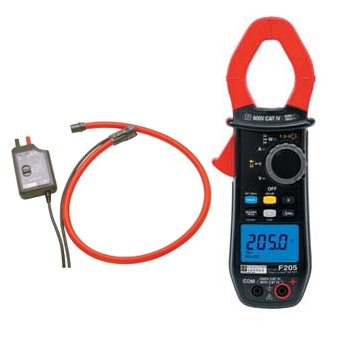
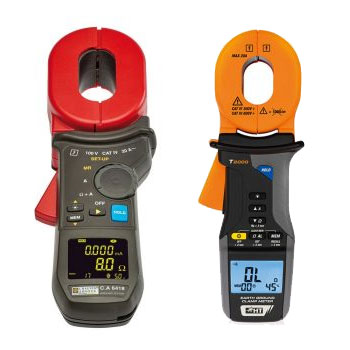
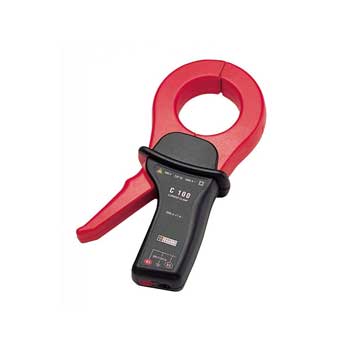
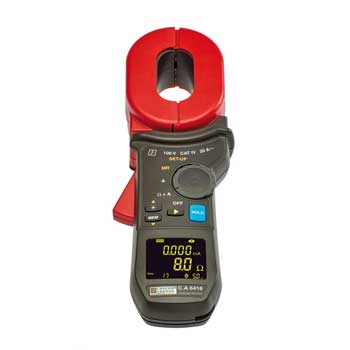
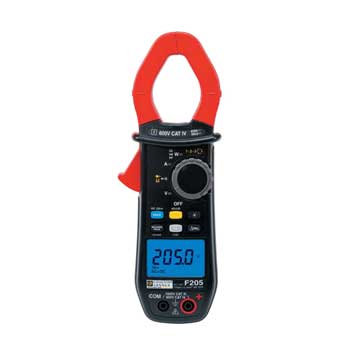
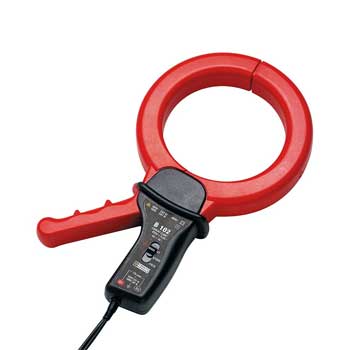
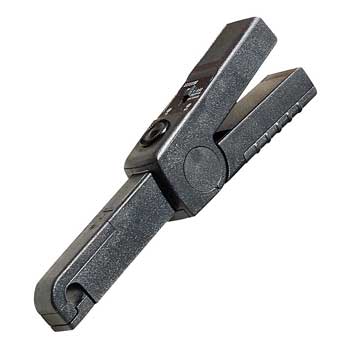
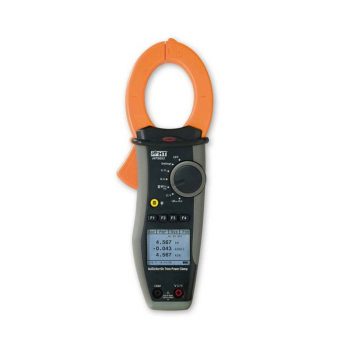
There are traditional clamp meters, flexible Rogowski coils, Hall-effect clamps and low-current precision clamps.
What is a Rogowski coil?
A Rogowski coil is a flexible, air-cored current transformer ideal for high currents, wide frequency ranges and large conductor diameters.
How is a Rogowski coil correctly installed?
The coil must fully encircle the conductor with a proper closure. The conductor should be centered inside the loop without twisting or compressing the coil.
What measurement ranges are typical?
Depending on the model, ranges span from a few amperes up to several kiloamperes. Flexible coils are preferred for extremely high currents.
What bandwidths can flexible current transformers support?
Rogowski coils offer wide bandwidth and are suitable for impulsive, distorted or fast current waveforms where rigid clamps may fail.
How accurate are flexible current transformers?
Accuracy depends on the integrator, calibration and positioning. Typical accuracy is 1–3 %, with high-grade systems achieving even better results.
What are common error sources?
Errors occur from incomplete coil closure, twisting, electromagnetic interference, unsuitable integrators or incorrect calibration.
Which current types can be measured?
Depending on the device: AC, DC or both. Rogowski coils inherently measure AC and require an integrator for signal conditioning.
How does electromagnetic interference affect measurements?
Strong EM fields can distort readings. Proper shielding, cable routing and robust instrumentation mitigate such effects.
What conductor sizes can be measured?
Flexible CTs can measure large busbars, multicore cables and conductors with large diameters where rigid clamps cannot be applied.
Which safety requirements apply?
Important factors include measurement category (CAT II–IV), insulation rating, maximum voltage to earth and safe handling during live operation.
What maintenance is required?
Routine inspection, functional testing, periodic calibration and checking the mechanical integrity of the closure mechanism are recommended.
How is data recorded and analyzed?
Data can be logged internally or transmitted via USB, Bluetooth or Wi-Fi and analyzed using specialized software.
Which applications especially benefit from flexible CTs?
Constricted installations, large conductors, energy analysis, load profile monitoring, commissioning, maintenance, EMC diagnostics and short-circuit estimation.
Are flexible CTs suitable for very low currents?
Yes, but only models with appropriate integrators and sensitivity. For ultra-low currents, rigid clamps may offer higher precision.