











































Current Transformers with Built-in Transducer
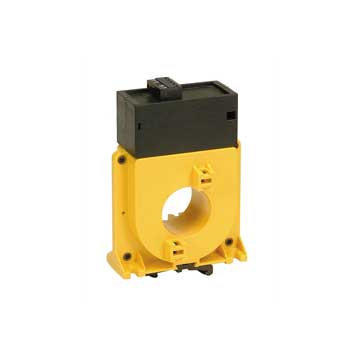
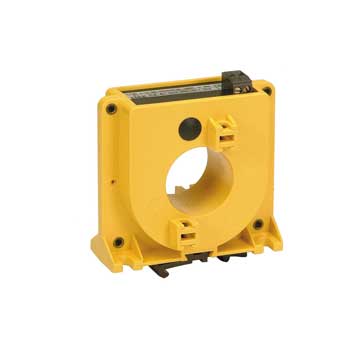
A current transformer with integrated transducer combines a conventional current transformer (CT) with built-in electronics that convert the measured current into a standardized output signal — e.g. 0–20 mA, 4–20 mA or 0–10 V. This allows to directly measure large currents in industrial or distribution systems and output a usable signal for displays, control systems or automation devices — without requiring external shunts or additional converters.
Questions & Answers
What is a current transformer with built-in transducer?
It is a current transformer that includes an electronic module converting the primary current into a usable standardized signal. The primary conductor runs through the transformer, which senses the current; the embedded transducer electronics output a proportional signal for further processing.
Why is the combination of CT and transducer advantageous?
Because it simplifies installation: only one device is needed instead of a separate transformer plus signal converter, reducing wiring effort and potential error sources.
Which output signals are common?
Typical output formats are 0–20 mA, 4–20 mA or 0–10 V, depending on the device and configuration. These are readily usable for panel meters, PLC inputs or data acquisition systems.
What current ranges can these devices cover?
Many versions offer configurable primary current ranges — e.g. 5–45 A, 25–225 A or more — making them adaptable to different load sizes and applications.
How is the current measured and converted?
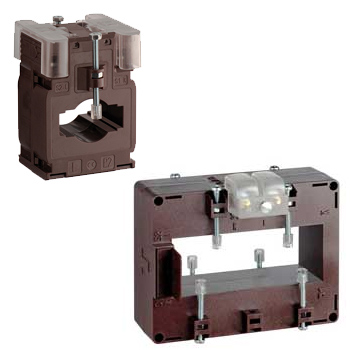
The primary conductor (cable or busbar) passes through the transformer core; the CT converts the primary current into a proportional secondary signal which the internal electronics convert into a standard output. The output is linearly scaled to the primary current.
What are typical application areas?
They are ideal for energy and load monitoring, motor current measurement, consumption tracking, power distribution control, industrial automation and any application requiring reliable current measurement and digital output for further processing.
What benefits do they offer for cabinet or automation use?
They provide galvanic isolation, standard output signals, reduced installation complexity and robust measurement, making them well suited for industrial switchboards, control cabinets and automation systems.
Are there any limitations or special considerations?
Yes — the secondary circuit must never be left open (to avoid dangerous high voltages), and the downstream device must accept the transducer’s output type. Also the transformer must be correctly sized for the maximum primary current to ensure measurement accuracy and safety.
How are they installed and commissioned?
You choose the appropriate current range, run the primary conductor through the transformer, supply the transducer with auxiliary power if required, and connect the output to a measurement or control device. The device then provides a proportional output signal reflecting the measured current.
When is using such a transformer recommended?
Especially when high currents must be measured and the result fed into PLCs, controllers or panel meters — when a safe, galvanically separated, standardized and installation-friendly solution is needed.