




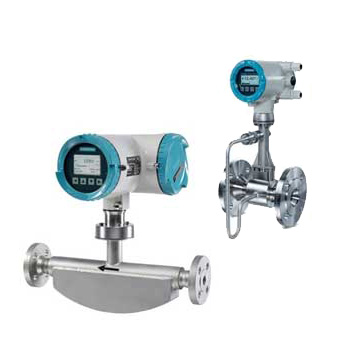
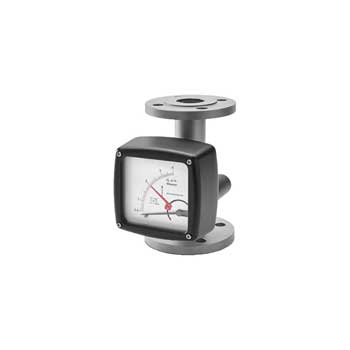
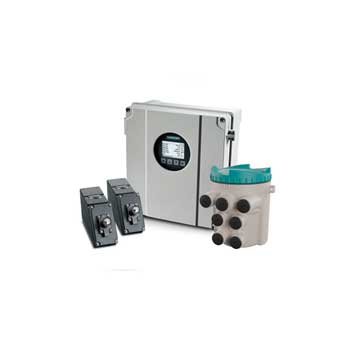
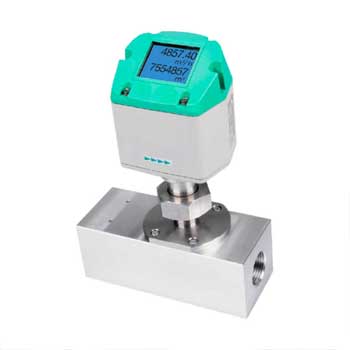



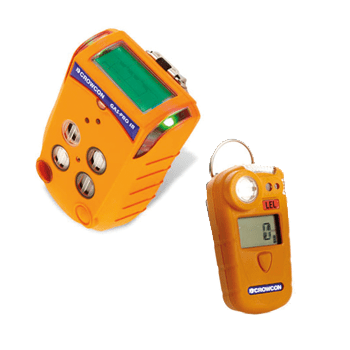
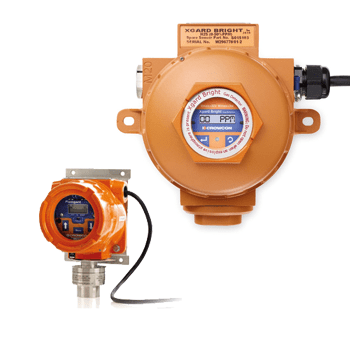
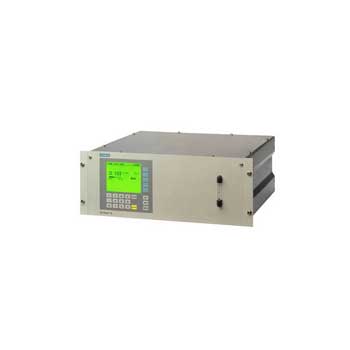



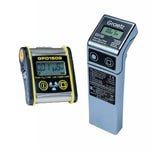
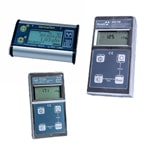

























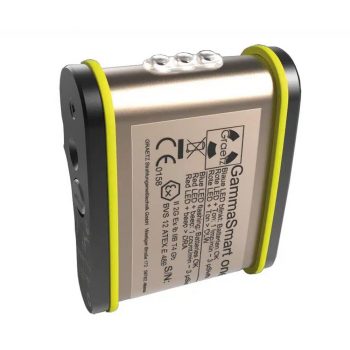
- The GammaSmart two device is a very robust, pocket-sized, battery-operated dose rate warning device for personal radiation protection
- It detects gamma and X-ray radiation and reports these with clear optical and acoustic single pulses, which increase in the pulse sequence as the dose rate increases
- The splash-proof aluminum housing (IP54) provides shielding against electromagnetic influence, an optical battery control indicates the operational readiness of the device
- A plastic clip is used to attach the dose rate warner to clothing
- GammaSmart two V40 with a dose rate warning threshold at 40 µSv/h for use in non-destructive testing (NDT) radiographic testing. For mobile handling, the local dose rate must not exceed 40 µSv/h.
 Datasheet Datasheet |
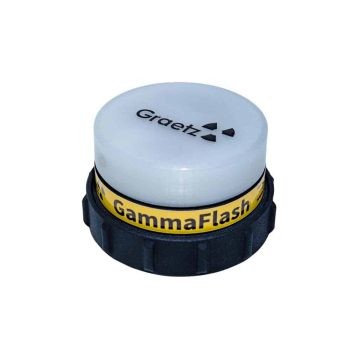
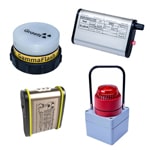
- GammaFlash is a lightweight, rugged, battery-powered dose rate warning device for the detection of gamma and X-rays in the Ḣ*(10) ambient dose equivalent rate measurand.
- Detector: Geiger-Müller counter tube with energy filter
- It has a fixed warning threshold that triggers a visual and audible alarm when exceeded
- The audible alarm can be acknowledged via a pushbutton on the housing perimeter
- Below the preset warning threshold, the GammaFlash indicates the functional readiness and battery status via a red LED
- By changing the blinking frequency of the optical single pulse display, an increase or decrease of the dose rate is indicated
- Customized warning threshold between 7.5 µSv/h and 10 mSv/h can be implemented ex works
- Easy to operate even with firefighter gloves on
- The plastic housing is jet-proof, oil and petrol resistant
- Thanks to a built-in magnet, the gamma radiation warning light can be attached to suitable metal surfaces if required
- Possibility of individual labeling of the housing cover
Notice:
- In the firefighter version, the GammaFlash is preset to the dose rate warning threshold of 25 µSv/h for determining the limit of a hazardous area
| Datasheet |
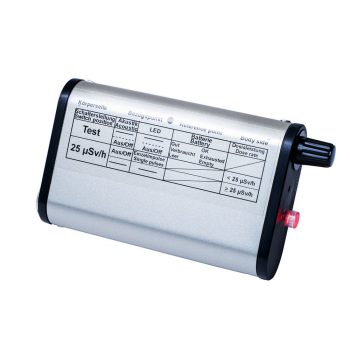
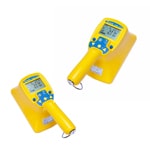
- The GammaTest C is a lightweight, rugged, battery-operated dose rate warning device for radiation protection for the detection of gamma and X-ray radiation in the measurand Ḣ*(10) ambient dose equivalent rate.
- The GammaTest C has four warning thresholds that trigger audible and visual alarms when exceeded
- Below the warning threshold, the GammaTest C indicates readiness for operation via the red LED and signals increases or decreases in dose rate as an optical single-pulse display by changing the flashing frequency
- The dose rate warning threshold 25 µSv/h is used in fire department operations to determine the limit of a danger zone according to FwDV 500
- The dose rate warning threshold 40 µSv/h is required in the field of non-destructive testing (NDT) for radiographic testing: For mobile handling, the local dose rate must not be higher than 40 µSv/h
- The splash-proof, anodized aluminum housing provides shielding against electromagnetic influences
- Operating time with one set of batteries at ambient radiation approx. 250 hours in 24 h operation
| Datasheet |

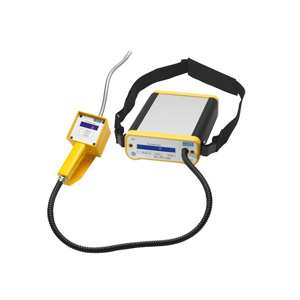
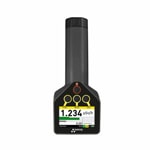
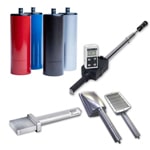
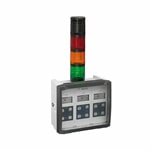
- Battery operated dose rate warning device for the detection of γ- and X-radiation in the measurand Ḣ*(10) ambient dose equivalent rate.
- The gamma warning light is preferably used to determine shut-off areas when a predefined dose rate is reached
- The device has four warning thresholds that trigger visual and audible alarms when exceeded
- The acoustic alarm can be switched off
- Designed for rugged use
- The housing is splashproof
- Operating time with fully charged battery in ambient radiation approx. 48 hours without warnings
- Stable tripod
- Motion detector for triggering the acoustic warning when a person approaches the hazardous area in the case of increased radiation
| Datasheet |

Dose Rate Alarm Devices for Personal Radiation Protection
Dose rate alarm devices are compact, body-worn electronic instruments that continuously monitor the ambient dose equivalent rate H*(10) and often the accumulated dose. When preset thresholds are exceeded, they trigger optical, acoustic and vibrating alarms to warn personnel early about increased radiation fields without significantly interfering with the workflow.
Frequently Asked Questions about Dose Rate Alarm Devices
How do dose rate alarm devices differ from conventional dose rate meters?
Dose rate alarm devices are primarily designed for continuous monitoring and alarming when limits are exceeded, typically in a compact, body-worn form factor. Conventional dose rate meters are often larger, provide more extensive display and documentation functions and are mainly used for spot measurements or area monitoring.
Which quantities do dose rate alarm devices usually measure?
Dose rate alarm devices normally monitor the ambient dose equivalent rate H*(10) in µSv/h or mSv/h and also integrate the accumulated ambient dose equivalent H*(10) in µSv or mSv. Both quantities are used to assess the exposure of personnel working in controlled radiation areas.
How are alarm thresholds set on dose rate alarm devices?
Alarm thresholds for dose rate and accumulated dose are typically configured directly on the device via keys and menu or by means of PC configuration software. At least one pre-alarm and one main alarm are common. The chosen values are based on operational limits, legal requirements or internal radiation protection rules.
Which types of alarms are available?
Dose rate alarm devices usually provide a combination of acoustic buzzer, vibration and optical signals (LEDs or display symbols). This ensures reliable alarming even in noisy environments, with protective clothing or limited visibility.
Where should a dose rate alarm device be worn on the body?
The device is generally worn on the chest pocket, belt or collar, usually around the torso area. The position should represent the typical exposure of the body and must not be shielded by massive metal parts or heavy protective equipment to ensure a representative dose measurement.
Which detectors are used in dose rate alarm devices?
Common detector types are energy-compensated Geiger-Müller tubes or photon-sensitive semiconductor detectors operating in the energy range of typical gamma and X-ray fields. The detectors are designed to respond reliably over a wide energy and dose rate range while maintaining very low power consumption.
What is the typical monitoring and measuring range?
Typical dose rate alarm devices start at a few 0.01–0.1 µSv/h and extend, depending on the instrument, up to several Sv/h to cover both routine monitoring tasks and alarming in emergency situations. The exact specifications depend on the device type and intended application.
Why is energy dependence important for dose rate alarm devices?
Energy dependence describes how the reading varies with photon energy. For personal protection, a nearly energy-independent response in the relevant energy range is essential so that the device provides reliable alarms under different radiation qualities. This is achieved by energy-compensated detectors and appropriate calibration.
How are dose rate alarm devices calibrated and checked?
Dose rate alarm devices are calibrated at defined intervals using reference radiation sources. In addition, many devices implement internal self-tests which monitor electronics, detector pulses and battery status. Regular functional checks before use (for example with reference check sources or test routines) are part of a structured radiation protection program.
What is the role of battery lifetime for dose rate alarm devices?
Since the devices are often worn throughout work shifts or permanently in radiation areas, long battery lifetime is crucial. Modern instruments achieve operating times of several months in continuous operation. A battery warning symbol or pre-alarm informs the user in good time about the need for battery replacement or recharging.
Which display and operating concepts are used?
Dose rate alarm devices usually feature a simple segment or dot-matrix display with clearly readable digits, symbols and status indicators. Operation is based on a small number of keys in order to minimize operating errors. Besides dose rate and dose, many devices also show alarm status, battery condition, lock conditions and possible error messages.
How are alarm events documented?
Many alarm devices include an internal memory that records alarm events with time stamp, peak dose rate and accumulated dose. Via interfaces such as USB, infrared or wireless links these data can be transferred to radiation protection software or quality management systems for evaluation and documentation.
In which applications are dose rate alarm devices typically used?
Typical application areas include nuclear facilities, radiology, nuclear medicine, industrial radiography, research institutes, waste management facilities as well as fire brigades and disaster response units. Wherever personnel can be exposed to ionizing radiation, these devices serve as personal warning instruments.
Which protection class and mechanical design are important for everyday use?
For robust daily use, a high degree of protection against dust and splashing water (such as IP54 or higher) and good shock resistance are essential. Housings with rubber coating, reinforced edges and pressure-resistant keys enable reliable operation even with gloves, under protective clothing or in harsh industrial environments.
Are there special functions for emergency operation?
Some dose rate alarm devices offer dedicated emergency modes with extended measuring ranges, particularly distinctive alarm patterns or real-time transmission of dose values to control centers. This enables incident commanders to monitor the exposure of emergency personnel and to control stay times in high radiation areas.