




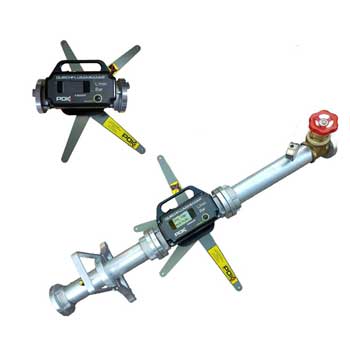
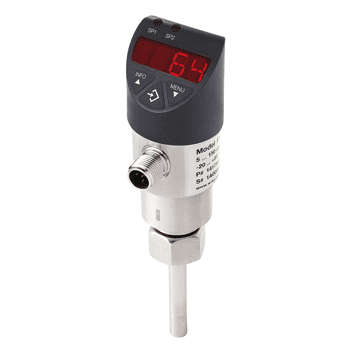
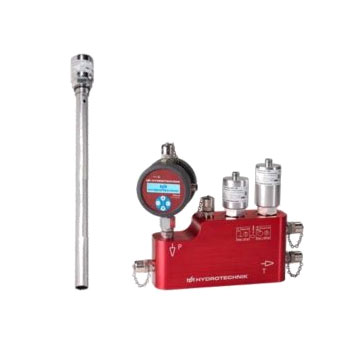
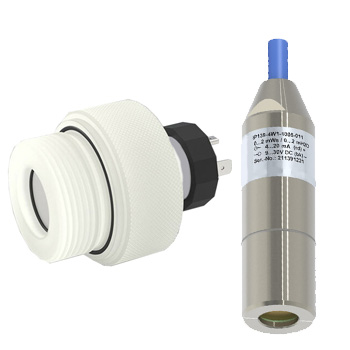





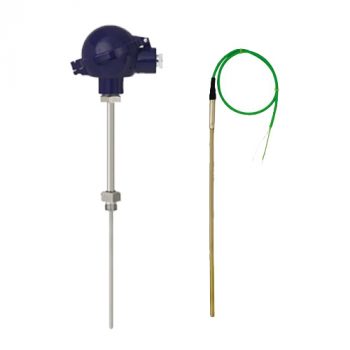
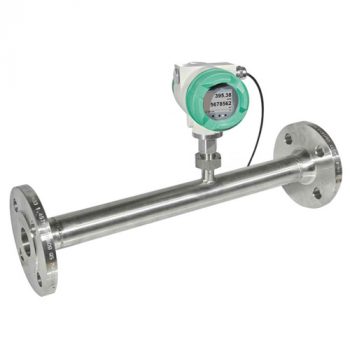
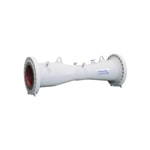






















- Highest accuracy and energy efficiency
- No upstream and downstream pipes required
- Wide range of applications
 Datasheet Datasheet |

H² Flow Meters for Hydrogen Systems
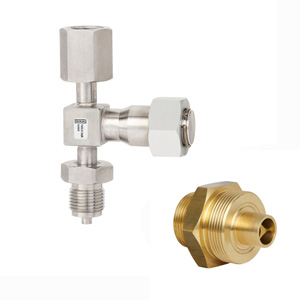
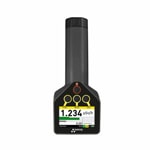
H² flow meters are specialized instruments for measuring the flow of hydrogen gas or hydrogen mixtures — typically as mass or volumetric flow. They are designed to accommodate the particular characteristics of hydrogen (low density, high diffusivity, variable temperature and pressure, explosion risk). As a result, they use dedicated measuring principles, suitable materials, and often integrated pressure and temperature compensation. These flow meters are used in electrolyzers, storage and distribution systems, refuelling stations, or process plants within the hydrogen industry. :contentReference[oaicite:22]{index=22}
FAQ / Frequently Asked Questions
What is an H² flow meter?
An H² flow meter is a device that measures the volumetric or mass flow of hydrogen gas — often taking into account pressure and temperature to derive a density- or mass-based flow value. :contentReference[oaicite:23]{index=23}
Why is hydrogen flow measurement technically challenging?
Hydrogen has very low density, diffuses strongly, and exhibits high sound velocity — making conventional measurement methods (e.g., for air or natural gas) often inaccurate or unsuitable. Additionally, special materials and sealing systems are needed to prevent leaks and embrittlement. :contentReference[oaicite:24]{index=24}
Which measurement principles are typically used?
For hydrogen, the following methods are commonly applied:
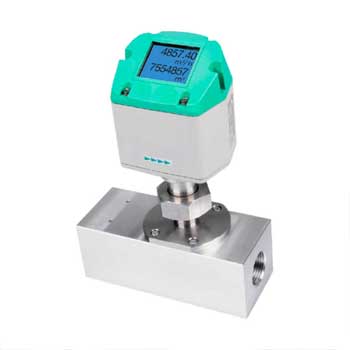
- Thermal mass flow meters – suitable for low to medium pressures and flow rates. :contentReference[oaicite:25]{index=25}
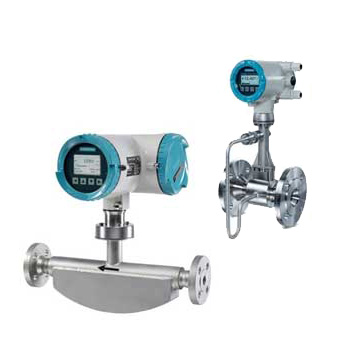
- Mass flow meters based on the Coriolis effect – direct mass measurement, robust, independent of density changes. :contentReference[oaicite:27]{index=27}
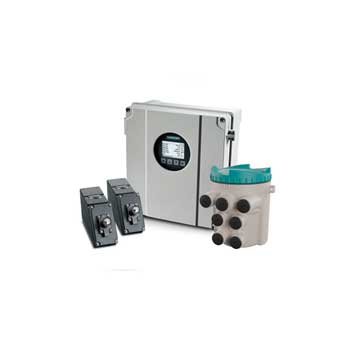
- Ultrasonic flow meters – measuring gas velocity via ultrasound to calculate volumetric/mass flow; advantageous due to low pressure loss. :contentReference[oaicite:28]{index=28}
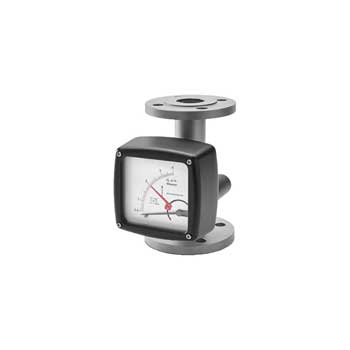
- Differential pressure based meters – possible in certain use cases, but often limited due to gas compressibility and drift in hydrogen. :contentReference[oaicite:29]{index=29}
When is mass flow measurement preferable over volumetric flow?
For compressible gases like hydrogen, volumetric flow is strongly dependent on pressure and temperature — values fluctuate with process conditions. Mass flow (or mass-based flow) is more stable and meaningful, e.g., for energy billing, process balancing, or quantity tracking. :contentReference[oaicite:30]{index=30}
What measurement accuracy can be expected from H² flow meters?
Modern Coriolis or high-end thermal mass flow meters can achieve very good accuracy when properly selected and calibrated — often with deviations in the low-percent or even per-mille range. Simpler systems show larger tolerances. :contentReference[oaicite:31]{index=31}
How important are pressure and temperature for the measurement?
Very important: Pressure and temperature influence hydrogen density, sound speed and thus the measurement result. Many flow meters therefore determine these values directly and perform internal compensation to ensure consistent results. :contentReference[oaicite:32]{index=32}
What materials and design requirements exist for hydrogen flow meters?
Wetted parts must be hydrogen-resistant — typically stainless steel or corrosion- and diffusion-resistant alloys. Seals, welds and housings must prevent leaks to ensure safety and measurement integrity. :contentReference[oaicite:33]{index=33}
In which applications are H² flow meters typically used?
Common applications include:
- Hydrogen production (e.g., electrolysis) to monitor generated amount. :contentReference[oaicite:34]{index=34}
- Hydrogen storage, distribution and transport systems. :contentReference[oaicite:35]{index=35}
- Refuelling of fuel cell vehicles — where high accuracy, pressure resistance and certification are critical. :contentReference[oaicite:36]{index=36}
- Process monitoring in industrial plants, test benches or research facilities. :contentReference[oaicite:37]{index=37}
What challenges arise in the calibration of H² flow meters?
Hydrogen differs significantly from air or natural gas — therefore calibration in the actual medium (H₂) under realistic pressure and temperature conditions is required. Air- or gas-equivalent calibrations are often insufficient. :contentReference[oaicite:38]{index=38}
Which approvals or specifications are relevant in the hydrogen sector?
For transport, refuelling or custody-transfer applications, devices often must meet international standards and certifications. This includes legal metrology (billing), safety and explosion protection regulations, as well as proven long-term stability under H₂ conditions. :contentReference[oaicite:39]{index=39}
What must be considered when installing an H² flow meter?
Proper installation with adequate upstream and downstream straight pipe lengths (or flow conditioners), stress-free piping, clean installation environment and possibly temperature/pressure compensation are crucial for measurement accuracy and operational safety. :contentReference[oaicite:40]{index=40}
Wie verhält sich der Druckverlust bei H²-Durchflussmessern?
That depends strongly on the measurement principle: thermal and ultrasonic meters as well as Coriolis flow meters can be designed for low pressure loss, while differential pressure or conventional meters may generate significant pressure drop — critical in gas transport or refuelling scenarios. :contentReference[oaicite:41]{index=41}
Wie werden H²-Durchflussmesser gewartet und kalibriert?
Maintenance depends on operating conditions, contamination and regulatory requirements. Regular functional tests, potential cleaning, leak checks and recalibration under hydrogen are recommended — especially for safety-critical or billing-relevant applications. :contentReference[oaicite:42]{index=42}
Welche Schnittstellen bzw. Ausgänge bieten H²-Durchflussmesser typischerweise?
Depending on the device, analogue outputs (current, voltage), digital interfaces (Modbus, CAN, PROFIBUS/PROFINET, Ethernet) and often totaliser, pulse or alarm outputs, counting functions or integrated data logging may be available — facilitating integration into process control or billing systems. :contentReference[oaicite:43]{index=43}