










































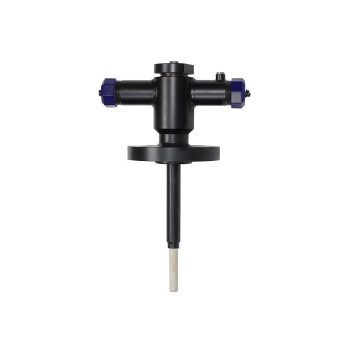
- 3 times longer service life in comparison to purely ceramic protection tubes due to the monocrystalline structure of the sapphire sensor
- High process safety with processes up to 1,700 °C [3,092 °F] and 65 bar [943 psi]
- Reduction of unplanned downtime
- Increased safety through double sealing system against escape of toxic media
- Cost savings through the elimination of a purge system and the repairability of the sensor

 Datasheet Datasheet |
| User Manual |
| User Manual |
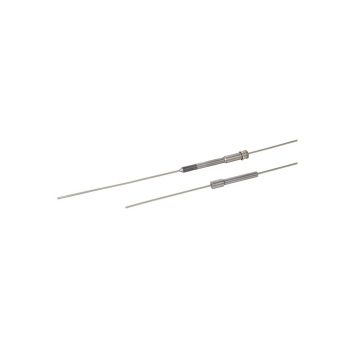
- Versions to customer specification
- Various process connections
- Short response times
- Robust, vibration-resistant design
- Various thermocouple types and electrical connection types
| Datasheet |
| Datasheet |
| User Manual |
| User Manual |
| User Manual |
- Versions to customer specification
- Various process connections
- Exchangeable measuring inserts
- Application in conjunction with a thermowell
- Explosion-protected versions Ex i, Ex n and NAMUR NE24
| Datasheet |
| User Manual |
| User Manual |
| User Manual |

H² Thermocouples for Hydrogen Applications
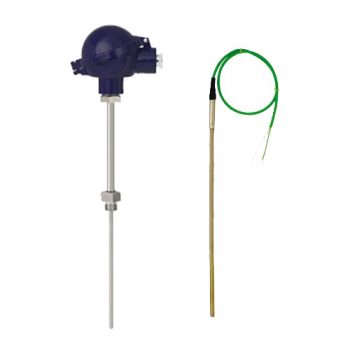
H² thermocouples are specifically engineered temperature sensors for measuring in media where hydrogen is present at elevated pressure and/or high temperature. They combine hydrogen-resistant sheath and protection tube materials with suitable thermocouple types and sealing concepts to ensure long-term stable and safe temperature monitoring in electrolysers, fuel cell test benches, hydrogen storage systems, reformers and high-pressure pipelines.
FAQ
What is the difference between H² thermocouples and standard thermocouples?
H² thermocouples are manufactured from materials that are resistant to hydrogen diffusion and embrittlement, such as high-alloy stainless steels or nickel-based alloys. In addition, adapted sealing systems, reinforced insulation concepts and often pressure-tight connection heads are used to minimise leakage and signal drift under hydrogen atmospheres.
Which thermocouple types are typically used in hydrogen applications?
Commonly used thermocouple types in hydrogen service are K, N and noble metal types such as S or B. Type K is widely used for general industrial processes, type N offers improved stability at higher temperatures, while types S and B are selected for very high temperatures and particularly demanding process conditions.
What temperature and pressure ranges can H² thermocouples cover?
Depending on the design, H² thermocouples can cover a range from approximately −200 °C up to beyond 1,600 °C. On the pressure side, applications from vacuum up to several hundred bar are possible when combined with suitable protection tubes and process connections, for example in high-pressure storage vessels or reactors.
Which protection tube and sheath materials are suitable for hydrogen service?
For hydrogen applications, high-alloy stainless steels, nickel-based alloys or special sapphire and ceramic protection tubes are commonly used. The selection is based on temperature, pressure, flow conditions and possible co-gases in order to prevent hydrogen embrittlement, corrosion and erosion damage.
How does hydrogen affect the long-term stability of thermocouples?
Hydrogen can diffuse into metallic materials and cause embrittlement, changes in microstructure and thus drift of the thermoelectric signal. By choosing appropriate materials, applying diffusion barriers and using carefully designed sealing systems, these effects are reduced and high long-term stability is achieved.
What are the specific requirements for electrical insulation in hydrogen atmospheres?
Insulation materials inside the thermocouple must be temperature and hydrogen resistant, for example high-purity ceramics or special oxides. Low leakage currents and sufficient insulation resistance are essential, especially at high temperatures and in moist hydrogen atmospheres.
How fast do H² thermocouples respond to temperature changes?
Response time is determined by the mass of the sensing element, sheath wall thickness, protection tube design and the flow velocity of the medium. Small-diameter mineral-insulated thermocouples provide very short response times, while massive protection tubes increase the response time but offer higher mechanical robustness and pressure resistance.
Which standards and approvals are relevant for H² thermocouples?
Thermocouple characteristics and tolerances are defined in the relevant thermocouple standards. In hazardous areas, ATEX, IECEx or comparable approvals are required, and in safety-related applications the complete measurement chain may have to comply with SIL requirements.
How are H² thermocouples installed in high-pressure and high-temperature processes?
Typical process connections include threaded fittings, flanges and welded connections, often combined with specially designed protection tubes. Sufficient immersion depth, a flow-optimised sensor position and a safe, pressure-tight connection are crucial to achieve accurate measurements and reliable plant operation.
When are replaceable measuring inserts recommended?
Replaceable inserts simplify maintenance and calibration, particularly in plants that require high availability. The defective or aged insert can be replaced or calibrated externally while the protection tube and process connection remain in place, reducing downtime.
How do H² thermocouples compare to resistance thermometers in hydrogen applications?
Resistance thermometers provide high accuracy within a limited temperature range but are more sensitive to mechanical stress and react differently to hydrogen diffusion. Thermocouples cover significantly higher temperatures and are more robust against thermal shocks, which often makes them the preferred choice in extreme hydrogen processes such as reactors or combustion chambers.
How often should H² thermocouples be checked or calibrated?
Calibration intervals depend on process conditions, accuracy requirements and internal quality procedures. In critical hydrogen applications, shortened intervals with regular comparison measurements, documentation and, if necessary, replacement of the measuring insert are commonly defined.
Which connection options are available for H² thermocouples?
Typical options are connection heads with terminal blocks, mineral-insulated extension cables and standardised thermocouple connectors. The choice depends on ambient conditions, temperature requirements and the downstream signal processing; in hazardous areas, intrinsically safe connection concepts are frequently used.