






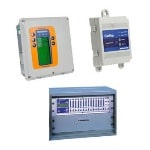
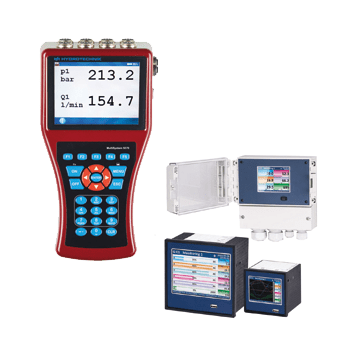
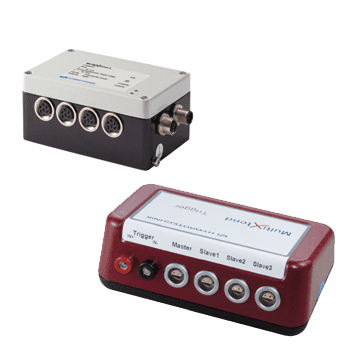
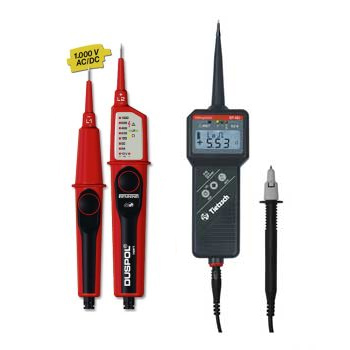
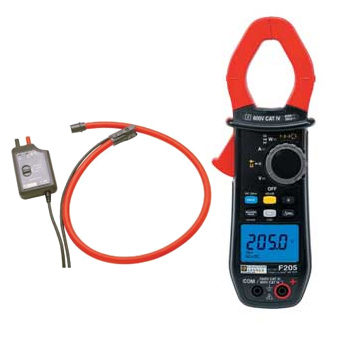
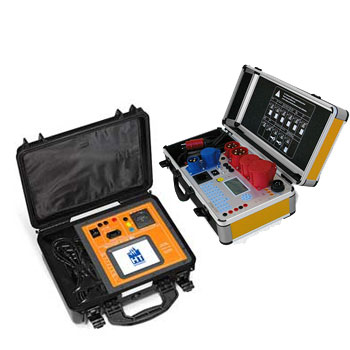


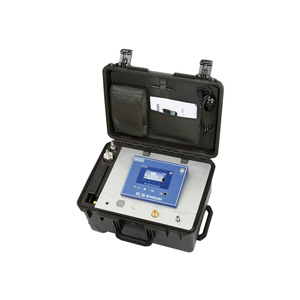
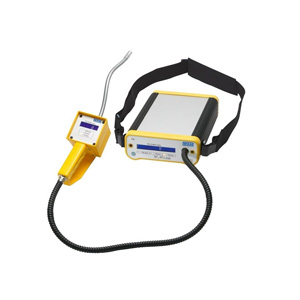
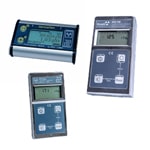
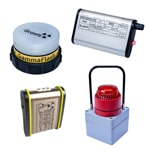
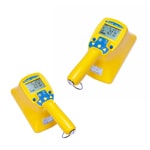
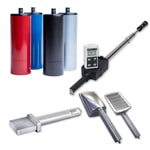
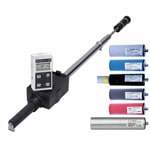
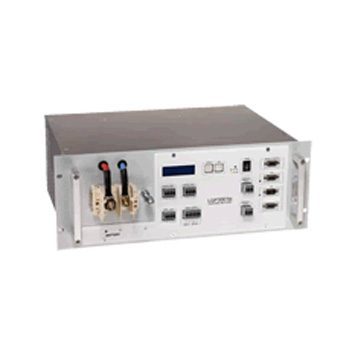

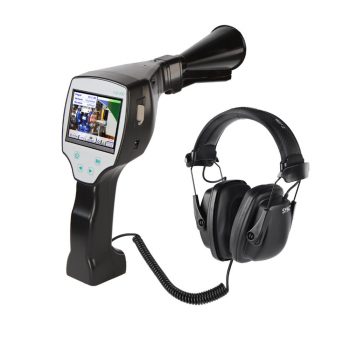
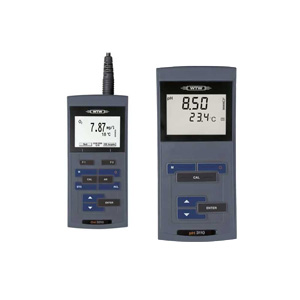




















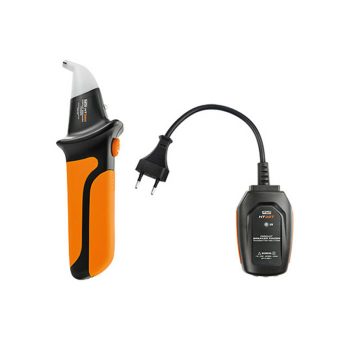
HT38 is essential to identify the circuit breaker protecting a given socket on a panel board without having to dissect it. HT38 includes a signal generator (HT38T) to be connected to the socket under test and a signal receiver (HT38R) capable of "exploring" all RCCBs of the panel board.
 Datasheet Datasheet
|
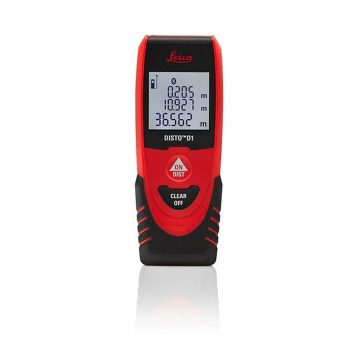
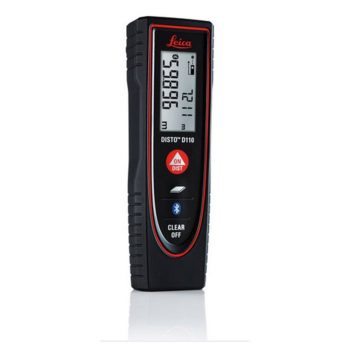
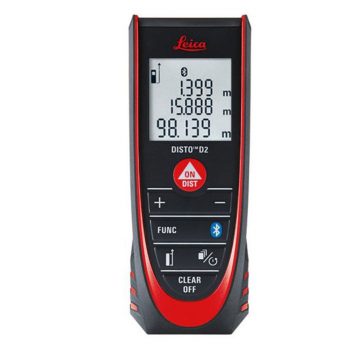

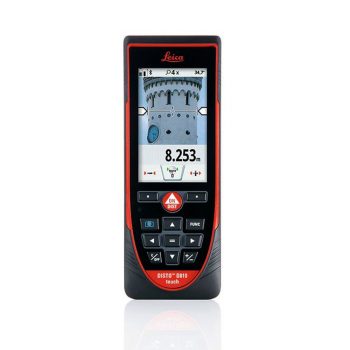
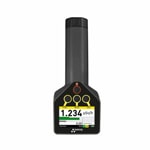
Smartphone...or DISTO? With a full-color touchscreen interface, the D810 touch is designed to be as easy to use as possible while keeping up with the most demanding jobs. Use your fingers to control the zoom on the pointfinder camera. But don’t worry, we didn’t leave you without buttons—when your hands are dirty or wet, you can still get a firm grasp on the job at hand.
 Datasheet Datasheet |
| Broschure |
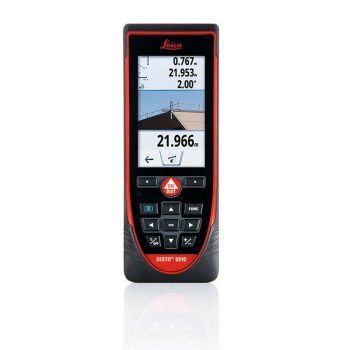
The DISTO S910 features the best of LDM technology from Leica Geosystems. It can measure the distance between multiple points from one location. It has a Smart Base for even more measuring options and functions. It can export data to CAD. And it has WLAN, Bluetooth®, and USB connectivity. Simply put, the S910 is our Master DISTO.
|
Datasheet
|
|
Brochure
|
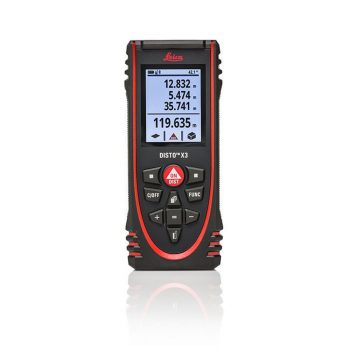
Limited Time Offer: DISTO X3 Special Edition with Pica BIG Dry Marker Available through 31.03.2020 (while supplies last) in UK, France, Germany, Italy, and Spain. The Pica BIG Dry Longlife Construction Marker is a robust carpenter’s pencil with an automatic lead feed and a lead sharpener for precise marking down to the millimeter on a variety of materials. The Pica BIG Dry DISTO edition is a great companion to your X3 to mark up your on-site measurements with ease.
| Datasheet |
| Brochure |
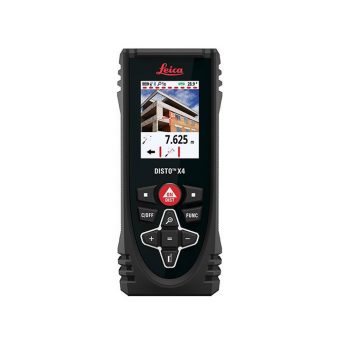
Measuring outside often? The DISTO X4 improves on the X3 by adding a pointfinder camera, which lets you aim your DISTO’s laser point using the full color, high-resolution display—simply line up your desired measurement point in the on-display crosshairs and you’ll get a precise measurement.
|
Datasheet
|
|
Brochure
|
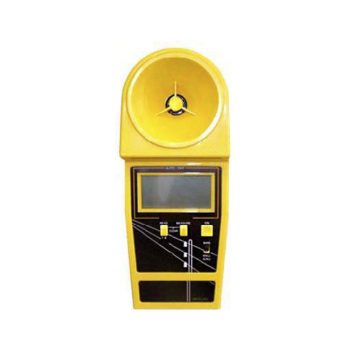
- Range (25mm cable min): 3 –23m (10-50ft)
-
Range (12mm cable min): 3 –15m (10-50ft)
-
No. of wires measured:6
-
Accuracy: 0.5% ± 2 digits
-
Resolution (range <10m): 5 mm
-
Resolution (range >10m): 10 mm
-
Minimum gap between wires: 150 mm
-
Operating Temperature Range: -10°C to 40°C
-
Battery Life (Long Life Alkaline type): 50,000 measurements
-
Measurement units: Imperial (feet/inches) or metric (meters)
- Range (25mm cable min): 3 –23m (10-50ft)
-
Range (12mm cable min): 3 –15m (10-50ft)
-
No. of wires measured:6
-
Accuracy: 0.5% ± 2 digits
-
Resolution (range <10m): 5 mm
-
Resolution (range >10m): 10 mm
-
Minimum gap between wires: 150 mm
-
Operating Temperature Range: -10°C to 40°C
-
Battery Life (Long Life Alkaline type): 50,000 measurements
-
Measurement units: Imperial (feet/inches) or metric (meters)
- Range (25mm cable min): 3 –23m (10-50ft)
-
Range (12mm cable min): 3 –15m (10-50ft)
-
No. of wires measured:6
-
Accuracy: 0.5% ± 2 digits
-
Resolution (range <10m): 5 mm
-
Resolution (range >10m): 10 mm
-
Minimum gap between wires: 150 mm
-
Operating Temperature Range: -10°C to 40°C
-
Battery Life (Long Life Alkaline type): 50,000 measurements
-
Measurement units: Imperial (feet/inches) or metric (meters)
- Range (25mm cable min): 3 –23m (10-50ft)
-
Range (12mm cable min): 3 –15m (10-50ft)
-
No. of wires measured:6
-
Accuracy: 0.5% ± 2 digits
-
Resolution (range <10m): 5 mm
-
Resolution (range >10m): 10 mm
-
Minimum gap between wires: 150 mm
-
Operating Temperature Range: -10°C to 40°C
-
Battery Life (Long Life Alkaline type): 50,000 measurements
-
Measurement units: Imperial (feet/inches) or metric (meters)
 Datasheet Datasheet
|
- Range (25mm cable min): 3 –23m (10-50ft)
-
Range (12mm cable min): 3 –15m (10-50ft)
-
No. of wires measured:6
-
Accuracy: 0.5% ± 2 digits
-
Resolution (range <10m): 5 mm
-
Resolution (range >10m): 10 mm
-
Minimum gap between wires: 150 mm
-
Operating Temperature Range: -10°C to 40°C
-
Battery Life (Long Life Alkaline type): 50,000 measurements
-
Measurement units: Imperial (feet/inches) or metric (meters)
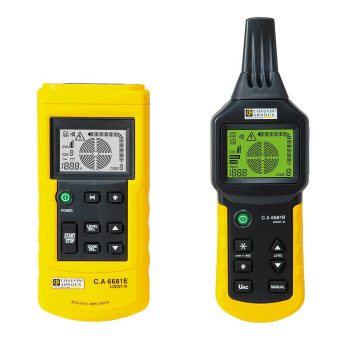
Electricity: Identify a fuse, circuit-breaker, etc. Track a cable in a wall Determine the location of a cut in the circuit Locate short-circuits Locate cable ducts in a house Detect buried conductors Plumbing/heating: Locate pipes (copper, steel) Track plastic pipes Telecom: Cable location Identification of a pair in a strand
| Datasheet |
| User Manual |
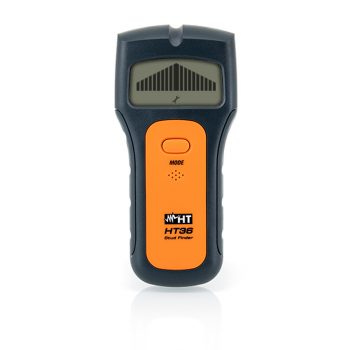
HT36 is capable of detecting the presence of wood beams and conductive items, metal items and cables with AC voltage hidden inside walls and roofs, and other common materials. The instrument gives out a sound and shows a signal on the display after identifying the border of the item, in order to easily detect its central position.
| Datasheet |
| User Manual |

Laser Distance Meters & Cable Locators / Cable Height Meters
Laser distance meters, cable locators and cable height meters are precision instruments used to measure distances, locate underground cables and determine the height of overhead lines. They are essential in construction, electrical installation, surveying, civil engineering and maintenance. Laser units measure distances digitally, cable locators find hidden cables, and height meters verify clearance and sag of overhead conductors.
FAQ
How does a laser distance meter work?
It emits a laser pulse and measures the time it takes to return (time-of-flight) or calculates the distance via phase-shift measurement.
What accuracy can be expected?
Typical accuracy ranges from ±1 mm to ±3 mm depending on distance, surface reflectivity and ambient light.
Can indirect height measurements be performed?
Yes — many devices use Pythagoras-based functions to calculate heights when direct sight is not possible.
What measuring ranges are common?
Most handheld devices measure up to 30–100 m; advanced models reach 150–250 m or more.
Does sunlight affect the measurement?
Strong sunlight weakens reflection, reducing accuracy. Dark or irregular surfaces may also require multiple attempts.
What additional functions are useful?
Area/volume calculation, continuous measurement, point-to-point measurement, angle/tilt sensors, Bluetooth data transfer and memory functions.
What is a cable locator?
A device that detects buried or hidden cables using electromagnetic fields or induced signals.
How does active cable tracing work?
A transmitter injects a signal into a cable; the receiver detects the magnetic field to determine location and depth.
How does passive cable tracing work?
The receiver detects naturally occurring fields (e.g., 50/60 Hz) from energized cables without the need for a transmitter.
What factors make cable detection difficult?
Metallic structures, parallel lines, moisture, strong electromagnetic fields or poor cable grounding.
How accurate is depth measurement?
Depending on the device, depth accuracy is typically a few centimeters to around ±10–15 cm.
Which utilities can be located?
Electrical cables, telecom lines, communication cables, underground services and sometimes metallic pipes.
What is a cable height meter?
A device used to measure the height of overhead conductors (electricity, telecom, lighting) without physical contact.
How accurate are cable height meters?
Accuracy typically ranges from ±5 cm to ±30 cm depending on height and environmental conditions.
What conditions affect accuracy?
Temperature, humidity, wind, rain, fog, multiple overhead lines or reflective disturbances.
Why is sag measurement important?
Sag changes with temperature and load; insufficient clearance can create safety hazards for machinery, vehicles or pedestrians.
How often should height measurements be taken?
Regularly—especially during inspections, after structural changes or when clearance concerns arise.
Can laser distance meters be used indoors and outdoors?
Yes — although outdoor use benefits from optical viewfinders or reflective targets.
Which industries rely on these instruments?
Electrical installation, building services, construction, telecom, surveying, maintenance, energy utilities and civil engineering.
What safety aspects must be considered?
Respect laser class, avoid pointing at people, verify underground utilities before excavation and wear protective equipment when required.
How are measurements documented?
Many devices store results internally or transmit them via Bluetooth to mobile apps or documentation software.
How do professional devices differ from entry-level models?
Higher range, better accuracy, stronger signal processing, advanced search modes, improved EMC immunity and robust housings.
How long do batteries last?
Battery life typically ranges from several hours to multiple working days depending on usage, display brightness and laser power.
Can cable locators detect damaged cables?
Yes — interruptions, signal anomalies or irregular responses often indicate damage or insulation faults.
How deep can cables be located?
Depending on frequency, soil conditions and cable type — often up to several meters.
Can multiple cables be distinguished?
Yes — by using different frequencies, selective coupling or analyzing signal amplitude and field orientation.